February 24 + 26
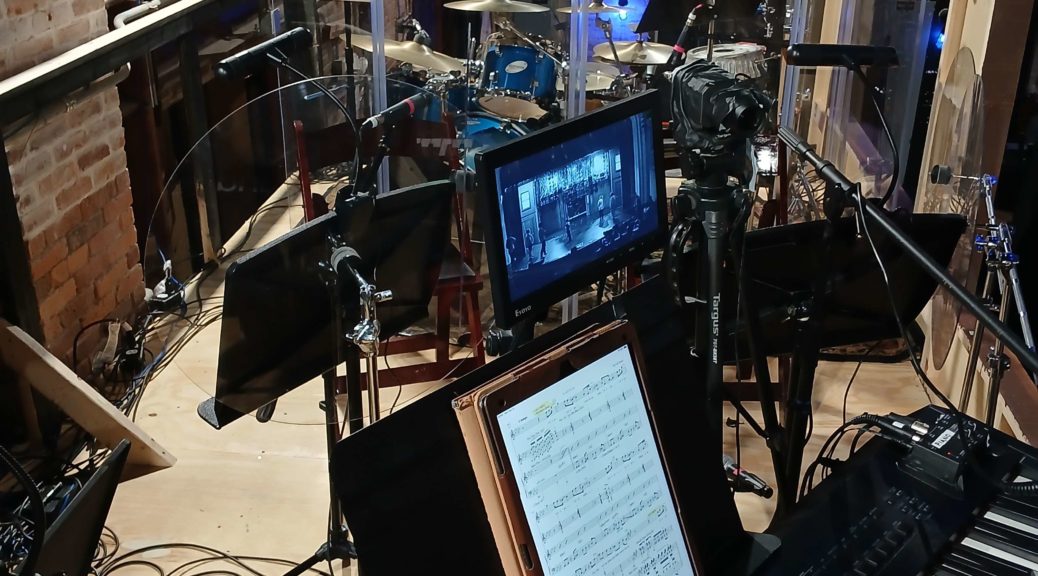
This week was the final week before opening night on the 28th, which I was unable to attend because of my senior recital hearing that evening. The bulk of my work came on Monday when we were finalizing the band set up. With the instrumentalists now arriving, we had to get all of the microphones set up. Having taken DIGA 361, microphone setup is easy for me to do now, This involved hooking up many XLR cables to a snake, positioning the microphones properly, and making sure that the XLR cables are not in the way so that they don’t become a tripping hazard. Additionally, we had to make sure that the cables were not hanging off of the platform to minimize the risk of them being a hazard. We kept them positioned on the ground using gaff table and used the sound shields to our advantage – the drum shields specifically, because they are large plexiglass screens that have a small opening towards the bottom that allows for cables to be passed through. The drum mics took the longest time to set up since there are multiple of them. There were two overhead mics, one for the left and right side, a low microphone for the kick drum, a snare mic, a hi-hat mic, and two clipped microphones, one for each tom drum. The microphones for each instrument would be connected to a power box that powers them. Ultimately, there were a lot of cables involved, but this helped me understand the importance of cable management and how to work in a tight space.
Another good practical experience! I’m curious: Will the mics stay in place throughout the run, or will you need to setup and breakdown anything each night/day?
The microphones stayed in place for the whole run. We didn’t take down anything from the band’s area until we struck set after closing.