Driving Success: This Student-Athlete Journey Goes Into the Science Lab
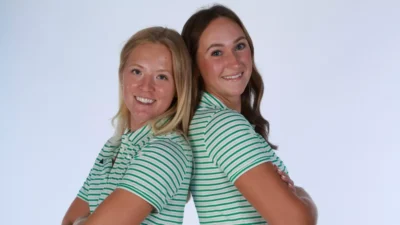
For student-athletes at Stetson, days rarely follow a straight line. Early mornings, long afternoons and late nights are often divided between practice, competition and the classroom, with little separation among them.
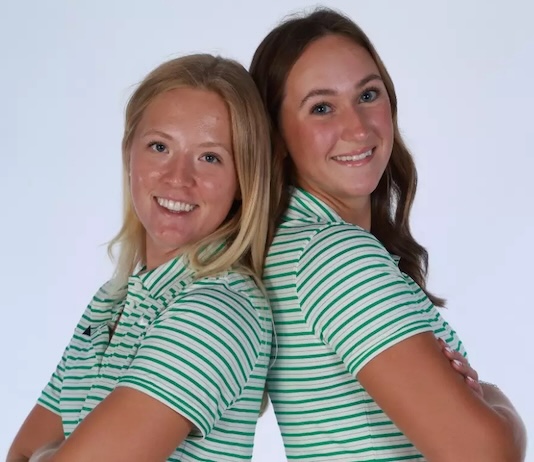
For members of the women’s golf team, that balance now extends beyond the course and into senior-level science coursework under assistant professor Kristine Dye, PhD, whose cancer research lab has become an important part of their final year at Stetson.
“Two days a week, we start with lift in the morning, like at 6 a.m. or 7 a.m.,” said Filippa Jansson, a senior from Sweden. “Then we typically go to practice right after … and then we have classes from 1 to 4 or something like that.”
Jansson, an All-ASUN Second Team selection last season, is one of multiple Hatters — along with fellow senior Victoria Leach, a New York native and a member of the women’s golf program since 2022 — completing senior research in Dye’s lab as Health Science majors.
“Wild Journey”
Jansson’s journey to Health Science wasn’t straightforward. “It was kind of a wild journey,” she said, laughing. In Sweden, students choose a general field rather than a specific major, and she opted for natural sciences. When she arrived at Stetson, she tried out Biology but found the introductory labs tedious.
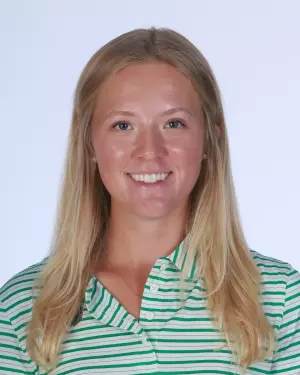
Jansson sampled other disciplines, such as Psychology, Communications and Business, but nothing clicked. “There was one semester where I didn’t have a single science class,” she said. “I thought, ‘Oh, I miss learning about science and biology.'” With golf as her top priority, she needed a major that fit her athletic schedule without sacrificing her curiosity. “Then I found Health Science,” she said. “Tori [Victoria] actually told me about it because I didn’t even know it was a major you could choose.”
“As seniors as we are, and we’re in Health Science, you have to do senior research,” Jansson continued. “In the fall, you take a research proposal class … and then we’ve planned our project that we’re supposed to do in the spring.”
The spring semester marks a shift from planning and theory to hands-on lab work, a transition that introduces new challenges alongside an already demanding athletics schedule.
“What Dr. Dye said is like some experiments might be fast; some might take six hours,” Jansson said. “You have to wait and do different trials and stuff.”
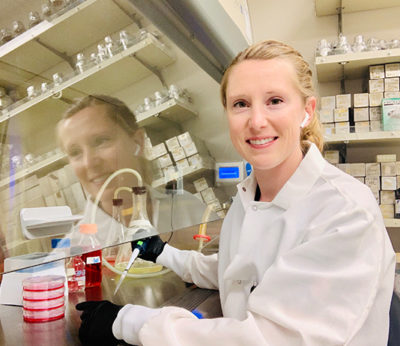
Dye’s research centers on oncogenic viruses, specifically Merkel cell polyomavirus and its link to Merkel cell carcinoma, a rare but aggressive form of skin cancer. Her research dives into the complexities of how a virus, discovered decades ago, can remain harmless in most people but trigger devastating disease in a small subset.
“We study viruses that cause cancer,” Dye explained. “We focus on a specific virus that’s been linked to an aggressive form of cancer with a very low survival rate.”
Her work recently received a $500,000 NIH R15 grant, allowing undergraduate students to take part in research typically reserved for graduate-level programs. “This project is at a graduate level,” Dye said. “But I am able to carry it out at the undergraduate level due to the financial support provided by the grant.”
“Super Cool”
For Leach, choosing Dye’s lab came with initial hesitation, especially since there was no prior relationship with her as a professor. “I had never taken a class with her before,” Leach said. “I was very hesitant to choose hers just because I hadn’t had a previous relationship with her.”
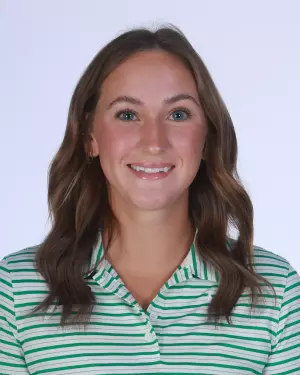
However, when Dye sent out an email about her research opportunities, Leach’s interest was piqued. She chose the project without knowing what to expect. Hesitation quickly gave way to enthusiasm once the work began.
“It’s super awesome,” commented Leach, noting the first part of the year was heavy on writing — research proposals, literature reviews, and background on cancer and viruses. It was necessary work, but it didn’t feel hands-on. Now, that’s changed.
“We just had our first day in the lab doing pipette training,” Leach said a few weeks ago. “It doesn’t really sound fun, but it’s super fun to start to use all the equipment, learn how everything works … being in the lab today was, ‘Wow, this is super cool.’”
What makes the experience even more meaningful is being part of research that’s gaining national attention. “I tell everyone about it — literally any chance I get,” Leach added, beaming. “My name is gonna be on a research paper sometime in the next couple of years. I think that’s super cool, just to have my name out there.”
In turn, the lab experience, where outcomes are not predetermined, offers similarities to athletics. Both require patience and resilience, and both feature close mentorship. The support Dye provides in the lab reflects the mentorship the players receive on the golf course from head coach Teresa Brown.
“Coach T is very concerned about our well-being and us as people. … If things happen in our life, she’s very supportive,” Jansson said.
Leach echoed that sentiment, highlighting how both mentors go beyond grades and scores. “Coach is also very academically driven with us,” said Leach. “It’s nice having both of that. They’re different in a lot of ways, but the support is very similar.”
That connection creates a uncommon environment where academics and athletics reinforce each other. Whether in the lab learning to manipulate delicate cells or on the course chasing birdies, the students know they’re not just being trained to excel — they’re being supported as whole people.
Editor’s note: To read the full article, go to GoHatters.com.