Stetson Poll: Republicans Lead in Florida 2026 Races, But Many Voters Undecided

A new statewide survey from Stetson University’s Center for Public Opinion Research (CPOR) shows Republicans maintaining an early advantage in Florida’s 2026 midterm elections, but with margins close enough to signal a competitive political landscape where independent voters and economic concerns could decide the outcome.
The survey of 848 likely Florida voters, conducted between March 25 and April 13, finds Republican candidates leading in both the governor’s race and U.S. Senate contest, though no tested matchup exceeds single-digit margins.
In the race for governor, Republican Byron Donalds leads Democrat David Jolly, 47% to 40%, while a separate matchup shows Donalds ahead of Democrat Jerry Demings, 46% to 42%. Roughly 7% of voters remain undecided in both scenarios, underscoring the fluidity of the race less than seven months from Election Day.
In the U.S. Senate race, Republican Sen. Ashley Moody also holds the advantage, leading the now declared challenger, Democrat Alexander Vindman, 49% to 42%, and Democrat Angie Nixon, 51% to 38%. While these margins suggest a Republican edge, they fall well within the range of a competitive statewide contest.
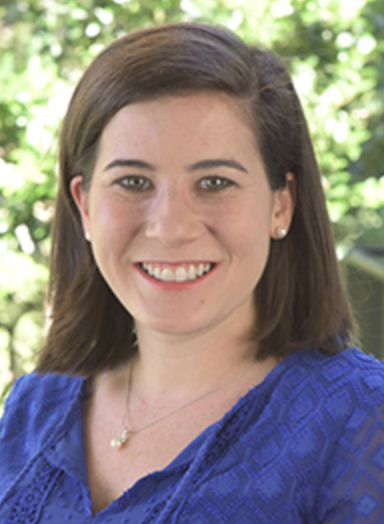
“It seems that the Republicans have an advantage for the upcoming election. However, the election is far away, and it may be more competitive as we get closer,” said Kelly Smith, PhD, an associate professor of Political Science at Stetson. “We’re seeing a state that leans Republican structurally, but not one where the outcome is predetermined.”
Partisan loyalty remains one of the defining features of the 2026 electorate, with roughly 85% to 91% of voters supporting their party’s candidate regardless of matchup. This places significant weight on independent voters, where large shares remain undecided, particularly in gubernatorial matchups. These voters, who are less inclined to turn out compared to Democrats and Republicans, are likely to determine whether these early leads hold.
The survey also reveals a pronounced gender divide shaping the contours of both races. Male voters tend to favor Republican candidates by notable margins, while female voters show stronger support for Democratic candidates. Because men also display higher turnout propensity, the Republican advantage reflected in these weighted estimates may already capture a structural edge that Democrats would need to offset through mobilization among women.
Beyond candidate preference, the survey points to a clear and consistent set of priorities that voters have. Nearly four in ten voters, 39%, identify cost of living and inflation as the most important issue facing the state, far outpacing all other priorities.
“Even in a polarized environment, the economic reality [that] voters are experiencing is cutting through partisan divides,” said Smith.
Other issues register at significantly lower levels. Immigration ranks second overall, though this is driven primarily by Republicans, for whom it is the second most important issue at 18%. Democrats, by contrast, prioritize democracy and voting rights as their second concern at 15%. Despite its prominence in national political discourse, abortion ranks as the top issue for only a small share of Florida voters (4%).
Voter motivation may also play a critical role in shaping the election. Sixty percent say they are voting in support of their preferred candidate rather than against the opponent (16%). However, this sentiment varies sharply across party lines, with Republican voters significantly more likely to say they are voting for their candidate (74% to 52% for Democrats), while Democratic voters are more likely to frame their vote as opposition (22% to 12% for Republicans).
These findings suggest a familiar but unsettled political environment. Republicans benefit from structural advantages, including stronger partisan alignment and more affirmative voter support. At the same time, Democrats remain within striking distance, aided by demographic advantages and a still-persuadable bloc of independent voters.
Methodology
The CPOR Spring 2026 Survey collected 848 responses from Florida adults via an online non-probability sample from Qualtrics’s panels from March 25 to April 13, 2026. Likely voters were identified using a modeled turnout score incorporating past voting behavior and engagement indicators. The sample was weighted by race, ethnicity, education, gender, and region to reflect the state of Florida. The margin of error is ±4.1 percentage points.

About Stetson University’s Center for Public Opinion Research (CPOR)
Founded in 2022, the Center for Public Opinion Research is an independent, non-partisan survey research center of Stetson University. The purpose of CPOR is to produce knowledge about how the public thinks about politics, the economy, and other social issues. Stetson’s CPOR also advances our students’ education in the dynamic science of survey research and social science methodology.
-Stetson Today