Stetson Students Win Awards at National Research Conference
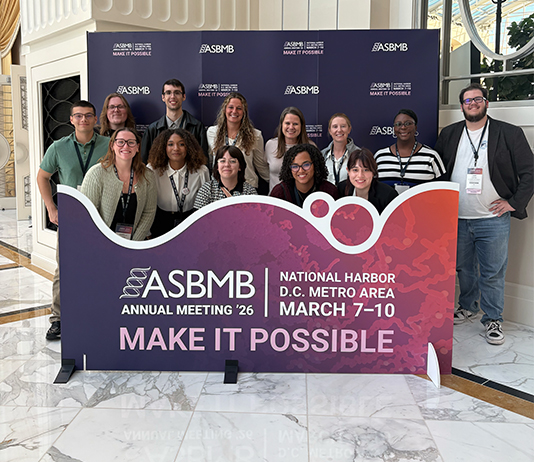
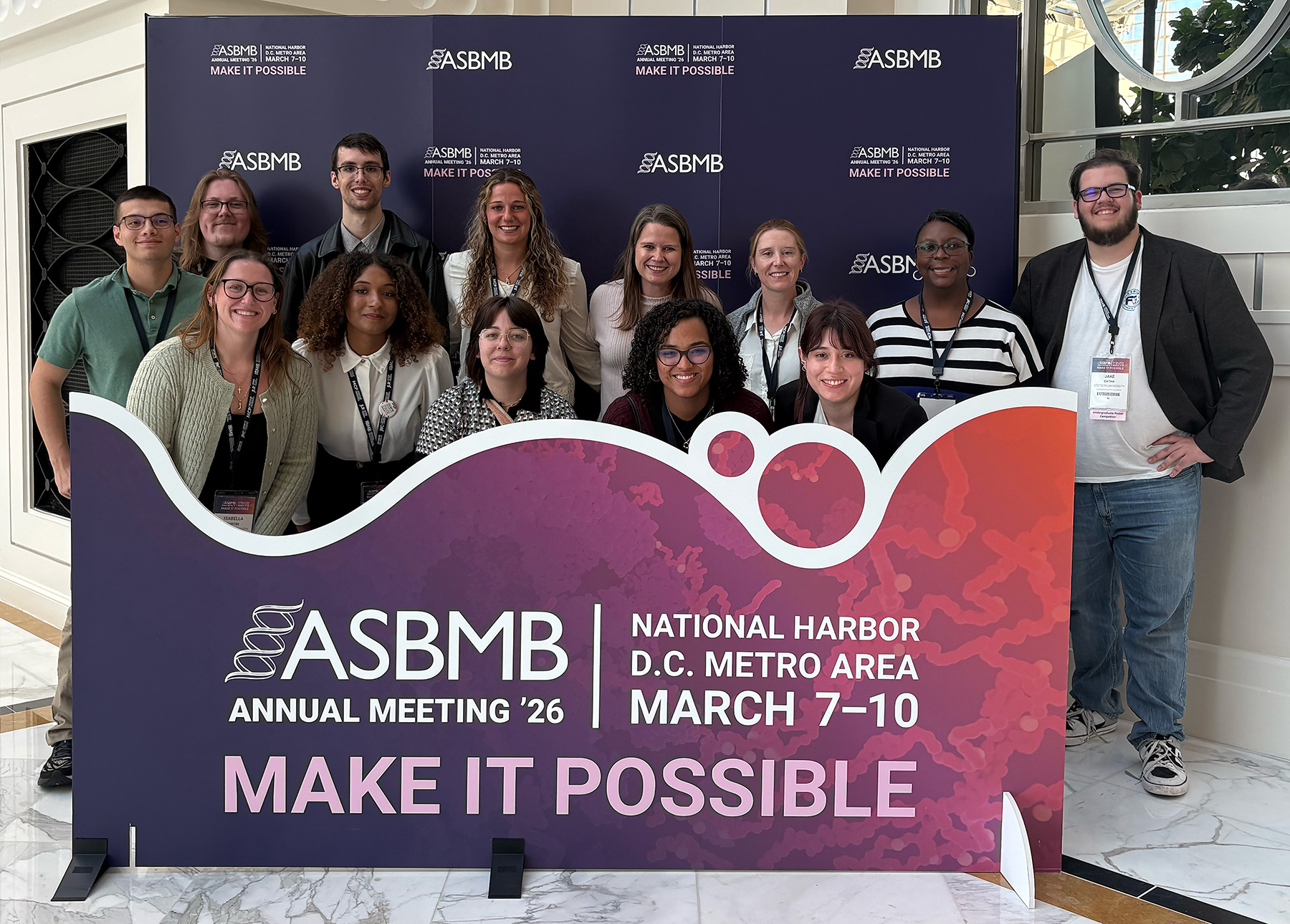
Stetson students presented their research at the 2026 American Society for Biochemistry and Molecular Biology conference in Washington, D.C., and brought home two awards and an honorable mention.
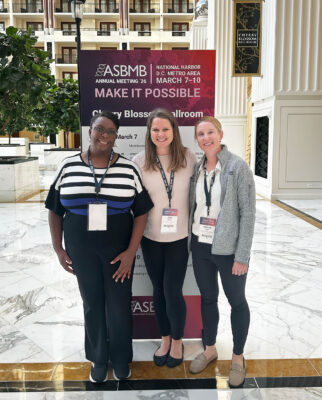
Ten students and three professors attended the ASBMB conference on March 7-10. The annual event attracts about 2,000 researchers, educators and students for seminars, workshops, exhibits and research presentations. Five Stetson students were chosen to compete in ASBMB’s Undergraduate Poster Competition throughout the conference.
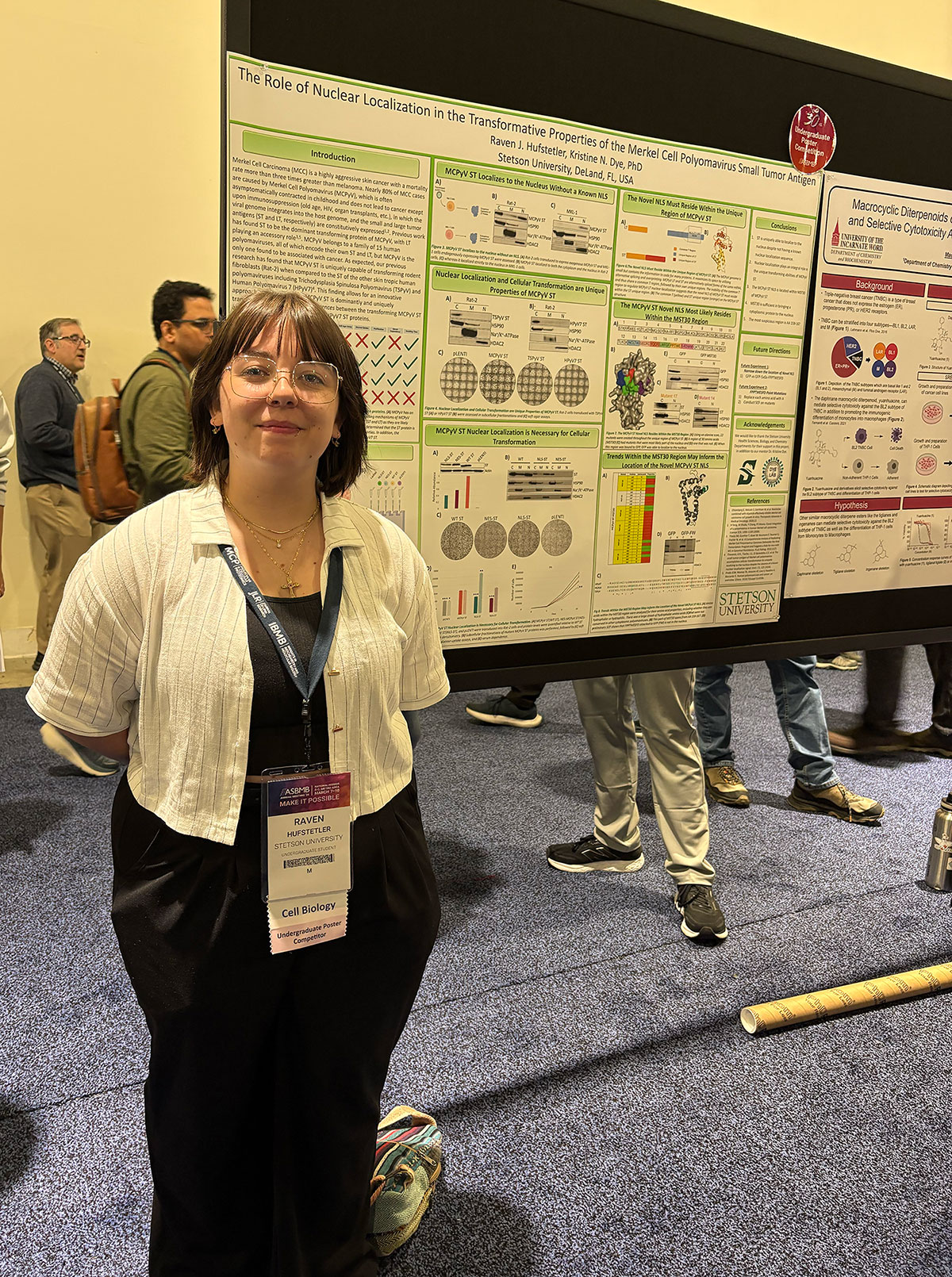
Raven Hufstetler ’27 received a Poster Award for her research on oncogenic polyomaviruses. Hufstetler is a student research assistant in the lab of Kristine Dye, PhD, Assistant Professor of Health Sciences and Biology, and received mentoring from her on the project.
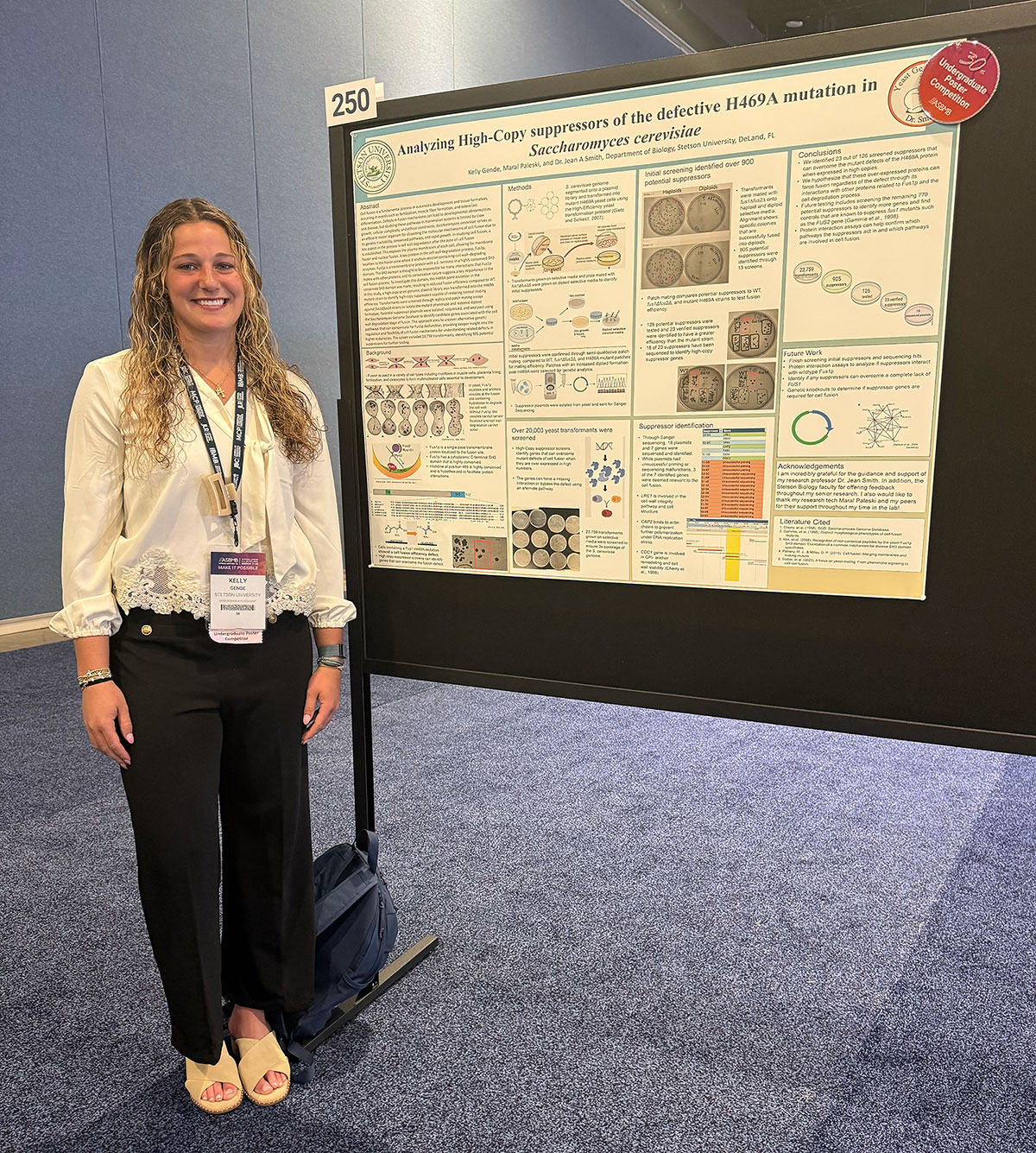
Two students received awards at the conference for their work studying cell fusion in yeast. Sean Gaudreault ’26 earned a Poster Award and Kelly Gende ’26 received an Honorable Mention. They were both mentored by Jean Smith, PhD, Assistant Biology Professor, who also presented her research at the conference.
Through federal grants, Professors Smith and Dye paid for the 10 students to attend the ASBMB conference, including registration fees, airfare and hotel. The professors received grants from the National Science Foundation and the National Institutes of Health to help fund their research labs, including paying undergraduate research assistants.
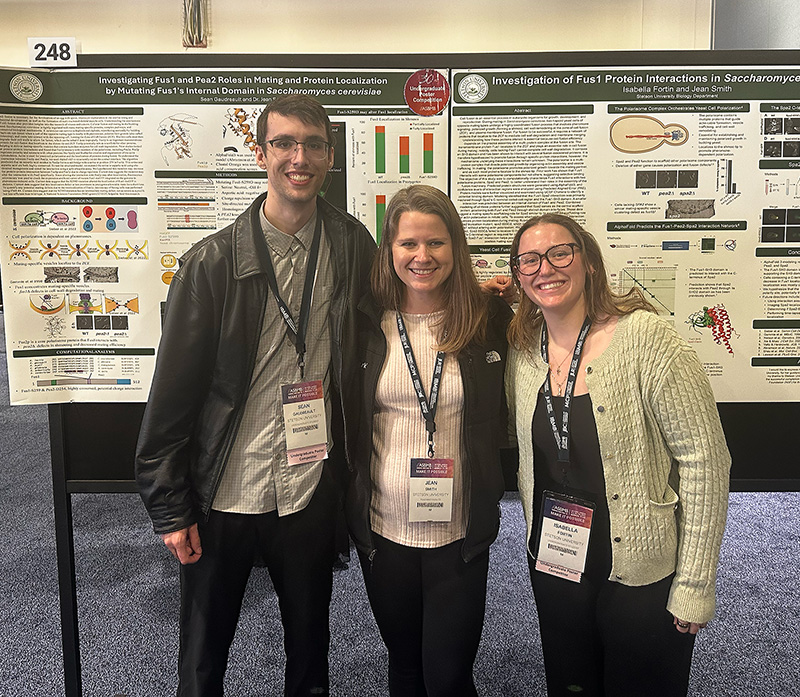
Professor Dye conducts research on cancers caused by viruses, such as Merkel Cell Carcinoma. Professor Smith studies the genetics and cell biology of fungal cell-cell fusion.
“It’s unique for a small school to bring that sheer number of students to a national conference,” Professor Dye said, “and to financially be able to bring all the students there because we have those grants.”
Associate Biology Professor Roslyn Crowder, PhD, also attended the conference and presented data collected by research students who examined the cancer cell cytotoxicity of novel synthetic drug compounds, which were made by Associate Chemistry Professor Paul Sibbald, PhD, and his research students.
The drug compounds were tested on human leukemia cells in Professor Crowder’s Cancer Biology class and successfully killed the leukemia cells, Professor Crowder reports.
“It was great to see such a large group of Stetson students have an opportunity to present their undergraduate student research at a national conference,” Crowder said. “The Stetson students had competitive poster presentations.”
The strong showing by the students demonstrates the exceptional opportunities for undergraduates to gain research experience and training at Stetson, as well as mentoring from top faculty. The fact that all students must complete a senior project in their field sets Stetson apart from other colleges and universities.
Now on top of their senior experience, students have even more opportunities through the Hatter Ready program for hands-on experiential learning in majors across campus, preparing them for successful careers or graduate study.
“On average, I think that we offer more research opportunities than many other institutions,” Professor Smith said. “The students are getting really good training and one-on-one mentorship that you wouldn’t get at a bigger school.”
-Stetson Today