Stetson’s Jeremy DiGorio to Lead Regional Association in Higher Education
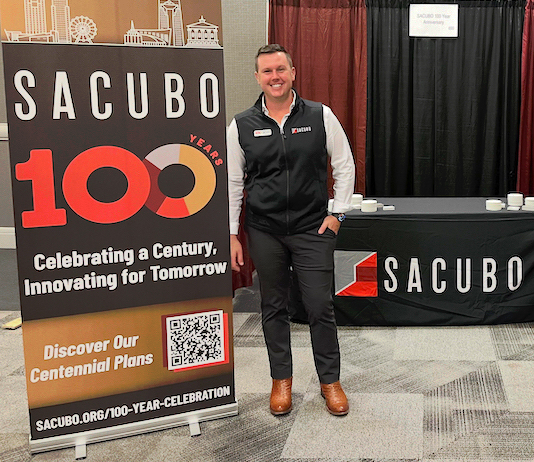
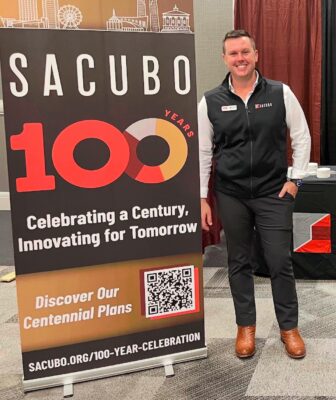
As Stetson continues its advancement from “Florida Gem to National Treasure,” as outlined in the university’s strategic plan, very promising news comes from Jeremy DiGorio, Stetson’s Vice President of Finance and Chief Financial Officer.
In late May, DiGorio became president of the Southern Association of College and University Business Officers (SACUBO). The one-year volunteer term also makes him a representative on National Association of College and University Business Officers (NACUBO) board of directors.
As a result, with Stetson working to build greater awareness and interest, DiGorio will be a thought leader — working closely with colleagues in higher education nationwide.
SACUBO, a volunteer-led organization, was founded to inform higher education institutions in the southern region of the United States about issues affecting higher education. Its current membership consists of approximately 700 institutions and organizations. As president, DiGorio now leads of the charge of an association that will be celebrating its 100th anniversary next spring.
‘Great Opportunity’ for Stetson
“I really enjoy working in higher education, and I see this as a great opportunity, not only for me professionally but for Stetson,” said DiGorio, who arrived at Stetson in 2021. “I will be working with some amazing colleagues across the Southeast and the United States.”
DiGorio’s primary role for SACUBO is to create and lead strategy — “making sure that we are meeting all the needs of our members and providing education toward financial sustainability within higher education,” he cited. Those constituents include chief business officers, chief financial officers, and other finance, HR and administration professionals.
Also, DiGorio added, SACUBO faces many of the same challenges in higher education that Stetson has, such as navigating an “enrollment cliff” that sees fewer high schoolers available to attend college, along with reductions in state and federal funding, among other issues.
“Yes, we have challenges in our sector right now. But I think it also brings us ways to think about how we become more creative,” DiGorio asserted. “As we think about things like AI [artificial intelligence] and technology, it can help us to actually streamline our organizations and work leaner as we try to meet the needs of our current students with constrained resources. And so, while there are challenges, the opportunity to think creatively, bring innovation and create a new landscape for higher education is pretty exciting.”
In turn, DiGorio gets the chance to share the Stetson story with other leaders in higher education.
“Just continuing to have conversations and share all of the amazing work in DeLand, Tampa and Gulfport is truly great for our institution!” he concluded.
-Michael Candelaria