Values Day 2026: Exploring Values Shaping the Future of America

Classes were canceled, but learning didn’t stop.
In fact, on Values Day, Nov. 12, the campus was teeming with more energy than ever, as not only students but also staff and faculty bustled from building to building, eager to learn from one another and collectively reflect on the theme, “America’s 250th Birthday: What values will shape the next 250 years?”
The Values Day committee and organizers of the day’s programming, as well as Hatter community members who showed up with curiosity and open minds, made this special Stetson tradition a success once again. The important conversations that took place are sure to have far-reaching reverberations beyond Values Day and Stetson’s campus.
Read on for the high points of Values Day 2026!
Opening Ceremony
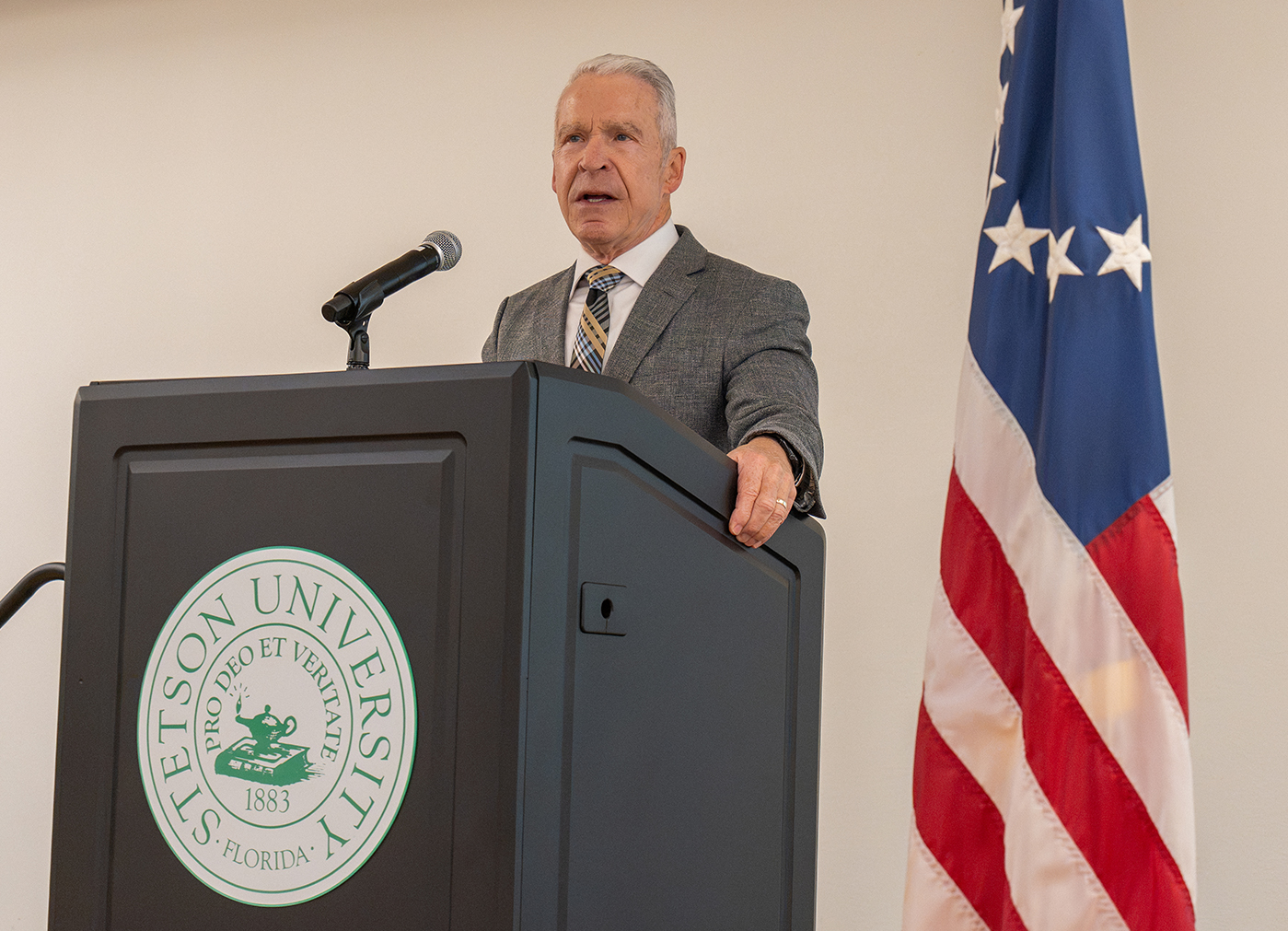
Dr. Joel C. Hunter wasn’t the original guest speaker for the opening ceremony, but he graciously filled in for Dr. Barry C. Black, the 62nd Chaplain of the United States Senate, who required last-minute rescheduling and was able to participate later in the afternoon.
Hunter, whose path into ministry began in the 1960s Civil Rights movement, sent a charge into the standing-room-only crowd in the Warren and Barbara Carr Stetson Room on campus.
Hunter has spent his life at the intersection of faith, community and public life, serving for 32 years as senior pastor of Northland Church in Orlando, and was a spiritual adviser to President Barack Obama throughout both terms. Also, among other roles, he has chaired Central Florida’s Commission on Homelessness and currently leads the Central Florida Pledge, an initiative that encourages dignity and respect, even amid disagreement.
So, when he spoke about the danger of artificial worlds, wealth inequality, economic tension, American rights, the necessity of being uncomfortable and more, one could hear a pin drop.
Regarding AI, Hunter said the issue revolves around getting caught up in mechanics and instruments rather than people. “The point is, we will attribute more and more humanity to technology that appears to have human traits,” he asserted, with a focus on younger people. “What we will have to do is figure out what are the values that we want to make sure grow alongside our intellectual and performance capabilities. And those will tell all the difference as to whether or not we are operating in a real world or an artificial world.”
On the topic of wealth inequity and economic tension, Hunter pointed to a needed balance between fairness and entrepreneurial efforts, citing how income continues to be distributed more and more unfairly. “As the wealth gap broadens,” he said, “there’s going to be a struggle, and you’re hearing it right now between the language of socialism and capitalism. There’s going to be a tension that continues to develop.”
Hunter discussed the evolution of American rights, referencing the Declaration of Independence’s historical limitation and the ongoing quest to widen the circle of belonging. His words: “Pluralism, of course, is allowing people to be who they are and respecting that, but that’s different than saying they belong and they are a part of who I am. … If we want to continue to build a healthy country, we’re going to have to combine those two.”
Finally, Hunter concluded with a message about acknowledging different views and, ultimately, coming together. “We will need to be uncomfortable,” he asserted.
“Get with somebody who is different than you are, but not just to discuss the differences, but to learn how to develop the relationship. That is key in the future of our country.”
Hunter’s voice served to set the stage for a day and night of deliberative dialogue.
Concurrent Sessions, Values Day Marketplace and More
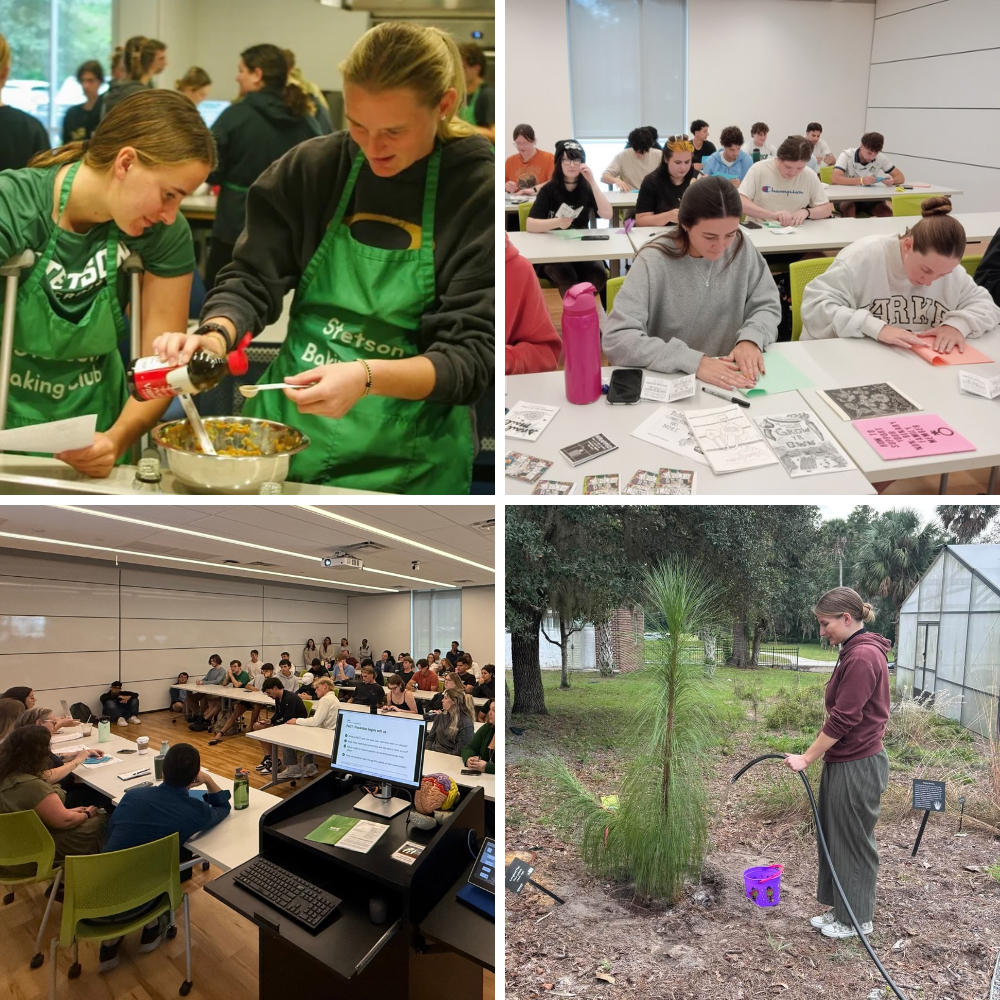
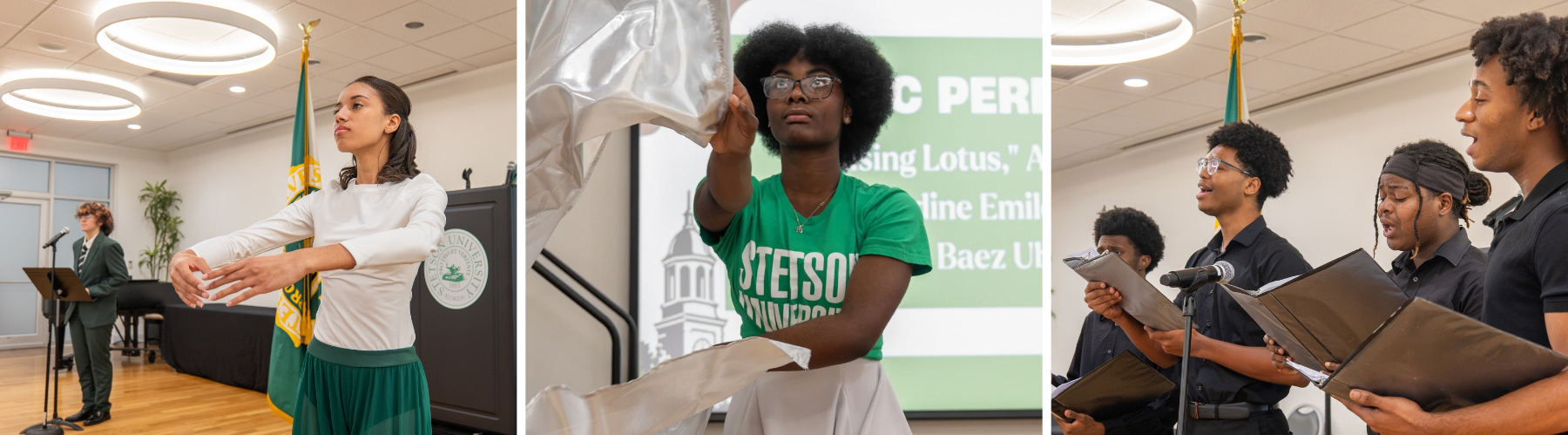
As morning sessions kicked off, students, faculty and staff made their way to various locations to attend Values Day workshops. Topics covered were as wide-ranging as sexual health trivia to boundaries within interpersonal relationships, lessons from Stetson’s Civil Rights Travel Course, sustainable clothing choices and more.
Brown Hall was a popular destination, with four concurrent sessions scheduled. In addition, word had traveled that the Baking Club and Hatter Harvest were making delicious zucchini carrot muffins at the Teaching Kitchen to explore themes of food, gardening, baking, collaboration and sustainability.
While participants got hands-on grating carrots and mixing batter, Hatters across the hall worked on creating zines, independently published small-circulation booklets. At the session, attendees also had a chance to learn about the history of zines and their use in environmental storytelling.
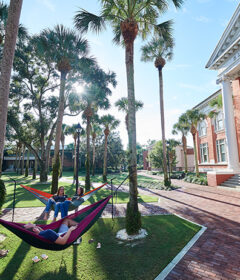
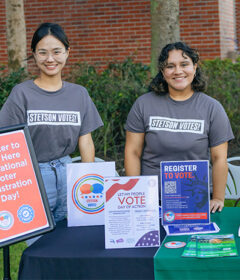
Concurrent sessions continued into the afternoon, promoting learning outside the classroom and new connections among Hatters, made possible by the entire university community hitting pause to the ordinary rhythm of life to reflect on its shared values and commitments. Similarly, the Values Day Marketplace at Palm Court provided a space to unwind in between sessions through music, lawn games, handmade goods and more.
Deliberative Dialogue
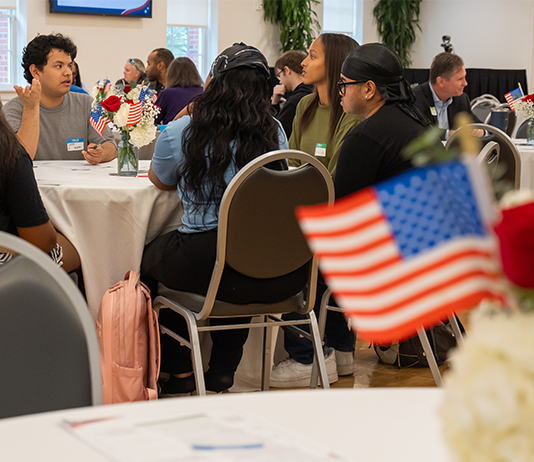
Undoubtedly a highlight of Values Day programming, the Deliberative Dialogue held in the Stetson Room asked the question, “If America cannot do everything at once, what deserves our greatest attention over the next 25-50 years?”
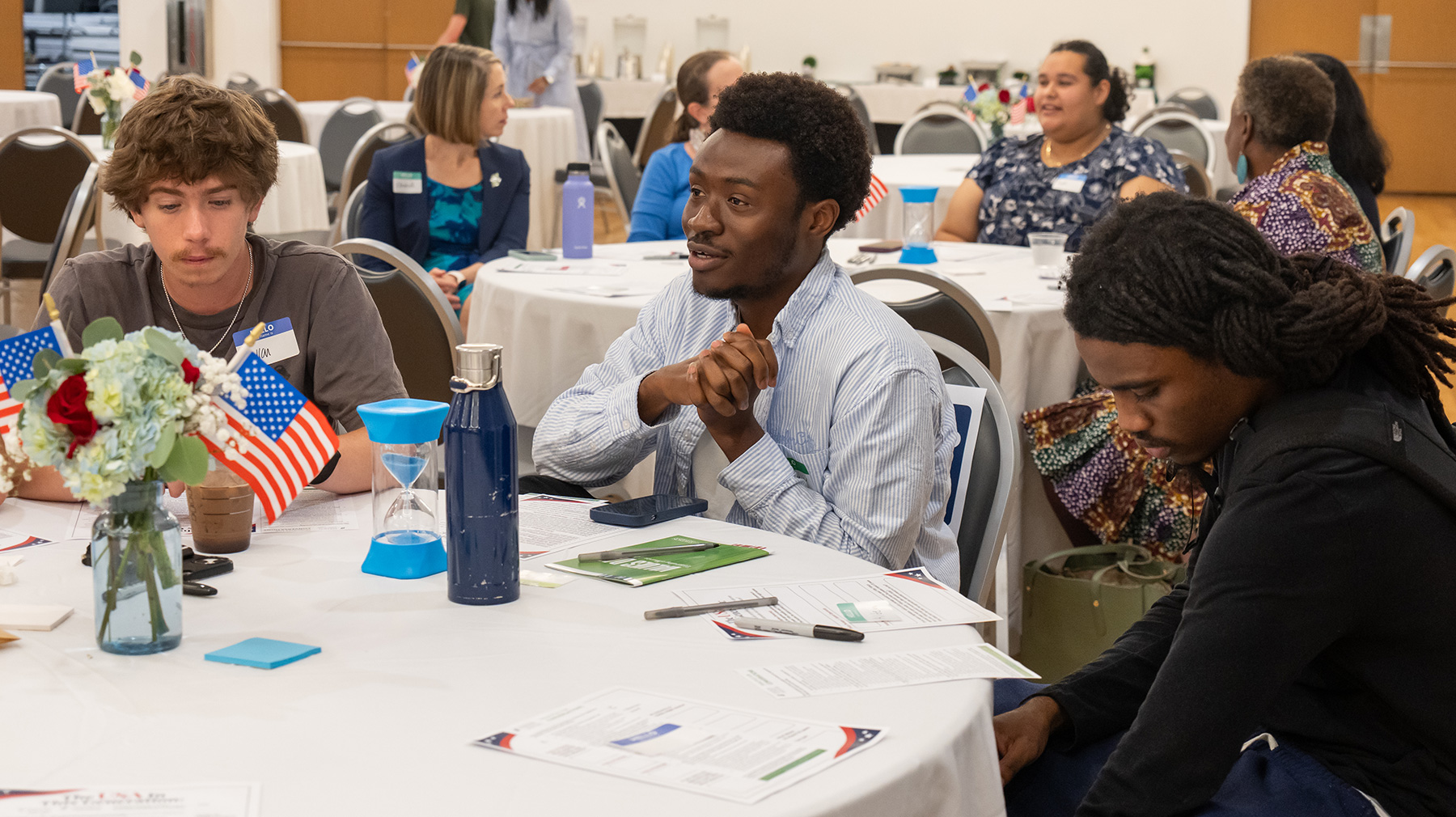
At each roundtable, attendees were welcomed by a student facilitator and a printout outlining the session’s activity: stepping into the shoes of lawmakers and deliberating on three policy packages each focusing on an important goal — strengthening democracy, expanding opportunity and investing in community. Attendees were then tasked with examining each of them, considering the tradeoffs they might create, who they would benefit the most, who they might leave out and more — all while engaging in respectful dialogue with members of their groups.
Rev. Caitlin Swann, associate director for Dialogue & Civic Action, explained that the session drew inspiration from the deliberative polling method developed at Stanford University’s Deliberative Democracy Lab. The format encourages participants to choose from good options instead of thinking in a yes-or-no binary, she said.
After in-group discussions, attendees shared what their group talked about with the room at large, such as consensus within groups, moments of respectful disagreement and the common sentiment of making positive contributions to America’s future.
“I often tell our students that we don’t always know what we value and what we believe until we say it out loud,” Swann said, explaining how her session fit into the larger purpose of Values Day. “I’m a United Methodist pastor by trade, so I have a lot of experience from sermon writing — realizing that maybe really abstract things kind of live in my head, and I don’t really know what I believe in a truly practical way until I have to articulate it out loud. So, we practice that together and hopefully get in touch, not only with our own values, but we compare and contrast with other people.”
She continued, “We’re all wrong sometimes, and we all have something to contribute. So, when we all come together, I think it can result in better ideas across the board.”
–Michael Candelaria and Siyon Kim