Campus Bioswales to Raise Awareness, Cut Pollution
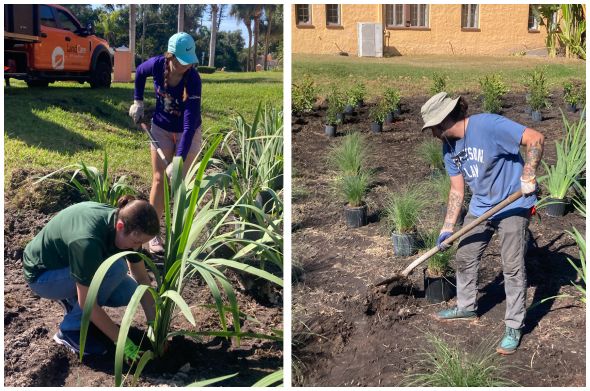
Student Noah Peretz has always been passionate about preserving wild spaces – and rewilding tamed ones.
While a student law clerk with Stetson’s Jacobs Public Interest Law Clinic for Democracy and the Environment, the spring 2026 grad discovered that passion for protecting natural environments can translate to meaningful community impact.
When the chance arose to make their law school campus greener, Peretz jumped at the opportunity.
With encouragement from Jacobs Clinic Director Jaclyn Lopez and with the enthusiastic support of campus officials and landscaping contractors, Peretz spearheaded a successful Tampa Bay Environmental Restoration Fund grant application to fund a multi-year effort to install native plants in four areas on campus. Peretz had never done anything like it before.
“It became clear that transforming our grass-lined stormwater retention swales into native, plant-based bioswales was a natural fit,” Peretz said. “From there, I began drafting the grant proposal. This was the first grant proposal I had ever written, and it would not have been possible without the support of my mentors.”
From green to greener
For natural environments and the wildlife that dwells within them, the grass isn’t always as green as it seems. St. Augustine and other lawn grasses require fertilizers, the excess of which get carried off by rainwaters into nearby waterways, where they feed harmful algae blooms. When it floods, they tend to retain less flood water than natural landscaping.
The bioswale project, which began fall of 2025, is replacing expansive patches of St. Augustine grass that line campus stormwater retention areas with vibrant and less water-intensive native plants. The Florida-friendly plants absorb more stormwater while reducing the amount of fertilizer that drains into our local waterways Bear Creek, Boca Ciega Bay, and Tampa Bay.
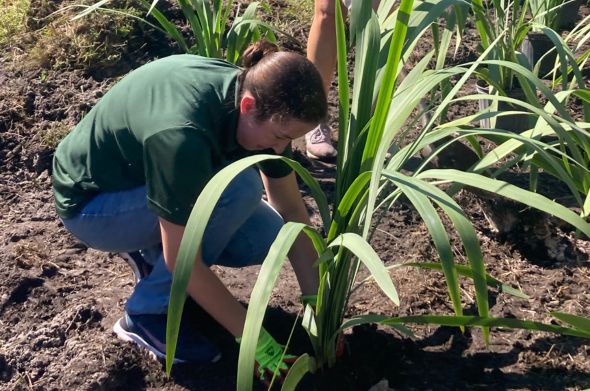
They will enhance filtration, improve groundwater recharge and water quality, and help filter pollutants originating from vehicles, roofing materials, landscaping, pet waste, and other sources. Since they require significantly less care, they’ll also be cheaper to maintain.
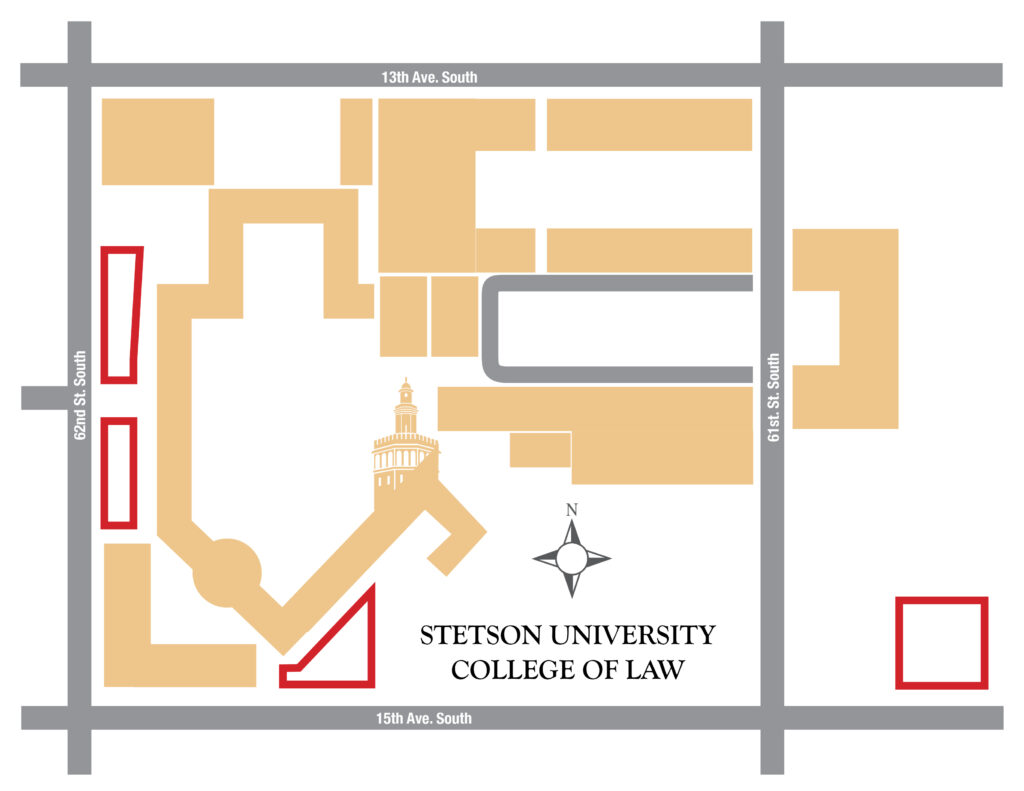
The first phase of the project is located on the south side of campus, across the street from the basketball courts and directly to the east of the walkway leading to the campus pool. Here, tufts of blue iris, muhly grass, cocoplum, and beautyberry dot the soil.
The second phase will overhaul the stormwater retention area south of the Hand Law Library. The third and fourth phases will replace turf grass on the edge of campus east of Plaza Mayor.
When the project is complete, educational signs explaining the benefits of bioswales will be placed near them and continuous monitoring of area water quality will ensue.
The project reflects the College of Law’s commitment to sustainability as well as engaging the community in meaningful dialogue on important issues.
“The campus bioswale project is just one example of how education and community advocacy can work together for a better future,” Lopez said. “In bringing this project about, Noah demonstrated an awe-inspiring amount of attention to detail, work ethic, follow-through and, perhaps most importantly, passion. We’re thrilled to have Noah as part of our team.”
A public education opportunity
Environmental advocates see the project as a way to expose students, faculty, staff, friends, and neighbors to environmentally beneficial ways of maintaining urban green spaces and inspire them to think beyond the way we’ve always done things.
“We’re excited to support Stetson’s vision to excel beyond the status quo of turf grass on their College of Law campus,” said Jessica Lewis, community projects manager with the Tampa Bay Estuary Program. “Once established, these bioswales will not only prevent nutrient pollution and water waste, they’ll also create a positive impact by restoring native urban habitat and showing students, faculty, and campus neighbors what’s possible in their own backyards.”
Peretz said he is now planting the seeds to ensure continued student involvement in administering the project after they graduate in May.
“My hope is that, as an alum, I will be able to return to campus and see the long-term fruits of this work, and that over time more of Stetson’s landscape design reflects a little more of that wild Florida beauty,” they said.
Post date: Jan. 21
Media contact: Kate Bradshaw
[email protected] | 727-430-1580