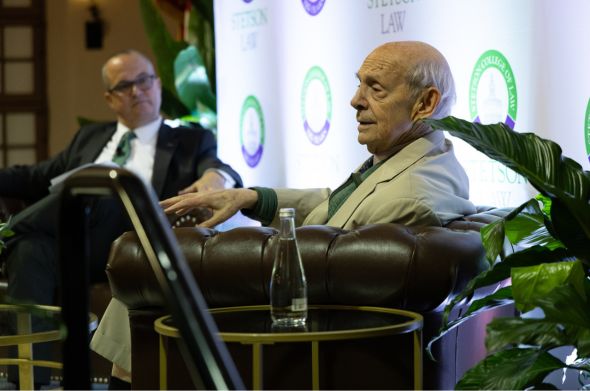
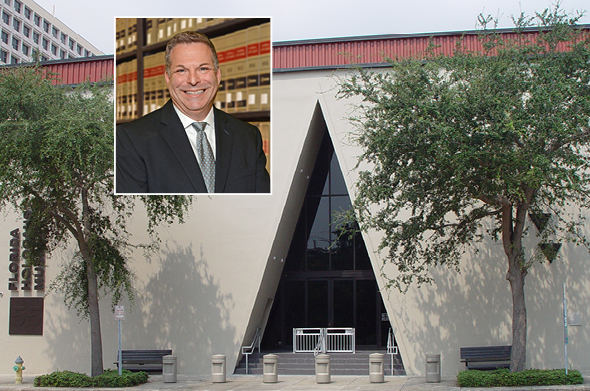
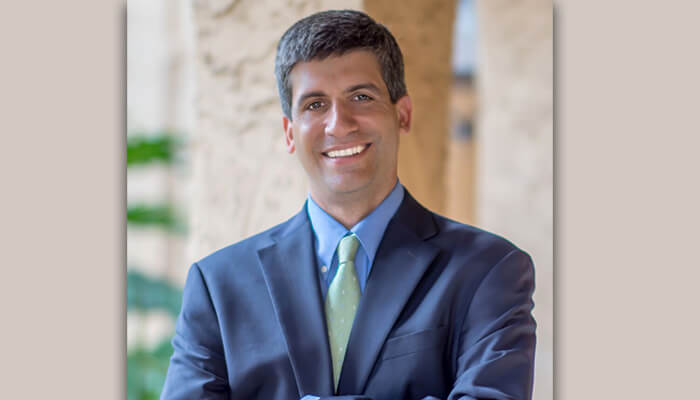
Dean D. Benjamin Barros (left) looks on as Retired U.S. Supreme Court Justice Stephen Breyer speaks at Stetson Law on February 1, 2026.
On February 1, the Stetson Law community gave a warm welcome to Retired U.S. Supreme Court Justice Stephen Breyer, who visited campus to share insights about the legal profession with College of Law students.
The Sunday evening event, which filled the Great Hall with hundreds of students, faculty and staff members, was one of several events commemorating Stetson Law’s 125th anniversary. It comprised an hour of insight, reflection, advice, and, often, humor as the retired justice conversed with Stetson Law Dean D. Benjamin Barros. The two also discussed Breyer’s recent book, Reading the Constitution: Why I Chose Pragmatism, Not Textualism.
Offering students an inside look at how the U.S. Supreme Court works day to day, the types of cases the Court hears, and how justices conduct conversations on divisive issues, Breyer stressed civility, respect, and listening to those with whom one disagrees.
“The thing that I found works the best: Listen to what the people say and where they’re coming from,” Breyer said. “Listen. And then you build on what they say.”
The Stetson Connections
Breyer was introduced by 1986 Stetson Law Alumnus David Bronstein, who met Breyer due to his friendship with Breyer’s son Michael.
Bronstein joked that he met the elder Breyer because he “was a C student.” He had meant to ask his friend how people get to the Supreme Court but worded his question in a way that made it seem like he was asking to visit – so the younger Breyer called his father and arranged one.
“Because I didn’t know how to properly ask a question, I got invited to the Supreme Court,” joked Bronstein, who is a founding partner with Bronstein & Carmon, a prominent insurance defense firm in South Florida.
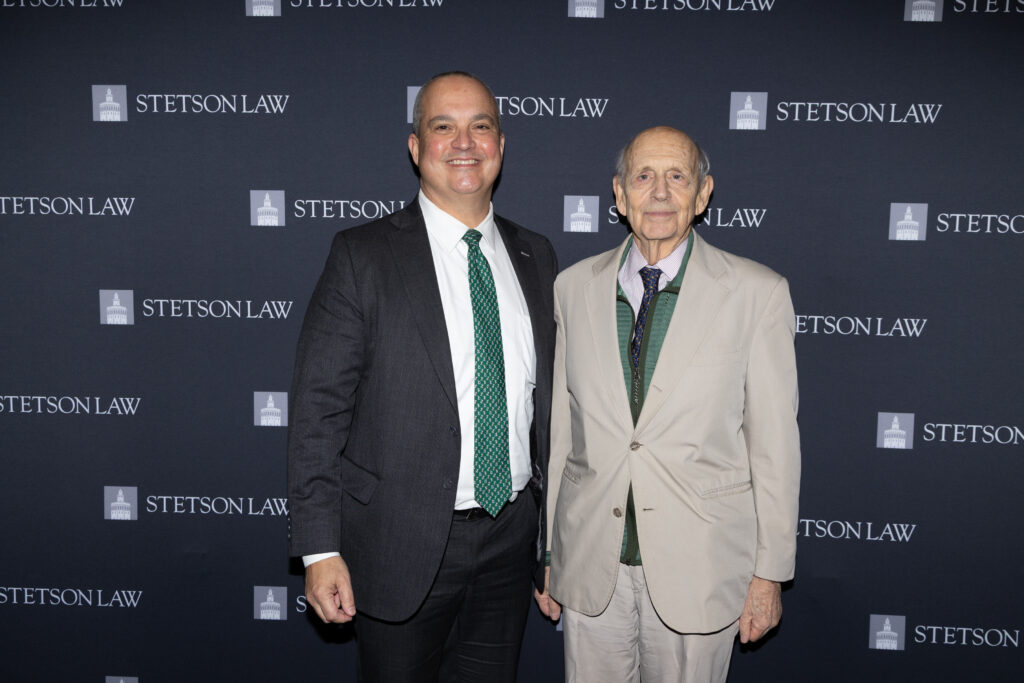
Left: Stetson Law Dean D. Benjamin Barros. Right: Retired U.S. Supreme Court Justice Stephen Breyer.
Bronstein also pointed out that former Dean Bruce Jacob, a 1959 alumnus and a transformative figure in Stetson Law history, was a special guest that evening. Jacob is known for arguing before the U.S. Supreme Court in the landmark 1963 case Gideon v. Wainwright.
“It’s such a delight for me to see him here today,” he said of Jacob, who was dean when Bronstein attended Stetson Law.
Thoughts on the Legal Profession & Civic Engagement
Breyer, who retired from the Court in 2022, is a graduate of Stanford, Oxford, and Harvard Law School. He has taught law at Harvard Law School and at the Kennedy School of Government for years. He worked as a Supreme Court law clerk for Justice Arthur Goldberg, served as a Justice Department lawyer in the Antitrust Division, was an Assistant Special Prosecutor during Watergate, and served as Chief Counsel of the Senate Judiciary Committee.
He was appointed to the U.S. Court of Appeals for the First Circuit by President Carter in 1980 and became Chief Judge a decade later. President Bill Clinton appointed him to the Supreme Court in 1994. He has authored books and articles on a broad range of legal topics.
As the conversation drew to a close, Breyer urged the students in attendance to remain active participants in democracy – and reflected on the unique and fundamental role the law and legal professionals play in promoting a just society in the U.S.
“Law is an institution that in general should help people live together peacefully,” Breyer said. “A rule of law is what we depend upon to keep those 340 million people together.”
WATCH: Full full video of Justice Breyer’s visit to Stetson Law
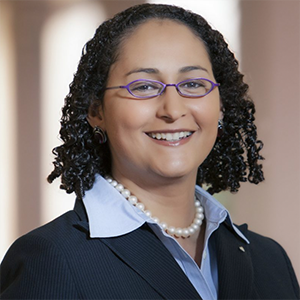
Law Professor Ciara Torres-Spelliscy was quoted in an August 3 National Public Radio story titled “Trump’s legal defense focuses on free speech – will that strategy hold up in court?” The story ran on NPR affiliates across the country.
Her insights focused on the distinction between speech and deeds in the case.
Quotes from the piece were also used in an August 8 story in The Week titled “Trump gambles on a ‘free speech’ defense strategy.”
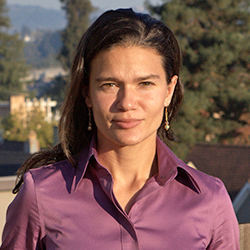
Law Professor Jaclyn Lopez was quoted in a September 4 Tampa Bay Times story titled “Florida swamp holds rare flower. But can the ghost orchid survive?”
The story explored threats to the rare flower’s habitat and how policymakers can leverage environmental protections to protect it.
Law Professor Peter Lake was quoted in a September 4 Associated Press wire story titled “West Virginia University Crisis Looms as GOP Leaders Focus on Economic Development, Jobs.”
The story, which ran in outlets nationwide, features Lake’s insights on potential areas where a university like WVU might see funding cuts if lawmakers opt for budget reductions.
Law Professor Theresa Pulley Radwan, Stetson Law’s top expert in bankruptcy law, was interviewed for an extensive question-and-answer article on LawFirm.com covering the fundamentals of bankruptcy law.
Tailored to consumers as well as business owners, the article includes Pulley Radwan’s insights about what to expect when filing for bankruptcy, alternatives to filing for bankruptcy law, and resources one can seek for additional support.
Ahead of the start of the Fall 2023 semester, six members have joined Stetson University College of Law’s dynamic faculty and visiting faculty.
Though they come from a wide range of backgrounds, all share a love of teaching and a lengthy list of professional and scholarly achievements.
From an award-winning environmental and legal writing scholar to a seasoned international business law expert, here are Stetson Law’s newest faculty members.
NEW FACULTY
Law Professor Erin Okuno
Assistant Professor of Law Erin Okuno – Legal Writing
A familiar face to many at the college of law, Professor Erin Okuno returns to her alma mater with extensive scholarship and teaching experience. The top-achieving 2013 Stetson Law graduate comes to Stetson Law from University of Miami School of Law, where she taught Legal Communication and Research Skills as well as Animal Law.
Here at Stetson Law, she will be teaching Legal Research and Writing.
The 2013 Edward D. Foreman Most Distinguished Student Award was editor-in-chief of the Stetson Law Review, a Biodiversity Fellow for the Institute for Biodiversity Law & Policy, and an advocacy skills trainer, and an adjunct and visiting professor.
Professor Okuno has worked with a small team of attorneys to prepare amici curiae briefs on behalf of scientists and scientific organizations in cases related to the Clean Water Act and its administrative regulations. In 2020, Justice Breyer cited the team’s amici curiae brief in his majority opinion in the U.S. Supreme Court case County of Maui v. Hawaii Wildlife Fund.
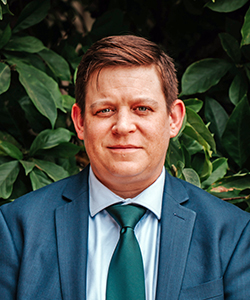
Assistant Professor of Law Anthony Palermo – Commercial Law
Professor Anthony Palermo comes to Stetson Law from prominent Tampa firm Holland & Knight LLP, where he litigated in state and federal courts, including at the trial and appellate level, and advised on regulatory and corporate compliance for clients in the financial sector and other industries. While in this role, Palermo was appointed to the role of Special Assistant Attorney General for the State of Michigan, where he helped the state’s Housing Development Authority ensure the agency was complying with consumer protection and lending laws.
Professor Palermo has written on and presented on dozens of legal topics, won multiple awards, and taken part in numerous professional and community activities in the Tampa Bay area and beyond.
A 2012 graduate of Harvard Law, Professor Palermo earned his B.A. in political science with highest distinction, with a minor in philosophy, from the University of North Carolina at Chapel Hill.
Assistant Professor of Law Em Wright – Legal Research and Writing
Joining Stetson Law from the University of Oregon School of Law, Professor Em Wright, is known as an effective national leader in legal research and writing. They graduated magna cum laude from Mercer University School of Law in Macon, GA. After graduating, they remained on campus as an adjunct professor to teach upper-level students enrolled in the school’s advanced legal writing certificate program as well as bar exam prep.
As a practitioner, Professor Wright has years of professional experience, including as an attorney representing plaintiffs on personal injury matters for Macon-based Adams Law firm. They also served as a pro se law clerk for the United States District Court, Middle District of Georgia. In this role, they led the screening of pro se civil rights and habeas actions filed by Georgia prisoners.
The sole founding member of Wright Source, LLC, Professor Wright tutored law school graduates preparing for the Multistate Bar Exam as well as the Georgia Bar Exam.
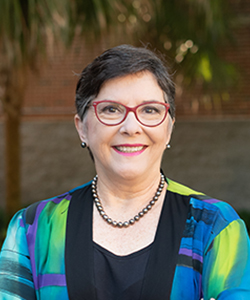
Distinguished Visiting Professor of Law Mary Adkins
Distinguished Visiting Professor of Law Mary Adkins – Legal Research & Writing
Distinguished Visiting Professor Mary Adkins is an expert in the history and evolution of Florida’s constitution at the University of Florida Levin College of Law, where she is a highly respected scholar and educator in the areas of legal writing and Florida constitutional law. She is also a member of the executive boards of the Florida Supreme Court Historical Society and the Florida Historical Society.
Her notable achievements include serving as 2020 Chair of the American Association of Law Schools’ (AALS) Section on Legal Writing, Reasoning, and Research, receiving the Board of Directors of the Association of Legal Writing Directors’ Outstanding Service Award, and publishing two books on the history of Florida’s constitution: Making Modern Florida: How the Spirit of Reform Shaped a New Constitution (2016) and Chesterfield Smith, America’s Lawyer (2020).
She co-authored the casebook Florida Constitutional Law: Cases in Context, served as an expert witness in cases involving the Florida Constitution, and conducted oral histories of numerous important historical, political, and legal figures.
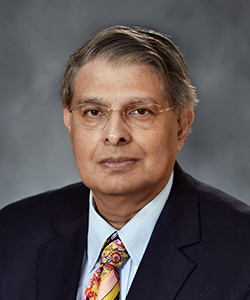
Visiting Professorof Law Jagdeep S. Bhandari – International Business Law
With a deep background in both scholarship and practice, Visiting Professor Jagdeep S. Bhandari joins Stetson Law from Wake Forest University where he was most recently a Professor of Law as well as a Research Professor of Economics. He will teach International Trade Law, Criminal Procedure, International Business Transactions and International and National Security Law.
He earned his J.D. from Duquesne University, an LL.M. in International Law from Georgetown University, a Ph.D. in Economics from Southern Methodist University, and a Master’s degree in Economics from the University of Rochester.
Professor Bhandari has taught law as well as business at numerous universities authored six books and been published in over 75 in peer-reviewed journals worldwide over more than three decades.
A certified mediator for Duval County, Florida, he has conducted pro bono work with organizations like Lutheran Social Services and Legal Aid.
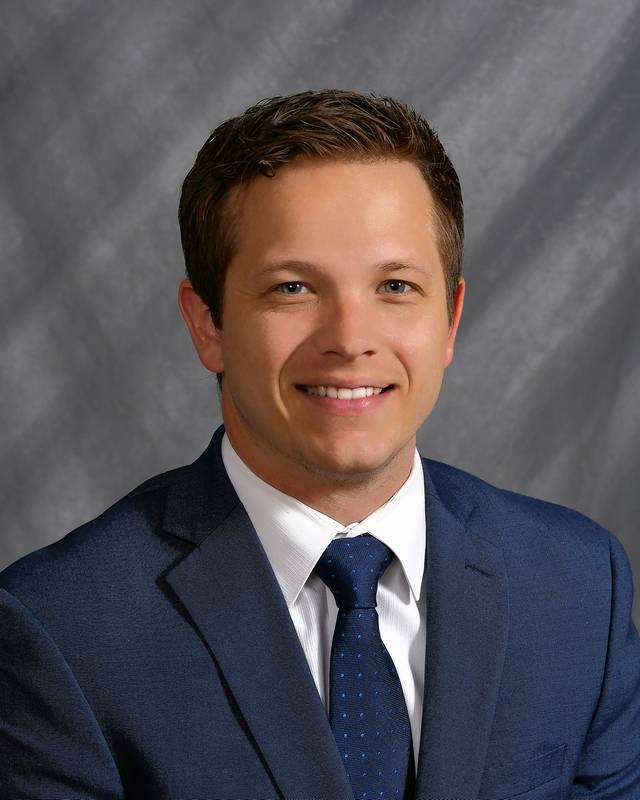
Visiting Professor of Law Mason Clark – Privacy Law
Visiting Assistant Professor Mason Clark has an extensive background in privacy and security law.
As a Global Deputy Privacy Officer for EVERSANA Life Sciences Services, LLC, an industry-leading company in Milwaukee, Professor Clark developed and implemented a global privacy program and led other initiatives related to privacy.
Professor Clark was an associate attorney at Chicago-based Baker & McKenzie LLP, Professor Clark, where he aided international corporations responding to possible data breaches, helped multinational corporations comply with privacy policies, and developed privacy and cybersecurity compliance programs. As an associate attorney with Ice Miller LLP in Indianapolis, Professor Clark specialized in litigation as well as data security and privacy.
As founder and chair of the Indiana State Bar Association’s Data Security & Privacy Section, he developed CLE curriculum and presentations for attorneys and other professionals.
Stetson Law Professor Jason Palmer spoke at The Florida Holocaust Museum as part of the museum’s Lawyers of Conscience series.
Before a packed room at The Florida Holocaust Museum, Stetson Law Professor Jason Palmer gave a compelling talk on the process of helping families of Holocaust victims reclaim assets from Swiss banks.
Palmer, who teaches international litigation and arbitration, legal writing, civil procedure, and law and sexuality – among other courses – wove together strands of history, collaboration, and heart-wrenching stories of families seeking justice in the wake of unprecedented atrocity as part of the museum’s Lawyers of Conscience lecture series.
“Not only did I spend five years of my life in Zurich, Switzerland, working on these matters and working on international mass claims processes, but I also have a personal connection, with a family member who was a Holocaust survivor and very close friends whose parents were Holocaust survivors,” Palmer said. “So the work that the museum does is very important and the topic is personal.”
An international collaboration
As a claims judge for the Claims Resolution Tribunal (CRT) for Dormant Accounts in Switzerland, Palmer adjudicated claims for dormant Swiss bank accounts of victims of Nazi persecution. The process was the result of legal challenges to Swiss banks that had accumulated great wealth in part from assets deposited there by individuals who later became victims of the Holocaust or were separated from their wealth when the Iron Curtain was established.
Relatives of Holocaust victims were asked to submit claims if they believed a loved one had deposited assets in a Swiss bank prior to the war. If they could prove their relation to the person who established a now-dormant account, tribunal officials awarded them with an amount of money comparable to the original deposit, with appropriate interest and fees added as of the date of the award.
Thousands of people from around the world had legitimate claims – all of which were investigated by a team of about 100 young legal professionals – lawyers, paralegals, translators – committed to doling out justice.
“Over the course of both CRTs, over $720 million was distributed to victims of the Holocaust,” Palmer said. “It was really an amazing enterprise made up of people basically in their late twenties to late thirties.”
A challenging legal landscape
Determining whether a claim should be paid required claimants to provide documentation to justify their claims – but since adjudicators could not rely on documents like death certificates (given there often wasn’t one), they had to get creative.
In one case, a claimant whose grandparents had made a deposit had only one way to demonstrate the validity of her claim: describing the place her grandparents lived, from her memories of visiting them as a little girl. The adjudicators used old maps to determine that her description of the town – the church down the street, a nearby playground – matched the layout of the town listed in the address used to open the account.
There were also challenges with multiple account holders sharing a name, and with determining which nation’s laws applied at a time when shifting borders kept an account holder’s citizenship in flux.
In some cases, the process helped reunite families whose connections had been lost to the war.
When an account was awarded that was determined to be owned by a victim of Nazi persecution, a computer model subsequently helped Palmer and his team to determine an equitable adjustment to the account amount which was also awarded to the claimant. While they couldn’t guarantee the claimants were being given the exact amount that was deposited, the CRT did its best. “It wasn’t perfect justice,” Palmer said. “It wasn’t the exact amount, but it was to right a historical wrong.”
An enduring Stetson Law connection
The event was not just the first edition of Lawyers of Conscience since before the start of the COVID-19 pandemic; it also marks the tenth anniversary of the series. Museum board member Rachael Worthington noted that the inaugural speaker of the series in 2013 was former Stetson Law Dean Bruce Jacob.
Jacob, who spent 13 years as Stetson Law dean (1981-1994), focused on the Nuremberg medical trials, which prosecuted Nazi doctors who carried out cruel experiments on Holocaust victims.
Palmer’s evening lecture was open to the general public, but the professor also led a CLE seminar on the same topic for legal professionals earlier in the day.
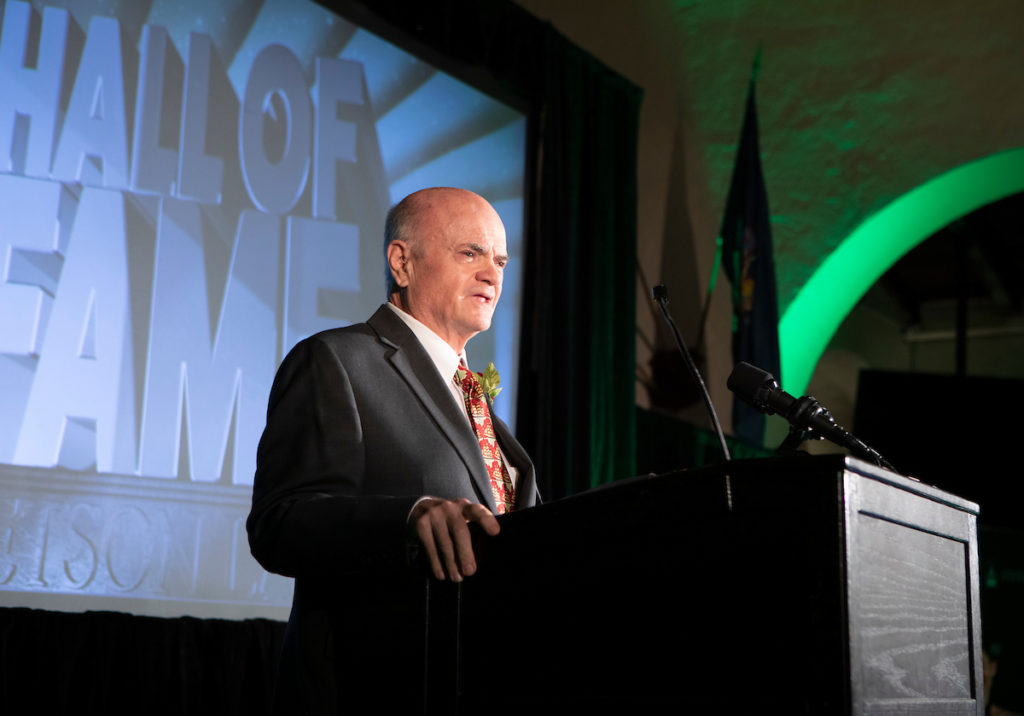
Stetson Law Professor Emeritus John Cooper gives remarks at Stetson Law’s 2022 Hall of Fame celebration
A beloved faculty member who radiates passion for learning and travel, Professor Emeritus John Cooper joined the Stetson University College of Law Hall of Fame on December 3, 2022.
Through his enterprising spirit and deep love of legal scholarship inspired countless others to expand their horizons through study and travel. His legacy includes establishing lasting connections here and around the globe. His journey began in Yokohama, Japan, where he was born on October 3, 1950. Cooper’s father was a career Army officer stationed in Japan after World War II. The family, consisting of Cooper, his father, his mother, and his older sister Charlotte, went on to live in places like Orleans, France; Heidelberg, Germany and Hawaii.
A lifelong love of travel
After graduating from the University of Oklahoma School of Law as a member of the academic Order of the Coif, he entered private practice and also served as an Assistant Attorney General for Oklahoma. Around this time, he visited the Soviet Union with a group of American legal professionals. The experience brought back memories of living abroad and made Cooper ask himself what he wanted to do with the rest of his life.
Teaching law became his goal. He interviewed with several law schools and ultimately accepted an offer to teach at Stetson. Cooper started in the fall of 1985.
Close friend and fellow Stetson tax law Professor Richard Gershon entertained during their daily noontime run. Their route started as a 5k, then they worked up to a 10k, talking and joking the whole time. It wasn’t long before Cooper was running marathons.
“When John started something, he was going to work at it – pretty intensely sometimes,” Gershon said of his friend.
Establishing global ties
He administered the Stetson LL.M program in international law and negotiated dual degree programs with law schools in Toulouse, France and Granada, Spain. He also administered a semester abroad program in London that offered practical internships in the British legal community. He established and administered study abroad programs in Estonia, the Netherlands, Switzerland, Germany, Spain, Argentina, China, and the Cayman Islands.
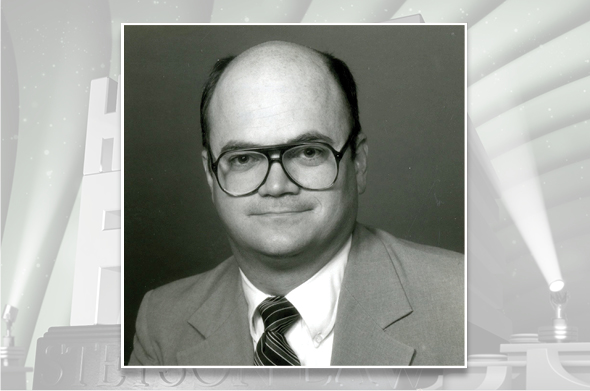
Law Professor Emeritus John Cooper
Cooper hoped that students would see studying abroad not as an opportunity for foreign travel, but as a potentially life-changing opportunity to gain new perspective on the law and life itself.
Retired, but not slowing down
Cooper earned the title of professor emeritus upon retiring. He and his wife, who retired in March of 2022, bought a cabin in the North Carolina mountains, and they split their time between there and St. Petersburg. Of course, Cooper has kept busy in retirement.
He studied gardening; qualified as a Master Gardener; raised compost worms, and grew shiitake mushrooms.
Cooper’s love for learning abroad endures. He is completing a manuscript on Vietnam POWs that he has researched and written over several years. He spent a year in Buenos Aires, Argentina to improve his Spanish language skills. While there, he traveled the country – from the tropical Iguazu waterfalls in the north to Patagonia in the south, where he, his wife, and his daughter explored the dramatic glaciers near El Calafate.
To learn more about Professor Emeritus John Cooper, see the video above.
Learn more about the other 2022 Stetson Law Hall of Fame inductees: Professor Emerita Dorothea Beane, Judge Pamela Campbell, and Board of Overseers Chair Greg Coleman.
In a July 2 article in The Guardian titled “Fox and Friends confront billion-dollar US lawsuits over election fraud claims,” Stetson Law Professor Ciara Torres-Spelliscy was quoted on the likelihood that Dominion has a valid defamation case against media outlets accusing the electronic voting systems manufacturer of voter fraud.
Versions of the story also ran in Yahoo! News and other outlets.
The article quoted Stetson Law Professor Louis Virelli III, who commented on whether Supreme Court justices’ praying with a group that filed an amicus brief is problematic.
The Christian Science Monitor quoted Law Professor Luz Nagle in a March 4, 2022 story titled “A door of hope has opened’: A fresh start for justice in Honduras?”
Stetson Law Professor Luz Nagle
An excerpt:
“Extradition to the U.S. from Latin America was long justified by weak justice systems that couldn’t handle trials of high-profile politicians or kingpins, says Luz Estella Nagle, a law professor focused on transborder crime at Stetson University in Florida. Although there has been significant U.S. government investment in the region’s justice systems, corruption is still its Achilles’ heel.
In 2016 and 2017 alone, the U.S. sent more than $104.56 million to Honduras in aid earmarked for justice-system and police reform, according to the latest available data from the Central America Monitor by the Washington Office on Latin America.
“Some feel that [legal] aid has been wasted. Because if we’ve invested so much money and time, … why has so little changed?” says Ms. Nagle.”
Ten years after the death of Trayvon Martin, Law Professor Judith Scully talked with National Public Radio affiliate WMFE Orlando for a story titled “A decade after Trayvon Martin’s killing, Florida’s Stand Your Ground still faces scrutiny.” Scully is an expert in social justice-related law and policy.
Story Excerpt:
Florida became the first state to adopt Stand Your Ground, with support from the NRA. “It is a type of statute that describes the rights of an individual to defend themselves when they feel threatened,” says Stetson University College of Law professor Judith Scully. Since becoming law in 2005, more than half of U.S. states have a Stand Your Ground law.
Unlike previous self-defense laws, Stand Your Ground removes the legal duty to try to escape the situation. “If you have a reasonable belief that you are being threatened, you can use deadly force, and you do not need to retreat,” says Scully. “It makes it much easier for individuals to actually claim that the killing that they participated in was a justifiable killing.