Stetson Brings Legal Lens to Everglades Conference
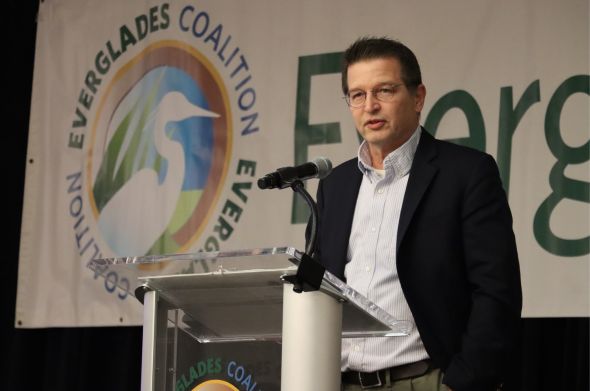
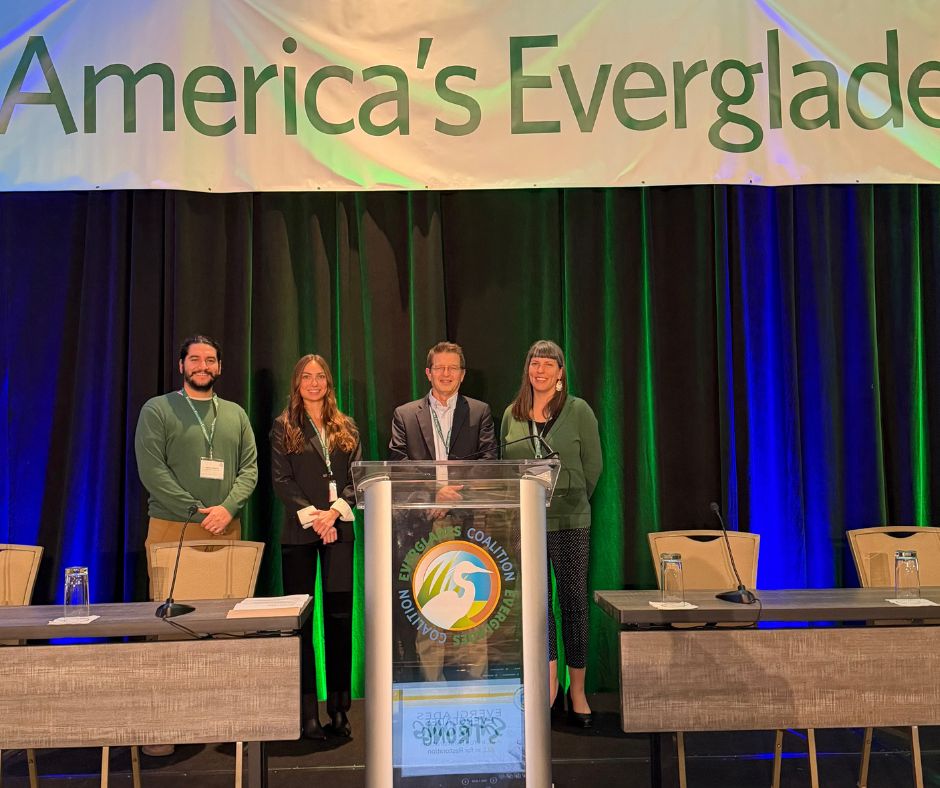
Members of the Stetson Law faculty shared key legal insights – and a message of hope – on protecting the vast, beloved landscapes that constitute the Florida Everglades at the 41st Annual 2026 Everglades Coalition Conference in Naples, Florida.
The event is the largest gathering of environmental advocates, government officials, students, educators, and others that focuses on the future of Everglades restoration efforts. This year’s theme was “Everglades Strong: All in for Restoration.” At the heart of many conversations were state and federal cuts to regulations and funding, a recent U.S. Supreme Court decision redefining protected waterways, and other emerging factors that threaten biodiversity in the Everglades, including the construction and operation of “Alligator Alcatraz,” a migrant detention facility.
In his keynote address to attendees, Stetson Law Professor and Institute for Biodiversity Law and Policy Director Royal Gardner offered a perspective on a key moment for environmental advocates – and how it can illuminate a way forward in uncertain times.
“One of the lessons of history that gives us hope is that coalitions working together using a science-based approach communicated in language the public understands can be successful,” Gardner said.
In his recent book, Waters of the United States: POTUS, SCOTUS, WOTUS, and the Politics of a National Resource, Gardner chronicles the history of wetlands policy in the U.S.
Blocking the world’s largest jetport
When the proposed “Everglades Jetport” – which supposedly would have been the world’s largest – threatened to destroy a portion of the Everglades in the 1960s, public outcry led to the nation’s first Environmental Impact Statement, Congress passing the National Environmental Policy Act, or NEPA, and ultimately the project’s halting.
“The coalition was successful,” Gardner said. “It stopped the jetport and it led to the establishment of Big Cypress National Preserve.”
That landmark legislation went on to influence dozens of other nations’ environmental policies, he added.
“It’s appropriate that the Everglades serve as a model for the international community because the Everglades is internationally important in its own right,” Gardner said.
Not only is the vast, iconic wetland an international destination, but it is also designated under the Ramsar Convention and other international environmental regimes.
Facing the challenges ahead
Recent political shifts have led to uncertainty among environmental advocates on the future of wetlands protections. Among the most concerning to many is the U.S. Supreme Court decision in Sacket v. Environmental Protection Agency, the landmark case that recently led to a much narrower definition of wetlands subject to protection.
That same jetport parcel is in the spotlight again as the site of Alligator Alcatraz.
“Once more our nation’s commitment to conservation is being tested and at the exact same site, no less,” said Stetson Law Professor and Jacobs Public Interest Law Clinic for Democracy and the Environment Jaclyn Lopez, who spoke on the migrant detention center and represents amici-conservation groups in a lawsuit over Alligator Alcatraz.
Lopez moderated a panel of representatives from numerous groups who oppose the facility on environmental and cultural grounds, including indigenous tribes and environmental organizations.
“It is our hope with this panel we can learn from history and benefit from the struggles of those who came before us to do better, sooner,” Lopez said.
In his keynote address, Gardner encouraged his audience not to lose hope as policymakers threaten detrimental rollbacks of environmental protections, but to use the existing political system to challenge them.
“They’re people,” he said. “They’re people who run for office or put themselves up to be appointed to public office. So, what I want you to consider is running for office or encouraging good people to run for office. We need good people running the government.”
Post date: Feb. 17
Media contact: Kate Bradshaw
[email protected] | 727-430-1580