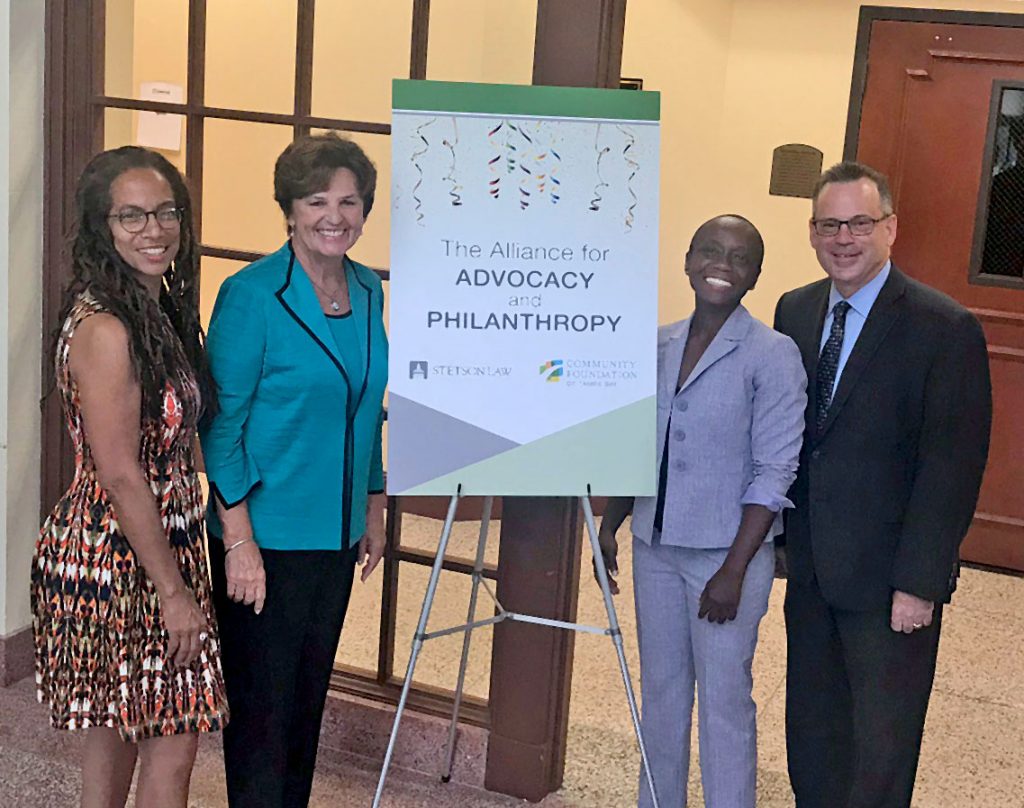
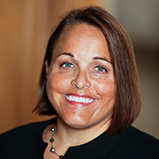
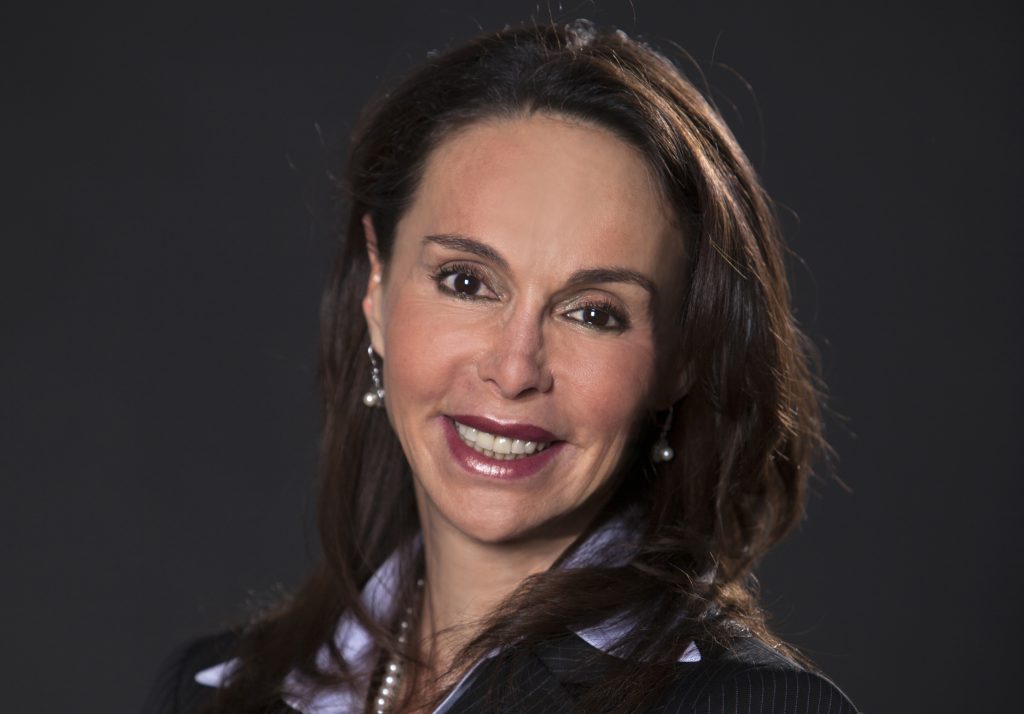
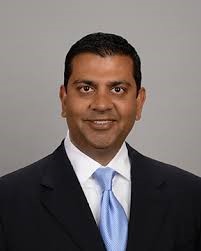
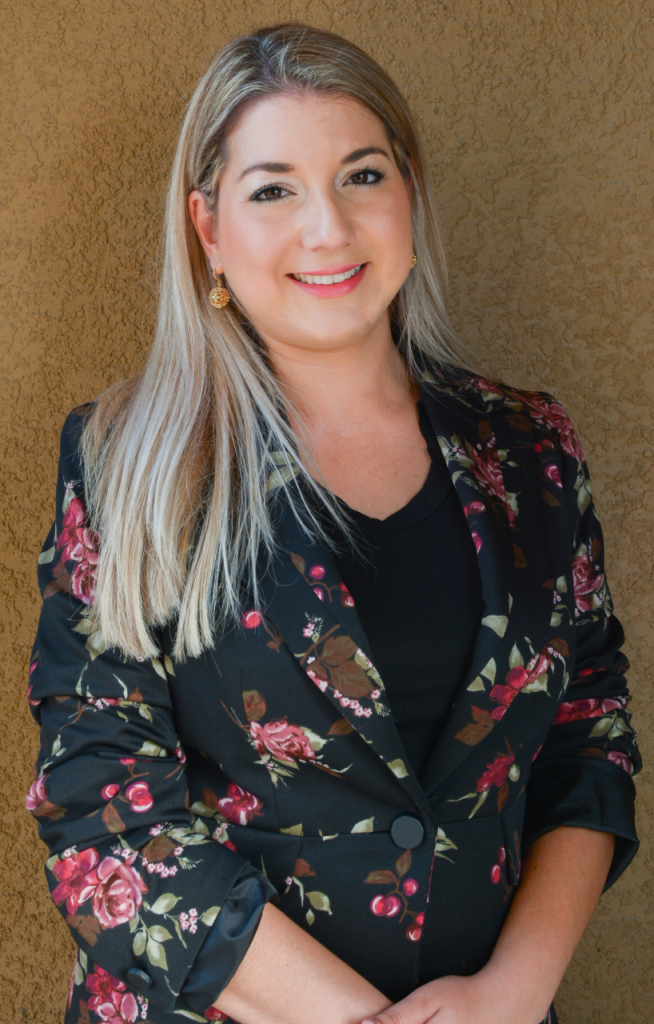
From left: Professor Judith Scully, Stetson University College of Law; Marlene Spalten, Community Foundation of Tampa Bay President and CEO; Michèle Alexandre, Dean, Stetson University College of Law; and Jesse Coraggio, VP, Community Foundation of Tampa Bay.
The
Community Foundation of Tampa Bay and Stetson University College of Law have
formed a new partnership to benefit the Tampa Bay area. The two organizations
have created the Alliance for Advocacy and Philanthropy, which will align the
power of advocacy with the heart of philanthropy. This new alliance reflects both
organizations’ longstanding commitment to addressing important issues for an
even more vibrant community.
The
Alliance for Advocacy and Philanthropy is a collaborative partnership, which
makes a strong case for creating positive change through the lens of activism
and the spirit of giving. The Alliance is a unique initiative to engage
the community and spark deep discussion through:
Connection, by
building partnerships and leveraging
resources to enhance the common good;
Education, by
developing self-advocacy and institutional capacity through access to
experts and educational opportunities; and
Collaboration,
by providing pathways for members of the community as well as students to
become actively involved.
“This
partnership is an incredible opportunity for our students and our community,”
said Michèle Alexandre, dean of Stetson University College of Law. “Working
together, we can empower the next generation of nonprofit and Tampa Bay leaders
to become effective
community advocates,
which will have a positive impact on our region.”
Fellowships and office space part of the deal
As part of the collaboration, the Community Foundation of Tampa Bay will offer two paid fellowships each semester for students attending Stetson University College of Law. The two fellowships will begin in spring 2020, and students will gain an in-depth understanding of community philanthropy and have hands-on experience in working with nonprofit organizations.
In
addition, Stetson University College of Law is providing office space at its
Gulfport campus for the Community Foundation of Tampa Bay. Stetson also will provide
meeting and conference space to the Community Foundation of Tampa Bay at its Gulfport
and downtown Tampa campuses.
The
general public, local nonprofits, and corporations will have opportunities to
take part in conversations sparked by the Alliance for Advocacy and
Philanthropy during events held at Stetson University College of Law.
Marlene
Spalten, president and CEO of the Community Foundation of Tampa Bay, said, “We look
forward to working with Florida’s first law school to create opportunities for our
region, to discuss communitywide challenges and possible solutions, and to promote
the economic health and vitality of Tampa Bay through an innovative program.”
“We look forward to working with Florida’s first law school to create opportunities for our region, to discuss community wide challenges and possible solutions, and to promote the economic health and vitality of Tampa Bay through an innovative program.”
Marlene Spalten, president and CEO of CFTB
About the organizations
The Alliance for
Advocacy and Philanthropy formalizes the organizations’ shared belief in
aligning resources and investing in advocacy, thought leadership, and programs
to solve community challenges. The partnership will include pro bono program opportunities
for students to support Tampa Bay area not-for-profits. Faculty and students at Stetson University
College of Law provide more than 30,000 hours of pro bono legal and advocacy
services through various institutes, programs and centers, including the Veterans
Law Institute, Center for Excellence in Advocacy,
the Social Justice Advocacy Program the Center for Excellence in Elder Law,
etc.
The Community Foundation
of Tampa Bay awards about $20 million each year to nonprofit organizations.
Since its inception nearly 30 years ago, the Community Foundation has granted
more than $230 million.
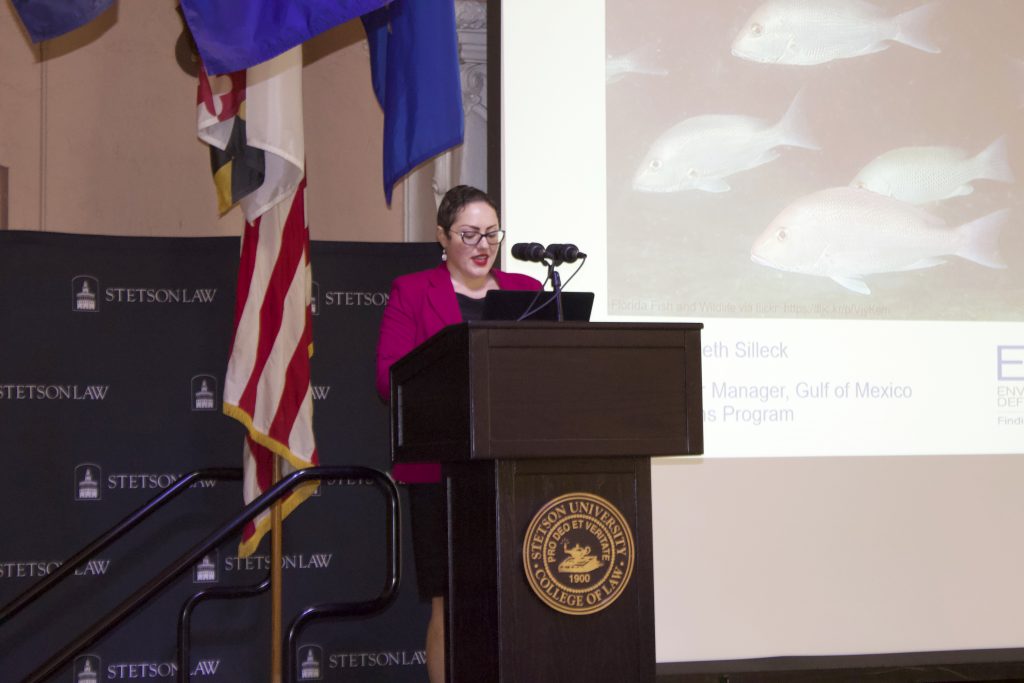
Elizabeth Silleck, a senior conservation manager at the
Environmental Defense Fund, discussed rights-based management of fisheries as
part of the Foreman
Biodiversity Lecture series at Stetson University College of Law.
Silleck works with the Gulf of Mexico Oceans Program, the goal of which is to bring fishermen, chefs and communities together to rebuild the fisheries in the Gulf. According to the EDF website, the Gulf of Mexico “supplies more than 40 percent of our domestic seafood and provides billions of dollars a year in wages for the fishing and tourism industries across five states.”
Gulf fisheries have struggled with an overfishing crisis, but
significant gains have been made to limit overfishing, turn the fishery around,
and provide increased access to local and national communities.
Elizabeth Silleck, a senior conservation manager at the Environmental Defense Fund, discussed rights-based management of fisheries as part of the Foreman Biodiversity Lecture series at Stetson University College of Law.
The Magnuson-Stevens Act
The concept of sustainable fishing practices began with The Magnuson–Stevens Fishery Conservation and Management Act (commonly referred to as the Magnuson–Stevens Act) of 1976. Created to prevent foreign fishing fleets from depleting resources off the coast of the United States, the Act also established the regional fishery management structure that currently exists today.
In each coastal area, there are regional councils comprised of representatives from the state, including a representative from each state’s natural resources department. In Florida, the Fish and Wildlife Conservation Commission is represented on both the Gulf council and the South Atlantic council. Customarily, each state has representation from a person affiliated with the commercial fishing sector, and a person affiliated with the recreational fishing sector. According to Silleck, this selection is intended to achieve a balance between not only commercial and recreational interests, but also the interests of the states.
The Magnuson-Stevens Act also required fishery management plans and established the concept of maximum sustainable yield—in other words, how much fishing can occur without jeopardizing the ability of the stock to replenish itself.
Despite this early action and structure, the original Act
did not really work to prevent overfishing, Silleck said. It was amended in
1996 and took into account social and economic factors that could affect the
maximum sustainable yield. This legislation also introduced requirements to
rebuild populations that had been subject to overfishing.
The Act was amended for a third time in 2007, and according to Silleck, this time there were finally teeth in the law. The new iteration of the law required that science-based annual catch limits be established, along with accountability measures for fishery management plans and consequences for breaking the law. For example, a commonly used accountability measure for exceeding the annual catch limit is referred to as a “payback,” in which the next year’s catch limit is reduced by the amount the limit was exceeded. Catch limits are approved by scientists associated with each regional council who understand their regional species and habitats.
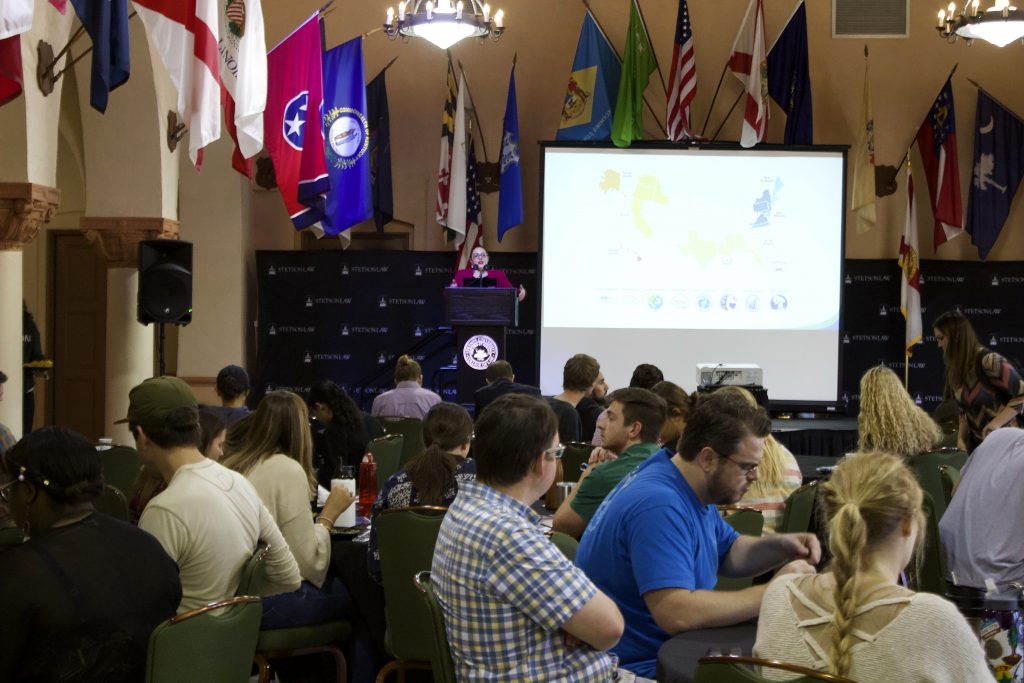
The Great Hall at Stetson University College of Law was packed for the Foreman Biodiversity Lecture series.
Rights-based management
Secure fishing rights – or rights-based management – is used
to combat overfishing by aligning economic incentives with sustainability
measures, Silleck explained. Under this kind of program, a fishing area or
proportion of a catch is allocated to individuals or groups of fishermen.
“The idea
is that over time, because people know that they have a secure interest in the
fishery, they are going to be more responsible stewards of that portion that
they have– because as it grows, they are going to have more fish,” she said.
The benefits of secure fishing rights are ecological, economic, and social, Silleck said. These programs utilize scientific catch limits and reduce the amount of discards in the ocean because they eliminate the race to fish as much as possible. The values of fisheries also increase as do the prices that fishermen can get for their catches.
“We’ve seen
here in the Gulf higher prices for the catch that are associated with the fact
that it comes from a sustainably managed fishery [and] the fact that you don’t
have everybody flooding the market with the same type of fish.”
The potential
challenges of rights-based management programs include equity in allocation,
she said.
About the Foreman Biodiversity Lecture Series
Stetson Law’s Institute for Biodiversity Law and Policy serves as an interdisciplinary focal point for education, research and service activities related to global, regional and local biodiversity issues. The Foreman Biodiversity Lecture Series brings to campus numerous experts in environmental law and environmental science. You can view Silleck’s complete lecture on the Stetson Law YouTube channel.
The 2018-2019 results are in, and once again Stetson University College of Law ranks No. 1 nationally in trial competition performance. This most recent recognition comes in addition to the more than 20 years Stetson has been recognized as No. 1 in trial advocacy according to the U.S. News & World Report.
The Trial Competition Performance Ranking (TCPR) from Fordham University School of Law is a points-based system that objectively ranks student trial teams in interscholastic law school trial competitions. It measures success at national and regional competition levels.
All TCPR points are allocated based on the competition result data compiled by Faulkner Law School at http://www.trialteamcentral.org/, and Fordham University School of Law used the data to create a three-year analysis of the top 25 performing law schools. The TCPR tracks points for the current academic year, as well as provides a historical ranking based on the accumulation of points beginning with 2016.
For the current academic year, Stetson ranks No. 1 with 21 points,
followed by Loyola University School of Law with 17 points and UCLA with 15
points. For the 2016-2019 period, Stetson tops the chart with 43 points, outpacing
its closest competition by 14 points. Drexel University Thomas R. Kline School
of Law comes in second for the period with 29 points, followed by Fordham
University School of Law with 26 points.
“While we appreciate this recognition and the achievements of our
students, our core mission will always be about the invaluable training our
students receive,” said Julia Metts, Director of Trial Programs and Professor of Practice at Stetson. “The
trophies are nice, the wins are encouraging, but the difference we make in the
lives of others will forever be our purpose!”
This national ranking comes on the heels of Stetson’s victory at
the Chester
Bedell Mock Trial Competition earlier this year. It marked the 23rd
time in 37 years a Stetson team claimed the prize. A second Stetson team made it to the
semi-final round.
Stetson’s program in trial advocacy is nationally ranked No. 1 by U.S.
News & World Report (2020). To learn more about the advocacy program,
visit stetson.edu/law/advocacy.
Volunteers from AARP Tampa Bay helped local seniors sign up for the Do Not Call Registry and other services to help block junk mail during the Consumer Protection Fair at Stetson.
“There is no rule book to retiring or getting old,” said Marilyn Izor, a retired nurse from St. Petersburg.
The 70-year-old attended a Consumer Protection Fair on Sept. 11, 2019, at Stetson University College of Law. The school hosted the event in partnership with AARP Tampa Bay as part of AARP’s National Day of Service.
Izor said she
left the event armed with plenty of notes and great information to help her on the
“journey of getting old.”
Attendees had
the opportunity to shred sensitive documents and consult expert speakers on
consumer protection issues, as well as probate, power of attorney and other
important topics. AARP employees helped
them sign up for the National Do Not Call Registry and various ways to opt out
of junk mail. Stetson law students assisted with legal technology training,
including how to spot dangerous email attachments and suspicious web links.
“You can be
really smart and still get caught, so you need to stay informed of the latest
tricks,” said Jeff Johnson, state director for AARP.
The
organization hosts multiple service events all around the state, each with a
different theme. In the Panhandle, for example, they worked on Hurricane
Michael relief. In Gulfport, the partnership with Stetson made perfect sense,
given the school’s well-known Center for Excellence in Elder Law and strong
advocacy programs.
Stetson Professor Rebecca C. Morgan introduces St. Petersburg Police Detective Brian Kronz during the Consumer Protection Fair on Sept. 11, 2019, at Stetson University College of Law.
Stay informed
Detective
Brian Kronz with the St. Petersburg Police Department was one of the event
speakers. A sobering fact from his law enforcement experience: 90 percent of
the time when seniors are a victim of theft, it was perpetrated by someone in a
position of trust. Home health aides and unscrupulous family members are common
culprits.
“Identity
theft happens every two seconds,” he said, adding that Florida has the largest
number of identity theft victims in the nation.
Identity theft is just one of many common crimes committed against the elderly. You can read more about the most popular scams and how to avoid them on the AARP website, but key red flags for exploitation include: unusual bank account activity; missing checks, credit cards, valuables or important documents; an unusual change in beneficiaries; or a new “best friend” suddenly appearing, Kronz said.
Seniors can protect themselves by selecting someone with integrity to act as their power of attorney, always speaking with a trusted advisor before making any kind of financial decision, shredding personal documents and mail, regularly checking their credit report via AnnualCreditReport.com, scrutinizing all financial statements, and securing valuable possessions. Kronz also encouraged all seniors to feel free to call their local law enforcement agency if they ever feel unsure about a situation, person or otherwise threatened.
Stop running from aging and make a plan
Stetson
alumna Stephanie Edwards, of Edwards Elder Law in St. Petersburg, discussed
types of long-term care, from home health to assisted living to skilled nursing
facilities, and how to pay for it. Too many people refuse to think about the
possibility of needing care and fail to plan.
“Fate likes
chaos, and fate likes crisis,” she said.
Consider
these numbers:
Companion care for a few hours during
the day can range $18 per hour and up;
Assisted living facilities can cost $2,500
to $4,000 per month;
Memory care facilities (when the need
for physical care is limited but because of dementia or Alzheimer’s, more
supervision is needed) can run $3,500 to $5,500 per month; and
Skilled nursing homes can range from
$8,000 to $12,000 per month.
Seniors
without a plan for long-term care could find themselves facing out-of-pocket
expenses that their retirement nest egg doesn’t stretch far enough to cover. Payment
options include:
Ensuring have you have enough cash savings set aside;
Buying long-term care insurance (though fewer companies are offering it these days, and it can be expensive); or
Utilizing Medicare or Medicaid when the time comes.
Many people
find they fall between making too much for qualify for Medicaid, but they don’t
have enough in savings to pay for private care, Edwards said. The VA and other
government programs have strict rules regarding how to protect your financial
assets while still qualifying for services. An experienced attorney can help
you navigate these programs and plan for the future.
The Consumer Protection Fair at Stetson University College of Law drew about 50 seniors from the Tampa Bay community, as well as representatives from Pinellas County Government, Bay Area Legal Services, and the Attorney General’s Office.
Get comfortable with uncomfortable conversations
Stetson alumnus
Will Lucius, director of Special Needs Trust at Raymond James, agreed that most
people are more concerned about what happens to their assets after death and
fail to plan for care they may need while still alive. That includes not only
funds, but a legal plan that identifies someone to make financial and health
care decisions for you should you become unable to do so.
Power of
Attorney for finances generally grants authority to an agent to act on your
behalf for financial decisions. It is important to select someone trustworthy
and ethical, not just default to your oldest child, for example, especially if
he or she has a history of bad financial decisions.
“Financial
Power of Attorney is a very good tool to have,” Lucius said, adding an
important caveat: “It really can be a license to steal if it’s in the wrong
hands.”
People who
don’t have a valid durable power of attorney and become unable to make their
financial health care decisions could find a court-appointed guardian or
conservator charged with making their financial and health care decisions. Other
options include trusts and joint ownership. An attorney who specializes in
estate planning can help you identify and plan for your future needs. The worst
alternative is having no plan at all, he said.
Be wary of
premade online forms granting Power of Attorney or other legal rights, as they
may not be right for your particular needs and need to be signed and witness
properly. A licensed attorney should always review such documents to ensure
they are valid. Wills, advanced health care directives, and Power of Attorney
documents should be kept in a secure place, but you should also be sure a
trusted family member knows where they can be found when the time comes.
“Be sure to
discuss your plans with your loved ones so they know your wishes,” he said.
A student on Stetson’s Trial Team questioned the “witness” (a.k.a. Professor Julia Metts) during a mock trial as part of the event.
Don’t be afraid to report suspicious activity
To round out
the day, members of Stetson’s prestigious Trial Team conducted a mock trial for
the audience that simulated a common scam on the elderly.
The scenario: a direct mailing
company owner was on trial for mail fraud. He designed, printed and distributed
a flier informing recipients they had won a free car. In reality, when people
dialed the number, they were coerced into divulging their personal information
and then swindled for money.
The questions posed by the
simulated court proceedings: Was the mailing company owner at fault? Was he
part of a greater scheme? Or should only the people behind the scam be held
accountable?
Interestingly,
event attendees acting as the jury found the company owner not guilty. They
placed blame with the faceless people who perpetrated the scam. But as Stetson
law professors Robert Flowers and Julie Metts pointed out, while the company
owner may not have been directly responsible for people getting swindled, he
played a role. Reporting his involvement to law enforcement gives them one more
piece of the puzzle, one more clue to be able to track down the real guilty
parties. Not only that, but it helps law enforcement and legal officials create
a database of information that could help solve future crimes.
The lesson for seniors: Even if
your individual case is not solved, the information from it may lead to arrests
and prosecution in the future, so don’t hesitate to report the information to
law enforcement, no matter how small or embarrassing it may seem.
Stetson Advocacy is everywhere, and most recently it was the
Virgin Islands!
At the end of July, Professors Roberta Flowers and Julia Metts traveled to the Caribbean for hands on Stetson advocacy lectures, demonstrations, and interactive presentations for members of the Virgin Islands Bar Association.
The multi-day training session was actually several years in
the making thanks to hurricane delays and other hiccups, but it was well worth
the wait, said VIBA President Chivonne Thomas.
“Stetson is a friend of the Virgin Islands Bar Association,
and we have fostered a great relationship,” she said. “They truly made the
effort to learn about the law in the VI and assist in helping our practitioners
manage the ever-changing body of law.”
Customized training was key
Thomas wanted to bring real trial training to the members of
her organization. She and her board
spent countless hours on conference calls with the team at Stetson to fine tune
the training and develop a program that met the unique needs of the VIBA.
“Our primary goals were to provide our practitioners with
feedback in real time and to grow the advocacy skills for attorneys of all
experience levels, especially our young lawyers,” she said. “Given the shortage
of practitioners, our young attorneys are often thrown into the courtroom
sooner than their stateside counterparts, and we wanted to give them tools that
they could utilize to strengthen their advocacy.”
Metts explained that Stetson Law appreciates every
opportunity to train advocates in every place where justice matters and skills
are needed. The upshot of all the hard work and planning meant attorneys with
no experience joined attorneys with 40+ years’ experience to “learn by doing”
and participate in trial skills-based training.
“The results were phenomenal!”
Prof. Julia Metts
Thomas said nearly 60 people attended the seminar, and they are
looking forward to further training opportunities with Stetson.
The 2020 Professional Development
Conference: Campus to Career will
take place on Friday, Jan. 31, 2020, and the Conference Planning Committee is now accepting program proposals.
Campus to Career is an award-winning professional development conference that is primarily for first-year law students but is open to all students. It meets students where they are, professionally and personally, and is timed to occur at the beginning of a full-time student’s second semester when they have finished the difficult business of academically transitioning to law school are now at a place where they can transition professionally to the law school experience.
The Planning Committee is seeking proposals
for 60 or 70-minute Competency-Centered Break-Out Sessions from Stetson
University College of Law full-time faculty, adjunct faculty, staff, alumni,
and members of our legal community. Up to 15 concurrent sessions will be
selected.
The 2020 Campus to Career Conference
will focus on the following competencies
Resilience
Time Management
Professional Identity
Development
Decision-making
Planning
Civility
Self-assessment
Mentoring
Wellness
Cultural Proficiency
The Committee welcomes proposals that focus on each
of the above competencies but has identified several focused topics that
reflect specific needs on our campus at this time. We encourage proposals that would
address the below themes, all of which align with the framework of the above
competencies:
Using social media in a professional manner
Helping students who “fell into law school” identify their
professional goals
Providing students with perspective on their first semester (it
doesn’t define them or their future)
Forming an authentic professional identity
The priority deadline for proposal
submission is Friday, September 27, 2019. Additional information, including the proposal
portal can be found at www.stetson.edu/law/pdcrfp. If you have any questions, please
contact [email protected] or call 727-562-7303.
Kirsten K. Davis, J.D., Ph.D., Professor of Law and Director of the Institute for the Advancement of Legal Communication, has been selected as Chair of the Florida Bar’s Standing Committee on Professionalism for 2019-20.
The Committee’s work advances civility and professionalism in the practice of law and works closely with the Bar’s Henry Latimer Center for Professionalism.
“I’m excited and honored to be working this year to support
the professionalism of lawyers in Florida,” said Davis, whose expertise is in
legal communication, rhetoric, and ethics.
Stetson University College of Law Professor Luz E. Nagle will spend the fall semester in the Canary Islands of Spain, teaching and conducting research at Universidad de La Laguna in Tenerife as a Fulbright U.S. Senior Scholar in international law.
“Selection as a Fulbright Senior Scholar is a highly competitive process,” Professor Nagle wrote via email from her office abroad. “The award came as a wonderful surprise. I am grateful, humbled, and honored for the opportunity to expand my knowledge and friendships in this wonderful culture and to be allowed to observe and participate in the training of future lawyers in a legal system different from our own.”
Professor Nagle will teach and lecture on international law topics and conduct research on trade-based money laundering while on the Faculty of Law (Facultad de Derecho) of the Universidad de La Laguna in Tenerife.
“My research interest
in trade-based money laundering is well-suited to the Canary Islands, which is
an historic trade crossroads between Europe, Africa, and the Americas and has
a vibrant free-trade port zone in Santa Cruz de Tenerife,” Professor Nagle
wrote. “I intend to engage with Faculty at the Universidad de La Laguna
who represent a multi-disciplinary approach to combating transborder and
financial crimes, and hopefully develop opportunities for advanced legal
studies between our two universities. Of course, I am also excited to
experience the lifestyle and natural beauty of the Canary Islands.”
Tenerife is the largest of Spain’s Canary Islands, an archipelago off the coast of northwestern Africa.
Nagle joins elite group
Professor Nagle is one
of more than 800 U.S. citizens who will teach, conduct research, and/or provide
expertise abroad for the 2019-2020 academic year through the Fulbright U.S.
Scholar Program. Fulbright winners are selected for their academic and
professional achievement, as well as record of service and demonstrated
leadership in their respective fields.
Fulbright alumni have
achieved distinction in many fields, including 59 who have been awarded the
Nobel Prize, 84 who have received Pulitzer Prizes, and 37 who have served as a
head of state or government.
The Fulbright Program
is the U.S. government’s flagship international educational exchange program. It
operates in 160 countries and is funded through an annual appropriation from
U.S. Congress to the U.S. Department of State, as well as participating
governments, host institutions, corporations, and foundations around the world.
J. William Fulbright,
a late U.S. senator from Arkansas, introduced legislation establishing the program
in 1946. Since then, it has given more than 390,000 students, scholars,
teachers, artists, and professionals of all backgrounds and fields the
opportunity to study, teach and conduct research abroad.
Stetson University College of Law’s Gulfport and Tampa campuses will remain closed through Wednesday, Sept. 4, based on guidance from the National Weather Service, Gov. Ron DeSantis, and our own safety officers. We will reopen on Thursday, Sept. 5, and all classes and activities will resume then.
We will continue to monitor the situation and make additional announcements as needed.
Hurricane Dorian Update – Friday, August 30
Stetson University College of Law’s Gulfport and Tampa campuses will be closing at 5 p.m. Friday, August 30, 2019. The campuses will remain closed through Tuesday, September 3, 2019, based on the track of Hurricane Dorian and its potential impact on the Tampa Bay area.
Safety of students and staff remains our highest
priority. Stetson University College of Law is not designated as a shelter
for individuals or pets. As such, we have notified students living in on-campus
dorms to be prepared to evacuate should power outages or other emergency
conditions require it. Staff from our Student Affairs/International Programs will
be working with students to ensure they have a plan.
In the case of a mandatory evacuation, students and staff have been advised not return to campus until they are notified. All students and staff have been encouraged to download the Ready Pinellas App and refer to Pinellas County Emergency Management, local media, and our own internal alert system for updates.
Additional information and updates will be posted online as they become available on the Stetson University College of Law website at www.stetson.edu/law, the official Stetson Law Facebook page (facebook.com/StetsonLaw) and the official Stetson Law Twitter feed (twitter.com/StetsonLaw or follow @stetsonlaw).
Based
in Tallahassee, the nonprofit organization helps obtain freedom for innocent
prisoners through investigating cases, obtaining DNA testing and advocating for
their release.
Since
2003, the Innocence Project of Florida has assisted with the release of 20
people who served a total of more than 440 years in prison for crimes they did
not commit.
“I’m honored to play a role in an organization
doing such noble work,” said Podgor, whose area of expertise is criminal law
and is a former deputy prosecutor and defense attorney.
SLAA has been honoring alumni accomplishments and
presenting them with awards for more than 25 years.
Outstanding Alumni
Representative Award
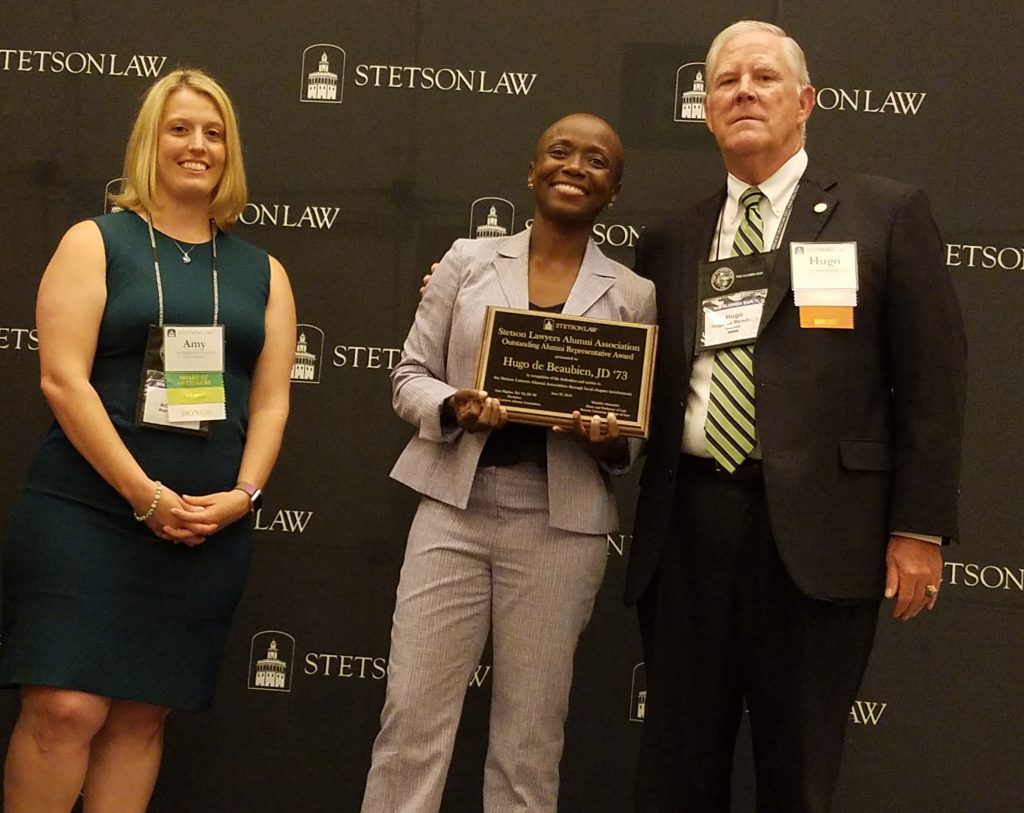
Stetson Law alumnus Hugo de Beaubien is the recipient of
the Outstanding Alumni Representative Award. He was recognized for his
dedication and service to the SLAA, commitment to the Central Florida alumni
chapter and encouraging other alumni to participate in the group’s activities.
Beaubien also established the DSK Law Book Award, which is presented annually
to the Stetson Law student who has the highest grade in contracts.
“I’m honored to receive the 2019 Outstanding Alumni
Representative Award,” said Beaubien. “Stetson Law has produced a number of
outstanding lawyers. I have always felt that alumni should support and give
back to Stetson Law as they are able to do so for the great education that we
all received.”
Beaubien is the founding partner of DSK Law in Orlando
and has remained connected to Stetson Law throughout his law career and been
involved with the college’s local alumni chapter. His efforts have been an
integral part of the alumni group’s continuous growth.
Distinguished Alumnus
Award
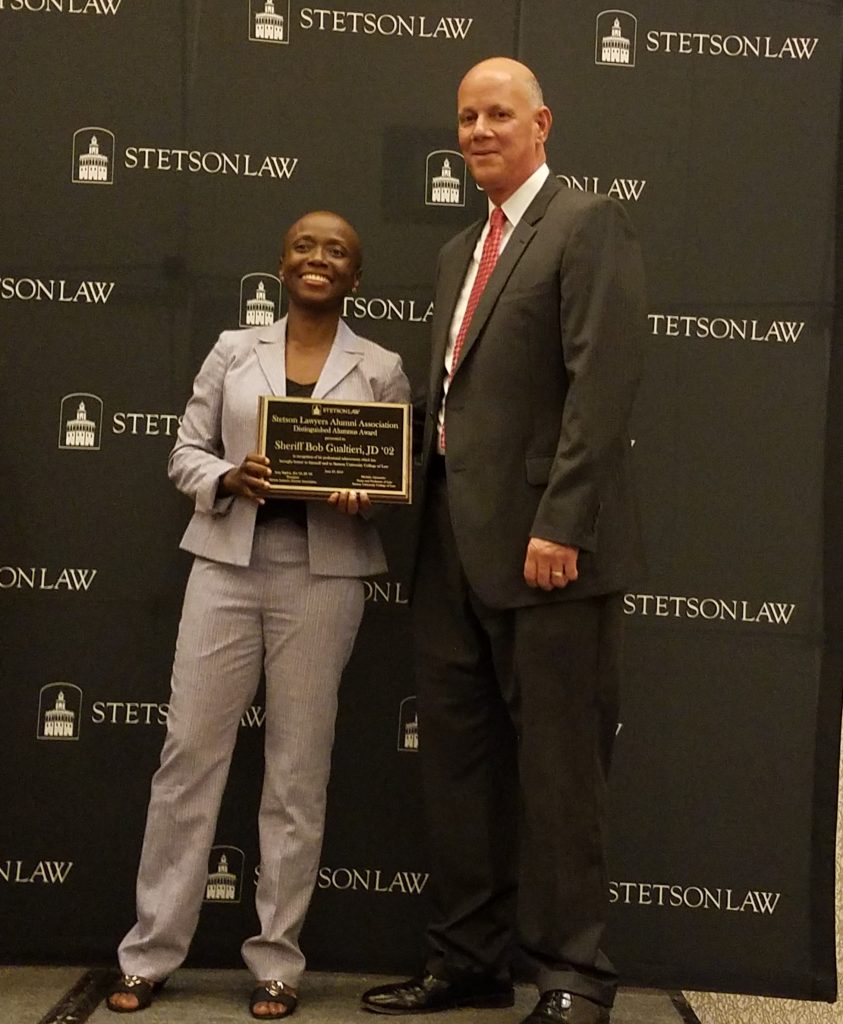
Pinellas County Sheriff and Stetson Law alumnus Bob
Gualtieri has been honored with the Distinguished Alumnus Award. The accolade
recognizes alumni who have been outstanding in their chosen profession and brought
honor to the individual and Stetson Law. The award also acknowledges the
recipient’s dedication and service to humanity, which fosters Stetson Law’s
ideals.
“I have been the Pinellas County Sheriff for the past
eight years and during that time, I have worked to uphold the rule of law and
protect individual rights while reducing crime in the county and ensuring
effective public safety,” said Gualtieri. “Receiving the Distinguished Alumnus
Award is a humbling honor, especially because of the many other Stetson Law
graduates who have achieved so much during their law careers.”
Paul M. May
Meritorious Service Award
Stetson Law alumnus Prineet Sharma has been recognized
for his utmost dedication and support of Stetson Law and the SLAA with the Paul
M. May Meritorious Service Award.
Sharma is the founding partner of Sharma Eminent Domain
Lawyers in Winter Garden. He is a member of the Veterans Law Institute’s advisory board, and
along with his wife Shamila Sharma, who is also a Stetson Law alumna, has
established the Sharma Family Veterans Endowed Scholarship.
“I’m very honored and humbled to receive the Paul M. May
Meritorious Service Award,” said Sharma. “Supporting veteran scholarships allows
me to give back to those who have given so much for us to enjoy our country’s
freedoms. If anyone deserves recognition, then it’s the brave men and women and
their families who serve so honorably to protect us.”
Ben Willard Award
As a fourth-generation Floridian, Stetson Law alumna Pam
Bondi was elected twice to serve as Florida’s Attorney General and currently
chairs Ballard Partners’ corporate regulatory practice. The SLAA acknowledged her
accomplishments with the Ben Willard Award. The recognition honors alumni who
have expended extra efforts to prevail for the benefit of Florida’s citizens,
and whose humanitarian achievements have brought distinction to themselves and
Stetson Law.
“I’m beyond humbled and do not feel deserving of this
great honor because so many Stetson Law graduates do so much for Florida and
our country,” said Bondi. “I was a career prosecutor and became Attorney
General to help people. My Stetson Law professors had a tremendous impact on my
career goals and I learned the value of giving back and have tried to make a
small impact on the world.”
Bondi tackled dozens of state and national initiatives,
including filing comprehensive state litigation regarding the nation-wide
opioid crisis as Florida’s Attorney General. She also played a leading role in
achieving the National Mortgage Settlement, which is the largest consumer
financial protection settlement in the United States’ history and ultimately
resulted in $56 billion in relief nationally.
In an extraordinary victory for Florida, Bondi sued
British Petroleum (BP) and other responsible parties in the Deepwater Horizon
oil spill case and settled for more than $2 billion in economic relief for
Florida alone.
During her tenure as Florida’s Attorney General, Bondi worked
aggressively to shut down pill mills, combat opioid abuse, ban synthetic drugs,
end human trafficking, test previously unprocessed sexual assault kits, develop
a school safety app to prevent school shootings and recovered more than $1
billion in consumer protection, antitrust and false claims matters.
Stetson University College of Law third-year student Emilia L. Soliman was recently named a Ms. JD Fellow. She is the third Stetson Law student to receive this honor.
“The
Ms. JD Fellowship is a wonderful mentorship program that will allow me to
express myself and join a community of professionals who will guide me through
the issues that women face in the law profession,” said Soliman. “This
fellowship also will provide me with the support that I will need to be
successful in the workplace after law school and give me a chance to create an
incredible network and village with amazing women in the legal field.”
Fellows
will be writing a blog entry on the Ms. JD Fellowship website and work either
on a group project with other fellows or an individual project at their law
school.
Soliman
may be writing a blog about her experience as a young mom in law school along
with the difficulties and challenges a mother faces as a full-time law student.
She is currently researching topics for either an individual or group project
as part of her fellowship.
Soliman
has aspired to become an attorney ever since she was a child. She observed her uncle
at his law firm after school, which sparked her passion for making a global
difference with a law career.
She
received Bachelor of Arts degrees in international and global studies and
political science and government from the University of South Florida and her
Master’s degree in Latin American and Caribbean studies at Florida
International University.
Soliman
is pursuing a career in international and immigration law after she graduates
from Stetson Law next year. While at Stetson Law, she has been a member of Phi
Alpha Delta, the Florida Association for Women Lawyers, Tampa Hispanic Bar
Association and the Stetson Law student publication Journal of International Aging Law & Policy and treasurer of
the International Law Society.
International
law and immigration are important to Soliman because she is an immigrant who
left Honduras with her family at a young age. She wants to give back and help
other immigrants in similar situations.
“I
have a multifaceted perspective and deeper understanding on a variety of global
issues,” said Soliman. “I want to affect social change through laws and advance
human rights throughout the world.”