IEMCC at 30: A Look Back at a Signature Stetson Moot
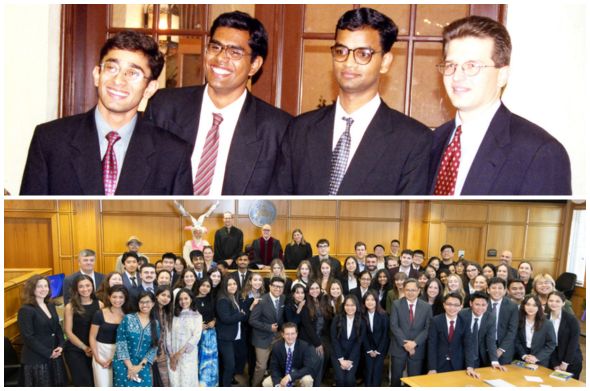
For three decades, the world’s top student advocates have come to Stetson Law to determine the outcome of fictional disputes between fictional nations – and the (also fictional) creatures that dwell within them.
As Stetson’s International Environmental Moot Court Competition turns 30, the event continues to build on its legacy of collaboration, cross-cultural celebration, and inspiring passion for the art of environmental advocacy.
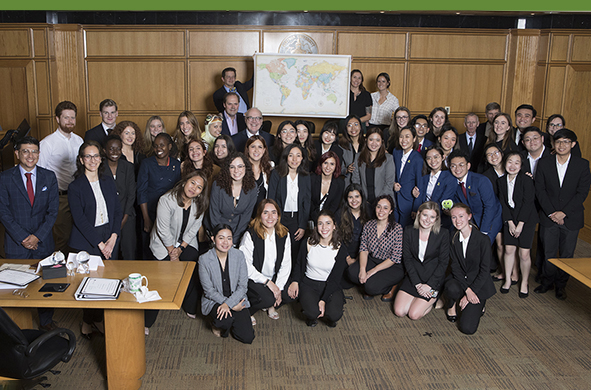
The final rounds of this year’s competition take place April 16 through April 18 on Stetson Law’s historic Gulfport campus. Once again, it will bring together student teams from around the globe for what will likely be a transformative experience.
“Over the last three decades, we have educated young advocates and leaders about environmental challenges. It’s been incredibly rewarding to meet alumni of the moot whose careers have been influenced by ‘The Stetson,’ as the event is referred to in many countries,” said Law Professor Royal Gardner, director of Stetson’s Institute for Biodiversity Law & Policy. “The competition has only endured because of the support of the Stetson community—faculty, staff, students, administration, alumni, and friends of Stetson.”
How it all began
Gardner and former Stetson Law Dean and Professor Darby Dickerson – both new professors at the time – realized that while there were moot court events covering numerous areas of law, none were dedicated solely to international environmental law. With the support of then-Dean Lizabeth Moody, the professors went to work organizing the event, which took place in November of 1996.
A total of 12 teams – 11 from the U.S. and one from the University of Málaga in Spain – argued on both sides of a problem loosely based on the turbot dispute between Canada and Spain. Over the years, students from nearly fifty countries, from Australia to Zimbabwe, have competed.
For the 30th edition, national and regional rounds were conducted in Bangladesh, Brazil, Colombia, Ghana, Kenya, India, Ireland, Pakistan, the Philippines, Republic of Korea, and the United States. Thirty teams from five continents have been invited to campus for the finals, although new visa requirements and rising travel costs have created significant challenges.
Gardner reports that he regularly receives compliments on how smoothly the moot is organized, which he credits to his colleagues on the competition committee, Professor Erin Okuno, a 2013 alumna, and Foreman Biodiversity Professor Katherine Pratt, a 2019 alumna.
Fostering global connections
With its globe-spanning reach and global themes, the competition has also attracted legal professionals working on international issues to volunteer as judges, including:
Judge Christpoher Weeramantry (International Court of Justice), Judges Kathy-Ann Brown and Anthony Lucky (International Tribunal for the Law of the Sea), Secretary General Peter Bridgewater and Deputy Secretary General Nick Davidson (Ramsar Convention), Executive Director Bradnee Chambers and Executive Director Amy Fraenkel (Convention on Migratory Species), and Secretary Veronica Caceres (Convention for the Protection and Conservation of Sea Turtles).
A message from Astrid Schomaker, Executive Secretary, Convention on Biological Diversity
The cases, the critters
The competition always requires students to grapple with important legal questions such as: how should one balance the needs of the current generation with those of future generations? What does consensus mean in the context of multilateral environmental agreements? How does one resolve conflicts between different treaties?
Gardner said the case is the result of a brainstorming session that takes place over dinner immediately following the prior year’s IEMCC finals.
Although hypothetical, the facts used in the competition often reflect current events. The basis of the 1999 problem was the export of toxic waste from Taiwan to Cambodia, which sparked riots. Two years later, it was Japan’s whaling program. Coinciding with Russia’s invasion of Ukraine, the 2022 problem – which was created more than six months before the invasion – dealt with the environmental fallout of conflict in the region.
In 2024, the problem examined whether the discovery of a shark species long thought extinct should halt rare-minerals mining in its habitat.
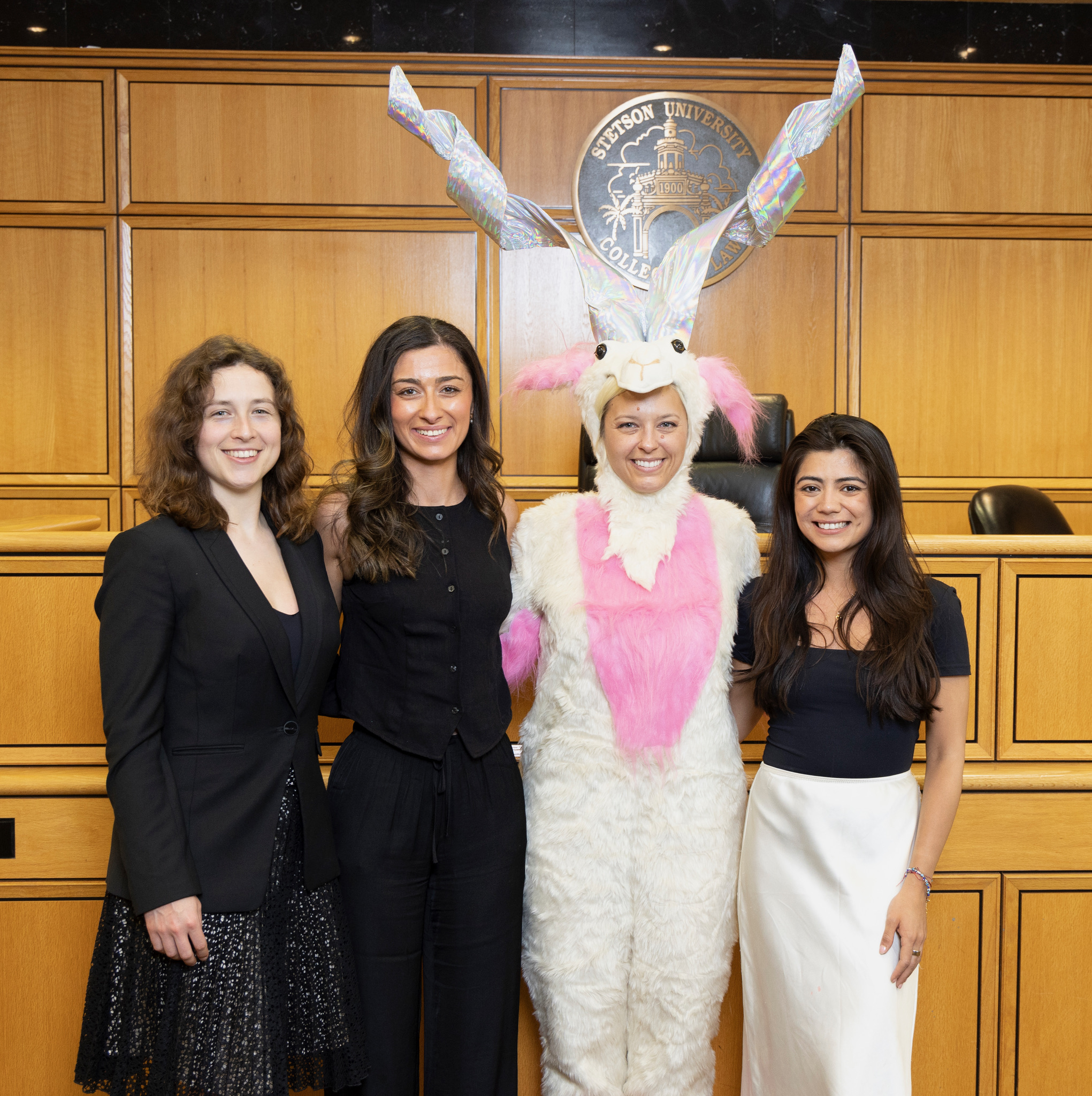
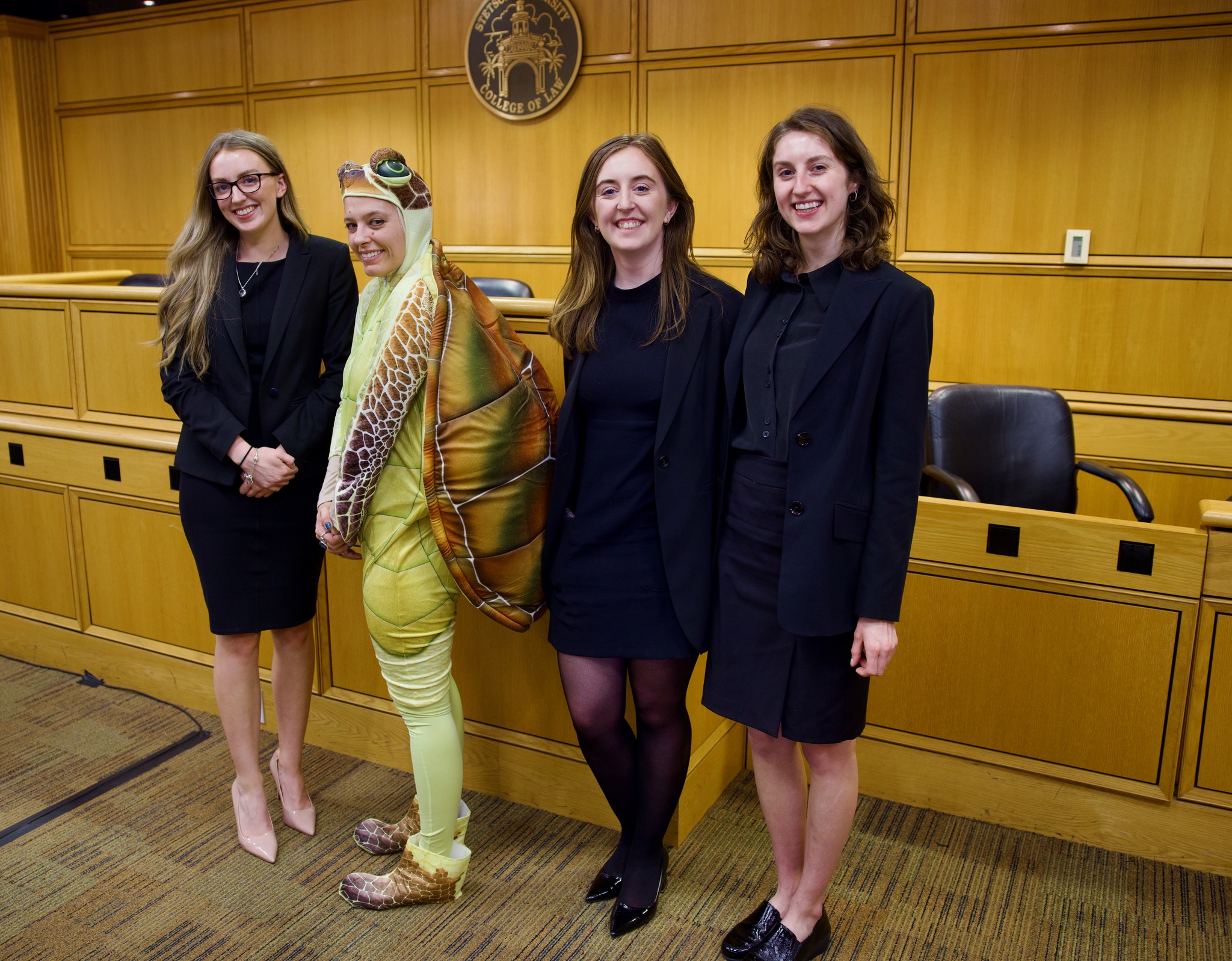
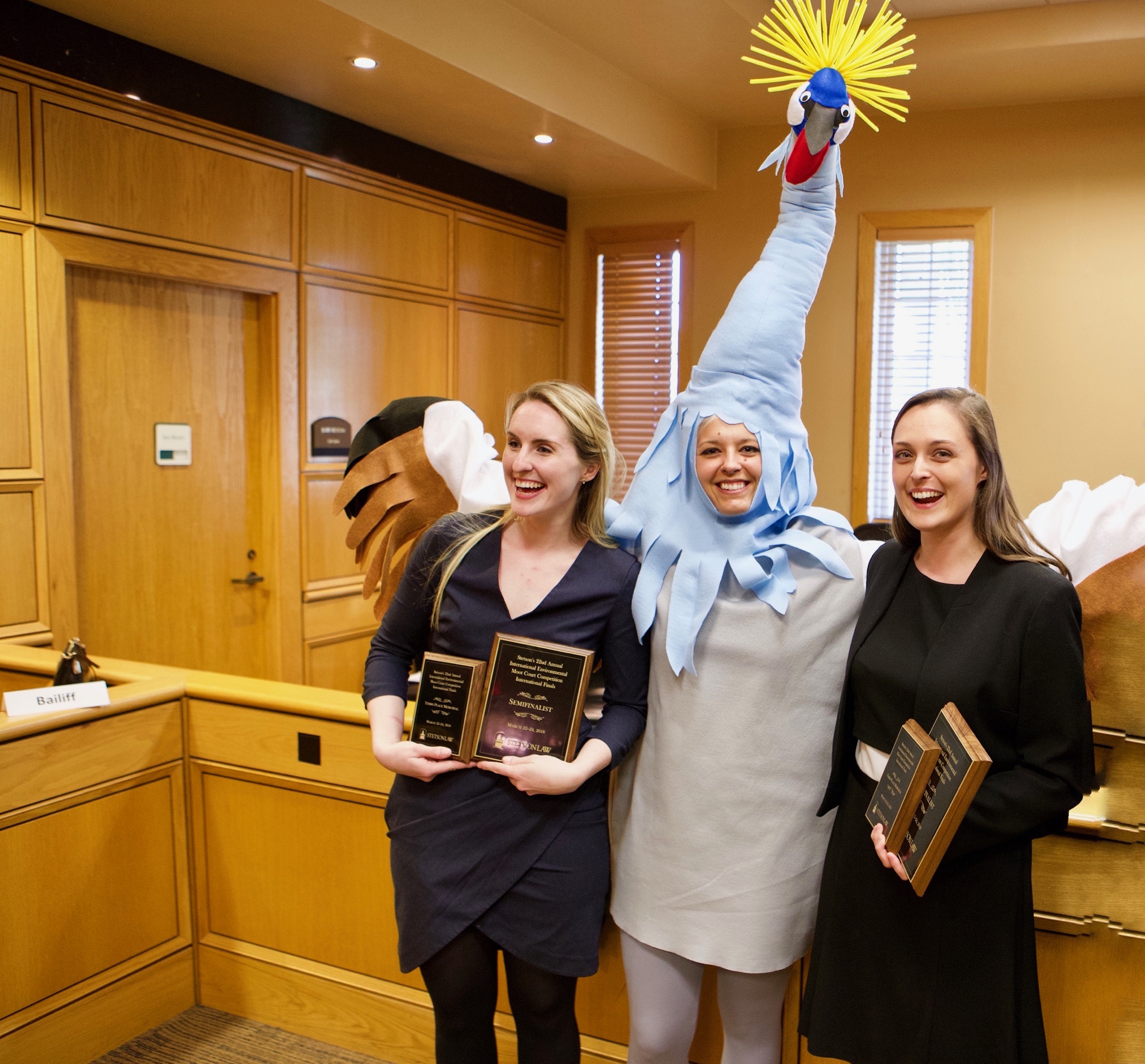
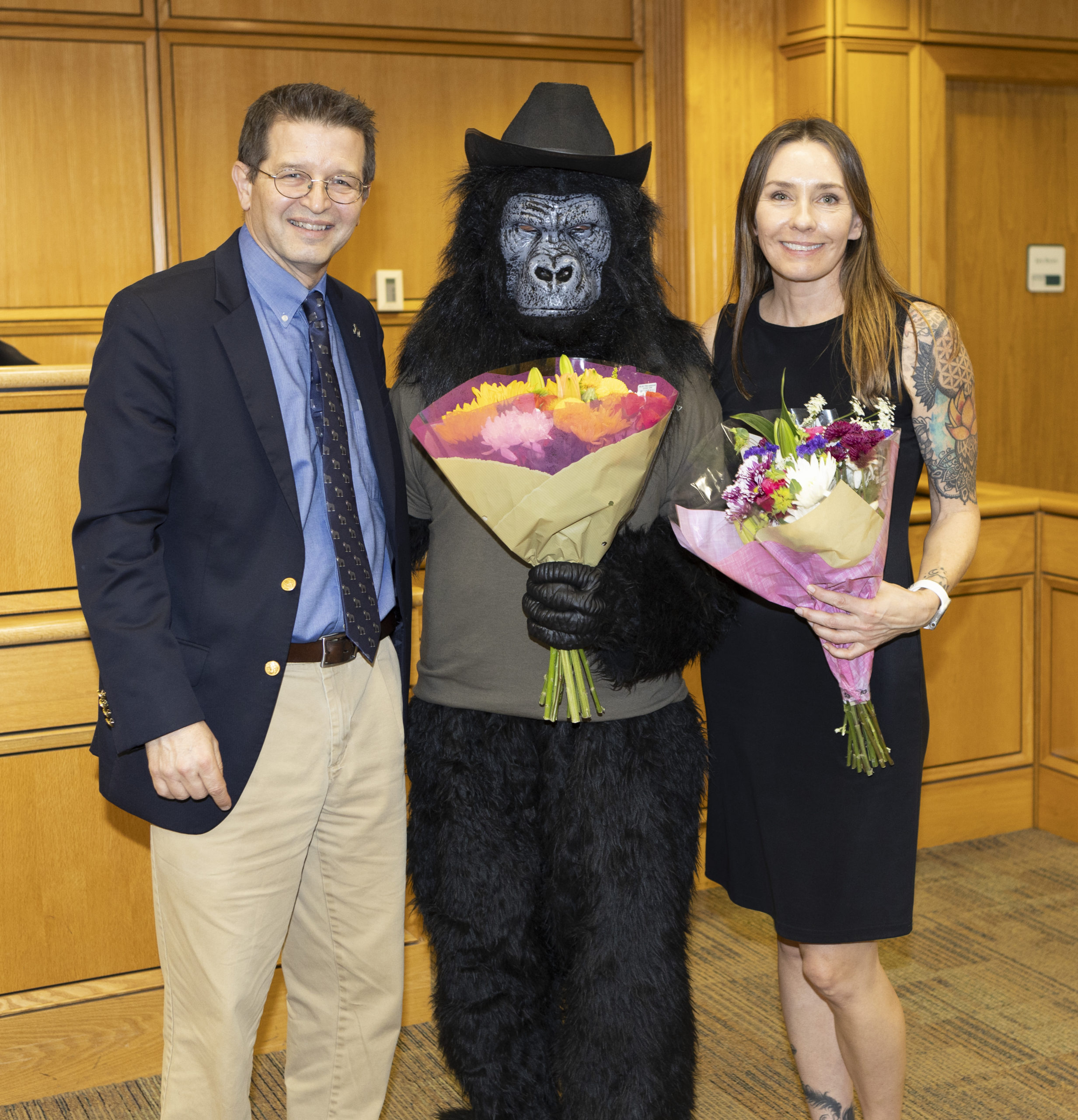
Since she has been involved, Okuno has endeavored to create or purchase a costume she dons to serve as the competition mascot at the event’s culmination – including the shark. She said the most challenging one to create (as well as her favorite) was the “blue-crowned crane.”
Another favorite: 2025’s “Royal markhor,” a goat-like species with long, spiraling horns protruding from its head and splashes of pink fur.
“I had to get creative with that one,” Okuno said.
SLIDESHOW: ERIN OKUNO’S COSTUMES


The 2026 problem deals with legal questions about de-extinction efforts related to the (fictional) Royal panther.
“Everyone waits for the charismatic species to emerge when the judges are debating the final rounds,” Gardner said.
The impact of global events
Whether it’s the global Covid-19 pandemic or the aftermath of the September 11 attacks in 2001, major events have created uncertainty in some years. In 2022, Russia’s invasion in Ukraine kept a team from the latter country from participating in the finals. They did, however, produce a video that was shown during the event’s opening reception.

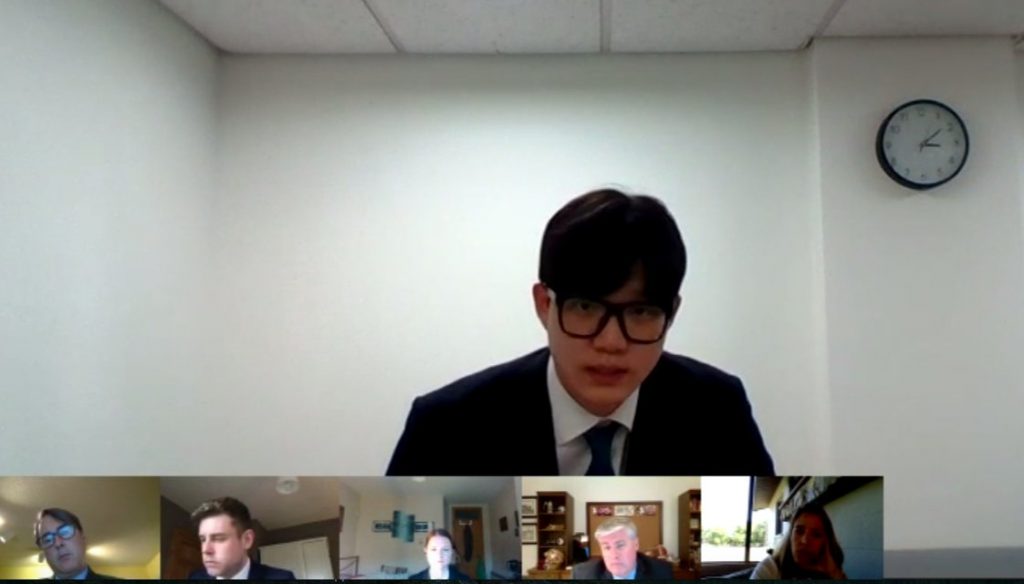
The IEMCC was one of the first moot court competitions to go online in 2020 and 2021 during the global pandemic. Gardner recalls a student competitor from South Korea presenting virtually from his campus (which officials opened just for him) at 3:00 A.M. local time.
One year, the competition’s Central Asian rounds were held in Nagorno-Karabakh, a breakaway region of Azerbaijan. The rounds went forward despite objections by Azerbaijani officials, with Gardner explaining it would proceed in the spirit of the right to education contained in the Universal Declaration of Human Rights, which promotes “the maintenance of peace.”
What sets IEMCC apart
Moot court competitions are often intense, high-pressure affairs. Even though the teams are there to compete, they help create a friendly, positive environment on campus.
“The best part is how enthusiastic and happy to be here everyone is,” said Pratt.
Okuno agrees. “Everyone exudes collegiality and joy,” she said.
T P Kennedy, Director of Education at the Law Society of Ireland, said his students often come away from the event with lifelong connections within the team as well as other competitors.
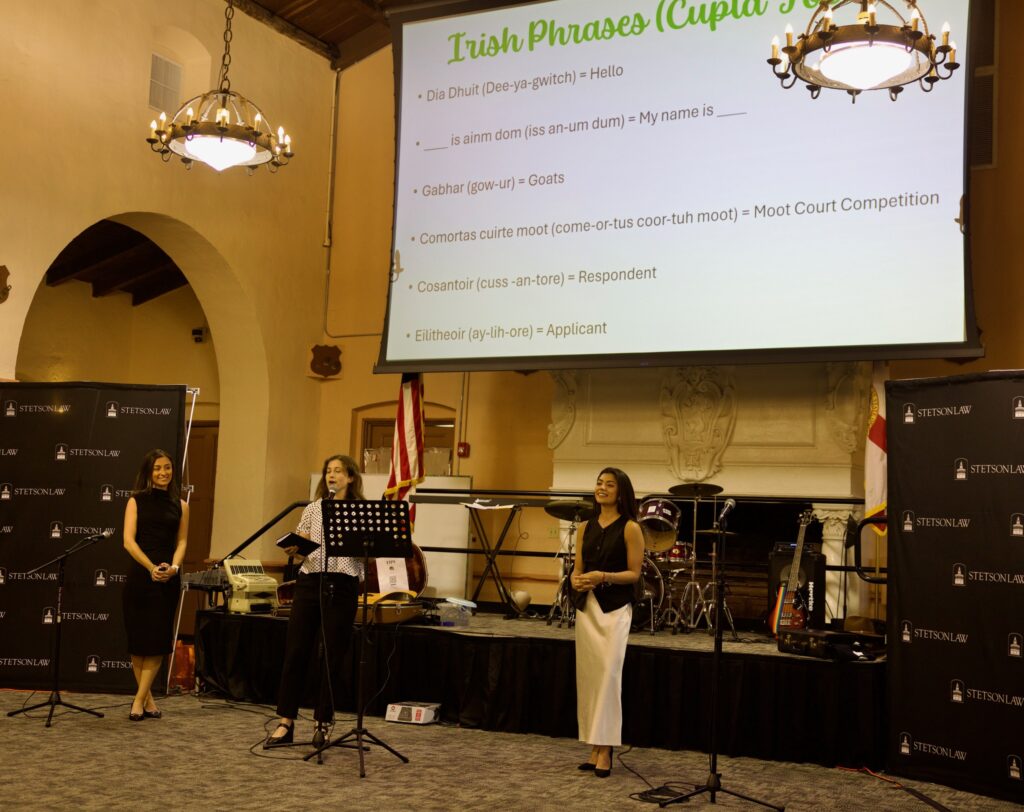
“What’s been notable for us is how civil and transparent the competition is,” Kennedy said. “Judges engage in conversation with the student advocate and there’s no sense of point scoring or entrapment.”
Such a cheerful environment has fostered the development of many traditions over the years, including a multicultural talent showcase during the welcome reception.
Members of Stetson Law faculty and staff sometimes even open their homes to visiting teams and judges. And the event now typically kicks off immediately on the heels of Stetson Law’s International Wildlife Conference, which often has a theme that dovetails with that of the IEMCC record.
Many national and regional rounds hold similar side events. Indeed, the organizers of the Bangladesh National Rounds use the Stetson moot as a mechanism to help build environmental civil society.
Gardner recently has had the opportunity to judge rounds in Brazil, Colombia, India, the Philippines, and Tanzania.
“It was an honor to participate, and it was inspirational to witness the energy, enthusiasm, and advocacy skills of the students,” Gardner said.
Learn more about Stetson’s International Environmental Moot Court Competition.
Post date: April 3
Media contact: Kate Bradshaw
[email protected] | 727-430-1580