Skip to content

Highlights from Justice Stephen Breyer’s Visit to Campus

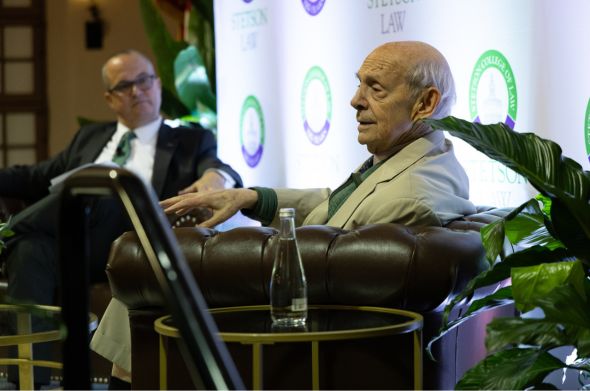
Two men sit on a stage. One is in the foreground, one is in the background.
Dean D. Benjamin Barros (left) looks on as Retired U.S. Supreme Court Justice Stephen Breyer speaks at Stetson Law on February 1, 2026.

On February 1, the Stetson Law community gave a warm welcome to Retired U.S. Supreme Court Justice Stephen Breyer, who visited campus to share insights about the legal profession with College of Law students.

The Sunday evening event, which filled the Great Hall with hundreds of students, faculty and staff members, was one of several events commemorating Stetson Law’s 125th anniversary. It comprised an hour of insight, reflection, advice, and, often, humor as the retired justice conversed with Stetson Law Dean D. Benjamin Barros. The two also discussed Breyer’s recent book, Reading the Constitution: Why I Chose Pragmatism, Not Textualism.

Offering students an inside look at how the U.S. Supreme Court works day to day, the types of cases the Court hears, and how justices conduct conversations on divisive issues, Breyer stressed civility, respect, and listening to those with whom one disagrees.

“The thing that I found works the best: Listen to what the people say and where they’re coming from,” Breyer said. “Listen. And then you build on what they say.”

The Stetson Connections

Breyer was introduced by 1986 Stetson Law Alumnus David Bronstein, who met Breyer due to his friendship with Breyer’s son Michael.

Bronstein joked that he met the elder Breyer because he “was a C student.” He had meant to ask his friend how people get to the Supreme Court but worded his question in a way that made it seem like he was asking to visit – so the younger Breyer called his father and arranged one.

“Because I didn’t know how to properly ask a question, I got invited to the Supreme Court,” joked Bronstein, who is a founding partner with Bronstein & Carmon, a prominent insurance defense firm in South Florida.
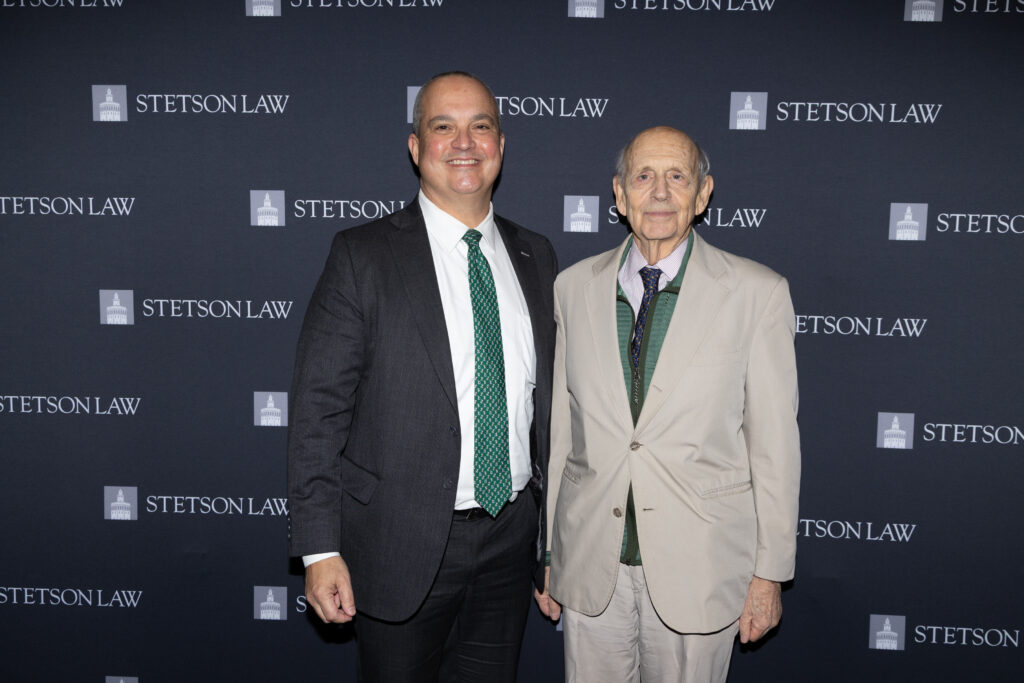
A man in a dark suit and a green tie stands next to a man in a light suit and a dark tie with a green vest in front of a backdrop that says "Stetson Law."
Left: Stetson Law Dean D. Benjamin Barros. Right: Retired U.S. Supreme Court Justice Stephen Breyer.

Bronstein also pointed out that former Dean Bruce Jacob, a 1959 alumnus and a transformative figure in Stetson Law history, was a special guest that evening. Jacob is known for arguing before the U.S. Supreme Court in the landmark 1963 case Gideon v. Wainwright.

“It’s such a delight for me to see him here today,” he said of Jacob, who was dean when Bronstein attended Stetson Law.

Thoughts on the Legal Profession & Civic Engagement

Breyer, who retired from the Court in 2022, is a graduate of Stanford, Oxford, and Harvard Law School. He has taught law at Harvard Law School and at the Kennedy School of Government for years. He worked as a Supreme Court law clerk for Justice Arthur Goldberg, served as a Justice Department lawyer in the Antitrust Division, was an Assistant Special Prosecutor during Watergate, and served as Chief Counsel of the Senate Judiciary Committee.

He was appointed to the U.S. Court of Appeals for the First Circuit by President Carter in 1980 and became Chief Judge a decade later. President Bill Clinton appointed him to the Supreme Court in 1994. He has authored books and articles on a broad range of legal topics. 

As the conversation drew to a close, Breyer urged the students in attendance to remain active participants in democracy – and reflected on the unique and fundamental role the law and legal professionals play in promoting a just society in the U.S.

“Law is an institution that in general should help people live together peacefully,” Breyer said. “A rule of law is what we depend upon to keep those 340 million people together.”
WATCH: Full full video of Justice Breyer’s visit to Stetson Law

Campus Bioswales to Raise Awareness, Cut Pollution

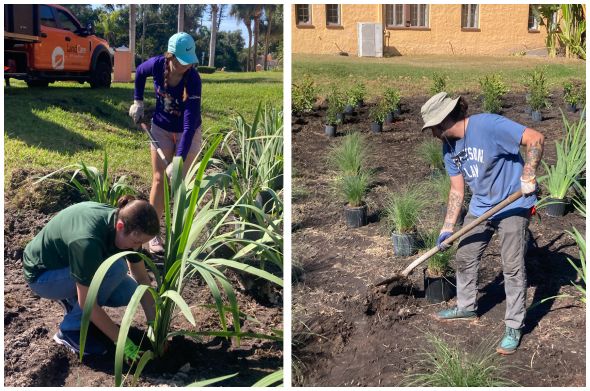
A split-screen image of students placing native plants into the soil at Stetson Law.
The first phase of the bioswale installation project began in fall of 2025.

Student Noah Peretz has always been passionate about preserving wild spaces – and rewilding tamed ones.

While a student law clerk with Stetson’s Jacobs Public Interest Law Clinic for Democracy and the Environment, the spring 2026 grad discovered that passion for protecting natural environments can translate to meaningful community impact.

When the chance arose to make their law school campus greener, Peretz jumped at the opportunity.

With encouragement from Jacobs Clinic Director Jaclyn Lopez and with the enthusiastic support of campus officials and landscaping contractors, Peretz spearheaded a successful Tampa Bay Environmental Restoration Fund grant application to fund a multi-year effort to install native plants in four areas on campus. Peretz had never done anything like it before.

“It became clear that transforming our grass-lined stormwater retention swales into native, plant-based bioswales was a natural fit,” Peretz said. “From there, I began drafting the grant proposal. This was the first grant proposal I had ever written, and it would not have been possible without the support of my mentors.”

From green to greener

For natural environments and the wildlife that dwells within them, the grass isn’t always as green as it seems. St. Augustine and other lawn grasses require fertilizers, the excess of which get carried off by rainwaters into nearby waterways, where they feed harmful algae blooms. When it floods, they tend to retain less flood water than natural landscaping.

The bioswale project, which began fall of 2025, is replacing expansive patches of St. Augustine grass that line campus stormwater retention areas with vibrant and less water-intensive native plants. The Florida-friendly plants absorb more stormwater while reducing the amount of fertilizer that drains into our local waterways Bear Creek, Boca Ciega Bay, and Tampa Bay.

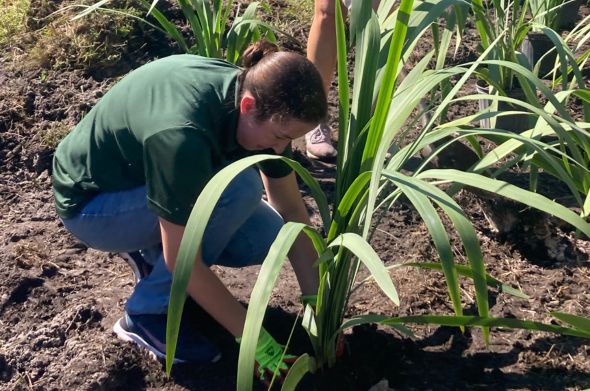
A person wearing a green polo shit and jeans is partially kneeling as they place a plant into soil
Replacing turf grass with water-loving native plants will help reduce flooding and pollution on campus.

They will enhance filtration, improve groundwater recharge and water quality, and help filter pollutants originating from vehicles, roofing materials, landscaping, pet waste, and other sources. Since they require significantly less care, they’ll also be cheaper to maintain.

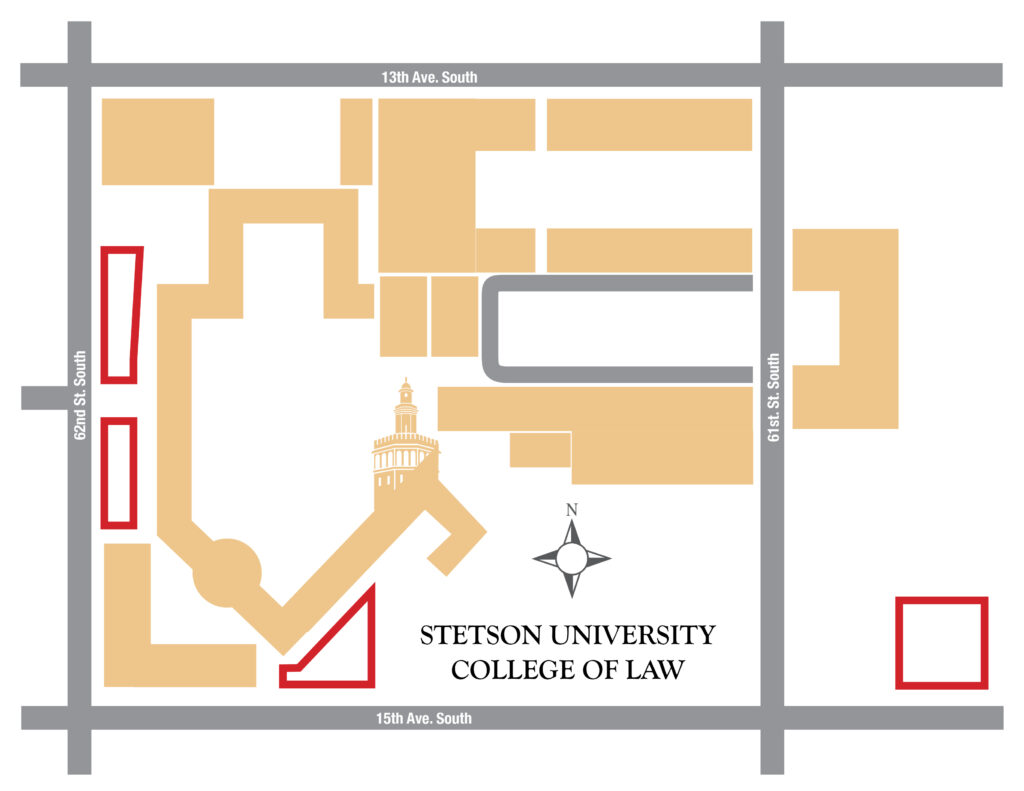
The first phase of the project is located on the south side of campus, across the street from the basketball courts and directly to the east of the walkway leading to the campus pool. Here, tufts of blue iris, muhly grass, cocoplum, and beautyberry dot the soil.

The second phase will overhaul the stormwater retention area south of the Hand Law Library. The third and fourth phases will replace turf grass on the edge of campus east of Plaza Mayor.

When the project is complete, educational signs explaining the benefits of bioswales will be placed near them and continuous monitoring of area water quality will ensue.

The project reflects the College of Law’s commitment to sustainability as well as engaging the community in meaningful dialogue on important issues.

“The campus bioswale project is just one example of how education and community advocacy can work together for a better future,” Lopez said. “In bringing this project about, Noah demonstrated an awe-inspiring amount of attention to detail, work ethic, follow-through and, perhaps most importantly, passion. We’re thrilled to have Noah as part of our team.”

A public education opportunity

Environmental advocates see the project as a way to expose students, faculty, staff, friends, and neighbors to environmentally beneficial ways of maintaining urban green spaces and inspire them to think beyond the way we’ve always done things.

A campus map highlighting four areas throughout Stetson Law's grounds where eco-friendly swales are being installed.
The swales are being installed in four key areas on campus (highlighted above in red).

“We’re excited to support Stetson’s vision to excel beyond the status quo of turf grass on their College of Law campus,” said Jessica Lewis, community projects manager with the Tampa Bay Estuary Program. “Once established, these bioswales will not only prevent nutrient pollution and water waste, they’ll also create a positive impact by restoring native urban habitat and showing students, faculty, and campus neighbors what’s possible in their own backyards.”

Peretz is now planting the seeds to ensure continued student involvement in administering the project after they graduate in May.

“My hope is that, as an alum, I will be able to return to campus and see the long-term fruits of this work, and that over time more of Stetson’s landscape design reflects a little more of that wild Florida beauty,” they said.

25 Big Stetson Law Stories in 2025

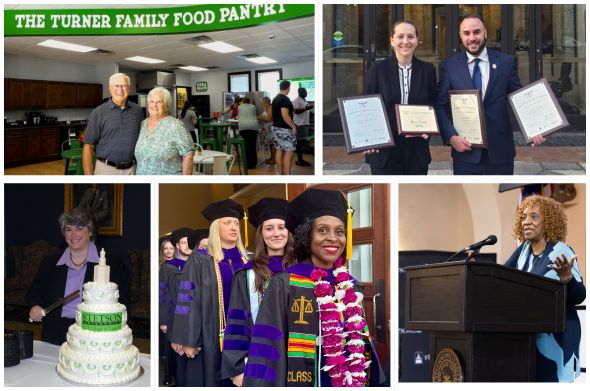
A collection of images, including a woman cutting a cake, a couple posing at a food pantry dedication, two students holding plaques after winning a competition, a woman at a podium, and three women in graduation regalia.
Highlights from 2025 include the dedication of the Turner Food Pantry, student championship wins, amazing speakers, an incredible graduating class, and celebration of the latest inductees to Stetson Law’s prestigious Hall of Fame.

In 2025, the Stetson Law community worked hard, supported one another, earned national recognition, and achieved great milestones. From celebrating the College’s 125 years of exceptional legal scholarship to continuing our forward-thinking approach to the role of artificial intelligence in education and the law, here are 25 major Stetson Law highlights of 2025.

A female graduate wearing a large lei smiles for the camera as she walks out of a large doorway.
Student grad 2025 4
previous arrow
next arrow
  1. Stetson Law celebrated its 125th anniversary. Hundreds came to campus to mark the occasion for the opulent Eras Gala. Festivities will continue throughout the remainder of the 2025-2026 academic year.
  2. Stetson Law was yet again U.S. News & World Report’s top advocacy destination and remained in the No. 3 spot for legal writing.
  3. Reflecting our decades-long commitment to supporting veterans on campus and beyond, Stetson Law was named a Top 10 Military Friendly® School for veterans and their spouses.
  4. Stetson Law welcomed five exceptional individuals into its prestigious Hall of Fame: Dean Darby Dickerson, Professor Peter Lake, Michael Marder ’77, Jeffery Smith ’73, and Ying White ’97.
  5. Drawing from the vast expertise of faculty members like Stetson Law Gary R. Trombley Family White Collar Crime Research Professor Ellen Podgor, the College launched an innovative White Collar Criminal Defense Training Program, which brought practitioners to campus.
  6. Alumnus Jeffrey Harvey ’12 helped reinforce the tremendous sense of community Stetson Law enjoys. Harvey honored his mentor, Alumnus and Former Florida Supreme Court Justice Fred Karl ’49 by donating a copy of Karl’s book Python Tales to the Florida Supreme Court Archives and contributing to a scholarship fund designated for veterans attending Stetson Law.
  7. Stetson Law’s signature professional development event, Campus to Career, featured insightful panel discussions, incredible keynotes, and impactful networking sessions. Bonus: during the event, Jonah Perlin recorded a live episode of the How I Lawyer podcast that featured Howard Williams ’12, who talked about his career path. Williams is now president of the Stetson Lawyers Alumni Association. Listen here.
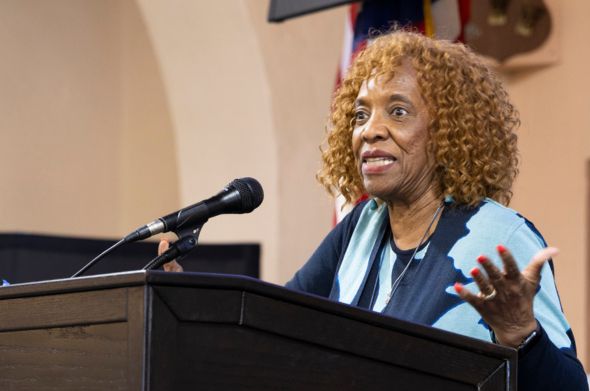
  8. Civil rights activist Janice Wesley Kelsey spoke about her experience at the annual Wm. Reece Smith, Jr. Lecture.
  9. Alumna and longtime Stetson Law Professor Rebecca Morgan ’80 was honored with the Wm. Reece Smith, Jr. Public Service Award.
  10. The International Wildlife Conference brought together top animal advocates from around the globe in April. The 29th edition of the International Environmental Moot Court Competition followed immediately on its heels. See full recap.
  11. Stetson’s Veterans Law Institute became the only nonprofit of its kind to join the Raymond James Valor Network.
  12. Faculty, staff and leadership continued to lead the charge on generative artificial intelligence in higher education and within the legal profession and in higher education. The Association of American Law Schools’ Section on Legal Writing, Reasoning, and Research honored Law Professor Kirsten Davis with its 2026 section award for her leadership in this and other areas.
  13. Visiting Director of Clinical and Experiential Learning Michael Vastine led a daylong conference exploring the landmark immigration case Padilla vs. Kentucky 15 years after the decision was handed down.
  14. We sent more than 300 new Stetson Lawyers out into the world to advocate for their clients, themselves, and a better tomorrow.
  15. We welcomed new and visiting faculty members from a broad range of backgrounds and geographical locales. This included two new full-time faculty, two Bruce R. Jacob Visiting Assistant Professors, and visiting professors from a broad range of backgrounds.
  16. The Stetson Law community served veterans in myriad ways, from its annual Wills for Warriors event to hosting a veteran claim oral argument. Veterans Law Institute Interim Director Morgan Zimarakos ’20 was also named president of the National Law School Veterans Clinic Consortium.
  17. The Foreman Biodiversity Lecture Series brought bestselling authors to campus. Among these were We Are Eating the Earth author Michael Grunwald, University of South Florida springs expert Chris Meindl, and Cynthia Barnett, author of The Sound of the Sea: Seashells and the Fate of Oceans.
  18. Two celebrated professors, Jason Palmer and Stacey-Rae Simcox, helped the College expand its support of students through new deanship roles.
  19.  From deep dives into Florida environmental law to sharp practitioner insights on major business transactions, immersive learning took center stage.
  20. For the first time, Stetson’s 1L orientation included a session that delved into using AI ethically and effectively while in law school.
  21. Stetson’s Child Advocacy Clinic was awarded Funding Florida Legal Aid’s Paul Doyle Child Advocacy Award during the 2025 Florida Bar Convention.
  22. During an event organized by Stetson’s chapter of the Federalist Society, Florida Supreme Court Chief Justice Carlos G. Muniz spoke at Stetson Law.
  23. Stetson’s criminal law team stepped up its offerings with a new criminal law concentration, which invites students to sharpen their understanding of the area of practice while still in law school.
  24. Recognizing the widespread nature of food insecurity, including among law students, Stetson Law Board of Overseers Chair Jason Turner and his parents, Gary and Laura Turner, supported the renovation, expansion, and replenishment of the College’s campus food pantry, an important resource for students.
  25. Two students dedicated their win at the National Veterans Law Moot to the memory of a dear friend and colleague, Logan T. West, who passed away unexpectedly in 2024 shortly before he was expected to compete in that year’s edition of the competition.

Bestselling Author Michael Grunwald Connects Climate & the Food System

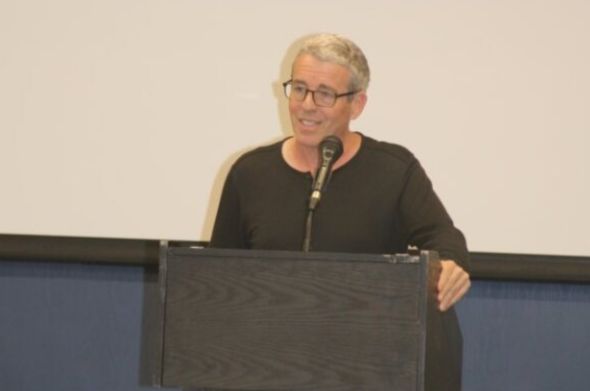
A man wearing a black shirt and glasses speaks at a podium.
Bestselling author Michael Grunwald spoke at Stetson Law in November 2025.

What does the food on your plate have to do with rising sea levels?

As it turns out, says best-selling author Michael Grunwald, quite a bit.

Grunwald, who spoke on the Stetson Law campus November 18 as part of the Edward and Bonnie Foreman Biodiversity Lecture Series, covers environmental policy and politics for The New York Times and other outlets. His most recent book, We Are Eating the Earth: The Race to Fix Our Food System and Save Our Climate, delves into the massive yet untold impacts industrial agriculture is having on the planet – and what we can do about it as individuals and societies.

“It’s a great read – a thought-provoking book about the connections between our food system and climate change,” said Law Professor Royal Gardner, director of Stetson’s Institute for Biodiversity Law & Policy, in his introductory remarks.

Grunwald said that while urban and suburban development cover just one percent of the planet, farmland covers a staggering 40 percent – and consumes more land every day.

“We’re losing a soccer field of forest to agriculture every six seconds,” he said. “Our natural planet is becoming an agricultural planet.”

A compounding problem

When it comes to offsetting the excess carbon emissions that are associated with rising global temperatures, trees are a critical resource for pulling carbon from the atmosphere.  The loss of forests, prairies, and other natural landscapes means less carbon dioxide is being pulled from the atmosphere.

Grunwald said trying to decarbonize the planet through renewable energy and other solutions while cutting down trees is like trying to clean your house while smashing the vacuum cleaner to bits.

Much of the land now being used for agriculture grows food for the animals many humans eat. Those animals are also emitting large amounts of greenhouse gases like methane into the air.

Yet a growing human population requires a reliable, productive food system. To achieve sustainable food production for generations to come, Grunwald said, we need to take a hard but honest look at what’s on our plates.

“We’re going to need to make more food with less land and less mess,” he said.

Hard choices, sustainable solutions

The problem appears daunting, but Grunwald sees two obvious starting points: eating less meat and wasting less food.

Meat from mass-scale agricultural operations requires extensive land – including land for growing the animals’ food – and directly produces greenhouse gases like methane. Meat from cows and lambs is particularly taxing on the environment, he said.

A man speaks at a podium in a room with marble columns.
Professor Royal Gardner introduced speaker Michael Grunwald.

Meanwhile, we are wasting more than 25 percent of the food we buy, which forces the food system to produce much more than is needed. The average U.S. household wastes more than $2,000 a year on food that will end up in a landfill, where it will emit methane – another powerful greenhouse gas.

“It is insane that we waste at least a quarter of our food,” Grunwald said. “That means we waste a quarter of the land and water and fertilizer that we use to grow it. We use a landmass the size of China to grow garbage.”

At the industrial level, he said, innovators are exploring ways to produce more food with less land. Food companies like Beyond and Impossible have developed meat alternatives from plants that will allow individuals to eat burgers and other foods they love without sacrificing palatability. Composting has become easier and more widespread, which helps reduce the amount of wasted food being shipped off to landfills.

As for individuals, their impact comes from the choices they make at each meal. While everyone going vegan would have a transformative impact on the planet, Grunwald – who said he is not vegan – recognizes the widespread resistance to this lifestyle, given the emotional and cultural associations made with certain foods.

“We all find a level of hypocrisy that we’re comfortable with,” he said. “Perfect isn’t usually on the menu. But better is better than worse.”

Learn more about We are Eating the Earth.

Veteran Moot Win Dedicated to Memory of Classmate

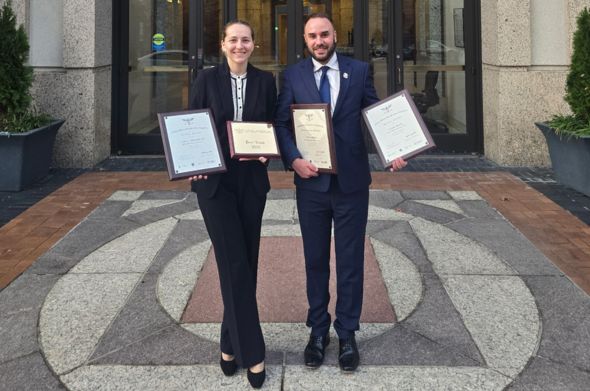
A man and a woman wearing business attire hold three plaques to celebrat a championship win.
Teammates Valeriya Gilmutdinova and Clayton Smith following their championship win at the National Veterans Law Moot Court Competition in Washington, DC. in 2025.

This one’s for Logan.

For the seventh time in the competition’s 16-year history, a Stetson Law team secured a championship win at the National Veterans Law Moot Court Competition in Washington, DC.

Going into the November event, teammates Valeriya Gilmutdinova and Clayton Smith decided to give it their all in honor of Logan T. West, a classmate who passed away unexpectedly just days before he was set to compete in 2024.

West and Smith, who were teammates, had spent months preparing for the event and had worked together at Stetson’s Veterans Law Institute. As a Veterans Advocacy Clinic fellow, West inspired hope, collaboration, and camaraderie among those with whom he worked. “Logan was the kind of partner who made you better,” said Smith, who also won the Best Oral Advocate Award at this year’s competition. “Dedicating this win to him isn’t symbolic for us; it’s a reflection of the impact he had on me and the entire class of 2026. This wasn’t just for him; it was because of him.”

Embracing the challenge

Veterans law can be emotionally and intellectually demanding work. Coupled with the pressure of preparing for a national championship, it can become daunting.

Hearing that Smith wanted to honor West by competing this year but didn’t have a teammate, Gilmutdinova stepped up to the challenge. She said she was inspired by the example West, whom she knew from her 1L Section, set through the “care, kindness, hard work, and dedication,” he showed every day.

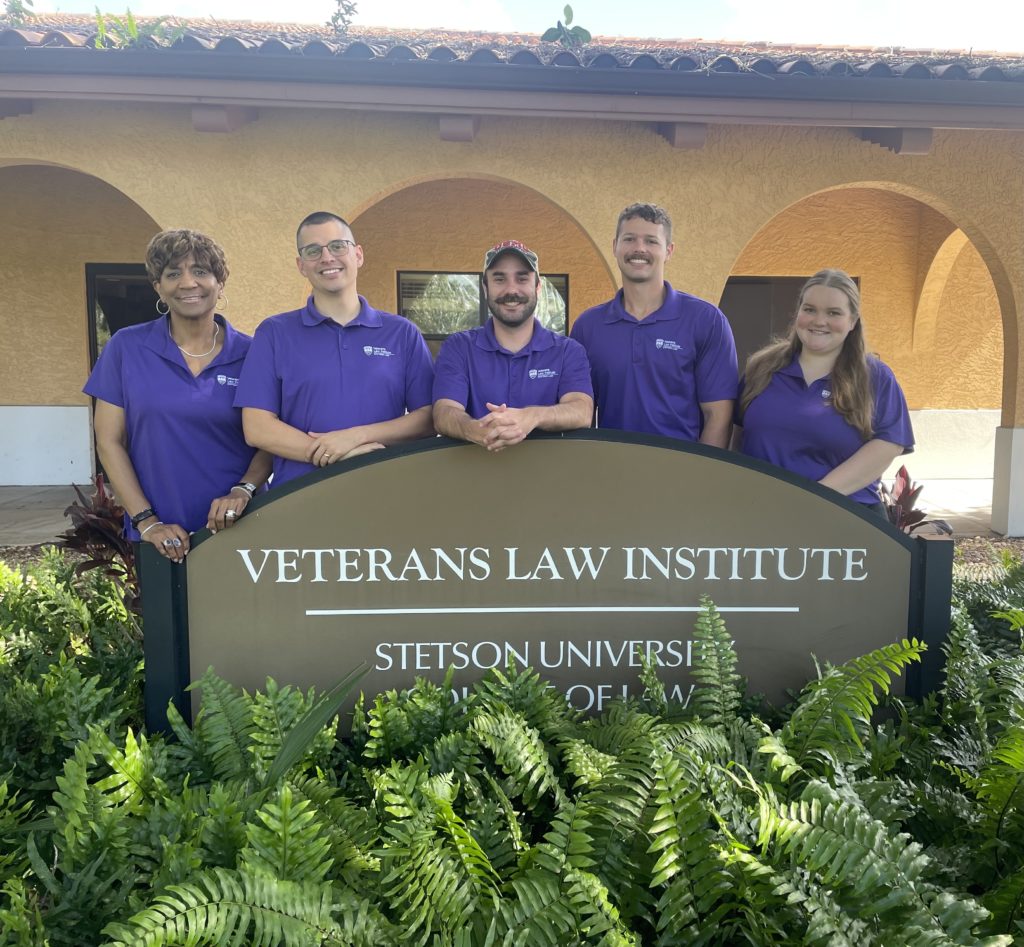
A group of students wearing purple polo shirts stand in front of an outdoor sign that says "VETRANS LAW INSTITUTE"
Logan T. West (second from right) passed away unexpectedly in 2024.

“We chose to dedicate this win in his honor because so much of what we achieved was inspired by his example,” she said. “This dedication is a promise to remember and uphold the values Logan embodied, guaranteeing that his spirit remains a part of every milestone the team celebrated.

Although the preparation schedule was grueling, Gilmutdinova said Smith’s dedication and tirelessness strengthened her resolve to work harder.

During his most challenging moments, Smith said he would reflect on the positive attitude that West exuded when things got tough.

“Whenever the preparation felt overwhelming, he’d remind us with his infamous line, ‘One pity party a day.’ He joked that he always used his up too early. That was his spirit: honest, hopeful, and always pushing forward,” Smith said.

Building on years of success

Stetson Law won the inaugural Veterans Law Moot in 2009 and went on to win six more times. At five wins, only Baylor comes close to Stetson’s record. Smith was also the seventh Stetson student to win Best Oral Advocate Award.

Faculty and staff with Stetson’s Veterans Law Institute helped the teamwork through some challenging constitutional and veterans benefits issues. A special thanks to the team’s co-coach, Christopher Gieger.  

The Chief Justice in the competition’s final round was former Stetson Law Professor and Veterans Law Institute Director Mike Allen, who is now chief judge of the United States Court of Appeals for Veterans Claims.

“Their achievement is remarkable alone, but the heart behind it is what really struck me,” said Morgan Zimarakos, interim director of the Veterans Advocacy Clinic. “Clayton and Valeriya carried the memory of their classmate with them throughout the competition as a beautiful tribute to his spirit and their shared dedication. I couldn’t be prouder.”
FL Supreme Court Chief Justice Speaks at Stetson

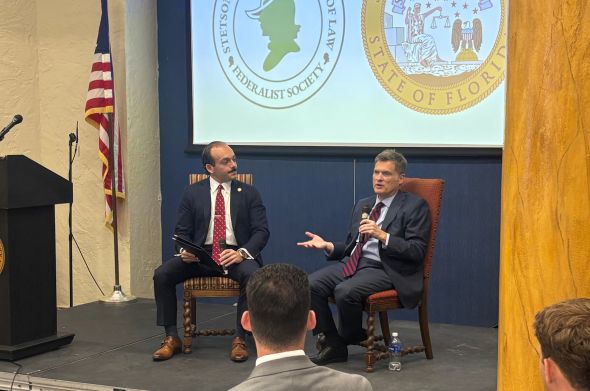
Two men wearing suits and ties sit and talk on a stage in front of a screen displaying the logos for the Stetson Federalist Society and the Florida Supreme Court.
Student Frank Giallourakis chats with Florida Supreme Court Chief Justice Carlos G. Muniz.

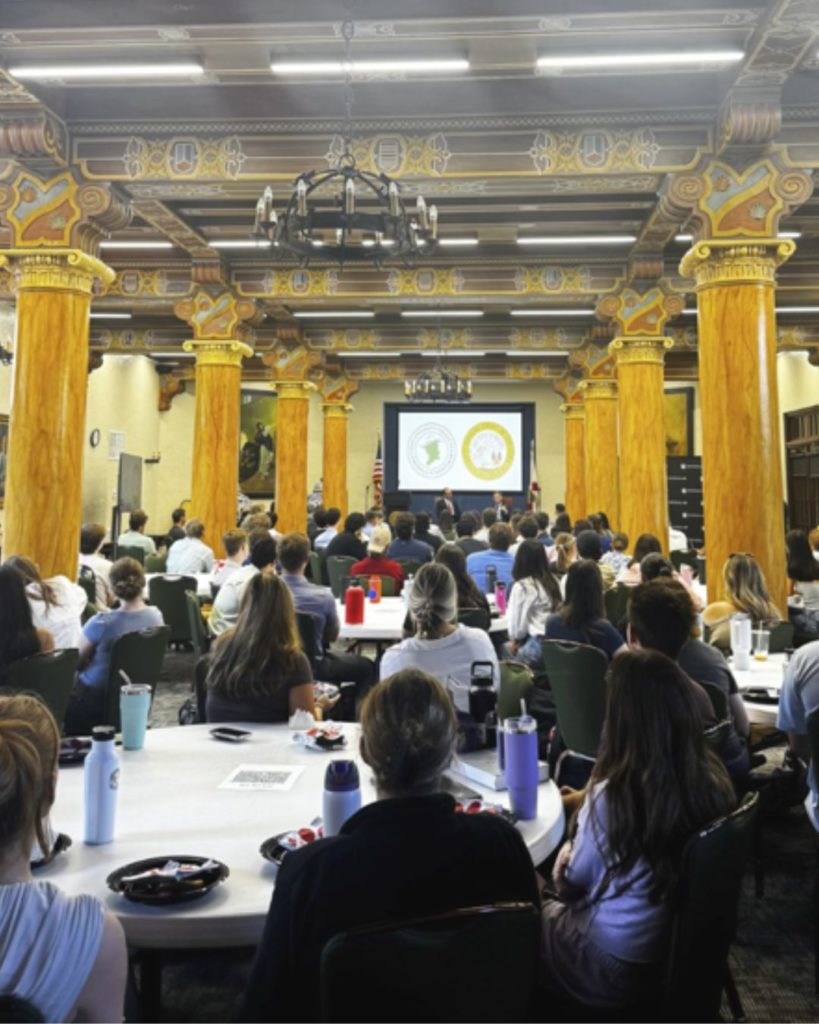
Members of the Stetson Law community packed the Mann Lounge on Thursday, October 23 to hear Florida Supreme Court Chief Justice Carlos G. Muniz’s thoughts on everything from judicial philosophy to how to succeed in the legal profession.

The fireside chat-style event was organized by the Stetson Law chapter of the Federalist Society and moderated by Frank Giallourakis, the organization’s president. “This afternoon was not just a tremendous honor for our Federalist Society chapter to host Chief Justice Muniz, but a historic day for our beloved Stetson law,” Giallourakis said following the event. “Chief Justice Muniz graciously took the time to speak to a crowd of over 100 students, faculty members, and administrators about judicial philosophy, the judiciary’s role under the Constitution, trends in Florida precedent concerning statutory interpretation, and how my Stetson law colleagues and I can best prepare ourselves to achieve great success.”

On building a meaningful career

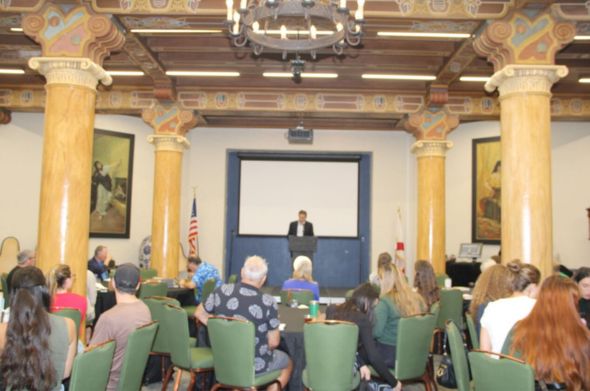
A photo of a room full of people from the back of the Mann Lounge
Florida Supreme Court Chief Justice Carlos G. Muniz spoke to a room full of students, faculty, and staff.

Chief Justice Muniz kicked off the conversation with his thoughts on how law students can realize their full professional potential.

One’s path is a combination of luck, merit, and relationships, he told the audience. Many opportunities happen because of positive impressions one gives his or her mentors and peers, and most people who find success want to pay it forward.

“Don’t be shy about asking people for help,” he said. “All of us have benefited from other people taking interest in us and helping us and my experience is that people want to be able to give back and help others who are coming along after them.”

Service & judicial philosophies

Muniz offered his thoughts on varying judicial philosophies such as originalism and textualism – and how judges’ relationship to the law differs from that of legal scholars.

He stressed that it is not the role of the judge to determine the outcome of a case based on their personal morals and opinions, but instead to subordinate one’s own views and will try to get the case right based on existing laws.

“There are lots of things judges don’t have control over. We don’t have control over what the law is. We don’t have control over the cases that come before us,” he said. “We do have control over how we treat people; whether we make sure that people have due process; whether they feel like judges came to the cases prepared and thoughtful. We really do try to promote that culture of service… The law is not just for judges. It’s for everybody.”

Organizers praised Chief Justice Muniz for his emphasis on shared values over the divisive rhetoric that can often dominate in conversations about law and policy.

“Chief Justice Muniz emphasized the importance of civility, careful study of the law, and a commitment to excellence in everything that we do not only as law students but practicing attorneys,” Giallourakis said. “We extend our sincerest gratitude to the administration for their steadfast support and look forward to carrying this momentum into our upcoming events.”

Learn more about Chief Justice Muniz.

At Stetson Law, Immersive Courses Dive Deep

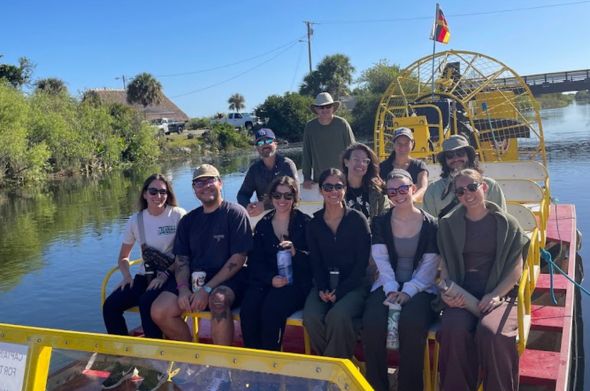
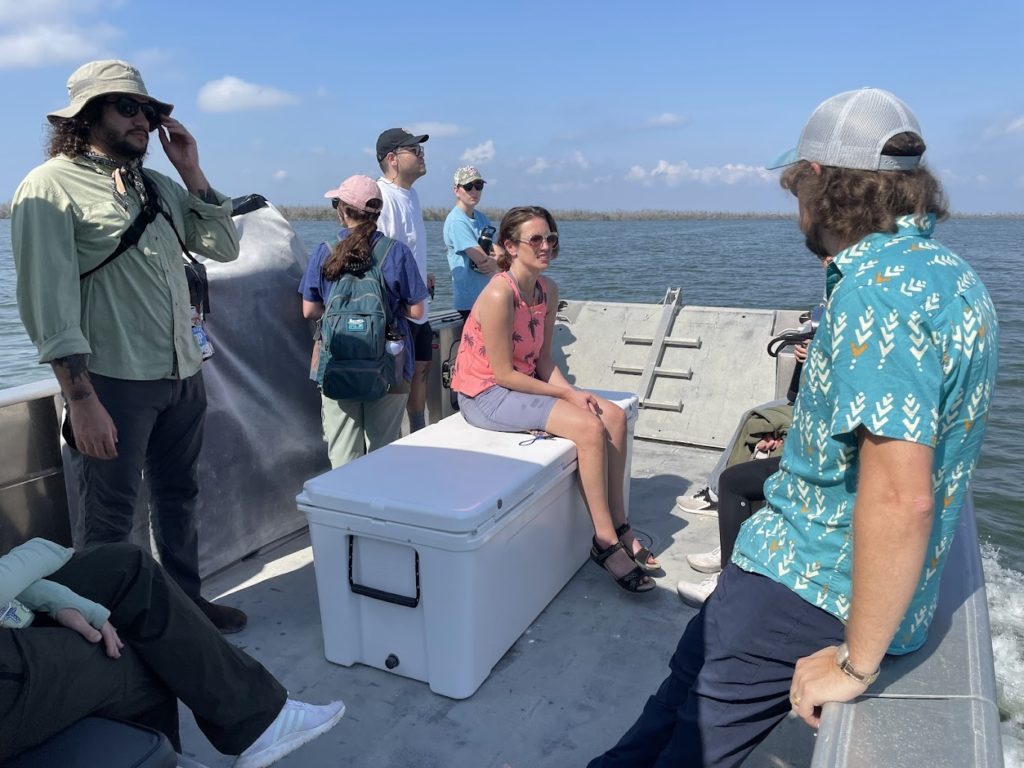
A group of students rides on an airboat in South Florida
Cases & Places brought students face-to-face with wild Florida and those who fight to preserve it.

Law courses don’t usually require a bottle of bug spray – let alone a tent. But for students who enroll in Cases and Places, a new course offered at Stetson Law, they are necessary.

One of the numerous outside-the-box courses the College offers, Cases and Places introduces students to Florida’s great outdoors, and the political, economic, and legal factors that influence how it functions today and the people leading on-the-ground efforts to protect it. In its inaugural offering, the course featured a four-day trip through the Greater Everglades, a large, biodiverse region, including its most remote environs – hence the tents.

“Getting our students out of the classroom and into the ecosystem is a powerful way to illuminate the legal documents and processes that shape our state,” said Law Professor Jaclyn Lopez, who teaches the course.

A new perspective on environmental law

Lifelong Floridian and Stetson Law student Warren Wood said the in-depth course was an enlightening experience even for someone who grew up in the Sunshine State.

Several students and a boat captain sit on a boat in open water.
Cases & Places 2025.

“It is one thing to read about the cases that shaped our state,” he said. “But it brought things into a different perspective to go out and see the places that have been affected by the cases we studied, and meet the people who were not only involved in the past cases, but continue to fight to keep our state beautiful and clean for generations to come.”

The experience reflects the College of Law’s culture of fostering preparedness among its students through encouraging meaningful experiences and connections within the legal profession well before graduation. Travel courses offer many opportunities to do so, but some classroom-based syllabi feature immersive sessions with successful practitioners who share insights and offer practical lessons.

Cases & Places 2026 details

The second edition of the course invites students to explore Florida’s springs, live the cases, and meet the lawyers, scientists, and advocates who help shaped policy around Florida’s abundant springs.

The three-credit course involves camping trip with driving, hiking, and swimming and will be taught by Professors Lopez and Royal Gardner. It satisfies the upper-level writing requirement.

Students interested in applying can send a resume and letter of interest to Professor Lopez, [email protected], by October 24th.

A “life-changing” civil rights exploration

Every summer, Stetson’s Civil Rights Law Travel Course invites students to visit the historic sites and history-makers who shaped the Civil Rights Movement in the United States. The course launched in 2005 by then-Professor Robert Bickel and has continued with support from Wil Florin ’82 and Tommy Roebig ’86.

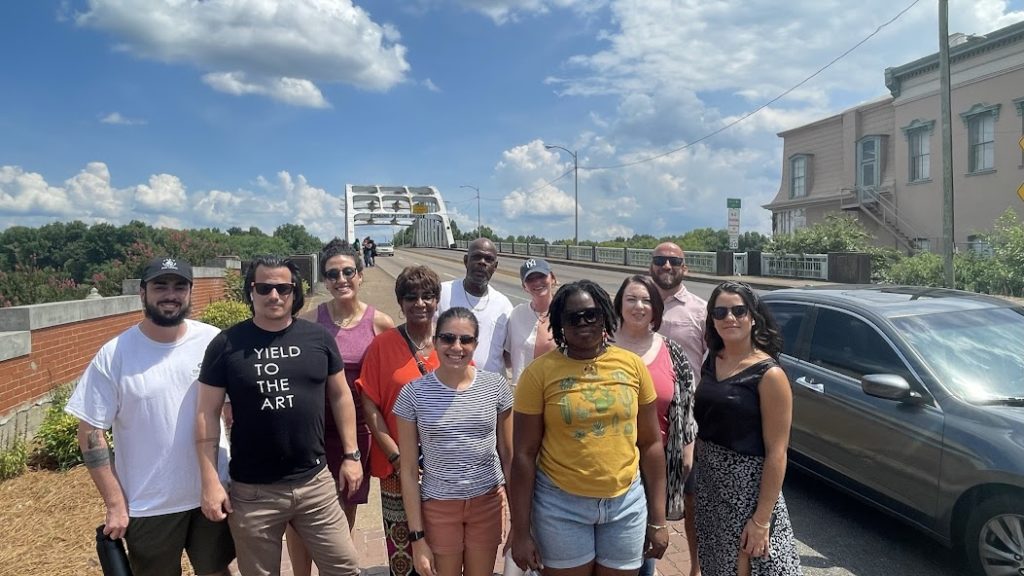
A group of students stands in front of a historic bridge on a sunny day.
A Civil Rights and the Constitution travel course is an immersive experience at Stetson Law.

The 2,000-mile journey takes them to Alabama, Georgia, and Tennessee to meet with still-living veterans of the Civil Rights Movement and explore places like the Edmund Pettus Bridge in Selma, Alabama.

Law Professor Judith Scully, who now teaches the course, said participating students describe the experience as life changing.

“As a professor who has been privileged to help lead this civil rights learning journey, I can say that my life has also been profoundly impacted and each year my commitment to teaching and learning in this program is exponentially multiplied,” Scully said. 

La’Tonya Lynn ’25 said the course gave her a “renewed call to action to make an impact” when she experienced it in 2022. 

“If I am resilient and persevere, I too can be victorious, even when faced with adversity,” she said.

Immersive learning in the classroom

While not all classes involve venturing out into the field, professors find unique ways to build real-world insights into their syllabi.

Law Professor Joseph Morrissey wears a salmon-colored shirt and sits at a seminar table.
Law Professor Joseph Morrissey leads a class discussion.

Through his compressed weekend course “Financial Advocacy,” Professor and Center for Elder Justice Director Mark Bauer covers legal financial literacy along with some cultural competence to help students understand the real-world questions they are going to face from clients and loved ones alike.

In his upper-level business course titled “Documents of the Deal,” Professor Joseph Morrissey brings accomplished practitioners, including alumni like Brittany Maxey-Fisher and Keven and Jenay Iurato, to the classroom for deep dives on a variety of corporate transaction types and the forms associated with them. From formation transactions to mergers and acquisitions and even bankruptcy, the course is meant to prepare students to launch a business law practice. 

“This course is a tremendous opportunity for law students to meet, learn from, and network with business law experts across a range of business fields,” Morrissey said. “It’s been awesome and students love it.”

Kaye Inns Speaker Offers Lessons in Values-Based Branding

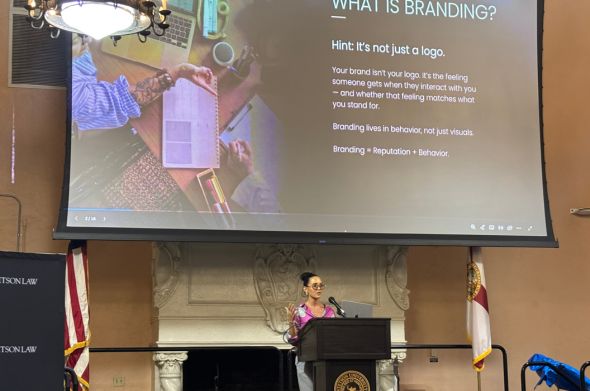
A woman stands at a podium in front of a large screen featuring a slide about branding.
Branding expert Bailey Martindale spoke at Stetson Law in October of 2025.

What does branding have to do with fulfillment?

For legal professionals, more than one might expect.

Earlier this month, Law Professor Tim Kaye hosted a speaker who shared sharp insights about the important connection between personal values and professional identity.

The dinner event was part of the Stetson Inns program, the College’s fresh approach to helping law students develop confidence, understanding, and professional identity. The speaker was Bailey Martindale, founder of Branded Communication, who offered a thoughtful approach to brand-building tailored for legal professionals.

Introducing her, Kaye said the pressures of law school can be so overwhelming that success eclipses everything else.

“As a result, you forget about who you are and what your values were before you started,” Kaye said.

Building a professional identity early – one based on personal values – can help ensure a more fulfilling career in law, he said.

How values factor into brand

Through a series of examples and exercises, Martindale encouraged the students to think about what kind of lawyer they want to be – and how to express that to prospective clients. From aggressive litigators to passionate advocates for justice, there are plenty of options.

Those core characteristics, along with how one conducts him- or herself, form the roots of one’s brand – not, contrary to popular belief, a logo, billboard, or promo.

“Branding isn’t just visuals. Branding is reputation and behavior,” Martindale said. “The most important part of branding is really figuring out your values.”

Professional interactions, digital presence, aesthetic choices, and those with whom one associates send signals that help form a reputation, she added – so they ought to reflect the factors that motivated a lawyer to choose the legal profession in the first place.

Through an exercise she called a “Mini Brand Lab,” Martindale ask the students to choose words they would like to associate with their ethical core (integrity, justice, professionalism), the client experience they would like to create (transparency, compassion, speed), and personal drivers (excellence, legacy, community).

Having a clear personal values statement can help one maintain their professional ethical compass – and their brand – under pressure.

“Obviously, as you know, lawyers often find themselves in fairly stressful situations,” she said. “So how are you holding onto those values that are important to you in stressful situations?”

Aligning values with clientele

During a question-and-answer session that followed her presentation, a student asked what happens if justice is your core value, but a client is pushing you to win at all costs – ethically or otherwise.

“There are those lawyers who want to be known as ferocious lions who will do whatever it takes to win,” Martindale said. “There’s nothing wrong with that.”

If a client’s expectations go against your own ethos, however, it might be time for a difficult conversation.

“That is when I encourage you to fire that client,” Martindale said. “I know that is a scary decision.”

And if the message you’re sending seems to be bringing in clients whose goals do not align with your values, Martindale said, “that is probably telling you it’s time for a rebrand.”

Immersive learning in a relaxed setting

Stetson Law’s award-winning Inns program aims to create a low-pressure environment where first-year students are introduced to everything from essential legal knowledge to practical tools like marketing. The goal is to encourage them to begin to develop their authentic professional identity before the pressures of law school and the legal profession set in – and to make career choices accordingly.

The program consists of smaller groups of first-year law students led by a “Bencher,” or professor – in this case, Professor Kaye – and mentored by 2Ls and 3Ls. Within these smaller groups, Benchers aim to cultivate a sense of belonging and a support system among the students while giving them a chance to meet and hear real-world insights from working professionals in the legal world and beyond.

Learn more about the Stetson Inns.

How 2025 Valedictorian Shelby Ponton, Mother of 2, Made It Work

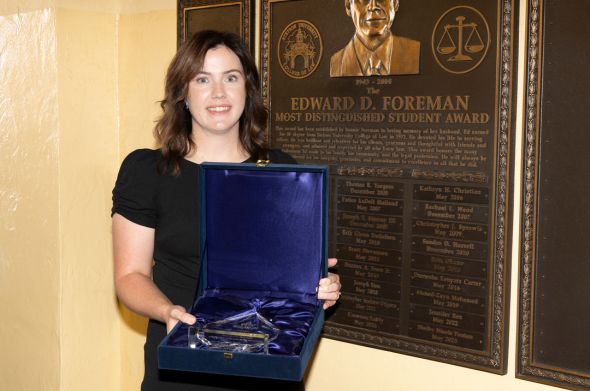
A woman with dark hair and a black dress stands before a plaque highlighting the Edward Foreman Award. She holds the award in a black case lined with purple velvet.
Stetson Law’s 2025 valedictorian is Shelby Ponton.

Upon starting law school, 2025 alumna Shelby Ponton realized she had something not all 1Ls possess: a curiosity about law that made studying a labor of love.

“I genuinely find it interesting,” she said.

The sense of fulfillment, combined with her desire to create a better future for her family, motivated the mother of two to work hard no matter what.

It paid off: Ponton is Stetson Law’s spring 2025 valedictorian. An animal cruelty investigator and rescue coordinator prior to law school, she was also the 2025 winner of the prestigious Edward D. Foreman Award, a member of Stetson’s Moot Court Board, and editor-in-chief of the Stetson Law Review.

She said learning of her valedictorian status was “redeeming.”

“All the long hours, deep thoughts, and sacrifices my loved ones made to help me get to the position I am lucky enough to be in felt worth it,” Ponton said. “More than anything, I feel excited to one day, when my kids are older, tell them how, with discipline and an extraordinary work ethic, they can accomplish anything.”

Balancing law school and family

When she started law school, Ponton and her husband, Zachary Ponton, had an infant in tow. Shortly before she started her second year, she gave birth to their second son. Whether she faced a tough assignment or a sleepless child, she would always focus on what was most important.

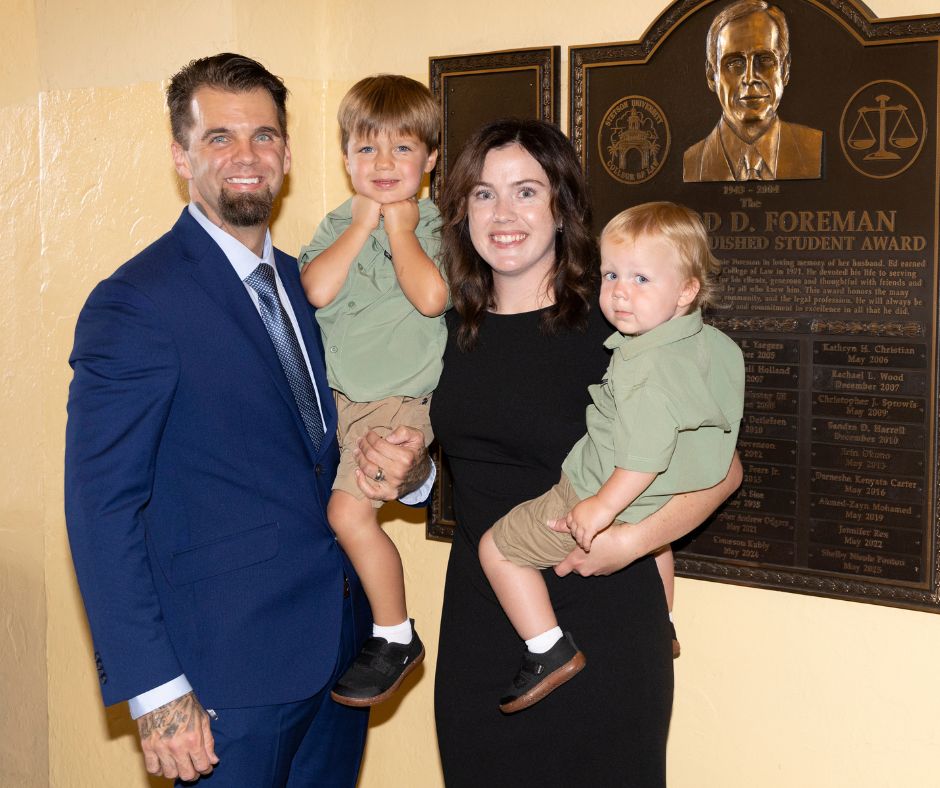
Zachary Ponton and 2025 Valedictorian Shelby Ponton with their two sons in May of 2025.

“When you have competing priorities in life that you really care about, you find a way to make it happen,” Ponton said. “I love my husband and two boys more than life itself and every time I faced a difficult assignment or long night, just thinking of their laughs was enough to get me through it.”

The opposite was also true.

“When the kids wouldn’t sleep or there was a blowout diaper, I’d joyfully think about citations and briefs,” she said.

The family would take their dog, Luna, on walks throughout campus. She said both of her children took their first steps and spoke their first words on the grounds of Stetson Law.

The support of loved ones & colleagues

She said her family was a critical source of support, namely her husband, “who made more sacrifices than I could possibly list to make this dream come true,” she said. She adds that her parents, in-laws, siblings, grandparents, mentors and coaches over the years, colleagues, and friends all factor into her success.

Also, while many Stetson professors positively impacted Shelby’s trajectory, there are a few who served as constant sources of mentorship: Professor Tomer Stein, Professor James Hart, Professor Erin Okuno, and Professor Ellen Podgor.

Serving as editor-in-chief of the Stetson Law Review was an unforgettable experience, she said, one that sparked lifelong friendships formed with members of the editorial board.

When she gave birth just before her 2L year, everyone on SLR united to support the family by providing meals to help offset the stress of sleepless nights. “That goes to show the kind heart of the people involved in this organization, and I am lucky they let me call them my friends,” she said.

On finding your passion

For students who aspire to achieve highly in law school and beyond, Ponton said everyone needs to create an approach to working hard that not only fits their personality and goals, but is sustainable over time – and to have a strong “why” for studying law upon which they can reflect when things get tough.

“Find, build, and lean on your support system,” Ponton said. “Don’t forget that you have control over your own life, your choices, and your future, so take ownership of it.”

Now a litigation associate at the Washington, D.C. office of Kirkland & Ellis, Ponton currently works on complex commercial litigation cases as well as some active pro bono matters.

Stetson Law Welcomes 4 Visiting (and 1 Returning) Professors in 2025

The Stetson Law tower from Plaza Mayor

As Stetson Law continues to maximize its offerings to students as well as magnify its scholarly contributions to legal education, the College is thrilled to welcome four visiting professors and one returning professor emerita to campus in fall of 2025.

Stetson Law is proud of its tradition of inviting visiting faculty to engage in projects that enrich students’ learning experiences while conducting important work that elevates Stetson’s regional, national, and international reputation.

These visiting faculty members represent a broad range of specialties.

Lucian Dervan

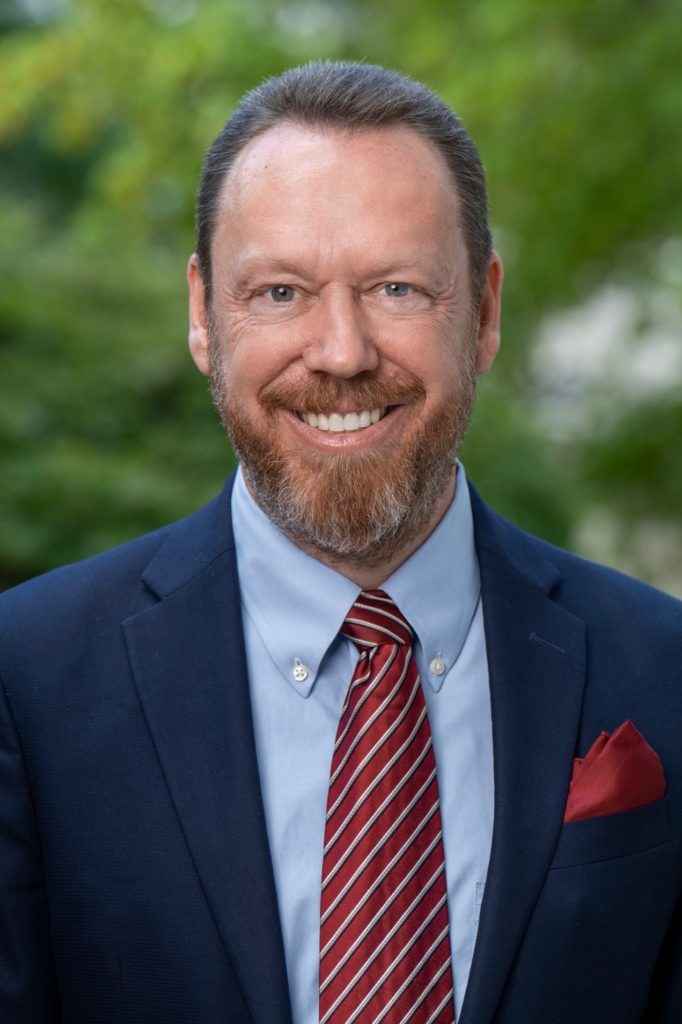
A mean with a beard smiles. He wears a suit and a red tie.
Professor Lucian Dervan

Joining Stetson from Belmont University College of Law, where he is Director of Criminal Justice Studies, Dervan focuses on domestic and international criminal law. The award-winning scholar is also Founding Director of the prestigious Plea Bargaining Institute.

Author of five books and dozens of book chapters and articles, Dervan is also the founder and author of The Plea Bargaining Blog and a contributing editor to the White Collar Crime Prof Blog (a member of the Law Professor Blogs Network), for which Stetson Law Professor Ellen Podgor serves as editor. He also regularly lectures regarding criminal law and has appeared before the United States House of Representatives’ Judiciary Committee. 

Dervan is founder and Chair of the ABA CJS’s Global White Collar Crime Institute, co-founder and co-chair of the ABA CJS’s Frankfurt International White Collar Crime Conference, and a member of the American Bar Foundation.

See Dervan’s full bio.

Sarah Gerwig

A woman with red hair wears a mint collared shirt and a vest.
Professor Sarah Gerwig

Joining Stetson Law from Mercer University, where she is a tenured Professor of Law, Gerwig will teach criminal law and feminist jurisprudence in the fall 2025 semester. 

At Mercer, she has served as Associate Dean for Academic Affairs and Director of Experiential Education. In 2006, she founded the nationally recognized Habeas Project, which provides pro bono representation in post-conviction cases across Georgia. She was awarded the 2013 Shanara Gilbert Emerging Clinician Award by the Clinical Legal Education Section of the American Association of Law Schools in recognition of her work with that clinic.

Gerwig directs Mercer’s unique Introduction to Client Counseling program, and her textbook, What Brings You Here Today? An Introduction to Client Counseling was published in 2021. Gerwig teaches and writes in the areas of criminal law, human rights, law & humanities, and professional responsibility.

See Gerwig’s full bio.

James Mastracchio

An accomplished tax litigator with clientele from around the globe, Mastracchio is a partner at Winston & Strawn LLP, where he has co-led the firm’s tax controversy practice in its Washington, DC office since 2021. He will teach federal income tax and tax practice and procedure as a visiting professor at Stetson Law.

With the distinction of having been lead counsel on international criminal cases in matters involving alleged tax violations, Mastracchio has represented clients before the U.S. Department of Justice and other regulatory bodies.

Mastracchio served as an Independent Examiner in Zurich, Switzerland and for the U.S. DOJ’s Swiss Bank Program and advised overseas financial institutions as well as government agencies on the implementation of the Foreign Account Tax Compliance Act. He was highly influential in the interpretation of inter-governmental agreements and treaty protocols as they relate to tax investigations.

Ira Nathenson

A man in glasses and a backwards hat takes a selfie against the backdrop of a city on a river surrounded by hills.
Professor Ira Nathenson

A passionate scholar in the area of intellectual property, Nathenson joins Stetson Law as a distinguished visiting professor after retiring from St. Thomas University Law School in Miami, where he founded the school’s intellectual property certificate program. While at Stetson, he will teach civil procedure and intellectual property.

Citing his eclectic interests, Nathenson looks for unexpected but compelling connections between seemingly disconnected areas like procedure, human rights, and popular culture.

Nathenson has written extensively on copyright law and other IP matters,  has served as Chair of the Section on Civil Procedure for the Association of American Law Schools, and runs a website featuring extensive civil procedure study resources as well as a companion YouTube channel.

See Nathenson’s full bio.

Professor Emerita Candace Zierdt

A blonde woman in a colorful shirt smiles in front of a stack of books.
Professor Candace Zierdt

Having recently retired from Stetson Law following nearly two decades on faculty, Law Professor Emerita Candace Zierdt returns to teach contracts in the fall 2025 semester.

Zierdt began teaching contracts and commercial law at Stetson in 2006. Prior to that, she taught at the University of North Dakota School of Law from 1990 to 2006. She has chaired the American Bar Association’s UCC committee, the Article 1 subcommittee, and the Article 2 subcommittee. She is also a member of the American Law Institute and the UCC committee for the Uniform Law Commission.

She was director of Stetson Law’s Bruce R. Jacob Visiting Professor Program from its founding in 2009 until 2019.

In January of 2025, she received the American Association of Law Schools’ (AALS) Section on Commercial and Consumer Law Mentorship Award at the AALS meeting in San Francisco.

See Zierdt’s full bio.

Other new faculty members include two new full-time professors as well as two Bruce R. Jacob Visiting Professors.

An International Focus for Newest Full-Time Faculty

Headshots of two women wearing suits

In the fall of 2025, two esteemed educators joined Stetson Law’s faculty as tenure-track professors. Both new hires demonstrate the College of Law’s commitment to growing its already robust offerings in the area of international law, as each brings a unique and impressive set of scholarship and experience to our law school.

Dagmar Rita Myslinska: Immigration Law

Stetson Law has hired noted immigration law scholar Dagmar Rita Myslinska as a tenure-track associate professor.

A woman with blonde, shoulder-length hair wears a blue suit jacket and white shirt. She crosses her arms as she stands in front of a red brick building with white columns.
Professor Dagmar Rita

She joins Stetson from Creighton University School of Law. Her extensive resume includes being the current chair-elect of the Association of American Law Schools’ European Law Section, a lecturer and director of teaching and learning at Goldsmiths, University of London, and a member of the board of trustees of the Migrants’ Rights Network.

Professor Myslinska’s research focuses on immigration and equality rights, using qualitative studies to analyze anti-discrimination and immigration policies in the US, UK, EU, and Japan.  She is currently working on a handbook of comparative international law.

See Myslinska’s full bio.

Klara Van der Ploeg: International Law & D.R.

Joining Stetson Law from the University of Nottingham School of Law, Associate Professor Klara Polackova Van der Ploeg specializes in international law and international trade regulation.

Professor Klara Van der Ploeg

Prior to joining Stetson, she led the Business, Trade and Human Rights Unit (Human Rights Law Centre) at the University of Nottingham, and she served as the Judicial Assistant to Judge Sir Christopher Greenwood at the International Court of Justice in The Hague. 

Her research explores structural questions surrounding international law and global governance, focusing on methods in which international law regulates non-state entities in addressing global problems.  Her monograph Regulating Collective Nonstate Entities in International Law: Rights and Obligations is forthcoming with Oxford University Press.

See Van Der Ploeg’s full bio.

Other faculty members that have joined the Stetson faculty this fall include two Bruce R. Jacob Visiting Assistant Professors as well as four visiting professors and one returning professor emerita.

Learn more about the international law concentration at Stetson.

Explore the College’s new International Law LLM offerings.

Fall ’25 Orientation Features Session on AI

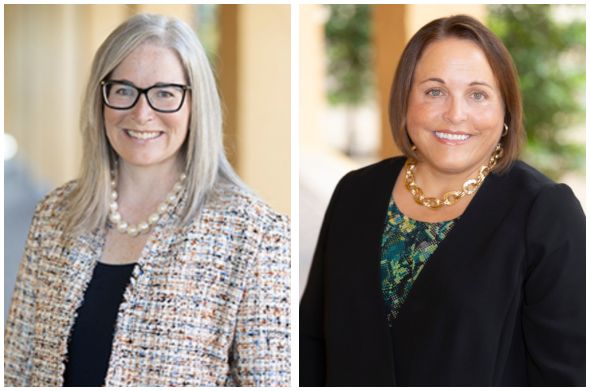
On the left is a headshot of Associate Dean Anne Mullins wearing a woven suit jacket and necklace with large pearl-like beads. On the right is a headshot of Professor Kirsten Davis wearing a black suit jacket and a gold-colored necklace.
Left: Associate Dean for Assessment and Professional Engagement and Professor of Law Anne Mullins; Right: Provost’s Faculty Fellow for Generative AI and Higher Education and Professor of Law Kirsten Davis.

For law students and legal professionals alike, generative artificial intelligence is a double-edged sword: a powerful tool that can enhance work and save time, but only if one knows how and why to use it.

Starting in fall of 2025, Stetson Law’s orientation will now include a training on best practices when using the paradigm-shifting tech in coursework and as legal professionals.

“Generative AI has touched nearly every aspect of our lives, especially in higher education,” said Associate Dean for Assessment and Professional Engagement Anne Mullins. “Orientation is the perfect opportunity to demonstrate how, if used correctly, these tools can support our students’ work as they develop important lawyering skills like attention to detail and critical thinking.”

Important lesson before class is in session

Generative AI is a powerful resource for law students. They can use it as a study aid, a brainstorming tool, and in some of the research they do as students and, eventually, as lawyers. Yet some might not be clear on how to reap the benefits of AI while avoiding poor information sourcing, plagiarism, or overreliance that can interfere with learning.

Designed and led by Dr. Kirsten Davis Professor of Law and Provost’s Faculty Fellow for Generative AI and Higher Education, the orientation course will introduce students using Generative AI ethically and effectively as students and as future legal professionals.

Since incoming students might have varying understandings of the tech and its uses, orientation is the perfect time to establish a baseline from which all students can work.

“I expect that students are wondering how generative AI is impacting law practice and law school and want to know how they should or should not use the tools,” Davis said. “There are many potential missteps with generative AI, and it’s our duty to start students off right.”

She hopes this will help them avoid pitfalls like relying on hallucinated information, examples of which have been seen in court cases where lawyers have included false case citations and fake quotations in court filings.

“Generative AI tools talk to us in our language, but they are not truth machines,” Davis said. “Law students need to understand this at the very start of law school.”

What’s on the agenda

Incoming 1Ls will learn about the technology behind generative AI, its strengths and weaknesses for advocacy and communication, and best practices for ethical use. 

“Importantly, students will get advice on appropriate uses for gen AI in their legal education. A significant goal of this training is to ensure that generative AI tools don’t interfere with their legal education,” Davis said.

In keeping with Stetson Law’s commitment to practice-readiness and professional identity formation, the training also promotes an approach to lawyering that emphasizes ethical advocacy, effective legal communication, preparedness, diligence, and inclusivity.   

“These values include a sense of responsibility to clients, the profession, the rule of law, and a commitment to actively developing the competencies needed for excellence as a lawyer,” Davis said. “The increasing use of generative AI by lawyers suggests that law students will need a framework for understanding how their character as lawyers intersect with the ability of generative AI tools to produce legal communication.”

The bigger picture

The session takes place amid an innovative orientation program that in 2023 was recast into a holistic, interactive format inspired by the inns of court tradition. The program has proven effective in bolstering confidence and creating a sense of community among students as they learn about life as a legal professional.

The American Bar Association recently selected the Inns program for the E. Smythe Gambrell Professionalism Award. The national recognition honors exemplary and innovative programs that promote professionalism.

Earlier this year, the Florida Bar Standing Committee on Professionalism recognized program organizers with its Group Professionalism Award.

To leadership, incorporating AI will ensure 1L orientation – and the Stetson Law experience itself – will equip students for success as lawyers.

“The ability to use generative AI is going to become a foundational lawyering skill in the coming years,” Mullins said. “Stetson graduates will be ahead of the curve in this area, just like they are in other foundational skills.”