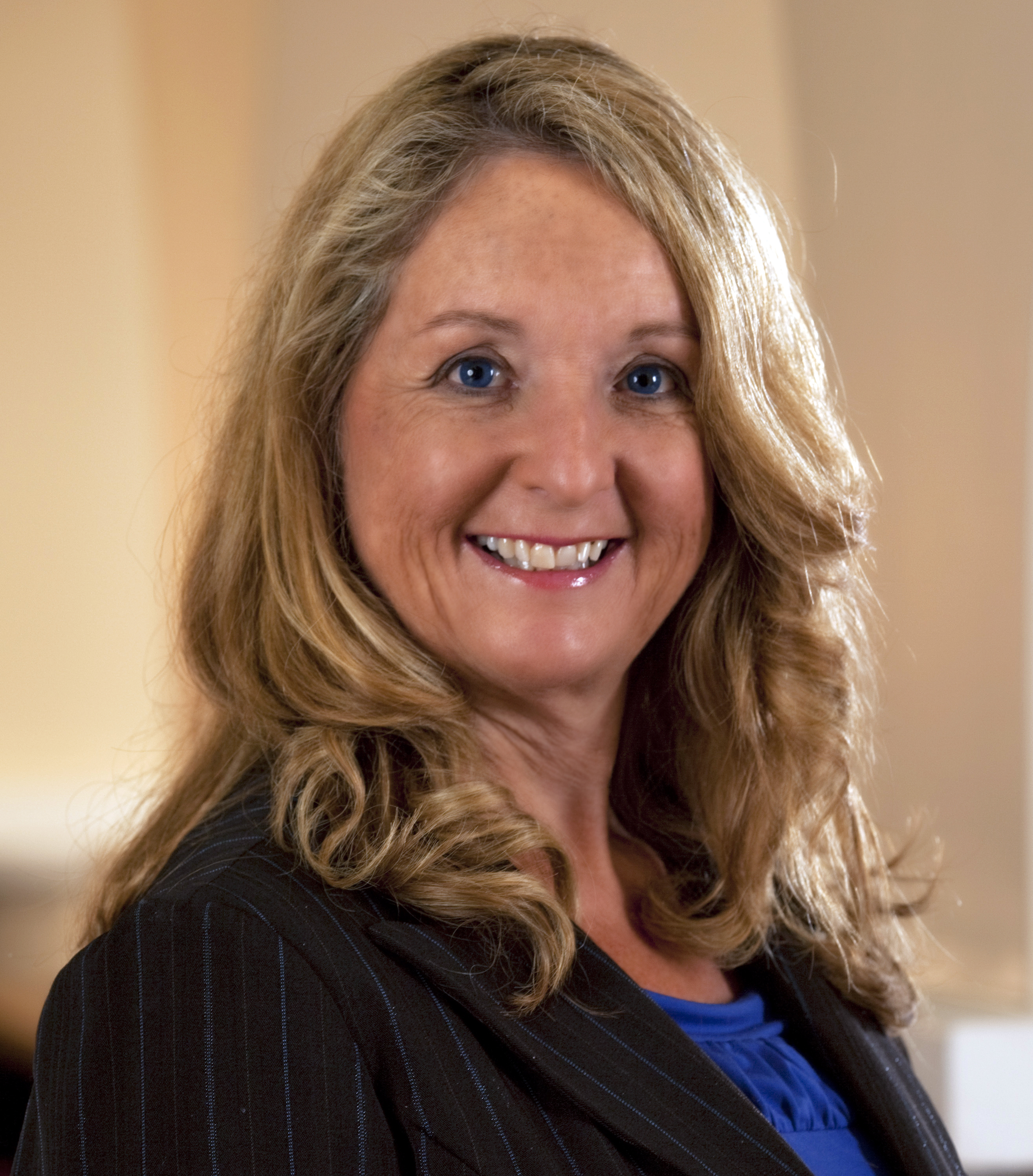
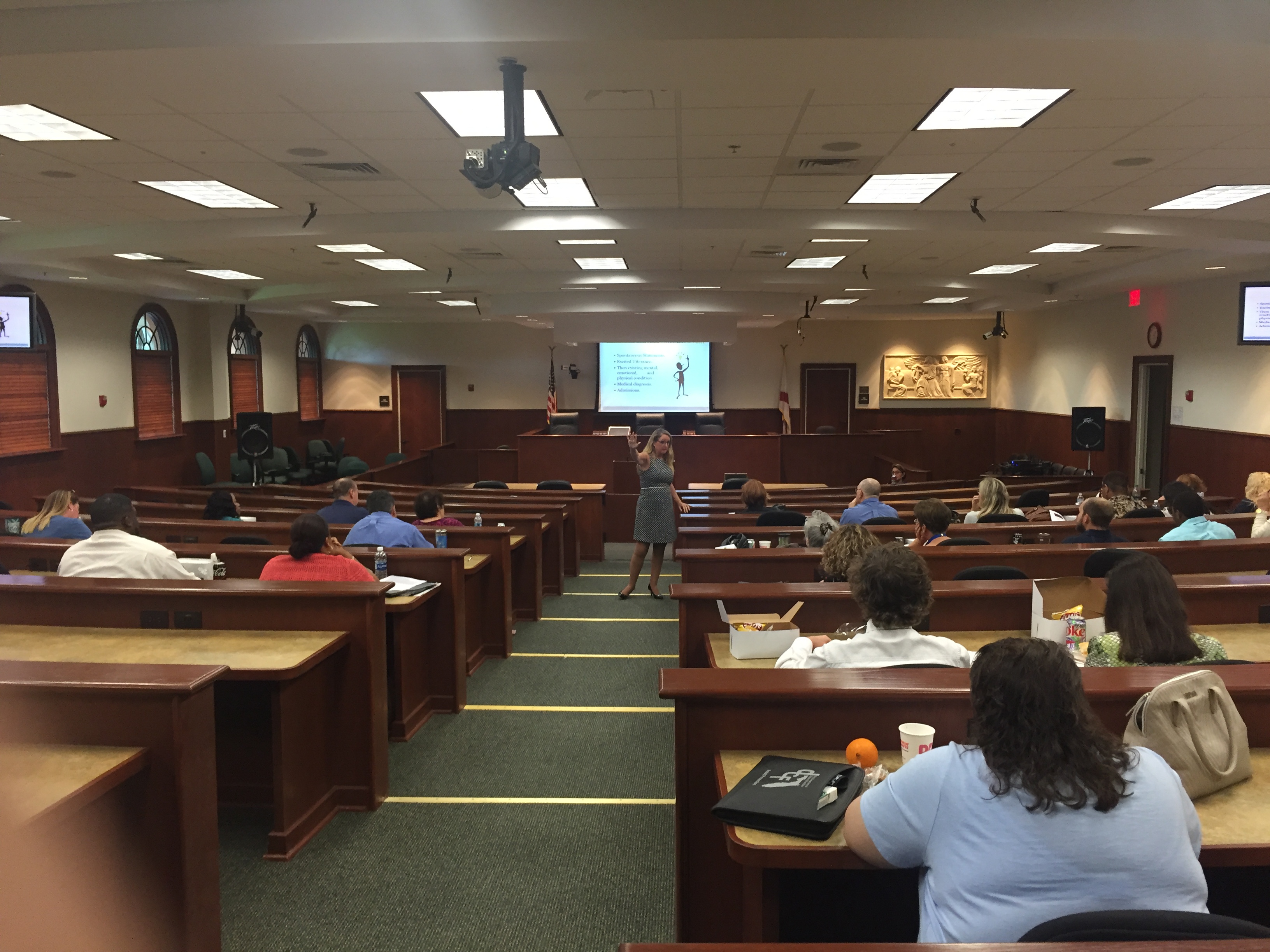
Can international corporations help stabilize society? LexisNexis Executive Vice President and General Counsel Ian McDougall spoke at Stetson University College of Law in Gulfport on Aug. 31.
McDougall presented on the role big business should play in stabilizing society.
Ian McDougall spoke at Stetson. Photo by Karun Rivero
Ian McDougall joined LexisNexis in 2004 as vice president and legal director for LexisNexis International. He sits on the United Nations Rule of Law Steering Committee and is a member of the UN General Counsel Advisory Board.
Stetson University College of Law will reopen on Saturday, Sept. 3, at 8 a.m. The Dolly & Homer Hand Law Library will reopen at 8 a.m. and all classes, clinics, externships, and events will take place as scheduled at both the Gulfport and Tampa campuses.
The worst of the rain and wind associated with Hurricane Hermine appear to be over.
However, we realize that there are some remaining power outages and related storm damage.
If you are experiencing ongoing challenges related to storm damage, please contact your professors or supervisors.
Our first priority is the safety of the Stetson community.
We thank all members of the Stetson community for your patience during this period and look forward to seeing you back on campus.
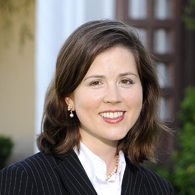
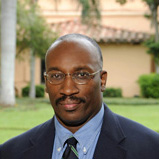
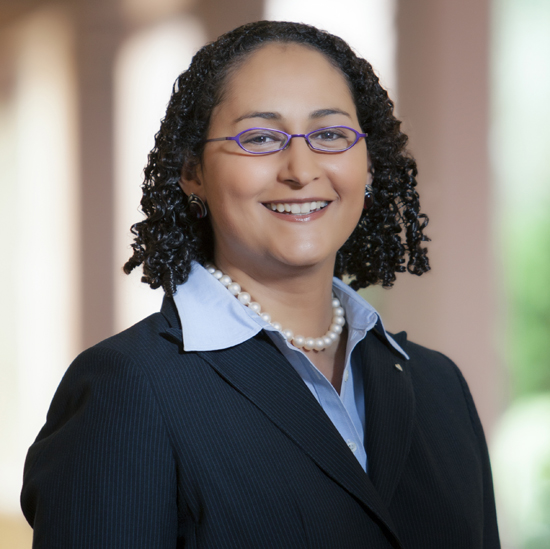
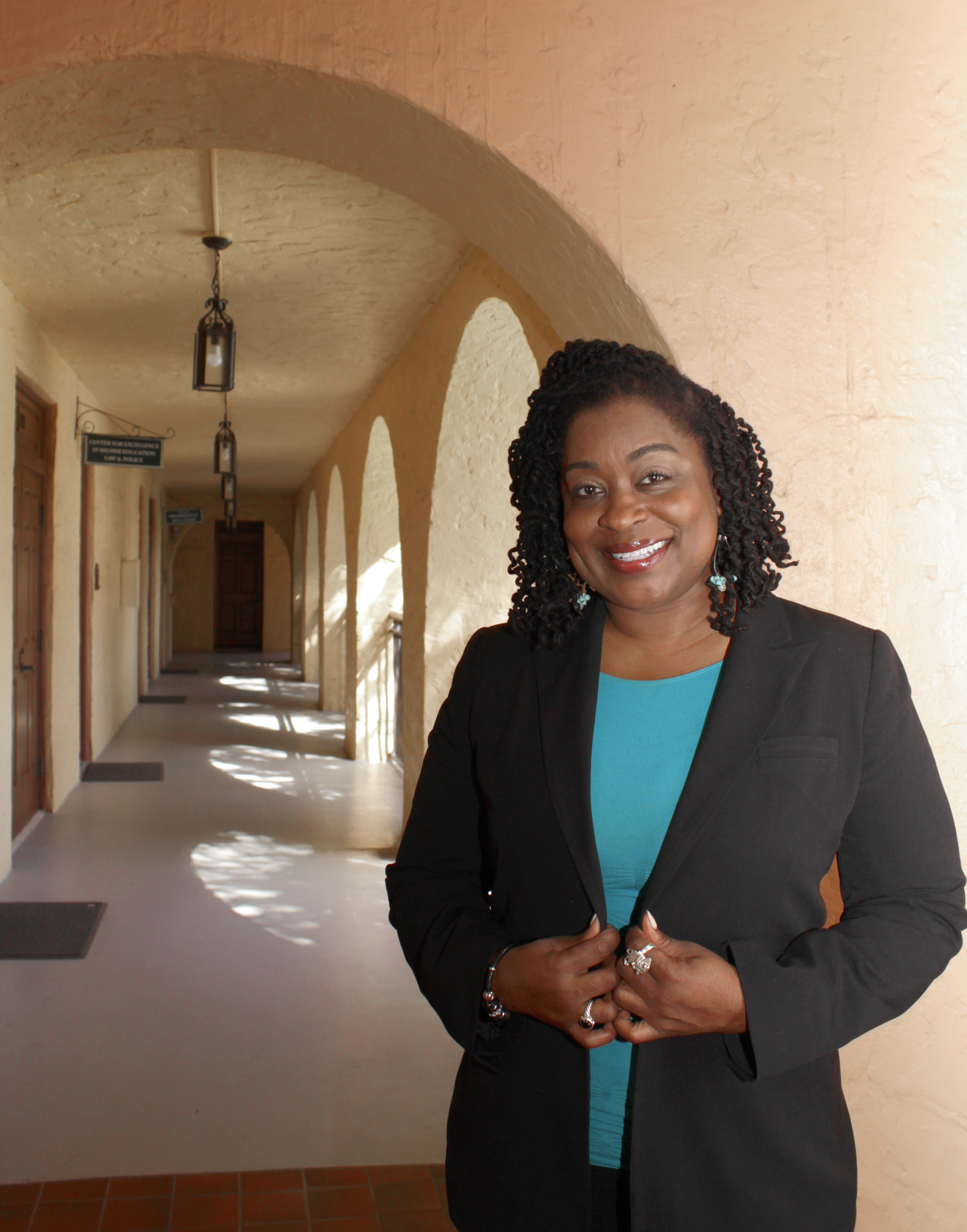
Starting in the fall semester, professors Kristen Adams and Ann Piccard will join Professor Judith Scully to lead the Social Justice Advocacy Concentration program at Stetson University. Together, these three professors will also lead Stetson’s pro bono efforts.
Professor Judith Scully.Professor Kristen Adams.Professor Ann Piccard.
Professor Judith Scully launched Stetson’s Social Justice Advocacy program in 2012 and invited Professor Robert Bickel to serve as co-coordinator. Professor Bickel is retiring this fall. The Social Justice Advocacy Concentration graduated its first full class of students in May 2014.
“I believe that the current challenges facing the legal system in the United States will not be solved merely through litigation in our court system. I feel compelled to educate students about the need to use their advocacy skills outside of the courtroom to urge legal reform,” said Professor Scully.
Since the program began, 22 students have graduated from Stetson with SJA concentration certificates. The students have helped refugees obtain legal assistance, spearheaded initiatives to help close the justice gap, created an urban gardening program for children in juvenile detention centers, challenged approaches to juvenile dependency in Florida law, helped public defenders representing transgender clients and juvenile clients with mental health challenges, helped homeless veterans obtain disability benefits, addressed the issue of criminalizing the homeless in the state, investigated the impact of second hand trauma, and created the curriculum for Stetson’s Street Law education program for middle school students.
Both professors Adams and Piccard have a long track record of working to close the justice gap.
“Serving as an Atlanta Legal Aid Fellow was a transformative experience for me and cemented my interest in social justice advocacy,” said Professor Adams.
After leaving Atlanta Legal Aid to return to her own firm, Adams had the opportunity to continue, for a short while, to represent public-housing tenants in a landlord-tenant dispute against the Atlanta Housing Authority.
“I was raised by politically progressive university professor parents, and had my first volunteer job, as a Head Start assistant, at age 12,” said Professor Piccard, who also joins the SJA team this fall. “Social justice advocacy is in my genes.”
Piccard began her legal career as a Reginald Heber Smith Community Law Fellow, a competitive, nation-wide program designed to attract highly qualified new lawyers to work with the federally-funded non-profit Legal Services Corporation. When her “Reggie” Fellowship concluded, Piccard went to work at Bay Area Legal Services, in Tampa, where she spent nearly 10 years, first as the pro bono coordinator supervising hundreds of volunteer lawyers, then as staff attorney and eventually supervising attorney for the Impact Litigation group at Bay Area.
Attending college during the Civil Rights Movement had a great impact on Professor Bickel’s desire to attend law school. Professor Bickel began his legal career with the U.S. Department of Justice Honors Program. He worked for the State of Florida with Lyndon Johnson’s first anti-poverty housing initiative. He created courses at Stetson during his 38-year tenure including the Constitutional Law and the Civil Rights course, the Employment Discrimination Law course and equal employment internship.
“Every subject I teach is in one form or another about people’s rights—the principle of equality,” said Professor Bickel.
In her legal practice, Professor Scully focused primarily on civil rights and criminal defense litigation She has been active in several human rights movements including the movement to end police violence in the black community in the city of Chicago; the movement to end contraceptive abuse against the bodies of women of color worldwide; the movement to respect women’s right to prenatal health care, as well as the right to obtain health care to terminate pregnancy; and the movement to end racial apartheid in South Africa.
“We must seek change not only in the courtroom but in the legislature, in administrative agencies, in local community and political organizations, and in ourselves by honing our advocacy skills to become the most effective leaders we can be,” said Professor Scully.
Professor Robert Bickel.
Jennifer Quijano J.D. ’13, the first graduate of Stetson’s SJA program, is now an attorney with the Legal Empowerment and Assistance Program in Brooklyn, New York, a legal assistance program that has been helping tenants avoid eviction and obtain repairs in the Bushwick neighborhood for close to a decade.
“Our graduates personify the meaning of social justice advocacy and the law’s highest purpose, to represent those who most need simple justice,” said Professor Bickel.
Stetson University College of Law’s Foreman Biodiversity Lecture series returns to campus starting in September. All lectures are complimentary and open to the public on Stetson Law’s Gulfport campus, 1401 61st St. S.
Upcoming lectures include:
Sept. 1, 12 p.m., Great Hall, Robert Williams, chief deputy general counsel of the Florida Department of Environmental Protection
Sept. 29, 12 p.m., Great Hall, Dr. Naomi Rose, marine mammal scientist at the Animal Welfare Institute
Nov. 3, 12 p.m., Great Hall, Jeanne Christie, executive director of the Association of State Wetland Managers
Stetson’s Foreman Biodiversity Lecture series is coordinated through the Institute for Biodiversity Law and Policy, which is the recipient of the 2016 Distinguished Achievement Award in Environmental Law and Policy. To learn more about environmental law programming and the Institute at Stetson, visit www.stetson.edu/law/biodiversity.
Attorneys’ Title Fund Professor of Law Darryl C. Wilson has been named associate dean for faculty and strategic initiatives at Stetson University College of Law.
Associate Dean for Faculty and Strategic Initiatives Darryl C. Wilson.
Associate Dean Wilson is the director of the Intellectual Property Law Internship Program, the American-Caribbean Law Initiative, and co-director of the Institute for Caribbean Law and Policy at Stetson. Wilson has taught around the world in the Caribbean, Estonia, the Netherlands, Spain, South Korea and Zambia. He is the faculty adviser for the Intellectual Property Law Society, Sports and Entertainment Law Society, the Real Property Probate & Trust Law Society, and the Black Law Students Association. He teaches Real Property, Real Estate Finance, Housing and Home Ownership for the Elderly, Trademarks and Unfair Competition, Copyrights and Patents, International Intellectual Property, Alternative Dispute Resolution, Sports Law and Entertainment Law at Stetson.
Wilson is a member of several professional and community organizations, and serves in alternate dispute resolution for international, national and state agencies. He is the author of several articles and co-author of a casebook on sports law, editor and author of two books on real property law, and is a regular contributor to the ABA Probate & Property Magazine. He has also been certified as a NFL Players Association contract adviser.
Before joining the law faculty at Stetson, Wilson was an associate professor at Detroit College of Law, now Michigan State University College of Law. He taught bar review courses and practiced law in his hometown of Chicago before joining academia full time. He began his legal career as a public interest law fellow, served as staff attorney and pro bono coordinator with the Cook County Legal Assistance Foundation, and later served as in-house corporate intellectual property counsel for Soft Sheen Products, as a regional counsel for real property affairs with the UAW, and as the principal attorney in his own private firm.
“Corporate citizens are strange bedfellows to have in a democracy,” Professor Ciara Torres-Spelliscy writes in the June 14 American Constitution Society Blog.
Torres-Spelliscy posits that corporations have steadily gained more rights, including those previously only applied to human beings, like religious and political speech rights. Her new book examines how these rights are not balanced with responsibilities, illustrating a lack of corporate accountability in everything ranging from taking care of the environment and paying taxes to respecting human rights and playing fair in important elections.
“Protecting the ideal of one-person-one-vote requires mitigating the power of corporate money in politics,” Torres-Spelliscy writes in the ACSBlog. “In this election year, the topic of the appropriate bounds of corporate power continues to be raised by candidates and voters alike.”
The book addresses how investors, customers and lawmakers have resisted expanding corporate power.
“2016 may be the election where campaign finance reform finally becomes an issue for the average voter,” says Torres-Spelliscy. “Already, three presidential campaigns have made campaign finance reform a focus of their reforms that they would enact if they win the presidency. These reforms could take the form of trying to reverse the Citizens United decision, which is a 2010 decision from the Supreme Court; it could take the form of small donor public financing; or it could take the form of better disclosure so that we end the dark money problem that we have in our elections.”
Corporate Citizen? includes interviews from a range of voices including Demos president Heather McGhee, Campaign Legal Center director Trevor Potter, congressional candidate and professor Zephyr Teachout, Ben & Jerry’s co-founder Ben Cohen, Center for Media and Democracy executive director Lisa Graves, Sustainable Investments Institute executive director Heidi Welsh and former Greenpeace director Phil Radford.
“The ultimate hope articulated by Corporate Citizen? is that we are not so far gone that we cannot restore real citizens back to their proper place at the center of American democracy,” writes Torres-Spelliscy.
Future law students can learn more about the part-time law program at Stetson University College of Law during an open house on Thursday, Aug. 25, 6-7:30 p.m., at the Gulfport campus, 1401 61st St. S.
Tammy Schweinsberg graduated with her law degree from Stetson’s part-time program in December of 2015.
By taking evening classes at Stetson’s Tampa Law Center and the Gulfport campus, busy people with daytime commitments can earn a law degree in as little as four years from the top-ranked law school in the U.S. for trial advocacy (No. 1) and legal writing (No. 3).
Recent outstanding graduates of Stetson’s part-time law program include Tammy Schweinsberg J.D. ’15, single mom of six children ranging in ages from six to 19, and Jounice Nealy-Brown J.D. ’16, director of communications at the Tampa Bay Times.
When Deleso A. Alford visited Stetson law school’s Gulfport campus briefly this summer, she brought with her an important goal: collaboration.
Professor Deleso Alford visited Stetson law school in July.
The Florida A&M University law professor’s research and teaching focuses on building a framework for cultural competence through the lens of personal narratives that shapes the way we see and understand each other.
During her short time as a visiting scholar at Stetson, Professor Alford met with both administrative and law faculty; staff in the Veterans Advocacy Clinic, Center for Excellence in International Law, Office of Career Development; and spoke with student leaders. She videotaped an interview with Black Law Student Association student president Kaarl Brandon and conducted research at Stetson’s Dolly & Homer Hand Law Library.
During her Stetson visit, Professor Alford also met with University of South Florida Health leadership and faculty. Stetson and USF offer a dual degree program in law and public health, and Stetson’s Veterans Advocacy Clinic and USF Health are legal and health care advocacy partners who work together to improve access to veterans benefits.
Professor Alford holds J.D. and LL.M. degrees respectively from the Southern University Law Center and Georgetown University Law Center, and is currently seeking a Certificate in Clinical Bioethics from the Medical College of Wisconsin. She teaches law school courses on torts, race and the law, bioethics and the law, and critical race theory at Florida A&M. Professor Alford also serves on the adjunct faculty and co-directs integrated curriculum for the Culture, Health and Society Longitudinal Curricular Themes at the University of Central Florida College of Medicine.
Professor Alford explained how she uses the lens of both historical and “her-storical” narratives to improve students’ focus on abstract concepts. In her work in medical education, Professor Alford discussed how she illustrates the issue of healthcare disparity through the story of Henrietta Lacks, an African American woman whose cells were taken without her knowledge or permission to be used in experiments that led to decades of path-breaking medical discoveries for vaccines and other treatments. Lacks’ case ignited legal and ethical debates over a patient’s rights to their own genetic material. Professor Alford described how exposing medical students to the Lacks story builds a framework for ethics rooted in cultural competence. Medical students become more aware of what it means to treat a patient differently based on culture, race, sex or education. In the same way, Alford said that law students and members of the legal profession can improve their understanding of clients’ needs by enriching their own cultural competency.
“A culturally competent lawyer who practices cultural humility needs to accept and address bias,” said Alford, who disagrees with Justice Harlan stating in the dissent in Plessy v. Ferguson that “our Constitution is colorblind and neither knows nor tolerates classes among citizens.”
“We have to deal with the notion of colorblindness in order to have cultural competency in the law,” said Alford. “We need culturally competent advocates.”
Professor Alford is the senior editor of the award-winning “Enslaved Women in America: An Encyclopedia,” and numerous articles. She is working on her forthcoming book, “Tuskegee’s Forgotten Women: The Untold Side of the U.S. Public Health Service Syphilis Study.” Professor Alford has lectured around the world, in Brazil, England and most recently in Cuba where she also moderated a panel of Cuban lawyers and judges.
Professor of Law Louis Virelli tackles the highly controversial topic of judicial recusal and the separation of powers that is the cornerstone of American democracy in his new book Disqualifying the High Court. Read more at the University Press of Kansas.
Professor of Law Louis Virelli.
“Recusal has emerged as an issue in the presidential campaign, in the form of Republican candidate Donald Trump’s criticism of Judge Gonzalo Curiel for not stepping aside from the civil suit against Trump University,” Tony Mauro wrote in A Law Prof’s Take on Judicial Recusals, the Williams Decision and Trump for the National Law Journal. “The high court itself has faced recusal controversies in recent years, prompting calls for justices to be more transparent in explaining why they do or don’t recuse in certain cases.”
“Stetson University College of Law professor Louis Virelli III has just written Disqualifying the High Court, a book about recusal that focuses mainly on the Supreme Court but also charts the history of recusal statutes, many of which he believes are unconstitutional,” Mauro wrote.
Virelli is a Professor of Law at Stetson University, teaching courses in administrative law, civil procedure, constitutional law and the federal courts. Professor Virelli writes primarily in the areas of constitutional and administrative law. His most recent work has focused on judicial review of administrative agencies and the constitutional issues surrounding the recusal of Supreme Court justices.
Professor Virelli’s articles have appeared or are forthcoming in journals including the Alabama Law Review, North Carolina Law Review, the Wisconsin Law Review, the Washington & Lee Law Review, the Northwestern University Law Review Colloquy, the Iowa Law Review Bulletin, the Administrative Law Review and the University of Pennsylvania Journal of Constitutional Law. He is a member of the Planning Committees for the Southeastern Association of Law Schools and the AALS Section on Administrative Law and Constitutional Law. Before joining academia, Professor Virelli served for five years as a trial attorney in the Civil Division of the United States Department of Justice in Washington, D.C.
The Center for Excellence in Elder Law recently completed a four-month training program with the Florida Department of Children and Families Suncoast Regions adult protective service investigators on June 1-2 at the Tampa Law Center.
Professor Roberta Flowers co-directs Stetson’s elder law center.
Approximately 70 adult protective service investigators from Hillsborough, Pasco, Pinellas, Sarasota, Manatee, DeSoto, Lee, Glades, Collier, Charlotte, and Hendry Counties completed the training.
Training program attendees had an opportunity to improve the knowledge base and skills that they use on a day-to-day basis while investigating allegations of elder abuse in the greater Tampa Bay area.
Professor Roberta Flowers conducted training at the Tampa Law Center.
The first of the three-phase program began in February with a live training session at the Tampa Law Center. Topics covered included interviewing clients with dementia, writing effective reports, investigating with an eye towards prosecution, and civil guardianship law. The second phase of the program included a series of five video lectures that the investigators watched at their monthly staff meetings that covered topics such as reviewing medical records, addiction in the elderly, self-neglect, powers of attorney and working with elder law attorneys. The third and final phase of the training was a live skills training day where the investigators honed their interviewing and testifying skills.
After attending lectures by Stetson professors Roberta Flowers and Kelly Feeley, the investigators broke into small groups led by some of the region’s best trial attorneys where they applied newly learned techniques through mock client interviews and testifying at a mock trial.
Speakers included professors Kirsten Davis, Feeley and Flowers; Judge David Demers; St. Petersburg College Policy Ethics and Legal Studies Dean Susan Demers; ASA Julia Metts; attorneys Bob Biasatti, David Blum, Jeff Brown, Patricia Calhoun, Christopher DeCarlo, Jay Hebert, Dominique Heller, Steve Hitchcock and Shirin Vesely; Director of Education at University of South Florida Health Byrd Alzheimer’s Institute Eileen Poiley; and Elder Consumer Protection Fellow Brandon Robinson.
Professor Roberta Flowers, co-director of the Center for Excellence in Elder Law, designed the APS investigator training program, which was fully funded by a grant from the Joy McCann Foundation.
“The Center for Excellence in Elder Law would like to extend an enormous thank you to the Joy McCann Foundation for supporting this worthy project, and to the many doctors, attorneys, academics, and APS supervisors who donated their most precious resources, their time and knowledge, to make this program a resounding success,” said Robinson.
The College of Law will open today (Tuesday, June 7) at noon. Scheduled classes and activities beginning at noon or later will proceed as scheduled. The Library will also open at noon. For those students participating in external clinics or externships, please consult with your supervisor and Professor Batt for additional guidance.
In the event that weather conditions create individual difficulties for students, please work with your professor and Dean Rozelle. In the event that the weather conditions create individual difficulties for employees, please work with your supervisor and our Office of Human Resources.
When Dr. Kirsten Davis, director of Stetson’s Institute for the Advancement of Legal Communication, designed and implemented a new program two years ago, she knew she wanted to provide students with more opportunities to improve their communication skills and make them better lawyers. Stetson’s legal writing program, under Davis’s direction, is consistently ranked among the nation’s best law school programs. Davis created a new extracurricular enrichment program to ready law students to be effective communicators in the legal practice.
Dr. Davis teaching at Stetson law school.
Students who complete the year-long Advanced Legal Writing and Communication Skills Development Program learn what communication skills are expected in the legal practice environment, the communication issues common to legal practice, and strategies for effective communication in practice. Students completing the program in the last two years include Brooke Charlan, Cherish Fuller, Giselle Girones, Timothy Jones, Ivan Lys-Dobradins, C. Brandy Perez, Lauren Rice, Alexander Stewart, Paul Thompson and Jami Worley.
“Lawyers engage many different audiences in many different contexts, so having a solid set of communication strategies to draw upon is important for the new lawyer,” said Davis. “This program familiarizes students with some of those strategies and gives them the opportunity to practice the skills and get feedback.”
“The assessments were practical,” student Giselle Girones said after completing the program, “and they helped me learn how to best prepare documents for real world practice.”
To complete the program, students attended at least eight legal communication workshops that addressed listening and non-verbal communication strategies; business, influential, and cross-cultural communication; contract and complaint drafting; and professional communication in litigation.
“I wanted to gain more experience drafting documents, while also having the opportunity to have my work product reviewed by the legal writing faculty of Stetson, whom I consider the best legal writing professors in the U.S.,” said Lys-Dobradin. “This program is a nice break from learning substantive material because it makes you take a step back and analyze the legal profession from outside of the box.”
Davis and her Institute colleagues, Catherine Cameron, Jason Palmer and Lance Long, taught the program, along with guest faculty speakers. After attending workshops, students completed and received faculty feedback on at least six written and oral communication assignments ranging from a witness interview, a self-reflection on nonverbal and cross-cultural communication, a complaint, a motion in limine, a motion for sanctions, a contract, a business meeting agenda, a client letter and a business development email.
Students also built an electronic portfolio to store and showcase their work to prospective employers and completed a legal grammar and citation self-study course. To wrap up the program, the students applied what they learned to assess others’ legal communication skills in a legal practice setting.
“You can always learn new skills and reinforce old ones,” said Jones. “We built a portfolio of legal documents to share with prospective employers, and the portfolio is an e-portfolio so we can easily share the portfolio with a web address.”
“I found the program worth my time,” said Rice. “I became more aware of my communication style and learned how to communicate effectively and confidently. The feedback I received on the assignments was extremely beneficial because it was so specific and individualized.”
The program is sponsored by Stetson’s Institute for the Advancement of Legal Communication. The Institute is a new initiative that is a home for the study of the legal communication issues that face lawyers, judges, other professionals, and the public.