
Law Professor Ciara Torres-Spelliscy wrote a Sept. 26, 2019, blog post for the American Constitution Society called, “Congress Has Used Campaign Finance for Impeachment Before: Here’s How To Do It Now.”
SCOTUSblog – Sept. 27, 2019 – Professor Ellen S. Podgor
Law Professor Ellen Podgor was featured in an online symposium for SCOTUSblog. The blog post introducing the symposium and its participants is called, “SCOTUSblog online symposium previews ‘Bridgegate’ political corruption case,” and Professor Podgor’s piece is, “Symposium: Corruption is not a crime.” This symposium is promoted on both the Doug Cogan blog and the Sentencing Law and Policy Blog.
ABA Journal – Oct. 2, 2019 – Professor Ellen S. Podgor
Law Professor Ellen Podgor was quoted in an Oct. 2, 2019, ABA Journal article called, “Split intensifies over prosecutors’ ethical disclosure duties.”
Election Law Blog – Oct. 4, 2019 – Professor Ciara Torres-Spelliscy
Law Professor Ciara Torres-Spelliscy was mentioned on the Election Law Blog as a panel speaker for the Don McGahn II and Bob Bauer In Keynote Conversation at George Mason Conference in Washington, D.C. on Oct. 4, 2019.
Two Stetson professors contribute to book on Mueller investigation

Law Professors Ellen S. Podgor and Louis J. Virelli III co-authored, along with five other legal scholars, the book The Mueller Investigation and Beyond published by Carolina Academic Press this year.
From the publisher: “The Mueller Investigation and issues emanating from that investigation are at the heart of this book, providing a contextual setting for learning and reviewing materials across the law school curriculum. The book includes cases, essays, and other materials that allow it to be used as a capstone course for classroom discussion in areas of administrative law, civil procedure, counterintelligence and congressional investigative activity, constitutional law, criminal law and procedure, election law, evidence, and professional responsibility.”
The book was used Nov. 3, 2019, in a special class at Stetson called the Mueller Investigation and Beyond.
“Professor Virelli and I authored this book for the purpose of providing materials to law students so that they could understand the appointment of a special counsel and the Mueller Report,” said Podgor.
In Chapter One, Podgor provides a general overview of the appointment and purpose of having a special counsel in this instance. It also covers Special Counsel Robert Mueller’s submission of his Report and the statements made by Attorney General William Barr upon release of the un-redacted portions of the Report. This chapter provides the contextual setting for the later chapters in the book.

In Chapter Two, Virelli, looks at the appointment of Special Counsel Robert Mueller and the controversies raised following his appointment. It examines cases where a special counsel appointment has been reviewed in courts. Both administrative law and constitutional law are the focus of this chapter.
For Chapter Seven, Podgor, looks at Obstruction of Justice, the focus of Volume Two of the Mueller Report. It dissects the applicable federal obstruction statutes and considers this with the Mueller Report’s legal framework. It then looks at the executive summaries that match the law with the alleged conduct. It concludes by examining statutory and constitutional defenses that were considered during the Mueller Investigation. This chapter offers an examination of criminal law, federal criminal law, and white-collar crime issues.
About Professors Podgor and Virelli
A former deputy prosecutor and criminal defense attorney, Professor Ellen S. Podgor teaches in the areas of white collar crime, criminal law and criminal procedure: adjudication. She has previously taught other courses, such as professional responsibility, international criminal law, criminal procedure, law and sexual orientation seminar, and trial advocacy.
Louis Virelli is a Professor of Law, teaching courses in Administrative Law, Civil Procedure, Constitutional Law I, and the Separation of Powers. He is the faculty advisor to the Stetson chapter of the American Constitution Society, the Stetson Law Democrats, and the Federal Bar Association.
Law Professor tackles political branding in new book
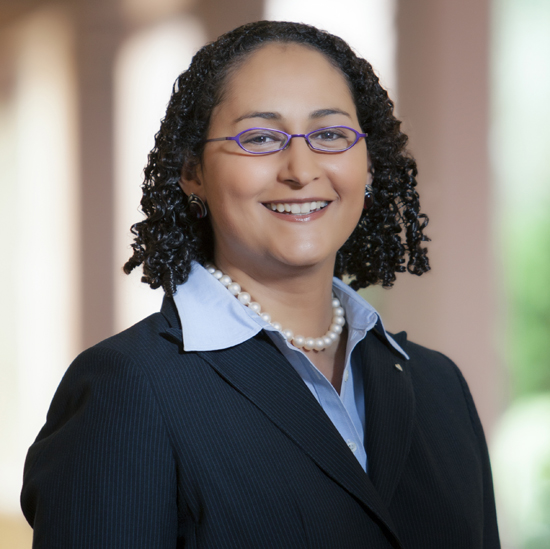
Law Professor Ciara Torres-Spelliscy wrote a new book called Political Brands that examines how branding and politics have gone hand in hand throughout history. It was published in September 2019 by Edward Elgar Publishing.
From “I Like Ike” to President Donald Trump’s MAGA hats, branding in politics have sold both ideas and candidates. Political Brands explores the legal framework for the use of commercial branding and advertising techniques in political campaigns, as well as the impact of politics on commercial brands. The book examines how branding is used by citizens to change public policy, from Civil Rights activists in the 1960s to survivors of the 2018 Parkland massacre.
Torres-Spelliscy, an expert on campaign finance, election law and constitutional law, said she wrote the book to, “help myself and my fellow citizens understand this strange American political moment in which branding is overtaking truth in elections and in every day political discourse.”
Book written for mass audience and academics alike
Each chapter focuses on another aspect of American political life that is being rebranded, from branding corruption and branding treason to branding greed, branding tragedy and more. The book was written to be accessible for the average citizen – especially as the 2020 election ramps up.
“America is experiencing a period of truth decay. I hope readers of the book will better understand this phenomenon and not fall for clever political branding that tries to tug at our emotions and fog the mind.”
Torres-Spelliscy also wanted the book to be useful for the academic community, so it includes full footnotes to allow scholars to build on its findings. For democracy advocates, the book ends with a raft of policy suggestions to improve and strengthen the democratic process.
Lessons to learn
“I hope that readers of Political Brands now and in the future gain a better understanding of how the Supreme Court has shaped the landscape for electoral politics by inviting corporations to spend in U.S. elections, allowing lying in elections to go unpunished and refusing to hold corrupt politicians liable for their actions,” said Torres-Spelliscy. “Against this legal backdrop, politicians and other political actors are flooding the electorate with myths, misstatements and outright lies. Often politicians, including the president, use commercial branding techniques to shape their messages to the public. And in the midst of this, the public is often told not to believe what their own eyes are witnessing, or that a reliable source of disquieting information is ‘fake.’”
Political Brands will also provide readers with needed context now and in the future of how President Trump got to the point of an impeachment inquiry by the House of Representatives.
You can find the book can find it on Google Play or Amazon.
Law Professors author second edition of legal writing tome

Law Professors Catherine J. Cameron and Lance N. Long co-authored the manual, The Science Behind the Art of Legal Writing: Second Edition, published by Carolina Press.
“New research on topics already addressed in the first edition spurred us to write the second edition,” said Long. “We also added a chapter on the science of using the passive voice and a chapter about how legal readers actually read what is written on a page or screen, which highlights recent research by Professor Cameron.”
The book is the first comprehensive compilation of research addressing legal writing and provides a much-needed resource to legal writing professionals, according to the publisher. The second edition updates the research in the first addition and adds chapters addressing the science of passive voice and the effect of legal training on how students read legal text.
Reviewer Amy Lipford wrote in the Law Library Journal of the first edition, “Even when incorporating the scientific elements of writing, this book is highly readable and well paced…Overall, Cameron and Long have created a book that is valuable for first-year law students and legal scholars alike. Its insights bring new life into old legal writing wisdom.”
About Professors Cameron and Long
Professor Catherine Cameron teaches and researches in the areas of legal writing and media law. She earned a bachelor’s degree in journalism, a master’s degree in mass communications, and a law degree from the University of Florida.
Professor Lance Long joined Stetson after having taught legal research and writing for nine years at J. Reuben Clark Law School, Brigham Young University, and at the University of Oregon School of Law. Before teaching, he was in private practice in California and Utah in the areas of intellectual property, contract, and construction law.
Law professor examines concept of ‘fault’ in contract law in new article

Law Professor Marco Jimenez’s article, “Retribution in Contract Law,” was published in the University of California-Davis Law Review, and Lawrence Solum featured the article on his Legal Theory Blog.
Article Summary
Traditional contract doctrine holds that there is no place for “fault” in Anglo-American contract law, in which a promisor is said to be held strictly liable for breaching a contract and is merely required to compensate the promisee for its disappointed expectations. However, in a recent article, “Retribution in Contract Law,” Professor Jimenez argues that if we focus on what judges do rather than on what they say they do when they decide contracts disputes, the wrongfulness of the promisor’s breach plays an important role in determining the remedy a court will ultimately award, indicating that courts are not only compensating injured promisees, but punishing breaching promisors as well.
About Professor Jimenez
Marco J. Jimenez is a Professor of Law at Stetson and teaches and writes in the areas of Contracts, Remedies, Western Legal Thought, International Sales Law and Arbitration, and Interdisciplinary Jurisprudence. Before joining Stetson’s faculty in 2006, Professor Jimenez clerked for the Honorable James Lawrence King on the U.S. District Court for the Southern District of Florida, and practiced in the areas of contract, antitrust, and securities law.
Law professor examines judges’ training in empirical data in new article
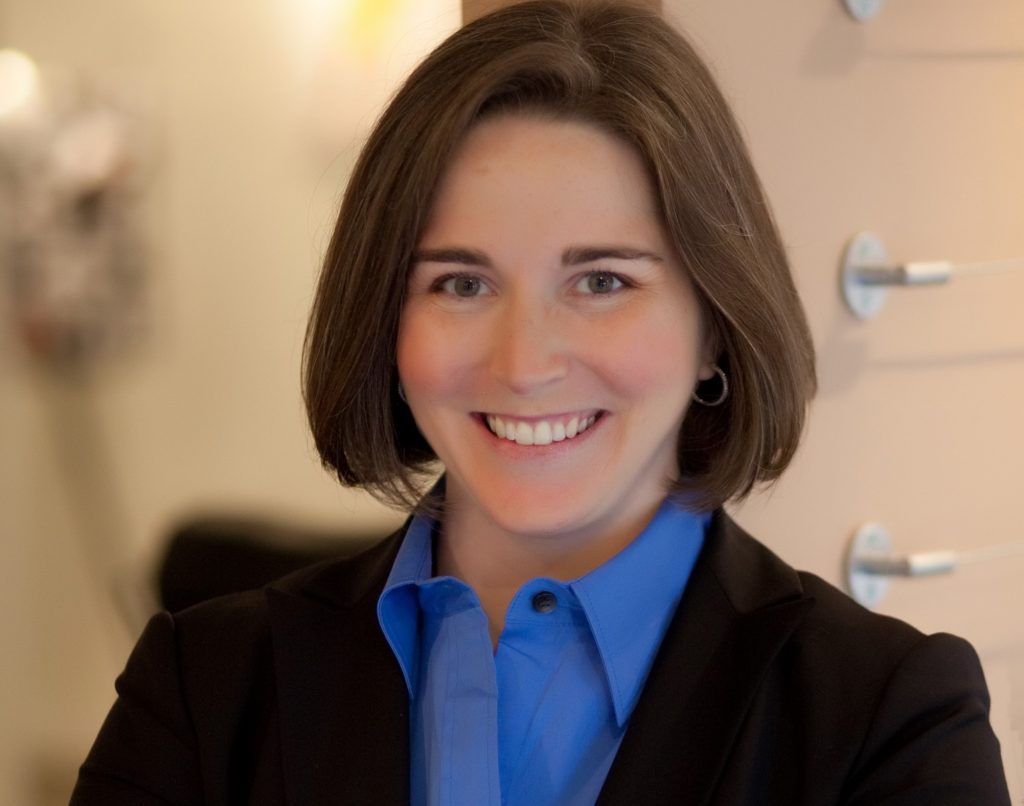
Law Professor Anne E. Mullins’s article, “Opportunity in the Age of Alternative Facts” was published in the Summer 2019 Washburn Law Journal.
Article Summary
Hotly contested constitutional litigation is increasingly shaped by empirical data. If judges and their clerks had more meaningful opportunities to develop expertise in empirical methodology and cognitive theory, they would be better positioned to (1) evaluate that data, and (2) be aware of any cognitive biases they may bring to that evaluation.
About Professor Mullins
Professor Mullins joined the Stetson University College of Law faculty in Fall 2018 as an associate professor teaching research and writing. She is a national leader in legal writing, serving all three major legal writing professional organizations. Mullins is currently serving as president of the Association of Legal Writing Directors. Her scholarship examines judicial writing through a cognitive theoretical framework.
Director of Stetson’s Veterans Law Institute examines veterans’ Second Amendment rights in article

The article, “Depriving Our Veterans of Their Constitutional Rights: An Analysis of the Department of Veterans Affairs’ Practice of Stripping Veterans of Their Second Amendment Rights and Our Nation’s Response” by Professor Stacey-Rae Simcox, was accepted for publication in the Utah Law Review in March.
Introduction
“The oath that every enlisted member and officer of the United States Armed Forces takes before serving includes the solemn promise to “support and defend the Constitution of the United States against all enemies, foreign and domestic” and to “bear true faith and allegiance to the same.” This oath contains no time limit and many veterans consider themselves to be bound by these promises for their entire lives.“
Article Summary
In recent years, the VA has been treading on the rights of veterans by systematically stripping them of their Second Amendment right to possess a firearm. Divesting a veteran of his or her constitutional rights in a manner that affords less protections than other citizens receive creates an unconstitutional infringement of the veteran’s Second Amendment rights under the United States Constitution. This situation is particularly ironic and shameful when one considers the lasting oath of all who have served in the Armed Forces of the United States to support and defend the Constitution above all else.
This article contrasts and compares the determination of financial incompetency in the VA to other determinations of “mental defectiveness” in order to demonstrate that the VA’s standards do not rise to the level of “adjudicat[ing] [the veteran] a mental defective” necessary to be stripped of his constitutional rights. This article also argues that including veterans determined financially incompetent for VA purposes on a list of persons unable to exercise their Second Amendment rights is an unconstitutional deprivation of these rights and must be remedied not only for those veterans who may be affected in the future, but for those veterans who find themselves in this situation currently.
About Professor Simcox
Stacey-Rae Simcox is a Professor of Law and Director of Stetson University College of Law’s Veterans Law Institute and Veterans Advocacy Clinic. She teaches in the areas of veterans benefits law, administrative law, trusts and estates, and legal skills.
Stetson’s Center for Excellence in Elder Law now hosts WINGS guardianship collaboration
The Center for Excellence in Elder Law at Stetson University College of Law has adopted WINGS, a national guardianship program incubated by Florida’s courts and now transitioning to the state’s acknowledged experts and national leaders in this area of specialization.
WINGS, or Working Interdisciplinary Network of Guardianship Stakeholders, began with a grant awarded to Florida’s Office of the State Courts Administrator from the American Bar Association’s Commission on Law and Aging. The transfer and evolution from startup to mature program allows the continuation of WINGS following the successful completion of the grant.
Stetson University College of Law, a stakeholder in WINGS from its inception in 2017, will coordinate meetings of WINGS, host its website, and manage the work of the program through the Center for Excellence in Elder Law and its faculty, including Professors Rebecca Morgan and Roberta Flowers.

Morgan and Flowers created a video series used to train and educate attorneys nationwide on the ethical dilemmas faced by elder law attorneys. They were awarded the Florida Supreme Court Professionalism Award for their video productions. In addition, they designed the nation’s first elder-friendly courtroom. Morgan and Flowers also developed, through WINGS, four e-learning modules to increase judges’ and attorneys’ professional competence and skills related to guardianship and less restrictive options.
There are 4.3 million Floridians aged 65 or older. A quarter of the state’s population is projected to be aged 65 or older by 2030. Increasingly, Floridians seek help from the State Courts System when they or loved ones need their interests protected. Guardianship cases for adults have increased steadily, with more than 7,300 cases to establish guardianship filed in the 2017-18 fiscal year, a 13 percent increase from five years previous.
In its startup phase directed by the courts, WINGS members recommended strategies for boosting the number of physicians serving on examining committees, created an informational guide and toolkit for decision-making options, and developed a tool to help law enforcement officers and first responders identify abuse, neglect, or exploitation.
WINGS stakeholders include representatives from Florida courts, clerks of court, state executive agencies, private organizations, and advocacy groups as well as family guardians and self-advocates. More information about WINGS, the guardianship e-learning modules, and other guardianship resources may be found on the Florida WINGS website, flwings.flcourts.org.
Adjunct Professor Frederick Schaub mentioned in Tampa Bay Times in parking lot shooting trial
The Clearwater parking lot shooting: Everything you need to know about the case
By Kathryn Varn and Dan Sullivan
Tampa Bay Times
Oct. 10, 2019
On July 19, 2018, an argument over a handicap space ended with Michael Drejka fatally shooting Markeis McGlockton in the parking lot of a Circle A Food Store. Issues of race, stand your ground and attorney behavior drew national attention to the trial in which Adjunct Professor Frederick Schaub was one of the prosectors.
Excerpt
Scott Rosenwasser and Fred Schaub
The two Pinellas-Pasco prosecutors assigned to the case have spent their careers at the State Attorney’s Office, Schaub starting in 1985 and Rosenwasser in 1995. Both teach on the side, Schaub at his alma mater Stetson University College of Law and Rosenwasser at St. Petersburg College.
This article was originally published in the Tampa Bay Times on Oct. 10, 2019, with the headline, “The Clearwater parking lot shooting: Everything you need to know about the case.”