
Skip to content

Law Professor Ellen Podgor quoted in The Washington Post on deferred prosecution agreements

Repeat offenders: Corporate misdeeds often settle with deferred prosecution agreements

Public Citizen found that dozens of companies have signed multiple deferred prosecution and non-prosecution agreements.

By Renae Merle
The Washington Post
Sept. 26, 2019

Excerpt
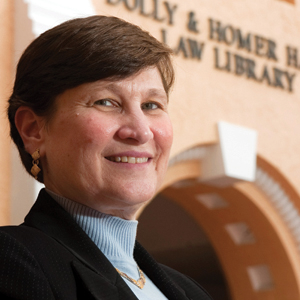
Ellen S. Podgor
Professor Ellen S. Podgor

The Justice Department has also begun emphasizing ways that companies can avoid harsh penalties, including announcing that those that invest in compliance programs would be rewarded. Then-deputy Attorney General Rod J. Rosenstein also announced a policy last year discouraging prosecutors from “piling on” corporations by imposing multiple penalties for the same misconduct.

Determining how to best punish corporations “is a tough problem,” said Ellen Podgor, a Stetson University law professor who analyzes white-collar crime. “How do you get corporations in line; how do you stop them from misconduct?” she said.

And later in the article, she was quoted:

Repeat offenders should face escalating fines and consequences, said Podgor, of Stetson University. “You have to make the fine so that the cost to the company is not worth” the bad behavior, she said.

This article was originally published on The Washington Post website on Sept. 26, 2019, with the headline, “Repeat offenders: Corporate misdeeds often settled with deferred prosecution agreements.”
Law Professor Ciara Torres-Spelliscy quoted in Politico examination of Jerry Falwell

‘Someone’s gotta tell the freakin’ truth: Jerry Falwell’s aides break their silence

More than two dozen current and former Liberty University officials describe a culture of fear and self-dealing at the largest Christian college in the world.

By Brandon Ambrosino
Politico
Sept. 9, 2019

Excerpt

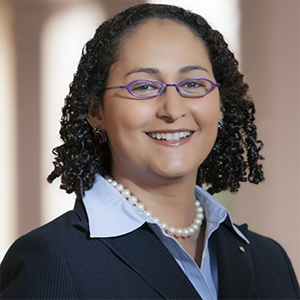
Ciara Torres-Spelliscy
Professor Ciara Torres-Spelliscy

“A 501(c)(3) organization trying to influence a poll so that a candidate’s fortunes are promoted or demoted is not permitted,” said Eve Borenstein, an attorney and tax expert known as the “Queen of the 990,” a moniker used to introduce her ahead of congressional testimony she gave about the IRS Form 990 in 2012.

While 501(c)(3) organizations are permitted to “do objective analysis of [an] electoral horse race,” said Ciara Torres-Spelliscy, a professor at Stetson University College of Law, “tweeting out a rigged poll if Liberty knew it was rigged probably does not fall into that safe harbor.”

And later in the article, Professor Torres-Spelliscy was quoted:

Still, Falwell’s actions here are “likely fine,” said Torres-Spelliscy, the law professor at Stetson University. “Many schools try to cancel classes or hold no classes on Election Day to encourage students to vote or be poll workers or engage in election protection activities. Though the IRS might consider Falwell’s stated partisan motivation if the IRS investigated Liberty to challenge its 501(c)(3) status, this type of investigation is highly unlikely.” 

This article was originally published on the Politico website on Sept. 9, 2019, with the headline, “Someone’s gotta tell the freakin’ truth: Jerry Falwell’s aides break their silence.”