Skip to content

Stetson University Seeks Provost

Contact Lori Cunningham
Associate, Storbeck/Pimentel & Associates, LLC
484-927-4069
[email protected]

Stetson University, an independent, values-centered, liberal arts university located in Central Florida, invites nominations and expressions of interest from potential candidates for the position of Provost and Vice President for Academic Affairs. A new position for this vibrant university, the Provost and Vice President for Academic Affairs will report directly to Stetson’s new president, Wendy B. Libby, who takes office in July 2009. The provost will help shape Stetson’s future by combining its history of academic excellence with creative, new strategies to move the university forward.

The Provost and Vice President for Academic Affairs is the chief academic officer of the university and provides intellectual leadership and support for all academic departments and multi-disciplinary programs. The provost plays a central role in faculty recruitment, promotion, professional development and college-wide curriculum assessment programs and works closely with the president and senior staff on academic, strategic planning and educational policy issues.

The ideal candidate will have an impeccable record of scholarship and proven experience leading academic initiatives. Candidates will hold an earned doctorate degree and must qualify for the rank of full professor in one of the university’s departments. In addition, the new provost will have a demonstrated commitment to diversity at all levels and the ability to work collaboratively with faculty on issues of university governance. He or she must possess strong strategic communication skills and have the ability to represent the university to internal and external constituencies.

Founded as the first private university in Florida in 1883, Stetson University serves a diverse student population of 3,700 in nationally recognized undergraduate, graduate and professional programs. Core values guide the university in providing a transformative education that prepares students for principled lives, professional achievement and engaged citizenship in the world. Stetson University is consistently ranked among the South’s top universities for academic quality in U.S. News & World Report‘s “America’s Best Colleges” edition and in many other national listings. Stetson is also included in U.S. News & World Report‘s “Great Schools, Great Prices” 2009 ranking of universities in the South. With an outstanding record of world, national, regional and state championships in advocacy competitions, Stetson’s College of Law is ranked among the nation’s top 100 law schools and is ranked No. 1 for trial advocacy and No. 6 for legal writing by U.S. News & World Report.

Stetson University has two campuses and two satellite centers. The historic main campus in DeLand, located between Orlando and Daytona Beach, houses the College of Arts & Sciences, School of Music and School of Business Administration. The university also includes the College of Law with its main campus in Gulfport/St. Petersburg, the Tampa Law Center in downtown Tampa and the Stetson University Center at Celebration near Orlando.

The review of credentials will begin immediately and will continue until the position is filled. For best consideration, please submit materials before February 27, 2009. Nominations, inquiries and expressions of interest should be forwarded, in confidence and preferably electronically, to:

sp_logoShelly Weiss Storbeck, Managing Partner
Lori Cunningham, Associate
Storbeck/Pimentel & Associates, LLC
Rose Tree Corporate Center II
1400 North Providence Road, Suite 6000
Media, PA 19063

phone: 484-927-4069
fax: 610-565-2939
e-mail:
[email protected]

Q and A with Royal Gardner

royal_gardner_photo2On Jan. 15, the Environmental Law Institute published Agenda for a Sustainable America, which features a chapter co-authored by Stetson’s Royal C. Gardner, a professor of law and director of the Institute for Biodiversity Law and Policy, and by Ezequiel Lugo ’07.

The book explores many topics related to sustainability, including forestry, transportation, oceans and estuaries, religion, and governance. Below, Professor Gardner answers questions about sustainable development and his contributions to the compendium.

What does sustainable development mean?

In principle, sustainable development means using resources and living in the world in such a way that you preserve options for this particular generation and for future generations. But the term “sustainable development” is in tension with itself. On the one hand it refers to development, but on the other hand the development is supposed to be sustainable, and often development is not sustainable. Sustainable development is an elusive goal, but one that we should strive for nevertheless.

With the world’s population estimated to increase by three billion in the next half century, according to Agenda for a Sustainable America, is sustainability even possible?

I think population growth is one of the biggest challenges (if not the biggest) to achieving sustainable development. We had a speaker at Stetson who had worked for many years in Africa on wildlife issues, and I asked her if there was one thing that you could do to help conserve and better protect biodiversity in Africa, what would that be? She thought about it for a minute and said “birth control.”

But population is only part of the equation. In the United States and elsewhere in the developed world, we need to focus on our overconsumption.

So given those challenges, will it be possible to achieve sustainability?

It’s possible. I think it will be difficult, but people change their behaviors when it becomes clearly in their self-interest to do so. For example, when gas prices shot up to more than $4 per gallon, demand for gas went down. People began to drive less. The trick is for people to try to change their behavior before it’s too late and before it becomes too painful to do so.

If you could advise President Obama on the topic of sustainable development, what recommendations would you make?

There are a lot of aspects to sustainable development. In the context of biodiversity, and specifically wetlands (one of the primary areas of my research), one of the things that I would say would be that we need to consider the unintended consequences of certain policies that may appear to be environmentally beneficial, but are actually not. Ethanol production is one example. On the one hand, it may seem to be a positive action because it is a renewable resource. On the other hand, there are costs associated with the use of water, with the use of pesticides, and runoff from agricultural areas, which happens to be the number one source of water pollution in the United States. Add to that the fact that as more land is put into agricultural areas to grow corn, we lose more of our natural areas.

In your chapter in Agenda for a Sustainable America, you discuss development assistance and U.S. national security. What is the relationship?

agenda_cover_imageSometimes people think that foreign aid is simply charity, but it actually can benefit the United States as well.

For example, some of our greatest threats from a national security perspective come from failed states. A state can fail in a number of different ways. It can be because AIDS has ravished its society. Or, there’s also the potential that certain environmental threats such as climate change may actually destabilize an area, which eventually could have an impact on the United States. Even the military recognizes that there is a link between international assistance and security issues. In 2007, a group of retired generals and admirals issued a report calling on the United States to take more of a leadership role with respect to responding to climate change.

Your chapter suggests that the measure for determining Official Development Assistance should be redefined. Do you think that would make the U.S. more accountable and more purposeful in how federal money is spent?

We have this measurement called ODA (Official Development Assistance), and it’s really just a rough metric. It’s a rough measurement in terms of what developed countries are doing to try to assist developing countries. It’s a framework that doesn’t capture all of the contributions that a particular country makes, but also you can’t assume that just because money is spent in a particular area that it’s going to result in a sustainable project. The chapter suggests that ODA should have an explicit sustainability element. A refined definition of ODA might lead to more effective use of ODA dollars.

There seems to be a growing awareness of environmental issues and sustainable development. Are we making progress or are we avoiding hard choices?

I think there’s certainly much more awareness about environmental issues today than in previous generations. I think we are making progress. To give you one example from the wetlands perspective, in the 1950s the United States was losing about a half-million acres of wetlands per year. That rate of loss has slowed to the point where the U.S. Fish and Wildlife Service reported that we have achieved recently, in the past several years, a net gain of wetlands—at least with respect to wetland area. It’s a bit complicated because I think that we are still losing wetland quality. Although we’ve made a lot of progress in that area in terms of slowing wetland losses, there’s still a long way to go. But certainly, there has been some progress made.

In terms of choices, there are some historical examples of when people in societies have made choices to act in a sustainable manner without government regulation. Perhaps the best example of that is with CFCs (chlorofluorocarbons), which are ozone-depleting substances. On their own, U.S. consumers, once they were educated about the risks to the stratospheric ozone layer, stopped purchasing products that released CFCs into the atmosphere, so much so that there was a two-thirds reduction in CFC consumption in the United States without formal regulation. One of the keys was that there were cost-effective alternatives. The hard part comes when you have alternatives but they’re expensive, like hybrid cars.

Do you think we can make right decisions even when there aren’t cheap alternatives?

I don’t know. Sometimes when I’m in a more pessimistic frame of mind, I would say no. But on the other hand, if people are aware of the real costs of their actions I think that people will take steps that may not necessarily be in their short-term economic interest—if they understand and appreciate the longer-term implications.

So awareness can lead to real action?

Absolutely. The reduction in CFCs is one example of that. A more current example would be with compact fluorescent light bulbs, which I encourage everyone to use. They’re more expensive initially but over the long term, because of the energy efficiency associated with them, they’re actually of benefit to consumers as well.

What are the biggest obstacles for sustainable development becoming commonplace?

It depends on where you are in the world. If you are in a country that isn’t stable, if you’re in a country where there is a war going on or where there is a threat of a war, sustainable development is not going to be at the top of your agenda.

If you are in a developing country, such as China, the focus may be enhancing your own economic condition instead of worrying about the fact that air pollution from China is degrading air quality in Los Angeles.

With respect to countries where there is a lack of stability, that’s one of the intersections of national security and sustainable development. People are not going to focus on a concept like sustainable development until they have basic peace and security. So to the extent that the United States, the member states of the European Union and other developed countries can contribute to peace and security in various regions, that actually contributes to sustainable development in the long term.

What is more important to achieving sustainable development, technological advancement or societal will?

I suppose the answer depends on whether you have faith in people, in general, or faith in technology. Sometimes I have neither [laughs]. That’s a good question, but it’s not an either/or answer. We’re going to need technological developments. For example, we’re going to need to come up with batteries that can store solar power. But where is the demand going to come for that development? It’s going to come from people who are calling for this technology.

Is it possible to impose new environmental regulations without stifling business growth? How?

Yes. I think it’s possible in a couple of different ways. Number one, reducing the waste stream in an industry can have economic benefits to a particular company. Ideally, a company would recognize this on its own, but sometimes it may take government regulation to force the issue.

In other contexts, government can create economic incentives for businesses to become more sustainable. One of the areas that I study now is wetland mitigation banking, which is a mechanism that creates an economic incentive to restore and protect wetlands. It can be controversial because there are people who are making a profit off of this. But if it’s done right, I think it’s a vast improvement over the status quo. I think it’s actually to everyone’s benefit if we can come up with systems where people can make money by doing environmentally beneficial activities, whether that happens to be restoring wetlands, reducing nutrient runoff from agricultural areas, or preserving endangered species habitat.

What changes in governmental policy might best help achieve sustainable development?

Gas tax [laughs]. That would obviously not be popular, but it would result in people conserving more and then the resulting funds that the government accumulates could be channeled into developing alternative sources of energy. Another important step would be for all levels of government to stop subsidizing development in natural areas, particularly along the coastline. There should be no federal subsidies with respect to flood insurance in these areas. If someone can afford to build something there, great. But the government shouldn’t be subsidizing those activities.

Another area that I think we should explore is the use of genetically modified organisms—specifically, agricultural crops that do not require pesticides. If you can remove pesticides from the farmlands, then you solve a lot of water-quality problems in the United States, and you can also help solve a lot of the issues associated with the dead zone in the Gulf of Mexico because you wouldn’t have excessive nutrient runoff that winds up there, choking off all life. Another, less controversial way would be to reclaim land along rivers, and set up buffer zones to restore the wetlands that were once there so they can act as filtering devices.

What can individuals do to support sustainable development?

Many things. Buy fluorescent light bulbs. Go with native vegetation instead of lawns that require watering, fertilizer and pesticides. When it comes time to purchase another automobile, buy a smaller one. I’m trying not to sound like a grumpy old man, but try not to waste so much!

People can educate themselves about these issues to find out what they can do in their own lives to try to cut down on what they consume. In particular, what Stetson students can do, in terms of educating themselves, is to take advantage of some of the on-campus activities we offer, such as the upcoming International Wildlife Conference, as well as other events in the area. There’s a brown-bag lunch series sponsored by USF-St. Petersburg that focuses on environmental issues, and they are open to the public. They’re great sessions that involve a combination of science, law and policy. If we’re going to make any progress in this area, we’re going to need all of these disciplines working together.

Are you hopeful that we can achieve sustainable development?

I vacillate [laughs]. Sometimes, I’m pessimistic and dyspeptic. Other times, I recall that humans are capable of great change. Just considering some of the huge political shifts that have occurred in our lifetime in terms of the Berlin Wall being taken down, the breakup of the former Soviet Union, the elimination of apartheid in South Africa, the apparent end of the Troubles in Northern Ireland, all of these demonstrate that there is reason to be hopeful.

Professor Selected for Prestigious Position

Contact Brandi Palmer
Manager of Media Relations
727-562-7381
[email protected]

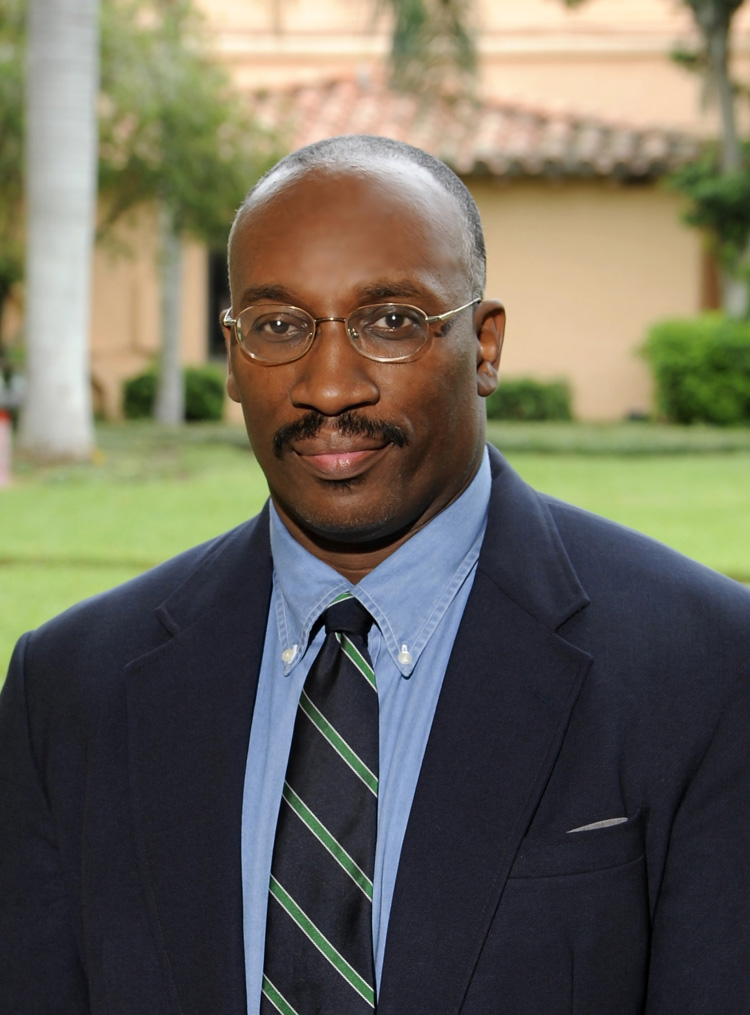
Darryl C. Wilson, professor of law and co-director of the Institute for Caribbean Law and Policy at Stetson University College of Law, has been selected as the Attorneys’ Title Insurance Fund Professor of Law starting in August 2009. It is a three year appointment.

Professor Darryl C. Wilson
Professor Darryl C. Wilson. Click for high-resolution image.

Stetson Law Professor James J. Brown, who was the first law professor named to the position, will become the Attorneys’ Title Insurance Fund Professor of Law Emeritus in August of this year.

“The Fund provided an honor and recognition that comes only rarely in one’s career,” said Professor Brown, who has been a law professor for 38 years. “The position allowed me to network and to make contacts at the Bar and at the Fund to assemble critical legal materials for the development of a much needed new course: Florida Real Estate Law.”

Professor Wilson will continue to focus his teaching and scholarship on matters related to real property.

“This appointment is a great opportunity to continue the work started by Professor Brown in integrating the academic aspects of property law with the very practical issues addressed by the Fund and its members on a daily basis,” Professor Wilson said. “I look forward to also extending opportunities for our students in the property field both while they are attending Stetson and after their graduation.”

Wilson also directs the Intellectual Property Law Internship Program and the American-Caribbean Law Initiative and is the faculty adviser for the Intellectual Property Law Society, Sports and Entertainment Law Society, and the Black Law Students Association at Stetson. He has taught internationally in the Caribbean, Estonia, the Netherlands, Spain and Zambia.

The Fund’s mission is to promote, preserve and facilitate the real estate practices of its members in their protection of the public.


Students Win Mock Trial Competition

Contact Brandi Palmer
Manager of Media Relations
727-562-7381
[email protected]

Students win statewide mock trial competition
(L-R): Stetson Law's winning Trial Team of Jamie Grant, Katelyn Knaak, Professor Lee Coppock, Christian Radley and George Root. Click for high-resolution image.

The Stetson University College of Law Trial Team won The Florida Bar Chester Bedell Memorial Mock Trial Competition for the 18th time on Jan. 15 in Miami. This is Stetson’s third win in four years against all other competing Florida law schools. All 10 Florida law schools sent two teams each to the competition this year.

“Stetson is proud to again be honored with a win at this prestigious statewide competition,” said Stetson Professor Lee Coppock, who coached the winning team along with alumnus Matt Easterwood. “We pride ourselves in producing the best advocates and in having the best advocacy program in the nation.”

Stetson’s team of Jamie Grant, Katelyn Knaak, Christian Radley and George Root defeated students from Barry University in the final round of the statewide competition. Jamie Grant was selected as Best Advocate in the final round of the competition.

Stetson has consistently placed as a top law school for trial advocacy since the U.S. News & World Report started the rankings.

Conference on Teaching Advocacy March 5-6

Contact Brandi Palmer
Manager of Media Relations
727-562-7381
[email protected]

Stetson University College of Law presents “Educating Advocates” March 5-6 on the Gulfport campus at 1401 61st St. S. Stetson’s second conference on the art, science and skill of advocacy instruction is designed for full-time professors, adjuncts and attorneys interested in teaching advocacy skills.

Conference presentations by leading advocacy instructors from around the world will include examining comparative methods for teaching advocacy skills, designing an effective advocacy skills curriculum, creating models for legal ethics for advocacy competition teams, and evaluating students.

“This program benefits anyone interested in expanding their knowledge in the field of teaching the art of persuasion,” said Professor Charles H. Rose III, who directs Stetson’s Center for Excellence in Advocacy. “This conference provides a hands-on approach to learning and teaching practical legal skills for both the courtroom and the classroom. We will discuss many of the problematic issues facing advocacy professors in the academy.”

The conference begins with the presentation of the Lifetime Achievement Award for Excellence in Advocacy to both Professor Thomas A. Mauet and Judge Warren D. Wolfson. Mauet directs the trial advocacy program at the University of Arizona James E. Rogers College of Law. Wolfson is an appellate judge for the Illinois Appellate Court as well as director of trial advocacy at the Chicago-Kent College of Law.

For complete session descriptions, tuition cost, and registration information, please visit www.law.stetson.edu/conferences or contact Stetson’s Office of Conferences and Events at [email protected] or by calling 727-562-7312. The deadline for early registration is Feb. 12.

11th International Wildlife Law Conference March 26-27

Contact Brandi Palmer
Manager of Media Relations
727-562-7381
[email protected]

Register now to join a two-day International Wildlife Law Conference at Stetson University College of Law discussing the future of biofuel production, ecotourism, fisheries and species protection with an international panel of experts from eight countries.


WHAT: The 11th International Wildlife Law Conference

WHERE: Stetson University College of Law, 1401 61st St. S., Gulfport

WHEN: March 26-27

WHO: Speakers include:

  • Wil Burns, editor-in-chief of the Journal of International Wildlife Law & Policy
  • Royal Gardner, professor of law at Stetson Law and director of Stetson’s Institute for Biodiversity Law and Policy
  • Gunther Handl, Eberhard Deutsch Professor or Public International Law, Tulane University, New Orleans, La.
  • Clay Henderson, Holland & Knight LLP, Orlando, Fla.
  • Johannes Huber, executive secretary, Antarctic Treaty Secretariat, Buenos Aires, Argentina
  • Julia Jabour, senior lecturer, honors & graduate research coordinator, Institute of Antarctic & Southern Ocean Studies, University of Tasmania, Hobart, Tasmania, Australia
  • Andi Pearl, manager of Antarctic Krill Conservation Project, The Pew Charitable Trusts, Washington, D.C.

WHY: The two-day conference will discuss topics including the impact of biofuel production on biodiversity, wetlands and forest ecosystems; the impact of ecotourism on regions including Antarctica and Cuba; fisheries and individual species protection; and the protection of wildlife and research whaling in Antarctica. CLE credits are available.

Editor’s Note: This program is free for members of the media. The public is invited to attend for a conference fee. To register or request more information, please contact the Office of Conferences and Events at Stetson at [email protected], call 727-562-7898, or visit Conferences and Events online.

Michael Farley to Lead College Relations

Contact Frank Klim
Executive Director of Communications
727-562-7889
[email protected]

Stetson University College of Law has announced that Michael Farley will lead its college relations office. Farley, who previously served as assistant dean of student life, has been named assistant dean of college relations.

In his new role, Farley will be responsible for alumni relations and development efforts for the law school.

Farley joined Stetson Law in 2005 as associate director of student life and has been assistant dean since 2006. Before coming to Stetson, he was assistant dean of student services at the University of Florida, director of alumni services at Sigma Phi Epsilon fraternity headquarters, and coordinator of student affairs at the University of South Florida.

Stetson No. 5 Among Top 25 Law Schools Graduating Hispanics

Contact Brandi Palmer
Manager of Media Relations
727-562-7381
[email protected]

Stetson University College of Law has been listed among the top 25 law schools for Hispanics in the Dec. 15 issue of The Hispanic Outlook in Higher Education. Stetson Law is listed fifth among law schools in the nation conferring the most law degrees to Hispanic students in 2007, according to the article, “Florida and Texas Home to Some of the Top Law Schools.”

Stetson Law has an active Hispanic Bar Association that is engaged in both campus and community life. In February of 2006, the Florida Supreme Court honored Stetson’s HBA chapter for its outstanding pro bono work with the Chief Justice’s Voluntary Bar Association Pro Bono Service Award.

The state of Florida has the most schools on The Hispanic Outlook‘s top 25 list of schools granting law degrees to Hispanics. Florida also has the most schools represented on the top 25 list of schools with the highest enrollment of Hispanics. Stetson is listed 18th among the top 25 law schools in the nation with the highest Hispanic enrollment.

The Hispanic Outlook gleaned data for this article from the National Center for Education Statistics. The magazine reports annually on the U.S. law schools conferring the most degrees on Hispanics. This year’s article also features the top 25 list of schools.


Benjamin H. Hill III Honored for Excellence

Contact Brandi Palmer
Manager of Media Relations
727-562-7381
[email protected]

Benjamin H. Hill III was awarded the Stetson University College of Law J. Ben Watkins Award for Excellence in the Legal Profession during the Stetson Law Review banquet on Nov. 21 in St. Petersburg.

Hill is past president of the Florida Bar, the Florida Bar Young Lawyers Division, and the Hillsborough County Bar Association.

Hill has received numerous professional recognitions throughout his distinguished legal career including the Florida Lawyer of the Year award, the George C. Carr Memorial Award for Excellence in Federal Practice, the Tampa Inn of Court Professionalism Award, the Hillsborough County Bar Association Outstanding Lawyer Award, the Hillsborough County Bar Trial Lawyers Section In the Trenches Award and the Florida Bar Solo and General Practice Section Tradition of Excellence Award. He has been named one of the Super Lawyers Top 10 Lawyers in Florida and among Florida Trend‘s Legal Elite.

Still active in the legal community, Hill is a fellow of the American College of Trial Lawyers, a member of the Middle District of Florida Federal Judicial Nominating Committee, a member of the American Bar Association House of Delegates, and the chair of the ABA’s Standing Committee on Lawyers’ Professional Liability.

The Watkins Award is presented annually in honor of J. Ben Watkins, who was instrumental in founding the Stetson Law Review.

The Stetson Law Review is a premier academic journal published three times per year. Each issue is presented in a symposium format addressing contemporary legal topics.


Stetson to Offer New Master’s Degree

Contact Brandi Palmer
Manager of Media Relations
727-562-7381
[email protected]

Starting in June 2009, non-lawyers around the world who work with the elderly will have an opportunity to obtain a Master of Jurisprudence in Law and Aging from Stetson University College of Law in Tampa Bay, Fla. After an on-campus orientation, courses will be offered online for professionals who work with the growing senior population.

“This new graduate program will allow professionals who work in the field of aging to learn more about laws, policies and programs,” said Professor Rebecca C. Morgan, Boston Asset Management Chair in Elder Law and director of Stetson’s Center for Excellence in Elder Law.

Applicants must have a bachelor’s degree, substantial experience in the field of aging, and an acceptable score on the GRE or equivalent examination to be considered for admission. Students in the new two-year program will learn more about elder law, guardianships, government benefits, housing options for the elderly, disability programs, retirement, long-term care and health care, and the ethical issues faced by professionals.

Stetson’s Center for Excellence in Elder Law was established in 1995 to meet the increasing need for legal education and research in the field of law and aging.

For additional information about the program, please visit   Master of Jurisprudence in Law and Aging  or contact the Center for Excellence in Elder Law at Stetson Law at 727-562-7393 or e-mail  [email protected].

Expert Witness Seminar, Dec. 10

Contact Brandi Palmer
Manager of Media Relations
727-562-7381
[email protected]

Stetson University College of Law’s Center for Excellence in Advocacy and Tirella Consulting will co-sponsor “The Art and Science of Expert Witnessing” on Dec. 10 at the Tampa Law Center, 1700 N. Tampa St.

The day-long program for practicing attorneys explores identifying and finding top quality experts, as well as preparation, presentation and ethics in expert witnessing.

“A top quality expert witness is often the key to convincing the jury that an attorney’s case is sound,” said Professor Charles Rose III, director of Stetson’s advocacy center and program chair. “This seminar will explore the fine art and technical science of finding and preparing the best expert witness for a case.”

Presenters will include the following:

  • Steven Cohen, witness and damage consultant for Cohen, Jayson, & Foster, P.A.
  • Richard Gilbert, complex civil trial practitioner listed among the best lawyers in America and in Florida
  • Jeffrey Goodis, Stetson Law honors graduate and trial team member who is among the state and nation’s best lawyers
  • Rosalie Hamilton, founder and president of Expert Communications and author of The Expert Witness Marketing Book
  • Christopher Knopik, recognized among the best lawyers in America and in Florida
  • Christopher Miller, Sr., president and founder of Suncoast Inspections.com
  • Alfred Tirella, a civil and criminal litigator with a trial practice in the areas of personal injury/medmal, criminal law and commercial litigation
  • David Theodore Tirella, trial attorney and founder of Tirella Consulting, a litigation support firm specializing in the selection and presentation of expert witnesses
  • Ed Suarez, among Florida’s best lawyers and a top leading American attorney who has practiced in the areas of financial crimes and fraud, felonies, criminal and personal injury
  • Scott Tozian, who represents attorneys in grievance proceedings and applicants for The Florida Bar, and provides expert witness services for legal ethics or malpractice matters

 To register, visit www.law.stetson.edu/conferences or call 813-228-0226.


Fall Commencement

Contact Brandi Palmer
Manager of Media Relations
727-562-7381
[email protected]

» Graduation Information for Students (PDF)

» Commencement Program – Fall 2008 (PDF)

» Honors and Awards Program – Fall 2008 (PDF)

» Webcast of Graduation Ceremony

Note: Windows Media Player is required to view webcast.

Florida Attorney General Bill McCollum delivered the commencement address to 87 graduates of Stetson University College of Law on Dec. 20 in Gulfport.

Elected in 2006, McCollum has worked to position Florida as a national leader in the fight against child pornography and Internet child predators. His leadership has prompted the Florida Legislature to greatly expand the Attorney General’s Child Predator CyberCrime Unit, and pass laws giving law enforcement new tools and greater punishments for those who prey on children over the Internet.

A native Floridian, McCollum served in the U.S. Navy from 1969-1972 and in 1992, he retired from the Naval Reserve as a Commander after serving in the Judge Advocate General’s Corps. He represented central Florida for 20 years in the U.S. Congress, where he founded the Task Force on Terrorism and Unconventional Warfare, served on the Judiciary Committee, and chaired the Subcommittee on Crime and the Intelligence and Banking Committees.

The graduating law class included nine students who earned both an M.B.A. and J.D. degree and 14 part-time students who earned a J.D. degree. Ten students earned LL.M. degrees, including eight who became the first graduates of Stetson’s online LL.M. in elder law program.