Skip to content

Advocating ‘easier than it really looks’ after students complete new program

Many of the student participants in Stetson Law’s new Youth Civic Engagement Program for teenagers between the ages of 15-17 attended a wrap-up ceremony and campus tour at the end of the week-long course.

Stetson Law’s July 2021 Pipeline Program

“I think that one of the ‘a-ha’ moments that I witnessed really had to do with civil dialogue. Students really believe that when they’re ‘right,’ quote unquote, that they need to get their point across. But when they learned that the point of advocacy and the point of activism is to get other people to understand their position – not to be right, not to win – but to actually help others understand the issues, I think that was a big ‘a-ha’ moment for many of them,” said Professor Judith Scully.

She was one of three Stetson Law professors who led the school’s new Youth Civic Engagement Program last month. The weeklong summer experience was designed for Pinellas County teenagers, between the ages of 15-17, considered underrepresented because of race, sexual orientation, gender identity, socio-economic status, or school performance. The goal was to train the teens how to advocate for themselves and others.
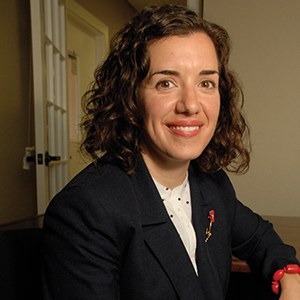
Christine Cerniglia
Christine Cerniglia

“I had no idea how engaged they would be, and they took off with it,” said Professor Christine Cerniglia. “It was awesome!”

“This young generation is fierce, so how to guide and lead them is a task for us to figure out and keep up with them just to be quite honest,” she added. “They’re inspiring.”

The courses included: Self and Society; Human Rights and Global Citizenship; Technology and Human Rights; Cyberlaw and Human Rights; Mindfulness, Listening and Civil Dialogue; Social Media and Human Rights; Advocacy, Community Building and Protest; 4th Amendment Rights in Public Schools; and Self-Optimization and Individual Goal Setting.  

Katie Parish, 15, was excited to learn about deductive reasoning and syllogism, saying that she often used those tools in discourse with others without realizing “that it was an actual thing.” She found the program to be engaging and encouraging.

“It’s just a very interesting, like, in-depth version of civil rights law and advocacy,” Parish said. “It makes advocating seem so much easier than it really looks, right? Because it seems so hard for kids our age, but Professor Scully and Professor Cerniglia and all the different people who were in the program just made it seem so easy.”
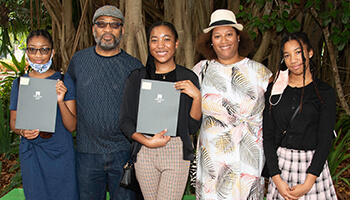
Eriam and Erin Shepherd were two of the participants.

William and Erica Shepherd, whose two daughters participated in the course, said the girls gained confidence and learned that communication is key to understanding themselves and others so they can work together to solve problems.

“First of all, this program was wonderful,” William Shepherd said. “It really taught them a lot about the concept of human rights and civics and learning how to implement themselves into that program.”

Stetson Law officials recognized that, during the last 20 years, civics education and social action programming have decreased nationally. Students have little, if any, opportunity at the high school level to access the knowledge and tools they need to be advocates. Given Stetson Law’s longstanding expertise in teaching students to think critically and advocate for vulnerable groups, school officials believed creating a program like this would be a valuable contribution to the community.
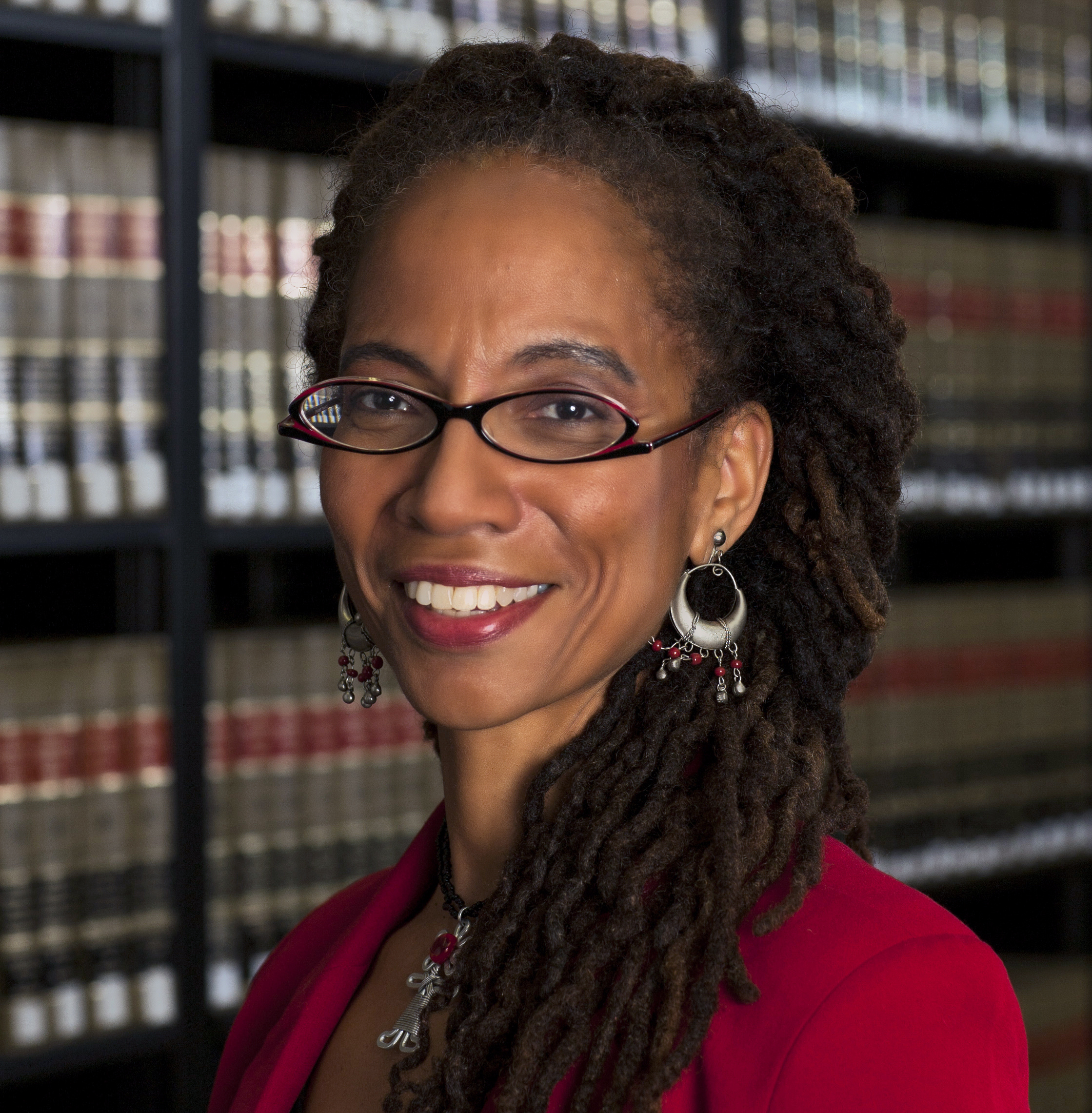
Judith Scully
Judith Scully

“I taught a course called Advocacy, activism and social change, and it really introduced students to the fact that young people have always been at the forefront of changing public policy, and that they, too –  our 2021 students – can also engage in advocacy that really makes a difference not just locally, not on the state level, not just on the national level, but internationally as well,” Scully said.

“I think our students were really excited about learning about how to harness their power and really participate in our democracy,” she added.

The students learned how to present themselves and do research, as well as the importance of voting and participating in government. One of the key lessons that surprised and delighted participants was the fact that in Florida, at age 16, they can pre-register to vote and get involved.

“The most useful thing I learned this week was Ten Ways to be an Advocate,” said Eriam Shepherd, 16. “I learned I can educate myself and others and that I can possibly in future run for office. And I learned about human rights and how my rights as a human are valid, and I need to know about those things.”

Stetson partnered with Foundation for a Healthy St. Petersburg to create and launch the new program. More than 40 students applied for the 30 openings, and ultimately 31 students completed the course, which was held virtually this year because of the pandemic. Next year’s class is expected to be held on Stetson’s Gulfport campus.


Professor Lou Virelli named to federal academic consultative group

Prefer to watch the video? View it on YouTube.

Louis Virelli
Louis J. Virelli III

Stetson Law Professor Louis J. Virelli III was tapped for membership in a group of leading administrative law scholars to provide a federal agency with academic research and expertise.

The Administrative Conference of the United States (ACUS) created a new Council on Federal Agency Adjudication in September 2020 to provide a forum for the heads of agency adjudication programs to exchange information about procedural innovations, best management practices, and more.

Virelli is one of group of law scholars recently announced as the Council’s academic consultative group. He first became involved with the ACUS in 2018 when he was selected to draft a report on recusal of agency adjudicators. Virelli has since authored Administrative Recusal Rules: A Taxonomy and Study of Existing Recusal Standards for Agency Adjudicators in 2020 and Recusal Rules for Administrative Adjudicators in 2018. That report led to the adoption of ACUS Recommendation 2018-4 – Recusal Rules for Administrative Adjudicators.

“I am honored to be included among this group of outstanding administrative law scholars and am looking forward to continuing my work with ACUS,” he said.

ACUS is an independent agency within the Executive Branch of the United States government. Its volunteer members are drawn from other federal agencies as well as from those in the private sector with expertise and experience in law and government. Its mission is to study administrative procedures in federal programs and recommend improvements. In other words, “a public-private partnership designed to make government work better,” as President Obama said in 2010.

It accomplishes this mission by conducting research, formulating recommendations, spreading agency best practices, promoting information exchange, and sponsoring events and publications. Over the first 30 years of its existence, the Conference issued approximately 200 recommendations, most of which were implemented in whole or in part.

In addition to Virelli, the other legal scholars in the new academic consultative group are:

  • Michael Asimow (Santa Clara University School of Law)
  • Kent Barnett (University of Georgia School of Law)
  • Jack Beermann (Boston University School of Law)
  • Emily Bremer (University of Notre Dame Law School)
  • Jill Family (Widener University Commonwealth Law School)
  • William Funk (Lewis & Clark Law School)
  • Robert Glicksman (The George Washington University Law School)
  • Daniel Ho (Stanford Law School)
  • Linda Jellum (Mercer University School of Law)
  • Renée Landers (Suffolk University Law School)
  • Jeffrey Lubbers (American University Washington College of Law)
  • Michael Sant’Ambrogio (Michigan State University College of Law)
  • Bijal Shah (Arizona State University Sandra Day O’Connor College of Law)
  • Anna Shavers (Nebraska College of Law)
  • Urska Velikonja (Georgetown University Law Center) 
  • Christopher Walker (The Ohio State University Moritz College of Law)
  • Melissa Wasserman (University of Texas School of Law)
  • Russell Wheeler (Brookings Institution)
  • Adam Zimmerman (Loyola Law School)

The Council’s list of projects is still developing, but recent initiatives include a webpage to help agency adjudication offices navigate operational challenges posed by the COVID-19 pandemic; a recent virtual Symposium on Federal Agency Adjudication; and upcoming projects on agency appellate systems, alternative dispute resolution, and agency head enforcement and adjudication functions. 

26th Annual Stetson IEMCC theme, record and rules released

Wetland area on fire via Wikimedia.

The Record and Rules for the 26th Annual Stetson International Environmental Moot Court Competition (IEMCC) have been released and are now available on the IEMCC website.

The theme for this year’s problem is “Protected Areas and Armed Conflict.”

The global, multi-part contest gives students around the world an opportunity to learn more about and advocate for environmental issues impacting the planet. Teams compete in national and regional rounds throughout the world, and the top teams are invited to participate in the International Finals.

The International Finals are planned for April 7-9, 2022, at Stetson University College of Law’s campus in Gulfport, Florida. Last year’s competition was held virtually because of the pandemic. Law Society of Ireland was named winner in that contest, and Symbiosis Law School, Pune, India, was runner-up.

Additional information about national and regional rounds will be posted on the IEMCC website as it becomes available. For updates, visit https://stetson.edu/iemcc and follow the IEMCC Facebook page @StetsonIEMCC and Professor and Director of the Institute for Biodiversity Law and Policy Royal C. Gardner on Twitter @swamp_prof.

Institute for Biodiversity Law and Policy releases annual report

Royal Gardner
Royal Gardner

Stetson Law’s Institute for Biodiversity Law and Policy released its 2020-2021 Annual Report this month, and the contents highlight how, despite the global pandemic, the Institute continued to provide environmental education, research, and service locally, nationally, and internationally this past year.

Led by Professor of Law and Director, Royal C. Gardner, the Institute for Biodiversity Law and Policy is Stetson Law’s interdisciplinary focal point for environmental law programs and initiatives. Some of the highlights from the report include:

Nationwide legal support

In April 2020, the U.S. Supreme Court decided County of Maui v. Hawaii Wildlife Fund, a critical Clean Water Act case. The majority opinion cited an amici curiae brief that Gardner, Erin Okuno (assistant director of the Biodiversity Institute) and a team of attorneys had filed on behalf of aquatic scientists and scientific societies. Gardner discussed the caseand how scientists can contribute to policymaking in a presentation for the Society for Freshwater Science’s Summer of Science, and the amici brief was featured in a PBS NOVA podcast on Science in the Courtroom.

The Institute has continued to file amici curiae briefs, including in California, Massachusetts and South Carolina, on behalf of aquatic scientific organizationsto explain the importance of considering science when making decisions under the Clean Water Act. The briefs are available on the Biodiversity Institute’s website.

International outreach

The Institute faculty and staff maintain ongoing relationships with the Inter-American Convention for the Protection and Conservation of Sea Turtles and Ramsar Convention on Wetlands, two international organizations. This year they also collaborated on projects with the University of Philippines Law Center’s Institute of International Legal Studies, Alberta Land Institute of the University of Alberta, and the University of Barcelona.

Student success

Keep Tampa Bay Beautiful (KTBB) selected Stetson Law student Nicholas Lewis as the recipient of the 2020 Environmental Education Program Award for a project he worked on in Professor Lance Long’s Environmental Advocacy course. Nicholas developed K–12 lesson plans for KTBB’s Environmental Education Center.

Recent Stetson Law graduates also are putting their environmental law education into practice. Brian Remler started at Morris, Manning & Martin, LLP’s Atlanta office working with their Environmental and Construction Practice Group, which specializes in brownfield redevelopment. Jess Beaulieu accepted a position as the program manager for Denver University Sturm College of Law’s Animal Law Program.

Read the full 2020-2021 Annual Report on the Institute for Biodiversity Law and Policy website.

Stetson University announces new Executive Officer for Diversity, Inclusion and Collaboration

Carmen Johnson
Carmen Johnson

Stetson University has selected Carmen Johnson, J.D., as its new executive officer for Diversity, Inclusion and Collaboration. In that position, Johnson will lead the development and implementation of proactive diversity, equity and inclusion initiatives in collaboration with the university’s existing support systems and in support of the university’s strategic plan to create a learning and working environment where all have an opportunity to succeed.   

The executive officer for Diversity, Inclusion and Collaboration champions the importance and value of a diverse and inclusive university environment and develops effective strategies to create opportunities for collaboration around equity, diversity and inclusion across Stetson’s campuses. The position actively engages faculty, staff and students to further diversity, equity and inclusion. 

 “I am thrilled and humbled to have the opportunity to continue supporting our Stetson University community and to promote our collective diversity, equity and inclusion efforts — both in DeLand and at the College of Law,” said Johnson. “The past and ongoing advocacy and expertise of so many throughout the Stetson community continues to inspire and lay the foundation for progress. I look forward to serving as a centralized resource toward this work and to promoting avenues for collaboration in partnership with the university’s leadership.” 

Christopher F. Roellke

 “With the upcoming release of months of work by our community in addressing issues related to diversity, equity and inclusion, we are at a critical point in moving Stetson University forward,” said Christopher F. Roellke, PhD, president. “Carmen has impressed me with her leadership and advocacy, and her kindness and empathy, two qualities I believe are so important during these difficult times. I am pleased she is in this new position to help lead and organize the efforts with our communities in DeLand and at the College of Law. This creative and joint appointment provides a terrific opportunity to foster even greater collaboration between the College of Law and the DeLand campuses as we continue to build One Stetson.”

Stetson is continuing its work on issues related to diversity, equity and inclusion following a recent Campus Climate Report, and soon-to-be-released reports from campus and community working groups organized during the 2020 academic year.  

Michèle Alexandre
Michèle Alexandre

 “Carmen’s numerous strengths, including her law degree, Title IX and diversity training, and her deep sense of collaboration, to name a few, make her the perfect choice to lead the university into the next stage of our diversity, equity and inclusion efforts,” said Michèle Alexandre, dean of Stetson University College of Law. “I am confident Carmen will bring energy, excitement and collaboration across the campuses to move our inclusion work forward.”  

Johnson joined Stetson’s College of Law in 2013 to fulfill her passion for higher education and the law, and most recently served as the director of Diversity Initiatives and Recruitment there. Prior to that, she was associate director for Admissions and Diversity Initiatives. In addition to being a Certified Diversity Professional, Johnson is the co-chair of the College of Law’s Diversity and Inclusion Committee and the university’s Stetson Culture Working Group, serves as a Title IX Investigator, and on the diversity and equity and inclusion leadership teams for Stetson University. During her tenure at Stetson, Johnson has been awarded Employee of the Year (2019), Morale Builder of the Year (2017), the Dean’s Award (2016, 2021), and as a National Diversity Champion (2016). 

Following her graduation from Stetson University College of Law, Johnson worked in complex civil litigation and later served as a staff attorney with the Sixth Judicial Circuit of Florida, where she focused on criminal and postconviction matters. Prior to that, she was a contract attorney with Rutledge, Ecenia & Purnell, PA, a clinical intern in the Office of the Pinellas County Attorney and a judicial intern for The Honorable Amy Williams in the Sixth Judicial Circuit of Florida. 

Johnson is admitted to practice law in the state of Florida and has been appointed to the Florida Bar Association’s Education Law Committee as well as the Diversity and Inclusion Committee. In addition to previously serving as secretary of the Fred G. Minnis, Sr. Bar Association, she is a past president of the Pinellas Chapter of the Florida Association of Women Lawyers after serving terms as president-elect and secretary, and a two-year term as director of Continuing Legal Education.

Professor Peter Lake wins ‘Everyday Hero in Education’ award

Peter Lake
Peter Lake

Peter Lake, professor of law and director of the Center for Excellence in Higher Education, was honored as a winner in the “Everyday Hero in Education” contest from Margaritaville.

Throughout the past year, the hospitality company called for nominations nationally for favorite teachers, counselors, administrators and coaches. Officials announced July 9 they had received thousands of stories of remarkable educators who were changing communities in impactful ways. Of those, they toasted 18 winners with getaways to a Margaritaville property. Lake won a trip to Margaritaville Beach Resort Costa Rica.

“I was touched by the overwhelming support I received in the process following nomination,” Lake said. “The pool of nominees [was] from all walks of teaching, and I was thrilled that Margaritaville recognized graduate level instructors as teachers. I proudly represent law school instructors (and truly all graduate level instructors) in the select group of award winners—especially those who answered the call during the pandemic.”

Lake also thanked Stetson and its leaders “for creating a 30-plus year platform of instruction that made this recognition possible. I am especially grateful to Dean Jacob, who so many years ago gave me the chance to have my dream job and space to learn to teach in my own unique way.” 

Sofia McDaniel, a 2021 graduate of Ohio Northern University Claude W. Pettit College of Law, nominated Lake for the award. He helped her find a program of instruction related to education that suited her. Lake said he was just doing his job; the Center for Excellence in Higher Education regularly provides such guidance to students and professionals. But it made a big impact on McDaniel, who is now chief executive officer at Equitable Education Advocates in St. Petersburg.

“Professor Peter brought serenity to my life and single handedly shaped my law school experience,” she wrote in her nomination. “He is the reason why I am a first-generation lawyer and now the founder of a special education advocacy center.”

The award was based in part on voting but also on other factors; at one point Lake was No. 3 in overall voting with more than 2,600 votes from people around the country whose lives he impacted directly or indirectly.

Blaze Bowers, J.D. ’21, served as Lake’s teaching assistant for nearly three years and shared news of the award on LinkedIn. He praised his teacher and mentor, saying, “You have touched more lives than you will ever know.”

“Professor Lake, as anyone who has had him for class knows, is more than an ordinary professor,” Bowers wrote. “He is a true teacher in every respect—caring, wise, knowledge, and accessible. Professor Lake has taught at Stetson University College of Law for 30 years, training jurists and bettering the lives of countless students. He exemplifies everything this award hopes to recognize.”

McDaniel agreed in a comment on the post.

“Professor Lake is a remarkable individual and getting him to Margaritaville was the least I could do to thank him for his mentorship,” she wrote.

Professor Kirsten K. Davis receives award for innovation

Kirsten K. Davis
Kirsten K. Davis

Professor Kirsten K. Davis was selected as a recipient of the 2021 COVID-19 Innovation Award from the Stetson University Board of Trustees.

Board members realized that despite the disruption of the past several semesters, the university community worked to prioritize safety, emphasize student outcomes, invest in technology, and encourage faculty’s freedom to innovate for the benefit of continued learning. They created the COVID-19 Innovation Awards to recognize faculty who:

  • demonstrated particular efforts as educational innovators for online teaching;
  • created a new normal for students’ experiences moving forward;
  • took on additional responsibilities for planning, training, and teaching;
  • were bold teachers willing to teach face-to-face with creativity and excellence to meet students’ interests or disciplinary needs; and
  • were engaged, positive leaders who were perpetually optimistic in the face of incredible change.

“Kirsten led and stewarded the faculty in all matters involving innovation of online education and helped train them on new platforms with continuing education on novel methodologies for online delivery,” wrote those who nominated Davis for the award.

Professor Kirsten Davis works with a student attending Stetson's Pre-Law Institute

Embracing technology for better teaching has been a career hallmark for Davis, but it became more urgent once the pandemic struck. She said she knew she needed to know more about how to engage law students in an online classroom.  

“So, I did what I encourage my students to do—be self-directed and learn all that you can about whatever it is you are doing,” she said.

That commitment turned into an opportunity to create learning experiences for her faculty colleagues and help them adjust to the increased demands of online education. Davis developed online education training materials and workshops for her colleagues. What started out as volunteer service work led to Davis being appointed Faculty Director of Distance Education by Dean Michèle Alexandre.  

Davis said she was honored by the recognition of her efforts.

“My work in the past year and a half with online education was about is ensuring that Stetson Law Students have engaging, effective, and transformative educational experiences no matter how that education is delivered.  The award demonstrates that the Stetson Board of Trustees cares deeply about the educational experiences of Stetson students.”

Professor Roberta K. Flowers named vice president of 2021-2022 NAELA Board of Directors

Professor Roberta Flowerss co-directs Stetson's elder law center.
Roberta K. Flowers

Stetson Law Professor Roberta K. Flowers has been appointed vice president of the Board of Directors of the National Academy of Elder Law Attorneys (NAELA), an association of attorneys dedicated to improving the quality of legal services provided to older adults and people with disabilities.

Her term began on June 1, 2021, and as vice president, she will play a critical role in leading the Academy towards achieving its goals.

“I am so excited to be on the leadership team of this inspiring organization,” Flowers said. “We will continue to work with the elder and disability law attorneys to effectively, efficiently, and empathetically represent some of the most vulnerable of our citizens.”  

Flowers is the director of Stetson Law’s Center for Excellence in Elder Law  and teaches Ethics in an Elder Law Practice.  She, along with Professor Rebecca Morgan, created a video series used to train and educate attorneys nationwide on the ethical dilemmas faced by elder law attorneys. The Florida Supreme Court awarded them the Florida Supreme Court Professionalism Award for their video productions. Additionally, the pair designed the nation’s first “elder friendly courtroom,” which serves as model for courtrooms of the future.

Established in 1987, NAELA is a non-profit association that assists lawyers, bar organizations, and others. Its mission is to educate, inspire, serve, and provide community to attorneys with practices in elder and special needs law. NAELA currently has members across the United States, Canada, Australia, and the United Kingdom. For more information, visit NAELA.org, or to locate a NAELA member attorney in your area, visit NAELA.org/FindLawyer.

Professor Kirsten K. Davis appointed to special committee on professionalism

Kirsten K. Davis
Kirsten K. Davis

Professor Kirsten K. Davis has been appointed by the new president of The Florida Bar, Mike Tanner, to serve on a newly created statewide Special Committee for the Review of Professionalism in Florida.   

The Florida Bar, through its Board of Governors, approved and created this Committee to develop specific recommendations to the Board and to The Florida Supreme Court for: 1) any necessary changes to the definition of professionalism or to the current professionalism standards; 2) improvements in how and when professionalism is taught during the course of a lawyer’s career; and 3) improvements to how professionalism standards are enforced, including greater emphasis on the use of the local professionalism panels.

When Tanner was sworn in earlier this month, he said the committee will be, “a complete top to bottom review of the professionalism” in Florida, according to The Florida Bar News.

“We’re going to look at how we teach it, how we define it, when we teach it, how we enforce it, how we promote it, what its relationship is to mental health and wellness,” he said, with the goal of creating “suggestions to the court for improvements in these areas.”

Davis has devoted much of her career to the topics of attorney ethics and professionalism. In addition to being the director of Stetson Law’s Institute for the Advancement of Legal Communication, she teaches courses on professional responsibility. She also served on The Florida Bar’s Standing Committee on Professionalism for six years, including as chair from 2019-2020.

“Questions about what professionalism means – what the standards should be and how those standards should be enforced – is a question that is being explored by state bar organizations and state supreme courts all around the country,” Davis said. “The work to revisit and refine the meaning of professionalism is important work. The practice community’s sense of professionalism is meaningful not only to licensed lawyers but also to law students in forming their professional identities.”   

The Florida Bar is the governing organization of the more than 100,000 lawyers licensed to practice law in the state. It works to ensure the highest standards of legal professionalism and protects the public by prosecuting unethical attorneys and preventing the unlicensed practice of law.

7 individuals recognized during 2021 SLAA Awards ceremony

The Stetson Lawyers Alumni Association (SLAA) presented awards on June 10, 2021, to seven individuals who have made a positive impact in the community and supported Stetson University College of Law. 

SLAA has honored alumni accomplishments with awards for more than 25 years. The ceremony typically takes place at the Stetson Law Alumni Reception at the Florida Bar Convention but was virtual again this year because of the pandemic. The 2021 award recipients are The Hon. Pamela A.M. Campbell, Donald Smith, Jeffery A. Smith, Clinton Paris, Dr. Paul Levine and Mrs. Susan Levine, and Kevin Iurato.  

Ben Willard Award  

Pamela "Pam" A.M. Campbell
Pamela “Pam” A.M. Campbell

The Hon. Pamela “Pam” A.M. Campbell, J.D. ’89, is this year’s recipient of the Ben Willard Award, which recognizes alumni who expend extra effort to prevail for the benefit of the citizens of Florida. The award also recognizes an individual whose humanitarian achievements have brought distinction to themselves and the College of Law.   

Judge Campbell practiced law in St. Petersburg for 17 years prior to her appointment to the bench. She was “AV” rated by Martindale Hubbell for high ethical standards. The emphasis of her law practice was health care law, probate and guardianship law, with several high-profile cases.  Prior to becoming an attorney, she had 14 years of experience in the legislative arena working in an administrative role in the Florida House of Representatives, United States Senate, and later as a political consultant with a national governmental affairs firm. 

Campbell was appointed to serve as a Circuit Court Judge in 2006 by Gov. Jeb Bush.  She has served in the Felony Criminal Division, Family Division, Civil Division and most recently began in the Probate Division in St. Petersburg, Fla., and has presided over more than 40 criminal jury trials and 90 civil jury trials. 

She is an active member of First United Methodist Church of St. Petersburg, former chair of Operation PAR, and former vice chair of the Florida Board of Medicine.  For her service to the community, she has received the American Board of Trial Advocates, Florida Jurist of the Year 2018; American Board of Trial Advocates, Tampa Bay Chapter, recognized for commitment to civility and professionalism (2018); William Castagna Award for Judicial Excellence by Masterson Inn (2015); St. Petersburg Bar Judicial Appreciation Award (2014); Heroes Among Us Award by the St. Petersburg Bar Foundation (2006); Richard T. Earle, Jr. Professionalism Award by Masterson Inn of Court (2003); and the Professionalism Award presented by the St. Petersburg Bar Association (2003). 

“This is quite an honor to be selected, and I really appreciate it,” Campbell said during the June 10 Zoom ceremony.  

She took the opportunity to highlight the legacy of Ben Willard, who was a Stetson alumnus who served in World War I, two terms in the Florida Legislature, and more than 28 years as a Criminal Court judge in Dade County. He was known for being protective of Stetson lawyers who came before him, and Campbell said she values continuing that tradition, working with more than 100 Stetson Law interns during her tenure.  

“I love being connected to Stetson in that way!” 

Distinguished Alumnus Award  

Donald “Don” Smith
Donald Smith

The Distinguished Alumnus Award is given to alumni who are recognized as being outstanding in their chosen profession, as well as for service to humanity that has brought honor to themselves and the College of Law. This year’s recipient is Donald “Don” Smith, J.D. ’78. 

Mr. Smith is a partner with the Law Firm of Smith, Tozian, Daniel and Davis, P.A.  In addition to his illustrious career as a litigator, he has served as a board member of the Boys & Girls Club for most of his professional career.  Recently, in partnership with the local Club and the Pinellas Community Foundation, he established The Don Smith Scholarship in Honor of Brian Smith at the College of Law.  The scholarship will be awarded to either a club member or someone who has volunteered or worked for the Club and who plans to attend the College of Law.  The scholarship is being endowed at the $50,000 level.    

“This award is really about all of the people that have helped me along this road,” Smith said, as well as the “club kids” at the Boys & Girls Club.  

Smith said in his years working with them, he has found them to be incredibly intelligent and of great character – all they need is a little assistance. He counts himself fortunate to play a small part in that and appreciates the collaboration of the organizations involved in bring this scholarship to fruition, as well as the support of his wife and son.  

Paul M. May Meritorious Service Award

Jeffery A. Smith
Jeffery A. Smith

Jeffery A. Smith, J.D. ’73, received this year’s Paul M. May Meritorious Service Award for showing continued support for the College of Law through the contribution of both time and gifts. 

In addition to Mr. Smith’s legal career as a State Attorney and his private criminal law practice, he and his wife Tricia have been exceptionally generous in their giving to the College of Law.  The couple have pledged $500,000 in support of the Advocacy Center and established the Jeffery A. and Patricia F. Smith Scholarship Endowment.  He has indicated that he is committed to contributing $1 million in support of his scholarship.   

“I am most flattered and honored by receiving this award,” Smith said, adding that next to his family,  Stetson was the most important thing that happened to him in his life. He would not be where he is or achieved what he has today if not for his Stetson education. It was a scholarship that made that education possible, so he feels an obligation to give back.  

Outstanding Alumni Representative Award 

 Clinton “Clint” Paris
 Clinton “Clint” Paris

The Outstanding Alumni Representative Award is designed to recognize dedication and service to the Stetson Lawyers Alumni Association through involvement in local alumni activities. Clinton “Clint” Paris, J.D./M.B.A. ’00, is this year’s recipient.  

Prior to launching the Law Office of Clinton Paris, P.A., Mr. Paris practiced law in the Tampa law offices of Annis, Mitchell, Cockey, Edwards and Roehn, P.A.; Squire, Sanders & Dempsey, LLP; Gray Robinson, P.A.; and served as an Assistant City Attorney for the City of Tampa. While in law school, he was a member of Stetson’s nationally ranked Moot Court Board, the Black Law Student Association, interned with the Hon. Mary S. Scriven, United States District Court for the Middle District Court of Florida, and received Stetson’s William F. Blews Award for Pro Bono Service. 

Paris earned a master’s degree in Business from the Stetson University College of Business, and a Bachelor of Science degree in Finance from the University of South Florida. Prior to becoming a lawyer, he was a claim specialist with State Farm Insurance where he handled property, automobile casualty, and bodily injury claims. 

He has been nominated for his lead role in establishing and securing donations to fund the Professor Dorothea Beane Scholarship and for his work planning the inaugural Black Law Student Alumni Reunion. 

“I came to Stetson full of dreams and ambitions, and Stetson gave me the opportunity to pursue such endeavors,” he said, adding he wants to give other lawyers those same opportunities.  

“I look forward to continuing my work with Stetson.” 

Distinguished Service Award  

Dr. Paul Levine and Mrs. Susan Levine

Dr. Paul Levine and Mrs. Susan Levine received this year’s Distinguished Service Award, which is presented to non-alumni of the College of Law in recognition of their significant, meritorious, and continuing contributions to support the College of Law. 

Dr. and Mrs. Levine established the Marc L. Levine Award in 2009 and have funded it annually since then. The award was established to honor their son’s (Marc) accomplishments while at Stetson and to honor graduating J.D. students who, like their son, demonstrated significant growth as a person and professional during their time at the COL and who emerged as a respected campus leader.   

While they were unable to attend the ceremony, in their statement they thanked Stetson for nurturing their son’s leadership skills and helping him become a respected member of the legal community.  

President’s Award  

 Kevin Iurato
 Kevin Iurato

The President’s Award is presented to the outgoing president of the SLAA in recognition of their term of service. Kevin Iurato, J.D. ’00, was a dedicated leader during a tumultuous year.  

“It was an honor and pleasure to serve as president of the SLAA,” Iurato said.  

He handed the reigns to incoming SLAA president, Mitch Schermer, J.D.’15. 

Additionally, alumni who have been members of the Florida Bar for 50 years were recognized for their dedication and service during the ceremony.     

Stetson Law celebrates Pride Month with inaugural flag raising

Cheers went up in the Sebring Horseshoe courtyard on June 2 as students, faculty and staff at Stetson Law kicked off Pride Month 2021 and made school history with the inaugural raising of the Progress Pride Flag.

“This flag really represents Stetson’s commitment to not only its students, but the entire LGBTQ+ community as we continue to fight for our… just right to be alive,” said Edson Abadia Jr., a 3L and president of Stetson Lambda Legal Society, which organized the event.

The new Progress Pride Flag represents even greater inclusivity and the advancements the LGBTQ community has made in recent years. It features additional stripes of color: the white stripe is to remember people who have died from HIV; the pink and blue stripes represent the transgender community; and the black and grown stripes represent people of color and their efforts to move forward LGBTQ rights, Abadia explained.

Jen Rex, left, and Edson Abadia Jr. with the Progress Pride Flag.

The crowd was small to ensure it complied with Safer Stetson COVID-19 policies, but the joy and excitement were palpable as the sun shone and a breezed picked up, setting the flags flying.

“It’s actually the first time I’ve ever been a part of an institution that had a flag raising ceremony for the month of Pride, and so I think that speaks not only to my school, but also to our country and the progression that we’re making, and it means a lot,” said Jake Erdman, a 3L.

Jen Rex, a 3L and vice present of Lambda Legal, agreed the event was a significant milestone for the school that sent a powerful message to students.

“For me that’s really important because my identity as part of the LGBTQ community is one of the reasons I came to Stetson,” Rex said. “I knew that it’d be a very accepting place, and I want to work to help support that community and to do legal work in that field, so I think that it’s really important to be somewhere that supports that and that I feel like I’m a part of the community here.”

The Progress Pride Flag will remain in the courtyard through the end of June as Stetson University College of Law honors and supports all members of the LGBTQIA+ community.

Pride Awards

Joann Grages Burnett.
Joann Grages Burnett

Lambda Legal Society continued the celebration with an evening event to bestow awards and discuss the latest LGBTQ events and legal news.

This year the organization launched new Pride Awards to recognize people who do great things for the LGBTQ community at Stetson Law and beyond. This year’s winners were Joann Grages Burnett, Edson Abadia Jr., and Nathan Bruemmer.

Burnett, associate director of Career & Professional Development at Stetson Law, was chosen for her assistance with developing Lambda events, as well as her ongoing support for LGBTQ students as they find their professional place beyond law school. Abadia was praised for being the driving force to revive Lambda Legal and expanding its community outreach. Bruemmer was recognized for his steadfast support of Stetson Law and being an outspoken leader in the community at large.

St. Pete PrideFest

Nathan Bruemmer.
Nathan Bruemmer

Bruemmer, a 2017 Stetson Law alumnus, is president and interim executive of St. Pete PrideFest, the largest Pride event in Florida, attracting more than 265,000 attendees with an economic impact of more than $67 million. He said this year’s event will span four weeks with themed festivals with limited attendance. The smaller gatherings will give people a chance to focus on the stories that make Pride so great. The themes include Pride OUTside, Arts + Qulture, and Taste of PrideFest, as well as more family-friendly events to celebrate all the different ways people create and define their families. See all the event details at StPetePride.org.

Celebrating victories and a look to the battle ahead

Joseph Morrissey

Law Professor Joseph Morrissey discussed various court cases and legislation from the past year, as well as upcoming decisions, that have impacted the LGBTQ community. For example, the U.S. Supreme Court’s decision in Bostock v. Clayton County, Georgia, in June last year extended Title VII protections against employment discrimination on the basis of sex to include sexual orientation and gender identity.

“That was huge,” he said.  

Recent federal policy changes include the new Biden Administration executive order to combat discrimination based on sexual orientation and gender identity and the rescindment of the ban on transgender individuals serving in the military. The Florida Commission on Human Rights also affirmed it would protect members of the LGBTQ community from employment discrimination, as well as housing discrimination under the Florida Fair Housing Act.

“So there’s all sorts of reason to be hopeful and excited about the current environment,” Morrisey said.

However, there has been conservative backlash to LGBTQIA victories, he added, and the worst of them target transgender people. Since beginning of 2021, there have been 80 state initiatives that would discriminate against transgender people, including prohibitions on transgender youth from participating in sports and having access to healthcare. These are thinly veiled attempts at discrimination that should not make it into law and those that do should be challenged, Morrissey said.

In November 2020, the Supreme Court heard Fulton v. City of Philadelphia, and its decision is due any day. The case could allow private agencies that receive taxpayer-funding to provide government services — such as foster care providers, food banks, homeless shelters, and more — to deny services to people who are LGBTQ, Jewish, Muslim, or Mormon. Morrissey said it is uncertain how the Court may rule on the case given the new conservative supermajority.

Law students, as future advocates, must understand the full effect of how court decisions and federal policies impact all levels of society so they can help take up these battles, ensure these voices are heard, and continue the victories, he said.  

Other News

Lambda Legal Society is planning a new student Mentorship Program to provide support for incoming law students. Staff, faculty members and other students are welcome to participate, Abadia said. Contact him at [email protected] for more information.  

Lavendar Law, the world’s conference and career fair for LGBTQ students, will be held on July 28-30, 2021, with the job fair from 2-6 p.m. on July 30. Seth Rosen, director of Development for the organization, said they will have more than 165 recruiters from law firms, corporations, nonprofits and government agencies.

Higher education institutions in Pinellas County unite for racial justice

Representatives from four higher education institutions who collectively serve 36,000 students in St. Petersburg, Florida are joining together to create a consortium focused on dismantling racial hierarchies. 

After working for months to create a shared vision and reaching out to community and campus stakeholders, their efforts have been recognized by the American Association of Colleges and Universities as one of 78 institutions (and the only consortium) across the nation selected to participate in a four-day Summer Institute to learn about the Truth, Racial Healing and Transformation (TRHT) framework and develop an action plan. The consortium includes Eckerd College, Stetson University College of Law, St. Petersburg College (SPC) and the University of South Florida (USF) St. Petersburg campus.

The Association of American Colleges and Universities has been partnering with higher education institutions since 2017 to prepare the next generation of strategic leaders to break down racial hierarchies through the TRHT framework developed by the Kellogg Foundation. TRHT Campus Centers implement action plans with the aim of moving toward the transformative goal of erasing structural barriers to equal treatment and opportunity on campuses, in communities and for the nation around the pillars of the TRHT framework: narrative change, racial healing and relationship building, separation, law and economy.

Each institution of the St. Petersburg consortium will send three members to the TRHT Summer Institute that will be held virtually from June 22-25, where they will participate in capacity-building workshops.  At the end of the institute, the group will present its action plan. 

Some of the initial goals the representatives hope to develop further include how the consortium will:

  • Play a pivotal role in racial healing and transformation in St. Petersburg by presenting a collective truth to build a collective future;
  • Engage faculty on incorporating issues of race into curricula and providing more truthful narratives about racial history;
  • Develop community seminars related to racial justice from a national, state and local perspective and partnering with local media;
  • Create student opportunities with a racial justice component with community organizations; and
  • Engage in legislative and community advocacy around issues that have been identified by community organizations as key to racial progress. 

The idea for the consortium originated in 2020, when USF’s St. Petersburg campus and community leaders in St. Petersburg and Pinellas County convened a task force to explore how to connect efforts to address inequalities that exist in the region. Task force members met monthly to discuss current initiatives, as well as gaps that might present opportunities for collaboration. 

Through their discussions, task force members identified the TRHT framework as a beneficial tool that could help strengthen each campus’ commitment to community and inclusion.

Each institution had unique circumstances and reasons for wanting to engage in this work.

USF announced many initiatives in 2020 to foster anti-racism, access, equity, cultural inclusivity and cultural intelligence, and its St. Petersburg campus initiated the exploration of the consortium concept as a way to strengthen its commitment to the city and region in the areas of social and racial justice. 

“I am very excited to work alongside others to create a campus community, city and county that eliminates racial inequalities, becomes a model for educating the community around issues of social justice and social action, and ensures that all USF St. Petersburg campus faculty, staff and students understand, appreciate and live the ideals of an inclusive community,” said Martin Tadlock, regional chancellor of USF’s St. Petersburg campus.

Meanwhile, Eckerd College is at an inflection point. Founded in 1958, the small, national liberal arts college recently welcomed its fifth president whose focus on the future of the institution also includes a deeper look at its relationship with the surrounding community.

“When we first learned of the Truth, Racial Healing and Transformation Centers and their framework from our colleagues at the University of South Florida St. Petersburg campus, we were awed at the streamlined approach to a subject we have deeply considered in our five-year strategic planning efforts,”said Robbyn Hopewell, director of media and public relations at Eckerd College.  “Eckerd College joined the consortium to attend the Institute and learn out how to turn our current programs addressing racial justice into a resource for our whole community.”

Professor Judith Scully

Stetson University College of Law joined the consortium with the intention of expanding the work of the Florida Law Schools’ Consortium for Racial Justice  (FLSCRJ), as well as broadening community collaborations and sharing its expertise around advocacy issues particularly as it relates to social and racial justice.  Judith Scully, co-founder of Stetson’s Social Justice Advocacy program and co-chair of the FLSCRJ, hopes to provide law students with legal pro bono and community service opportunities with community organizations that are working on issues related to racial justice and the law, including issues regarding economics, policing, housing, environmental justice and/or public education.

“A TRHT Center could also provide training for our students and the community on how to have difficult conversations about race, provide opportunities for us to learn about the legal racial history of St. Petersburg and to connect our legislative advocacy work as part of the Florida Law School Consortium on Racial Justice to community advocacy,” Scully added.

St. Petersburg College’s goal is to strategically align current diversity, equity and inclusion practices with other local higher education institutions.

“SPC is committed to serving as a leader, convener and a catalyst for positive change and our partnership with the TRHT center will connect and enhance resources that cultivate healing and learning,” said Tashika Griffith, provost for the SPC Downtown and Midtown Center. “The establishment of a TRHT Center will assist with ensuring all stakeholders have an opportunity to thrive in an environment that fosters inclusive growth,” she added.

While each institution has been making positive steps to identify and address gaps in equity and elevate minority voices, the TRHT framework presented a way for each institution to streamline a shared process and unify fragmented strategies across campuses, Michelle Madden said, USF St. Petersburg’s campus diversity officer. 

“The consortium provides the opportunity to do this work more intentionally and deeply both internally among our students, faculty and staff and externally in the community to further the work of racial healing and equity transformation,” she added.

Outside of the four higher education institutions, the consortium has received support from community members and organizations, such as the Foundation for a Health St. Petersburg, which has provided a local planning grant for the consortium.

“Foundation for a Healthy St. Petersburg supports the work of the consortium and believes the implementation of the TRHT model will transform longstanding institutionalized systems rooted in racism,” said Carl Lavender, chief equity officer for Foundation for a Healthy St. Petersburg. “The prospective framework for discovering truths about racial harm, jointly working to heal resulting trauma and supporting the role of higher education to uplift the narrative and voices of Black, indigenous and people of color will yield multiple pathways to collectively manifest race equity within the consortium and community at-large.”

To learn more about the TRHT framework and the summer institute, visit The Association of American Colleges and Universities website.