Skip to content

New courses provide international students planning to study law in the U.S. context, history of American legal system

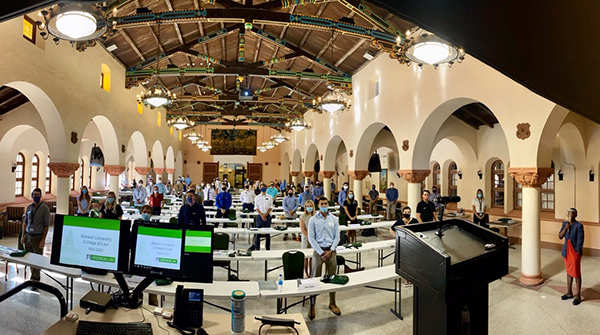
Stetson Law campus image

Stetson University College of Law is excited to announce the launch of a new Legal and American History Program (LAHP) for students who will begin their J.D. or LL.M. studies in August 2021, as well as Legal and American History Program Plus (LAHP+) for those looking to begin their U.S. legal studies in 2022 or beyond!

The program will provide historical context and knowledge of United States history – focusing on legal decisions, and the socio-economic, racial, ethnic, and gender disparities that have existed over time and influenced the evolution of the American common-law legal system.

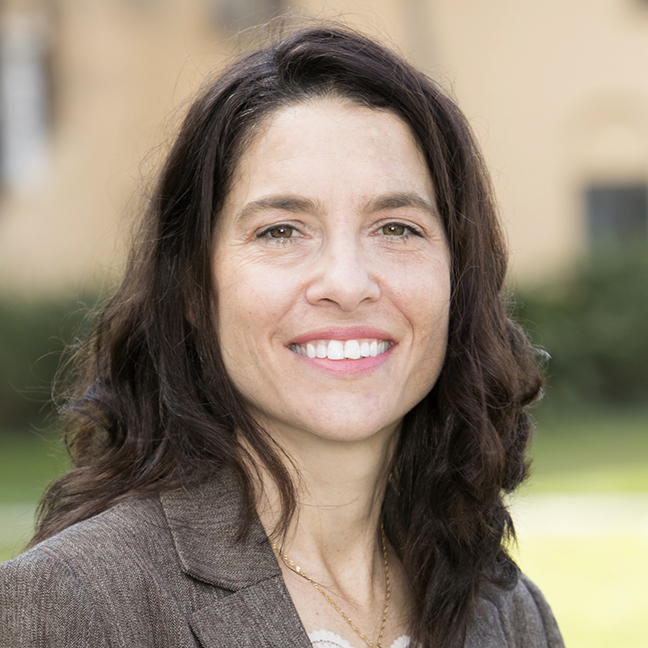
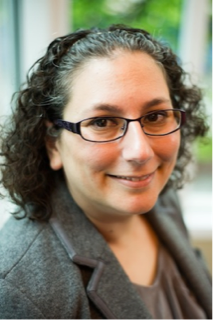
Jessica Dworkin
Jessica Dworkin

“This program was created because international students who are planning to study law in the United States often find that having a strong foundational understanding of United States history provides an important basis for understanding the legal system, and current legal and political events,” said Jessica Dworkin, director of international and graduate programs at Stetson Law. She will teach the courses.

LAHP will be a three-week, synchronous, virtual program (July 6 to July 23), and LAHP+ will be a four-week, synchronous, virtual program (July 6 to July 30) from 9 a.m. to 12 p.m. EDT. The additional week in the LAHP+ program will feature workshops aimed at helping international students understand how the U.S. law school admissions process works. In this additional week, admissions professionals will share insights about how they review applications and what makes a candidate stand out from the crowd. They will discuss personal statements, résumés, and letters of recommendation, as well as the overall application process and timeline.

“LAHP and LAHP+ are wonderful preparatory courses for students interested in applying to and studying at any of the law schools in the United States,” Dworkin said.

As director of international and graduate programs at Stetson Law, Dworkin provides leadership, strategic planning, enrollment management, student and academic support for LL.M., M.J., and study abroad programs. Prior to working at Stetson, Dworkin held similar roles at Emory and The Ohio State University. Dworkin earned her B.A. from The Ohio State University and her J.D. and LL.M. from Duke University School of Law. Prior to her career in international legal education, Dworkin practiced law. She has presented on topics of LL.M. administration, internationalizing legal education, and U.S. legal education for organizations including NAFSA, NALP, and EducationUSA.

Scholarships are available for these programs. To learn more and register, visit our website:  https://www.stetson.edu/law/academics/home/legal-and-american-history-program.php.   

Winner of new Advocacy Writing Competition announced

Stetson Law is pleased to announce the winner of the inaugural Advocacy Writing Competition is Laura Rose, an assistant professor of law at the University of South Dakota Knudson School of Law in Vermillion, SD.

She also happens to be a 2012 Stetson Law alumna!

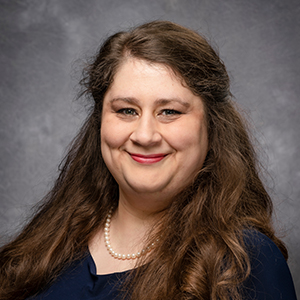
Laura Rose
Laura Rose

Rose will discuss her paper, “Advocacy in Action: Teaching Evidence to Interleave the Doctrinal and the Practical,” at the annual Educating Advocacy Teachers (EATS) Conference in June, and it will be published in Stetson Journal of Advocacy and the Law. She also won $2,000 cash.

“In my time at Stetson I was introduced to interdisciplinary law teaching through classes like Professor Lee Coppock’s Trial Advocacy, Professor Bob Bickel’s Constitutional Law and the Civil Rights Movement, and Professor Ellen Podgor’s White Collar Advocacy. I am grateful for the chance to pay it forward through my teaching, scholarship, and service.” 

The new competition was launched in late 2020 to motivate advocacy skills teachers, coaches, and practitioners to publish scholarship on advocacy related topics. It also offers them a chance to share practical and innovative ideas in the field of advocacy.

Elizabeth Boals, assistant professor of law and director of the Center for Excellence in Advocacy at Stetson Law, said “this writing competition will help advance creativity and innovation in advocacy teaching. We look forward to supporting advocacy related scholarship for many years to come.”

About Stetson Journal of Advocacy and the Law

The Stetson Journal of Advocacy and the Law was founded in 2014 and is the first law review designed to be read online. It is a student-produced legal journal dedicated to discussing, exploring, and influencing contemporary issues related to oral and written advocacy. It features articles on all facets of advocacy (including Alternative Dispute Resolution, Trial Advocacy, and Appellate Advocacy) written by pre-eminent practitioners, judges, law professors, and students.  The Journal is published annually.

About Stetson Law’s Center for Excellence in Advocacy

The Center for Excellence in Advocacy, whose program is repeatedly ranked No. 1 by U.S. News and World Report, promotes the continuing development of unparalleled advocacy skills through teaching, scholarship and research. Stetson Law’s Advocacy Resource Center offers instruction to a worldwide audience through online video presentations by experts in the field of advocacy. The Stetson Law community is committed to the concept of the complete advocate – one who commands a superior understanding of the law, the ability to persuasively present evidence, and the humanity to know when to do the right thing.

Stetson Law wins Florida Bar Foundation Pro Bono Law School Challenge

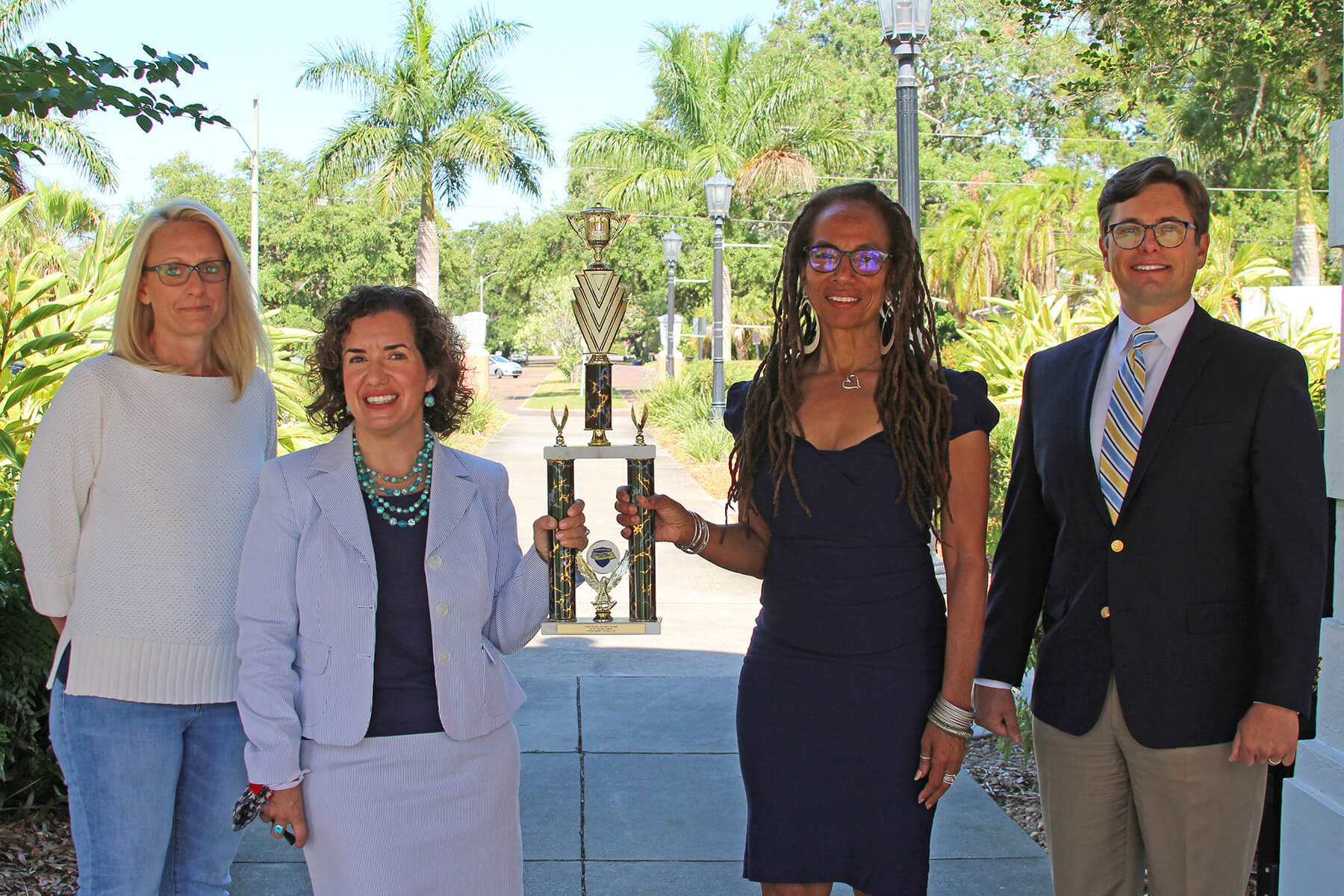
Stacy Elizondo, Career and Professional Development coordinator; Associate Professor Christine Cerniglia, director of Clinical and Experiential Education; Professor Judith Scully, co-founder of the Stetson Social Justice Advocacy Program and current chair of the Pro Bono Committee; and Mike Casey, associate director of Alumni Relations with the 2021 Florida Pro Bono Law School Challenge trophy.

The Florida Bar Foundation announced the winners of the 2021 Florida Pro Bono Law School Challenge April 5, and Stetson University College of Law won the top honor, the MVP Pro Bono Champion Award, for matching the most students with its own alumni.

“I am so pleased to see us recognized for work related to helping close the justice gap,” said Professor Judith Scully. “As one of the founders of the Stetson Social Justice Advocacy Program and current chair of the Pro Bono Committee, I could not think of a better way to end this semester.”  

For the third year in a row, students and lawyers used an online platform at FloridaLawSchoolChallenge.org to choose cases hosted by legal aid programs. Florida’s law schools competed for six weeks to see which could take the most pro bono cases. Students and lawyers from all of Florida’s 12 law schools participated. Barry University Dwayne O. Andreas School of Law won for most student engagement. Ave Maria School of Law won for the most alumni engagement.

Legal aid programs also competed to post the most cases online during the Challenge; CABA Pro Bono Legal Services, Legal Services of North Florida, and Community Legal Services of Mid-Florida were winners.

“It is a testament to our state’s law schools’ commitment to pro bono work that 309 law students matched with lawyers on full representation cases through the Challenge,” Stephen R. Senn, the Foundation’s president, said. “Providing students with opportunities to get real world experience and lawyers with opportunities to mentor and support their local legal aid programs strengthens the legal aid system.”

Trophies will be presented to the winners at the Foundation’s 2021 Virtual Award Ceremony on June 17. The Florida Bar Foundation is a 501(c)(3) nonprofit organization whose mission is to provide greater access to justice. A core part of the Foundation’s mission is to promote public service among lawyers by making it an integral part of the law school experience. By connecting students with alumni to partner on pro bono cases from legal aid organizations, the Foundation increases access to justice and promotes pro bono work.

Stetson Law takes unique sign language interpreter training virtual

Members of Stetson Law’s faculty and trial team, along with sign language interpreters, work through a mock hearing.

GULFPORT, Fla. – For the fourth year in a row, Stetson Law hosted an innovative workshop to train both sign language interpreters and future lawyers in navigating a courtroom and legal proceedings when sign language interpretation is required.

The 4th Annual Sign Language Interpreter Legal Training Workshop is unlike any other in the country because it provides specialized, hands-on sign language interpreter legal training in a live mock hearing courtroom setting. The workshop tackles some of the challenges distinctive to courtroom sign language interpreting, such as navigating the courtroom environment, and conveying abstract concepts and technical legal terms. 

Jason Palmer
Jason Palmer

“Stetson is the only place that is providing training for sign language interpreters in true-to-life hearings and trials with real lawyers and law students,” said Professor Jason Palmer, one of the organizers. “It is a unique opportunity for our students to get that experience before they go out and practice, and for sign language interpreters to have a real courtroom experience instead of training in a meeting room or a convention center.”

The two-day workshop featured Stetson Law faculty and staff from its Center for Excellence in Advocacy and the Center for Excellence in Elder Law, students from Stetson Law’s Trial Team, Dispute Resolution Board, and Moot Court Board, along with professionals from two American Sign Language (ASL) interpreter services: Tampa-based Absolute Quality Interpreting Services, and Columbus, Ohio-based Hallenross and Associates. More than 50 novice and advanced level interpreters from all over the United States attended the event.

“This has absolutely matured into something amazing,” said David Scott, chief operational officer with Absolute Quality Interpreting Services, which has partnered with Stetson all four years. “The staff at Stetson has turned it into an absolute magical training.”

The first day of the workshop provided lectures and training on standard practices and vocabulary for courtroom interpreting. On the second day, all the participants had the chance to test out their skills in a courtroom environment with the help of Stetson Law’s Advocacy Board Students. Interpreters worked through every step of a hearing, including interpreting open and closing statements, direct and cross-examinations, and interpreting for a witness who is deaf.

American Sign Language is its own unique language, rather than a direct interpretation of English, and that is an important distinction for lawyers to understand. Lawyers are taught to be deliberate in their word choices in questions and opening and closing statements, so understanding how part of a court proceeding will be interpreted in ASL could require them to adjust their approach. For example, using sarcasm in a closing statement could backfire if it cannot be adequately conveyed to a deaf juror. Likewise, interpreters must be highly cautious about their facial expressions and word choice in the legal world. Something as small as interpreting the word “gun” when an attorney actually said “weapon,” could alter what the attorney meant to convey. And questions of accuracy of the record could lead to serious repercussions, such an appeal of a decision or even a malpractice lawsuit.

Linda Ross and a fellow interpreter in 2020.

Traditionally held on Stetson Law’s Gulfport campus, which offers fully equipped and accessible courtrooms, this year the workshop went virtual via Zoom. The online platform presented new challenges for all involved. For example, some students found their rhythm during questioning disrupted as they had to allow for the delay in questions and answers to be interpreted. Everyone, including interpreters and deaf witnesses, agreed it was not always clear which interpreter they should be watching when more than one was on screen signing. However, the prevailing sentiment in the legal community is that much of the industry’s work – be it court hearings or client meetings – will continue to be done remotely even after the pandemic ends. So, it behooves lawyers and interpreters alike to be comfortable with navigating this new normal.

“I’m thankful this crucial work is happening to make our courtrooms more inclusive,” said Dean Michèle Alexandre. “It’s a great opportunity for our students to learn skills to advocate for clients of different backgrounds who need interpretation.”

New summer program gives a taste of study abroad without the travel

Stetson Law campus tower with flags in the foreground

GULFPORT, Fla. – Stetson Law is pleased to announce our Office of International Programs is now offering a series of 1 credit hour courses for law students who had hopes of studying abroad this summer but are unable to because of the pandemic.

This reimagined version of a study abroad program will feature multiple courses taught by faculty from Stetson and other law schools focused on topics of international, foreign, and/or comparative law importance. Students may choose to take one, or many, of the classes.

“This is a great opportunity to learn about these topics of law without the need to travel or to incur additional travel-related expenses,” said Jessica Dworkin, director of international and graduate programs.

Stetson Study Abroad Comes to You will be offered between July 6 and July 30, 2021. Each course will last one week, and students may choose to take between one and four courses during the duration of the 2021 offerings. Courses will generally be held from 9 a.m. to 12 p.m. EDT, taught synchronously Monday through Thursday with Friday and the weekend being reserved for a take home final examination.

The curriculum will include such courses as:

  • International Space Law, taught by Professor Roy Balleste, Stetson University College of Law, will examine the role of international law in the regulation of outer space activities, including those related to the moon and other celestial bodies. Specifically, the course examines the current and potential future uses of outer space with a focus on recent developments such as mining, commercialization, space tourism, and claims of sovereignty over outer space and celestial bodies.
  • Health Law Issues and Human Rights in Africa, taught by Professor Florence Shu-Acquaye, Nova Southeastern University, will explore Health Law and Human Rights issues that make the African continent unique. It will highlight, the predicament of African Women and the current strategies and interventions to address these. The course will increase the understanding of the role of International and regional Treaties dealing with Human Rights in Africa, and their application within that context.
  • War Crimes & Courts-Martial, taught by Professor Jennifer North, Charleston School of Law, is a study of the Laws of War, the Geneva Conventions, the Uniform Code of Military Justice and Manual for Courts-Martial, as well as other relevant statutes and cases. It examines the laws governing the battlefield – jus in bello – as it applies to U.S. military service members and insurgent groups charged with war crimes. Current events are discussed in conjunction with international governing doctrines of the Laws of Armed Conflict.

Visit our website to find out more and register, or email [email protected] with any questions.

Ireland takes top spot at 25th Annual International Environmental Moot Court Competition

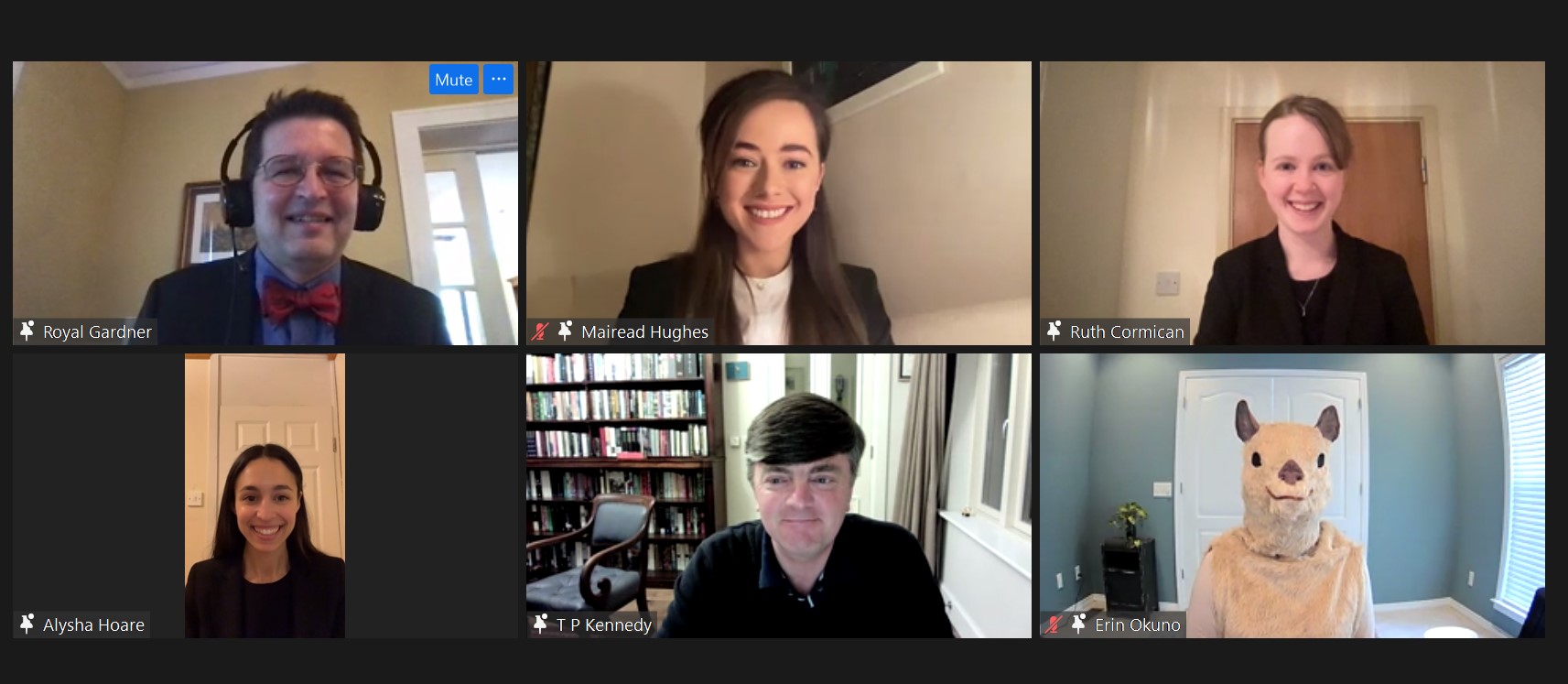
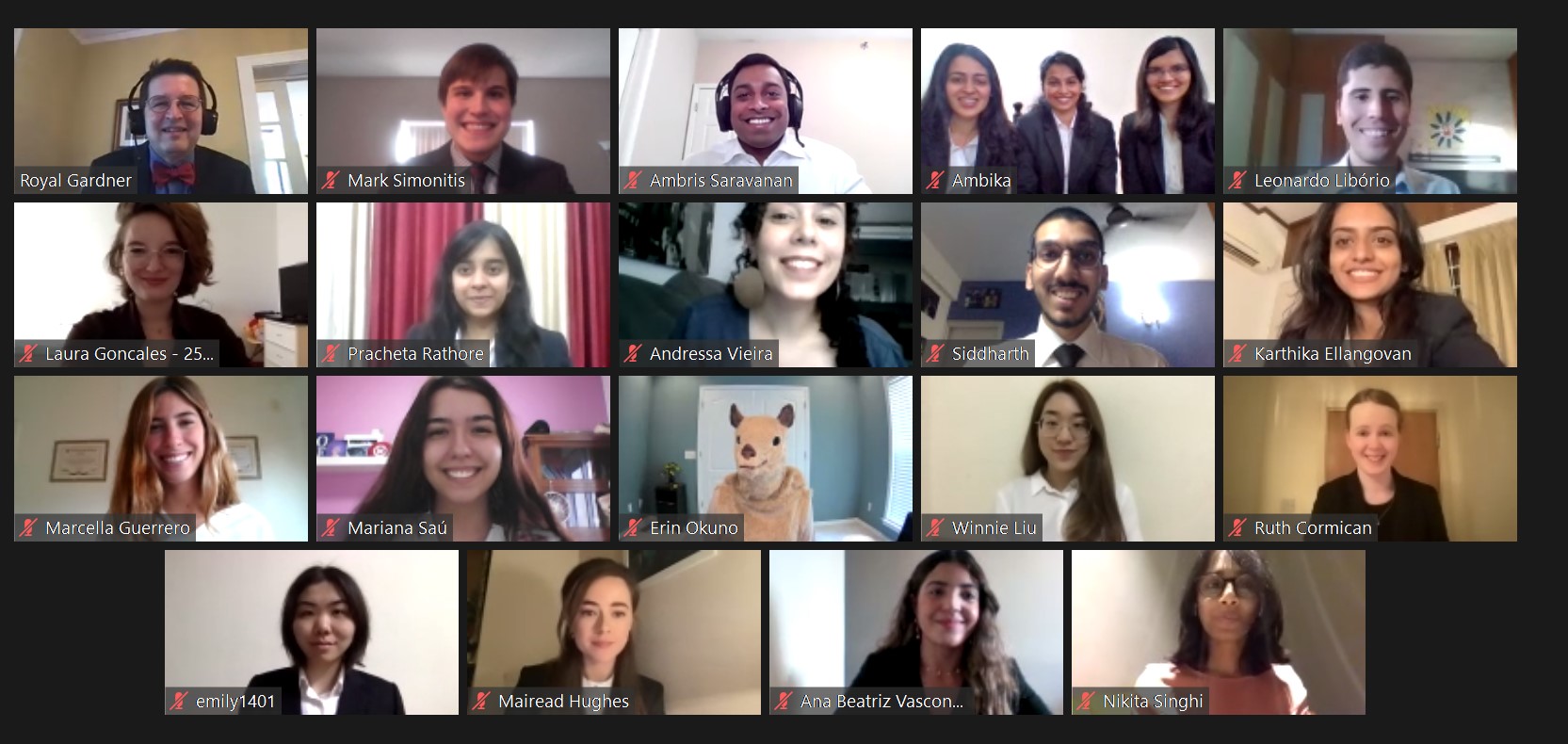
Law Society of Ireland won this year’s competition. Pictured here, clockwise from top left: Stetson’s Professor Royal Gardner, Ireland’s Mairead Hughes, Ruth Cormican, Alysha Hoare, and coach T P Kennedy, and Stetson’s Visiting Professor Erin Okuno (aka the bat mascot).

The 25th Annual Stetson International Environmental Moot Court Competition (IEMCC) brought together 18 teams from around the world for three days of competition that culminated with Law Society of Ireland as this year’s winner.

Symbiosis Law School, Pune, India, was runner-up in the competition. Ireland also took Best Memorial, and team member Alysha Hoare was named Best Oralist in the Championship Round. Teams from 11 jurisdictions – Brazil, China, Colombia, India, Ireland, Mexico, the Philippines, Singapore, Slovenia, Taiwan, and United States of America – competed. The full results are below.

The IEMCC Final Rounds are traditionally held on Stetson Law’s campus in Gulfport, Fla., but were moved online in 2020 because of the COVID-19 pandemic. The 25thcompetition also was held virtually March 25-27, 2021.

Students prepared and presented arguments on an issue dealing with the protection of bats and international trade measures. Dr. Rodrigo Medellín, known as the “Bat Man of Mexico,” helped develop the problem and served as one of the final round judges along with Amy Fraenkel, executive secretary of Convention on Migratory Species, Dr. Wil Burns, co-director of the Institute for Carbon Removal Law & Policy at American University, and David Wirth, professor at Boston College Law School.

All the judges agreed they were impressed with how the students focused on not only the law, but also the deeply technical aspects of the science involved. Fraenkel noted part of the key to a persuasive argument is to rely on the facts, not just the law itself.

Professor Royal Gardner, director of Stetson’s Institute for Biodiversity Law and Policy, said he hoped students would take those skills, along with everything else they learned this year about trade law and international environmental law as they prepared for the competitions, and use it throughout their careers. 

Teams from 11 jurisdictions – Brazil, China, Colombia, India, Ireland, Mexico, the Philippines, Singapore, Slovenia, Taiwan, and United States of America – competed.

25th Annual Stetson International Environmental Moot Court Competition

International Finals – Virtual Rounds

March 25-27, 2021

Final Round:

  • International Finals Champion: Law Society of Ireland – 2186
  • Runner-up: Symbiosis Law School, Pune, India – 2100
  • Best Oralist in the Final Round: Alysha Hoare, Law Society of Ireland – 2186

Semifinalists:

  • National Law University, Delhi, India – 2156
  • O. P. Jindal Global University, India – 2177

Oralist Awards for the Preliminary Rounds:

  • Best Oralist in the Preliminary Rounds: Ruth Cormican, Law Society of Ireland – 2186
  • Second Place Oralist: Ayan Gupta, National Law University, Delhi, India – 2156
  • Third Place Oralist: Karthika Ellangovan, O. P. Jindal Global University, India – 2177
  • Fourth Place Oralist: Aaron Tan Kai Ran, Singapore Management University – 2109
  • Fifth Place Oralist: Elizabeta Korenčan, University of Ljubljana, Faculty of Law, Slovenia – 2171

Memorial Awards:

  • Best Memorial: Law Society of Ireland – 2186
  • Runner-up Best Memorial: O. P. Jindal Global University, India – 2177
  • Third Place Memorial: University of the Philippines College of Law – 2149

Spirit of Stetson Award:

  • Mackenzie Presbyterian University, Brazil – 2133
  • University of Ljubljana, Faculty of Law, Slovenia – 2171

View photos from the competition

A gallery of photos from the virtual rounds of the competition is available on Zenfolio.

‘Bat Man of Mexico’ says we have much to thank, little to blame, bats for

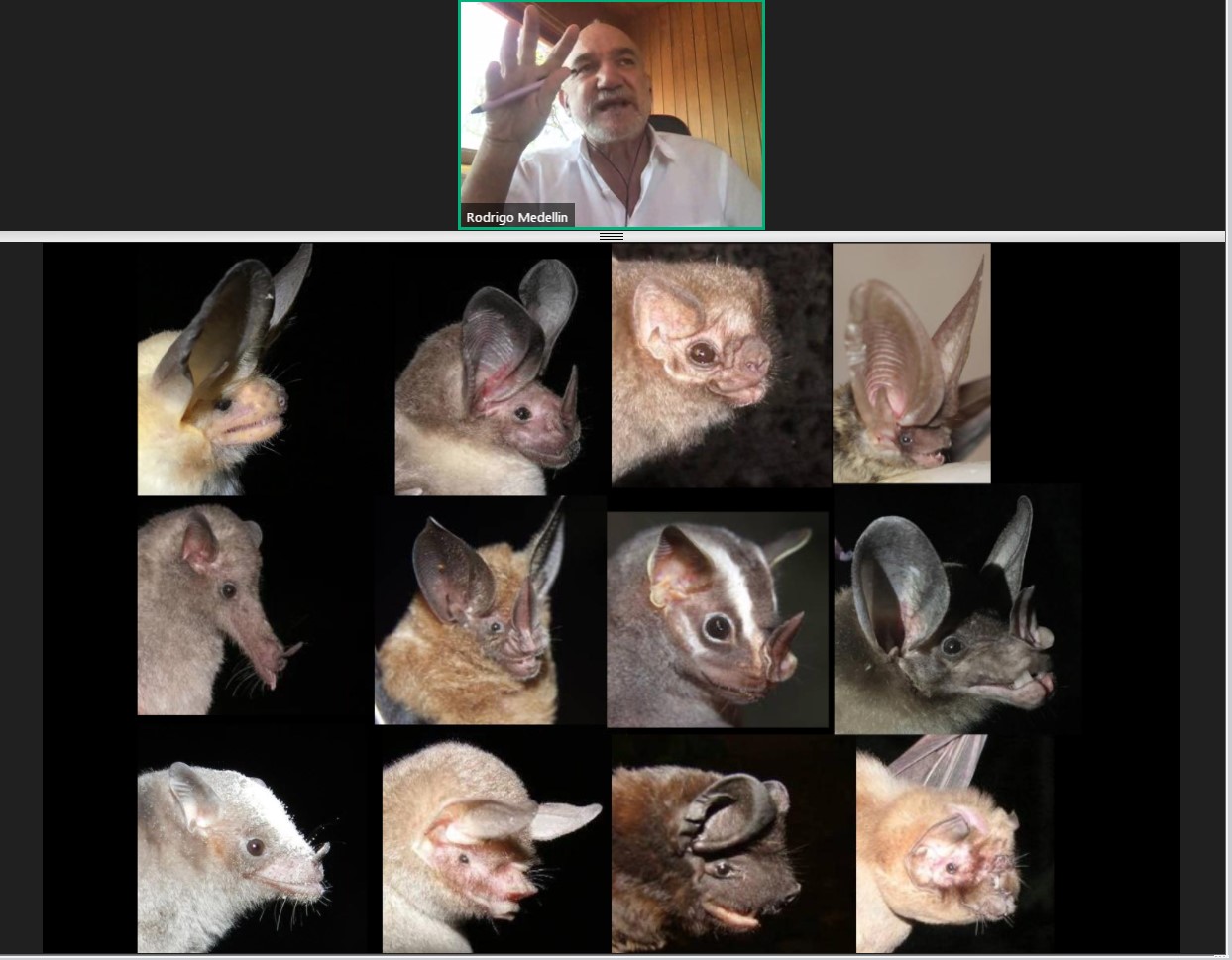
Dr. Rodrigo A. Medellín’s Foreman Biodiversity Lecture on bats and infectious diseases.

Stetson Law’s final Foreman Biodiversity Lecture for the 2020-2021 academic year featured Dr. Rodrigo A. Medellín, an ecologist, academic, and internationally renowned bat expert.

His lecture, “Bats and Emerging Infectious Diseases: Myths, Realities, and Hope in Pandemic Times” was an impassioned plea for the much-maligned mammals. For starters, he insists they are not ugly. And more importantly, they are not responsible for the most recent novel coronavirus, SARS-CoV-2.

Medellín knows bats get a bad rap, and “expert scientists” propagating fake ideas and blaming bats for spreading infectious diseases such as COVID-19 to humans does not help. One point Medellín drives home as often as he can to whomever will listen is that scientists and the media need to stop using the word “new.” Diseases or even species may be new to science but likely are not new to humanity or even Earth. In the case of emerging infectious diseases, it is more accurate to say these are “previously undescribed pathogens.”

Yes, humanity is seeing an increase in outbreaks of previously unknown diseases, including SARS, Ebola, Zika, Chikungunya and more. The headlines can be, understandably, frightening. Scientists still know very little about these viruses, where they come from, and how humans became infected with them. But scientists do know a few key things:

  • Viruses are as old as life itself and are incredibly ubiquitous, abundant and diverse.
  • Coronavirus are a family of about 300 species, and of those, only three can cause serious harm to humans.
  • SARS-CoV-2 is a human virus that no animal, including bats, can transmit to humans.
  • The bat SL-CoV coronavirus has a 96 percent similarity to SARS-CoV-2, but even if it entered human bodies, it would be unable to enter human cells and cause infection.
  • There is no demonstrated evidence that SARS-CoV-2 jumped from bats to humans.
Dr. Rodrigo A. Medellín and bat species

It’s important to bear in mind a new virus itself is just one piece of the puzzle. Without the ecological context, we cannot fully understand zoonotic (meaning those that spread between animals and humans) diseases. Killing animals believed to be the source of a “new disease” merely treats the symptoms, not the source of the problem, Medellín said. Another fact to consider: bats do not have more zoonotic diseases than other animals. In terms of proportion, song birds and rodents carry a higher number.

Humans are encroaching further into remote, pristine, previously unexplored areas of the world. The resulting loss of habitat and biodiversity, along with exotic invasive species spreading around the globe, has exposed us to new potential pathogens. There will undoubtedly be more diseases, Medellín said, but the first line of defense against the next pandemic is ecosystem and biodiversity conservation.

In addition to conservation, Medellín also points to a need to regulate and reduce the illegal, unsustainable consumption of bushmeat, as well as reducing global meat consumption and changing the forms of production of the animals we do eat. Crowded, unsanitary conditions in both wet markets and mass production farms create the perfect breeding ground for disease.

Many of our daily choices – from the food we consume to the products we buy – can have a ripple effect on biodiversity and, ultimately, human health.

“We all have something to do to prevent the next pandemic.”

New scholarship created to honor long-time state attorney and dedicated alumnus

Bernie McCabe
Bernie McCabe

To honor the legacy of Bernie McCabe, JD ’72, his classmates have established the Bernie McCabe Prosecution Clinic Scholarship, which will provide tuition assistance to a student participating in the Prosecution Clinic.

Over the years, McCabe helped mold hundreds, if not thousands, of young attorneys, said Denis M. de Vlaming, one of McCabe’s classmates. He guided and pushed them to achieve excellence and to serve their communities honorably.

“Not only was Bernie a classmate and friend, but he was also a committed advocate for justice and a brilliant legal mind,” de Vlaming said. “His passing leaves a void that will not easily be filled.”    

McCabe was a “Double Hatter,” earning his bachelor’s in 1969 from Stetson University and Juris Doctor from Stetson Law in 1972. He began his career as the Assistant State Attorney in the Sixth Judicial Circuit in Florida and was eventually elected as State Attorney for Pinellas and Pasco counties in 1992, a role he held until his passing in 2020.

He dedicated his life and career to many professional and nonprofit organizations aimed at protecting the rights of victims of crimes. He also was a steadfast presence at Stetson Law, being appointed to the Board of Overseers in 1994, supervising the Stetson Prosecution Clinic for 28 years, teaching young law students as an Adjunct Professor, serving as judge for various mock trial competitions at the law school, and hiring and mentoring many Stetson Law alumni.

Organizers hope to raise the funds to endow the scholarship in perpetuity. Those who would like to honor McCabe’s memory by making a gift to endow the scholarship that bears his name should contact Patricia Toups, Assistant Director of Development, at [email protected] or 727-562-7985. 

International Environmental Moot Court Competition marks 25th year

This year marks the 25th anniversary of the Stetson International Environmental Moot Court Competition (IEMCC). The global, multi-part contest gives students around the world an opportunity to learn more about and advocate for environmental issues impacting the planet.

Planet earth with translucent water of the oceans, atmosphere, volumetric clouds, and detailed topography in outer space

Teams compete in national and regional rounds throughout the world, and the top teams are invited to participate in the International Finals. This year initial rounds were hosted in Brazil, Colombia, India, Ireland, Mexico, the Philippines, the Republic of Korea, and the United States. The Finals are traditionally held on Stetson Law’s campus in Gulfport, Fla., but were moved online in 2020 because of the COVID-19 pandemic. The 25thcompetition also is being held virtually March 25-27, 2021.

Eighteen teams from 11 jurisdictions (Brazil, China, Colombia, India, Ireland, Mexico, the Philippines, Singapore, Slovenia, Taiwan, United States of America) are expected to compete. Students will prepare and present arguments on this year’s theme: Protection of Bats and International Trade Measures.

Prof. Royal Gardner
Prof. Royal Gardner

“While we had hoped to celebrate our 25th anniversary in person, we are thrilled that we can still bring together law students from all over the world to participate in our signature event,” said Professor Royal Gardner, director of Stetson’s Institute for Biodiversity Law and Policy. “We are inspired by their dedication and resiliency during these challenging times.”

Another traditional feature during the finals is a Foreman Biodiversity Lecture, part of a series of talks on environmental topics given by experts from around the world throughout the academic year. The lecture, which precedes the competition kickoff on March 25, features Dr. Rodrigo A. Medellín, “The Bat Man of Mexico.” His topic is “Bats and Emerging Infection Diseases: Myths, Realities, and Hope in Pandemic Times.” The lecture is at noon Eastern Daylight Time and is free and open to the public; register in advance here: https://attendee.gotowebinar.com/register/5116322686497095947.

Below find the schedule for this week’s rounds. The final round and awards ceremony will be live and open to the public. Be sure to follow the IEMCC Facebook (https://www.facebook.com/StetsonIEMCC) page for updates, links and details!

2021 Final Round Competition Schedule

(All times are Eastern Daylight Time)

Thursday, March 25

  • Check-in/orientation       11:00–11:45 a.m.
  • Foreman Biodiversity Lecture      12:00–1:00 p.m.
  • Preliminary Round 1 – Heat A     2:00–3:30 p.m.
  • Preliminary Round 1 – Heat B      3:30–5:00 p.m.
  • Preliminary Round 2 – Heat A     6:00–7:30 p.m.
  • Preliminary Round 2 – Heat B      7:30–9:00 p.m.

Friday, March 26

  • Preliminary Round 3 – Heat A     9:00–10:30 a.m.
  • Preliminary Round 3 – Heat B      10:30 a.m.–12:00 p.m.
  • Preliminary Round 4 – Heat A     2:00–3:30 p.m.
  • Preliminary Round 4 – Heat B      3:30–5:00 p.m.
  • Virtual Networking Session for Teams     5:00–6:00 p.m.
  • Announcement of Teams Advancing to Quarterfinals       6:00 p.m.

Saturday, March 27

  • Quarterfinals      9:00–10:30 a.m.
  • Announcement of Teams Advancing to Semifinals       11:00 a.m.          
  • Semifinals         11:30 a.m.–1:00 p.m.
  • Announcement of Teams Advancing to Championship        1:30 p.m.
  • Championship Round     2:00–3:30 p.m. (open to the public and all teams)
  • Awards Ceremony           3:30 p.m. (open to the public and all teams; should be done by 4:30 or 5:00 at the latest)

Previous IEMCC Winners

Chart showing previous 24 IEMCC winners.

South African human rights lawyer to deliver May commencement address

Edwin Cameron
Edwin Cameron

GULFPORT, Fla. (March 23, 2021) – Prominent South African judge and human rights lawyer, Edwin Cameron, will deliver Stetson Law’s commencement address on Saturday, May 1, 2021.

In addition to speaking, Cameron will receive an Honorary Doctor of Laws degree. Though the commencement ceremonies will be held in person on the campus, Cameron will appear via prerecorded video from Johannesburg, South Africa. Other featured speakers will include Stetson University President Dr. Christopher F. Roellke and Stetson University College of Law Dean Michèle Alexandre.

Stetson Law will celebrate four separate commencement ceremonies that day in the Plaza Mayor Courtyard on the Gulfport campus, 1401 61st St. S. They will be held at 8 a.m., 10:45 a.m., 1:30 p.m., and 4:15 p.m. The graduates have been divided among four outdoor ceremonies throughout the day to allow for physical distancing and other safety protocols. Students are limited to two guests. The ceremonies will be webcast live so additional family and friends can participate. Other precautions include a face mask requirement for all attendees and wellness screenings prior to entering campus.

Other honored speakers have pre-recorded messages that will be available to view on the Graduation website that day.

About Edwin Cameron

Edwin Cameron is a prominent South African judge and human rights lawyer who has fought for social justice issues, particularly for LGBTI equality and to destroy the stigma and unjust discrimination for those living with HIV/AIDs. His recent work addresses the “moral catastrophe” of mass incarceration that disproportionately affects Blacks and other minorities.

Cameron was first appointed to the bench by President Nelson Mandela in 1994. He was a Judge of the Supreme Court of Appeal for eight years and of the High Court for six, before serving as a Justice of the Constitutional Court, South Africa’s highest court, from 2009 to 2019. He currently is Chancellor of Stellenbosch University and Inspecting Judge of the Judicial Inspectorate for Correctional Services.

Before serving on the bench, during his decades as a human rights lawyer he co-drafted the Charter of Rights on AIDS and HIV, co-founded the AIDS Consortium, founded the AIDS Law Project, and fought for the historic inclusion of sexual orientation in the South African Constitution. He wrote a prize-winning memoir, Witness to AIDS, about his own experience of surviving AIDS. His second book, Justice: A Personal Account, was published in 2014. Cameron was the first, and remains the only, senior official in Africa to state publicly that he is living with HIV/AIDS, for which Mandela once referred to him as “one of South Africa’s new heroes.”

He has received numerous honors for his legal and human rights work, including a special award by the Bar of England and Wales in 2002 for his “contribution to international jurisprudence and the protection of human rights.” He is an honorary fellow of the Society for Advanced Legal Studies, London, and of Keble College, Oxford, as well as an honorary bencher of the Middle Temple, London. He holds honorary doctorates in law from King’s College London, the University of the Witwatersrand, Johannesburg, Oxford University, the University of St. Andrews, Stellenbosch University, and Sussex.

Amendment 4 Fellows tackle voting rights, other issues through new program

Four Stetson Law students have spent the last year dedicating their time and talent to an essential new program in Pinellas County aimed at helping returning citizens rebuild their lives.

Stetson University College of Law and Community Law Program (CLP) received a $33,500 grant from the American Bar Endowment (ABE) in summer 2020 to create clinics to help returning citizens previously convicted of felonies get their voting rights restored.

Jasmine Mattear

In 2018, 65 percent of Floridians voted in favor of Amendment 4 to revise the Florida Constitution to restore voting rights to 1.4 million citizens previously convicted of felonies (commonly referred to as “returning citizens”). Months later, the Florida Legislature passed a subsequent bill requiring all financial obligations of returning citizens’ sentences be paid before they could vote. This meant only those returning citizens with enough money to pay financial obligations such as court fees, fines, and restitution in full would be eligible to vote. The requirement eliminated access to justice and civic engagement for hundreds of thousands of low-income and indigent citizens.

Alessandra M. Jensen

To combat the inequality, CLP, through the grant and with the help of students and faculty at Stetson University College of Law, started a series of Restoration of Voting Rights Remote Clinics serving Pinellas County, Fla.  CLP staff recruited, trained and supported volunteer attorneys who hosted virtual clinics twice a month to review legal options with returning citizens interested in restoring their voting rights.  

Stetson Law selected four student fellows to support CLP’s efforts through assisting with intake, research, and outreach. The law students also helped in recruiting, organizing and training other law student volunteers and community partners. This year’s fellows were Jasmine Mattear, Gabi D’Esposito, Steven Nicholas, and Alessandra M. Jensen.

Steven Nicholas

Their efforts have now become known as the Amendment 4 Program and include ongoing legal services for issues including voting rights, driver’s license restoration, and sealing and/or expunction of criminal records. Stetson students have filmed a series of videos to education the public about the various services (see below). As part of the project, Stetson fellows worked with the Florida Rights Restoration Coalition to assist 485 returning citizens, 148 of whom were then registered to vote before October 2020.

Each of the students brings his or her unique perspective to the Fellow role. D’Esposito, a 2L from Long Island, saw firsthand how those who cannot afford legal representation can receive harsh and unfair sentences for crimes when a relative was imprisoned for five years. She aims to be a public defender after graduation but said the Amendment 4 Program has given her a chance to help people now.

Gabi D’Esposito

“It’s been great having in individual impact,” she said.

For Nicholas, a 3L from Bradenton, the Amendment 4 Program is an “anger project.” Trained lawyers volunteering on cases spend full days just trying to determine exactly what people were charged with, and what they owe in fines and fees. If educated and experienced attorneys struggle to track down the information and navigate governmental red tape, how could the average returning citizen be expected to do so without qualified help? That’s why the program is so important.

“I’ve learned how difficult the system makes it to work within its own rules,” he said.

Mattear, a 3L from Tallahassee, agreed that her biggest lesson from her year as a Fellow was the sheer amount of time and work involved in helping clients navigate the legal system. Not all court processes are straightforward, and they vary by jurisdiction. But something as seemingly simple as having a criminal record sealed or expunged can have a huge impact on a person – it could be the key to passing a background check and securing a job.

That keeps Mattear motivated, as does the hope of restoring voting rights for returning citizens.

“Voting is so important as an American citizen,” she said. “Everyone should have a say.”

The Amendment 4 clinic is open to qualifying Pinellas County residents; sessions are held online the first and third Thursday of every month from 5-7 p.m. For additional information, or to receive assistance through this project, contact call Community Law Program at (727)-582-7480 or email [email protected].

Fellow Talk Friday Series

Stetson Law to offer new civic education program for local underrepresented teens

GULFPORT, Fla. (March 5, 2021) – Stetson University College of Law, in partnership with Foundation for a Healthy St. Petersburg, is excited to announce a new summer program aimed at training underrepresented teenagers to advocate for themselves and others.

The weeklong summer course is designed for Pinellas County teenagers, between the ages of 15-17, considered underrepresented because of race, sexual orientation, gender identity, socio-economic status, or school performance.

Dean Michèle Alexandre
Michèle Alexandre

“Youth civic engagement training is crucial at this time. Offering a program like this is one of the most   valuable contributions philanthropic organizations and educational institutions such as Healthy St. Pete and Stetson Law can provide to the community,” said Stetson Law Dean Michèle Alexandre. “Stetson Law has longstanding expertise in teaching students to think critically and advocate for vulnerable groups. We believe that these types of programs can create a positive ripple effect for the participants, their families, schools and communities.”

Stetson Law officials recognized that, during the last 20 years, civics education and social action programming have decreased nationally. Students have little, if any, opportunity at the high school level to access the knowledge and tools they need to be advocates.

Randy Russell

“There is a latent power in youth that is often overlooked. Racism takes a tremendous toll on our society and youth now see that in pronounced ways,” said Randy Russell, Chief Executive Officer at the Foundation for a Healthy St. Petersburg. “By pursuing deeper understanding of their personal identities and their role in a society, it becomes easier to envision how to become change makers striving for race equity in the community and beyond.”

The summer session will be five full days during Summer 2021 and will serve as a pilot program for what officials plan to be a four-year effort. The curriculum will include two civics classes, two civil rights classes, and various engagement opportunities with community leaders and advocates.

Interested students must complete a short application, and all applicants will be reviewed and selected by a committee. In addition to Dean Alexandre, Professors Judith Scully and Christine Cerniglia will lead the program. For more information about the program or how to apply, please email Carmen Johnson at [email protected].

About Stetson University College of Law

Stetson University College of Law, Florida’s first law school, has prepared lawyers and leaders since 1900. Today, Stetson leads the nation in blending legal doctrine with practical training, evidenced by its top-ranked programs in advocacy and legal writing. Through its academically rigorous curriculum and commitment to social responsibility, Stetson produces lawyers who are ethical advocates ready to succeed in the legal profession.  

About Foundation for a Healthy St. Petersburg

The Foundation for a Healthy St. Petersburg is a private foundation serving the residents of South Pinellas County. Its goal is to improve population health by advancing racial and health equity by working at the county level with countywide systems, such as the school district, health department, and transportation system. The Foundation also works with more than 100 nonprofits and has invested over $21 million in the community over the last three years.