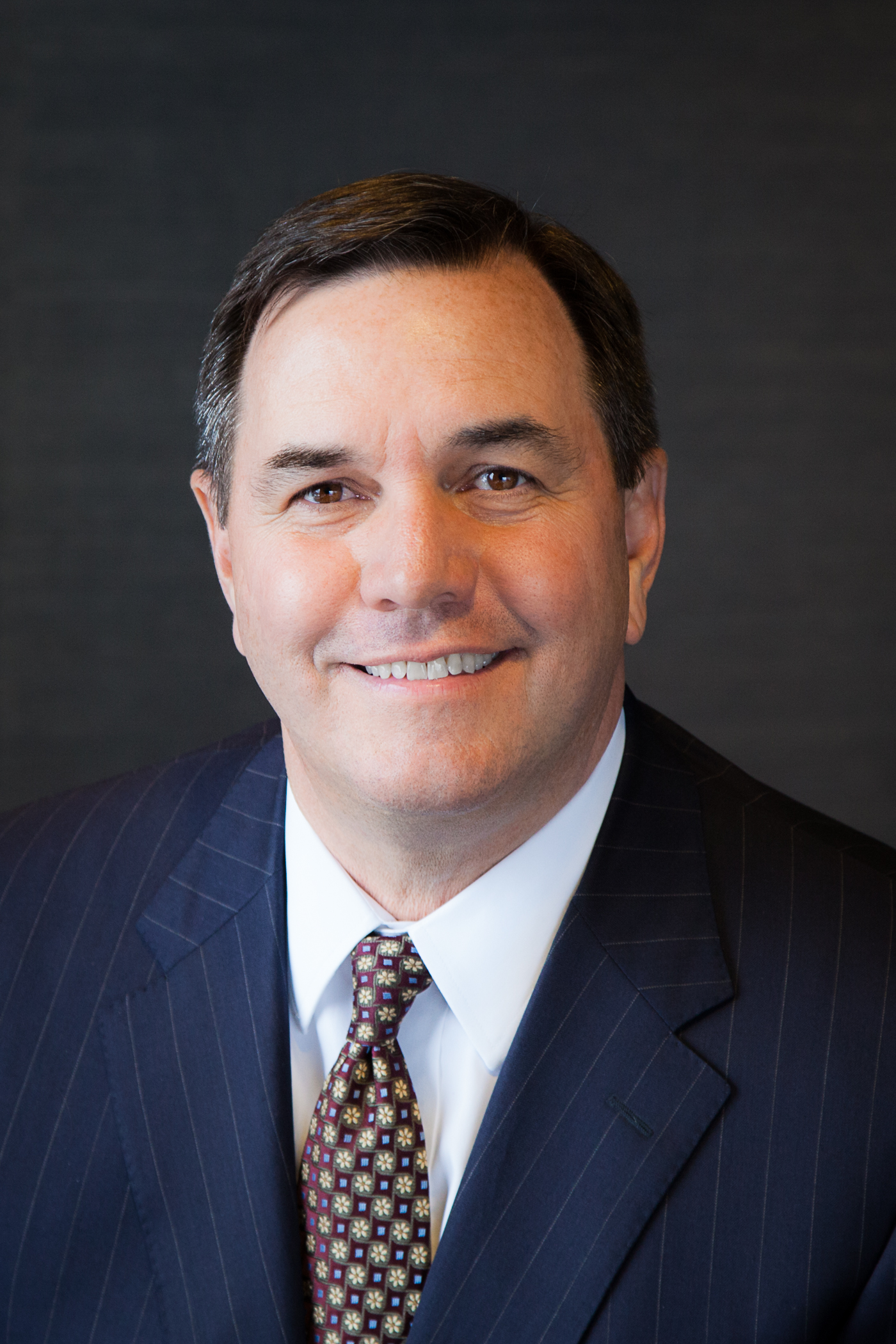
Stetson University College of Law is presenting its Cornerstone Award to Scott S. Bethune during its regional Educating Advocates Teaching Advocacy Skills conference on Dec. 7 at the University of Missouri-Kansas City.
Bethune is the founding member of Davis, Bethune & Jones, one of Kansas City’s premier law firms. He has dedicated his legal career to helping people find closure to desperate situations. As a member of the board of trustees and executive committee of the University of Missouri-Kansas City School of Law Foundation, Bethune helped raise the national status of the UMKC Trial Team to no. 6 in the nation for 2017 in the Fordham Law School rankings and UMKC rose to no. 21 in advocacy in U.S. News & World Report in 2017-18.
Through Bethune’s leadership and generous support, the UKMC Trial Teams have won numerous awards, recognition and national accolades, including an invitation to the prestigious Top Gun competition for the first time in the law school’s history, where they placed third in the nation. The UMKC Trial Teams also appeared at the Tournament of Champions and National Civil Trial Competition.
Bethune concentrates his practice on serious injury, wrongful death and complex commercial litigation. He is listed in the Best Lawyers in America and has been named the 2017 Lawyer of the Year in Kansas City for Mass Tort/Class Action Litigation in addition to being recognized in the Kansas City Business Journal as “Best of the Bar” and as a “Super Lawyer” by the Missouri and Kansas Super Lawyer magazines. Bethune is the immediate past-president of the Kansas City Metropolitan Bar Association and is on the board of trustees and executive committee for the UMKC Law Foundation. He is also commissioner for Missouri’s Appellate Judicial Nominating Commission, a member of the American Board of Trial Advocates, and past-president for the Western Missouri-Eastern Kansas chapter. He is also on the boards of the Missouri Association of Trial Lawyers and Kansas Association for Justice.
The Cornerstone Award recognizes exceptional members of the advocacy teaching community who work tirelessly to create learning opportunities across the profession. The recipients of the Cornerstone Award are recognized for their unwavering commitment to protecting the right to trial by jury, developing training opportunities for trial lawyers, and supporting the profession in both word and deed.
Stetson’s annual Educating Advocates conference in Gulfport, Florida, in the spring, and regional Educating Advocates conference in the fall, bring together advocates from around the country to share ideas, sharpen skills, and learn the nationally renowned Stetson Method of advocacy.
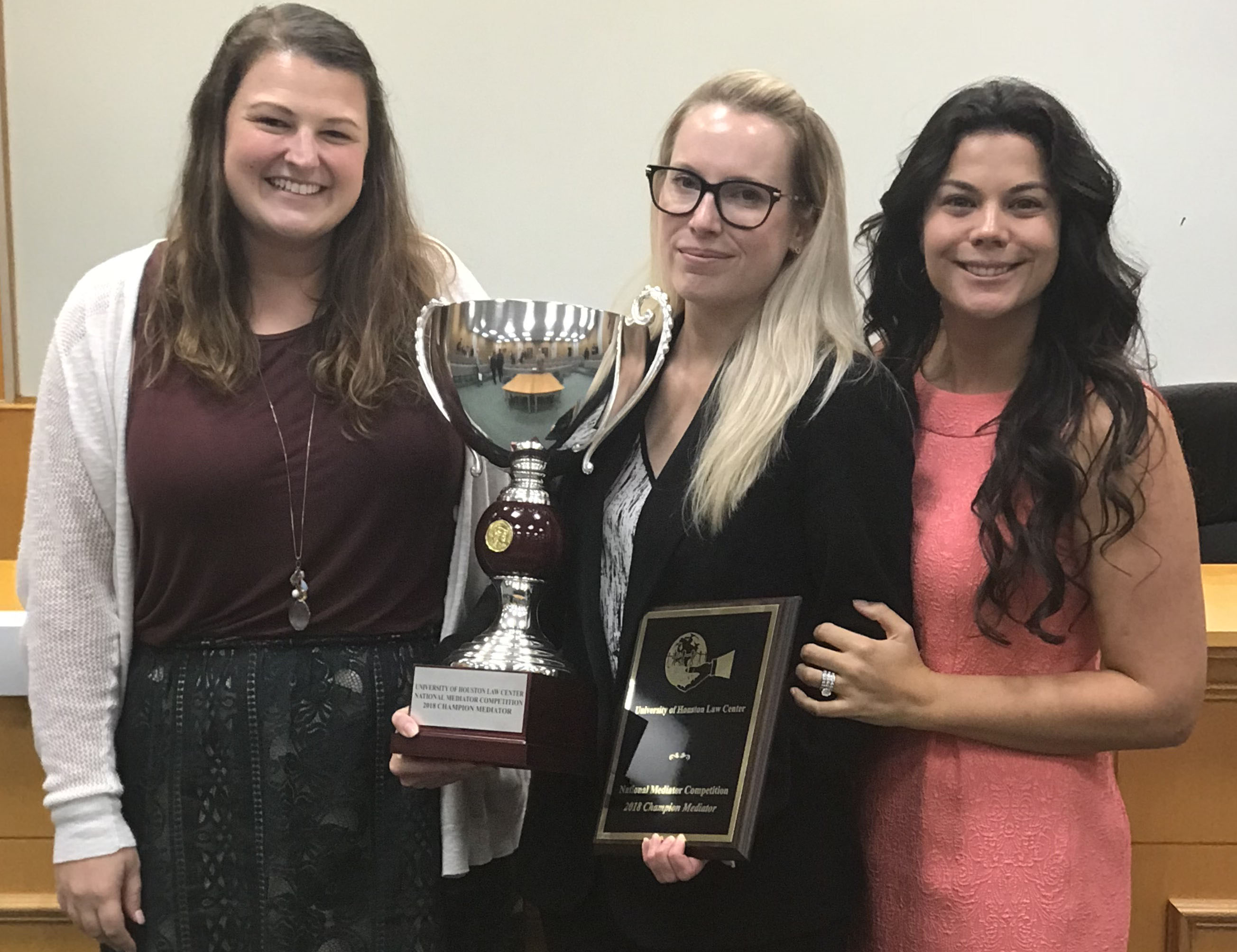
(L-R): Jenna Jordan, Haviland Kebler, and Professor Erika McArdle.
The Stetson University College of Law Dispute Resolution Board team of Jenna Jordan and Haviland Kebler competed and Kebler won the National Mediator Competition at the University of Houston Law Center in Houston, Texas, on Oct. 13.
A total of 16 students from teams across the country, including six Texas schools, competed in the unique competition, in which law students serve and are judged on their effectiveness as mediators.
“The competition gives students an opportunity to represent clients in the important role of mediation,” said Professor Erika McArdle, Associate Director for the Center for Excellence in Advocacy at Stetson. “Mediators can help resolve conflicts and disputes of great magnitude, and assist in reaching settlements. This kind of role-playing helps prepare students to be the best real-world advocates they can be, and these students advocated with extraordinary poise and professionalism.”
Professor Kelly Feeley coached and McArdle traveled with the team.
“Professor Feeley was the heart and soul of the team, providing great support as their coach,” said McArdle.
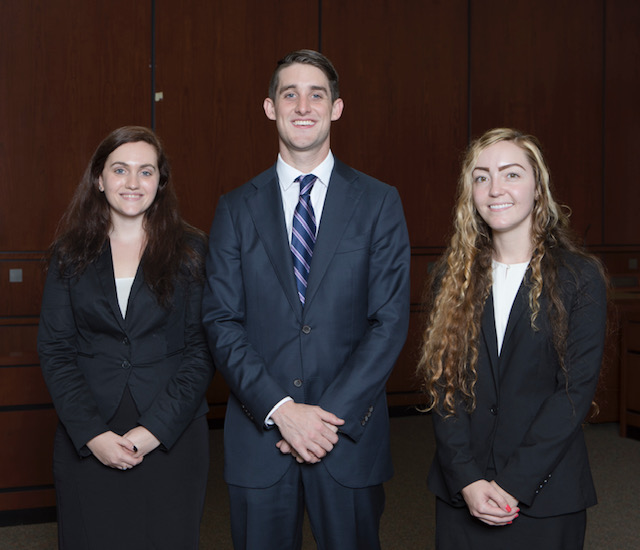
(L-R): Deanna Cipriano, James Nealon, and Madison Wahler. Photo courtesy Professor Brooke Bowman.
The Stetson University College of Law team of Madison Wahler, Deanna Cipriano and James Nealon won the Leroy R. Hassell National Constitutional Law Moot Court Competition at Regent University School of Law in Virginia Beach, Virginia, on Oct. 6. Nealon also won the fourth best oralist award in the preliminary round.
This was the first time Stetson participated in the competition, which drew 20 teams from around the country. Professor Brooke Bowman and Stetson Law 2005 alumnus Bill Wildhack co-coached the national championship team.
In the final round, the Stetson students argued before a seven-justice panel, including a federal appellate court judge, the professor who drafted of record, and five state Supreme Court justices. The Stetson students were applauded for their poise and professionalism, as well as their ability to answer extremely difficult questions.
Since 1980, Stetson’s Moot Court Board has won four international, 28 national, and 22 regional advocacy championships, in addition to 61 best oralist and 55 best brief awards.
Stetson has ranked the top law school for Trial Advocacy in the country 20 times in 24 years and has consistently ranked among the top six legal writing programs since the inception of the rankings in 2005.
Stetson University College of Law inducted Wil H. Florin J.D. ’80, Professor Rebecca C. Morgan J.D. ’80, and Professor Emeritus Michael I. Swygert into its prestigious Hall of Fame on Oct. 6.
(L-R): Wil Florin ’80 with Interim Dean Kristen Adams.
Florin, who was born in Salzburg, Austria, co-founded what is now the Florin Roebig law firm, and at age 30, obtained the then-largest reported jury verdict in Pinellas County history. He and partner Tommy Roebig have obtained numerous record-setting Tampa Bay area jury verdicts, including what are believed to be the largest contested jury verdicts in Pasco, Hernando and Sumter counties. Two of those verdicts were reported among the Top 50 in the nation in 2014 and 2016 by the National Law Journal. Florin and Roebig have worked on some of the nation’s most scrutinized civil cases, representing wrestling great Hulk Hogan and former USF head football coach Jim Leavitt. In 2010, Florin became one of very few attorneys to ever have their legal career profiled by the Tampa Bay Times. In 2017, he and Roebig appeared on CBS News “48 Hours.” Recently, they, along with Florin’s son Chad, were retained by the victim in one of the world’s most highly publicized cases of 2018. Florin describes his most rewarding professional achievement to be the successful national class-action prosecution of a federal race discrimination case where he obtained a multi-million dollar settlement and secured an agreement that implemented broad-based corporate changes in promotional practices. Florin has served Stetson as an adjunct professor and a member of both the Board of Overseers and Board of Trustees. He received Stetson’s Paul May Meritorious Service Award in 2007. While he was a student, Florin won the 1980 Stetson Moot Court Competition and represented Stetson at the Robert Orseck state competition. Since its inception, Florin Roebig has sponsored the travel component of Stetson’s Civil Rights History course. Constructed in 1993 and rededicated in 2006, Stetson named its Florin Roebig Courtroom for the firm.
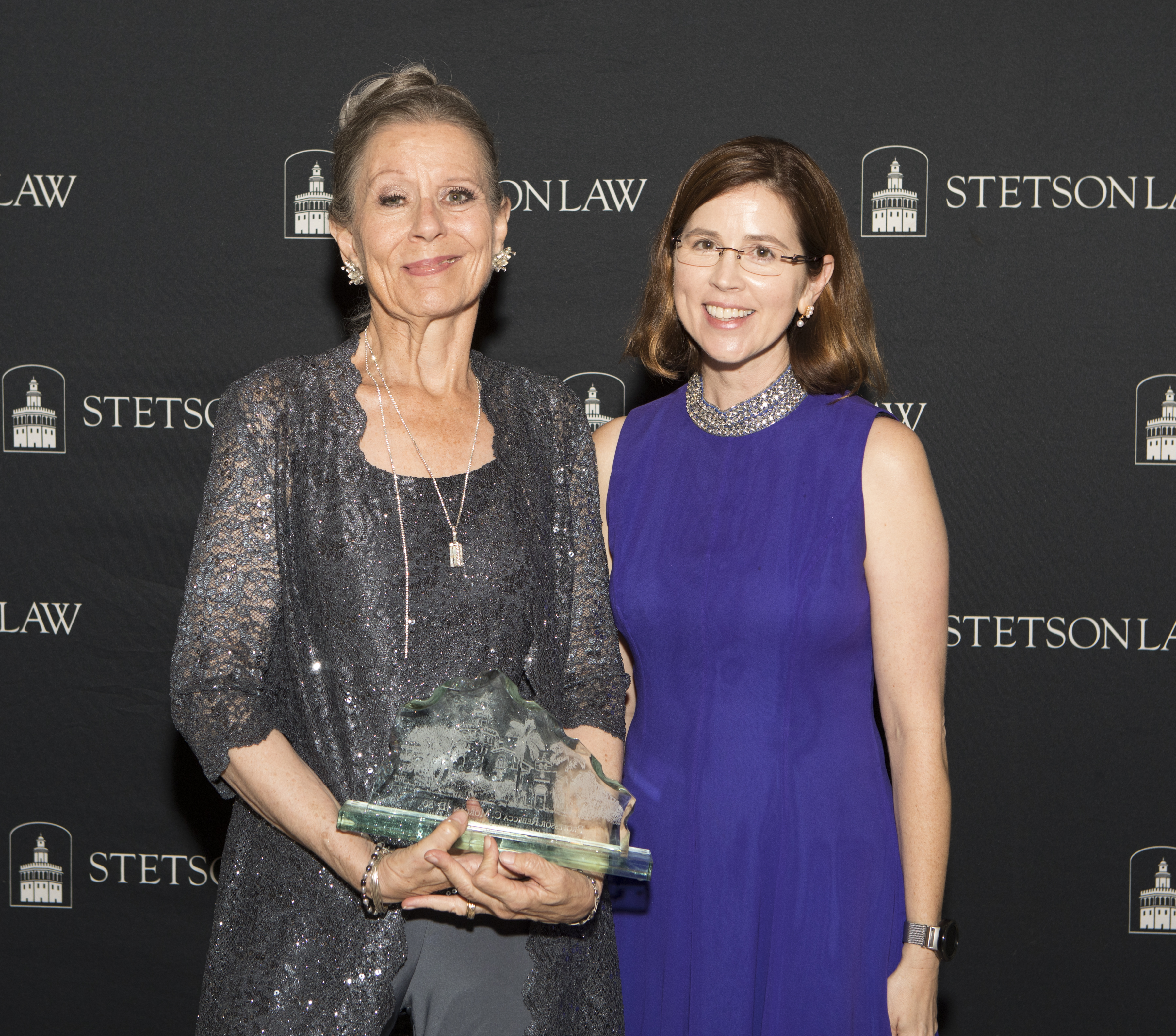
(L-R): Professor Rebecca Morgan J.D. ’80 with Interim Dean Kristen Adams.
Morgan began to build the foundation for her career as a pre-eminent and nationally and internationally known expert in elder law shortly after graduating from Stetson Law, ultimately being called the “godmother of elder law” by former VA Secretary Max Cleland. After law school, Morgan was hired by Gulfcoast Legal Services, working in the senior advocacy unit. In 1985 she left Gulfcoast and returned to Stetson, teaching elder law classes and overseeing a clinic. She also served for a time as assistant dean of students and associate dean of academics at Stetson Law. In 1995, she created the Center for Excellence in Elder Law. With Professor Roberta Flowers, she spearheaded efforts that resulted in the construction of the Eleazer courtroom as a model for barrier-free accessibility, named for Professor Emeritus Bill Eleazer. She was instrumental in the creation of Stetson’s LL.M. in Elder Law and is currently involved in the leadership of Stetson’s new Master of Jurisprudence in Healthcare Compliance. Professor Morgan has served in leadership roles at the most elite elder law organizations in the country, along with elder law affiliated organizations. She has served as president of the National Academy of Elder Law Attorneys, of Justice in Aging, and the American Association of Law Schools Section on Aging and the Law. She is past chair of the Florida Bar Elder Law Section. She also serves on the faculty of the National Judicial College. She has also served on numerous tasks forces, commissions and advisory boards, including the Center for Medicare Advocacy, the ABA Commission on Law and Aging, and the board of the American Society on Aging. She has worked with the National Elder Law Foundation, writing questions for the nationally certified elder law attorney exams. Professor Morgan chairs the National Conference on Special Needs Planning and Special Needs Trusts, now celebrating its 20th year.
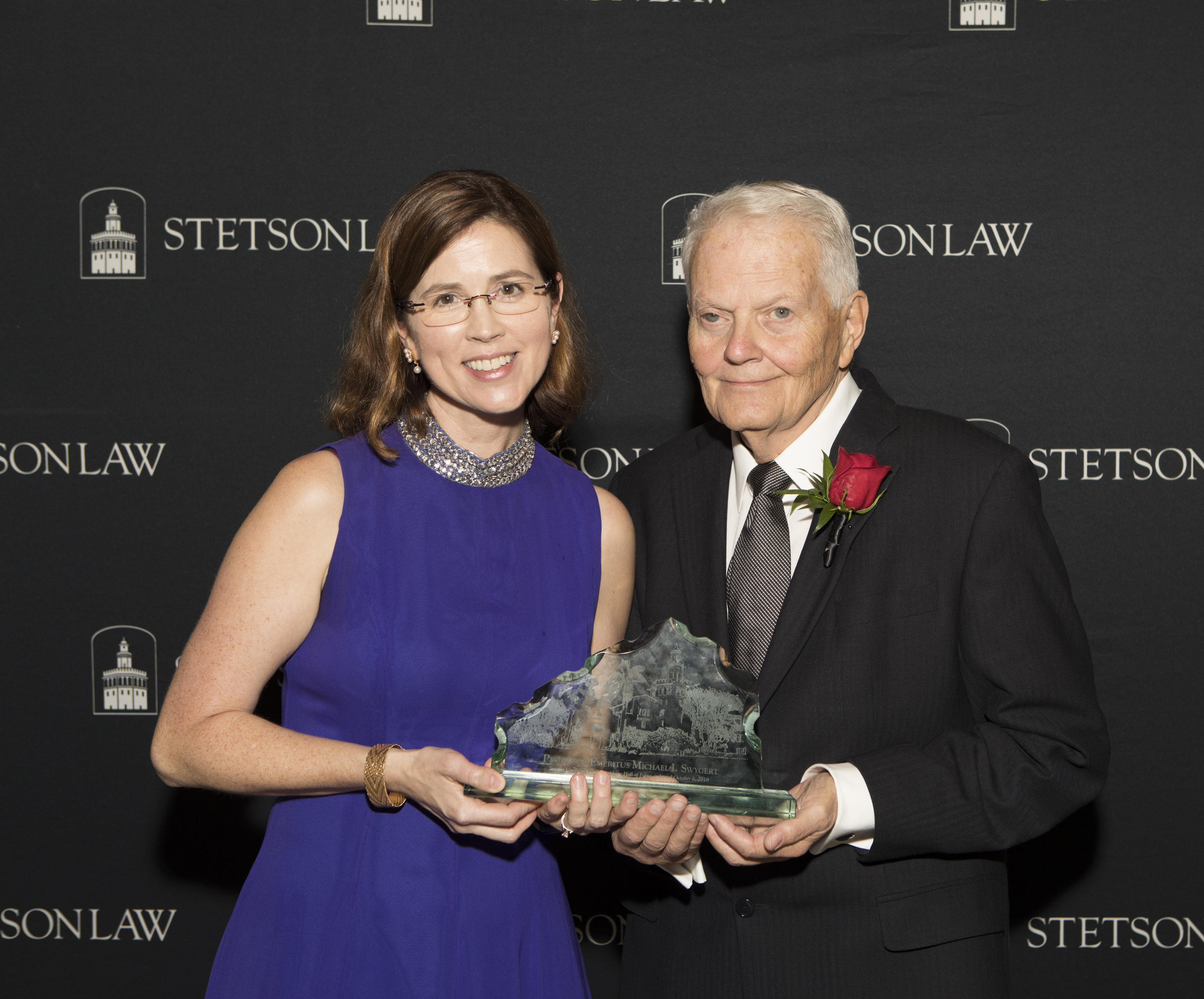
(L-R): Interim Dean Kristen Adams with Professor Emeritus Michael Swygert.
Swygert, whose father was a federal judge who spent 19 years at the district court, then 27 years at the U.S. 7th Circuit Court of Appeals in Chicago, realized in high school the impact that great teaching can have on a person’s life. Swygert was the first editor-in-chief of the law review at Valparaiso University, where he graduated first in his law class in 1967. He received a master of laws degree from Yale Law School in 1968, and after graduating, took a job with a law firm in Chicago where he had an opportunity to work on an anti-trust dispute regarding General Telephone Company versus AT&T. In 1971, Swygert became as assistant professor at Valparaiso Law, and later a law professor at DePaul University in Chicago. He also successfully settled a heated teachers strike in Indianapolis that led to a series of effective arbitration and mediation cases in several states. He spent three years working on a case that went to the Supreme Court concerning a power company attempting to build a nuclear power plant near the city of Chicago. Joining the Stetson faculty in 1979, Professor Swygert loved working with students, and authored and co-authored several articles and books. One ground-breaking statistical piece regarding tenured professors was cited by the New York Times. A prolific writer, he co-authored the definitive history book, Florida’s First Law School: A History of Stetson University College of Law, with the late Dean Gary Vause. He also wrote a book about professor Wm. Reece Smith Jr., namesake of Stetson’s Wm. Reece Smith Courtroom. He wrote an extensive history book for the 125thanniversary of Valparaiso Law, where he directed the Law School National Council and started the Swygert Moot Court Competition in honor of his late father. Professor Swygert was invited to be on the faculty at several universities, including Cambridge University, when he was invited to visit as a research scholar and opened the door for several Stetson colleagues who were subsequently invited to visit at Cambridge University.
For the past 14 years, Stetson Law has honored distinguished luminaries in the legal and academic arenas at its annual Hall of Fame.
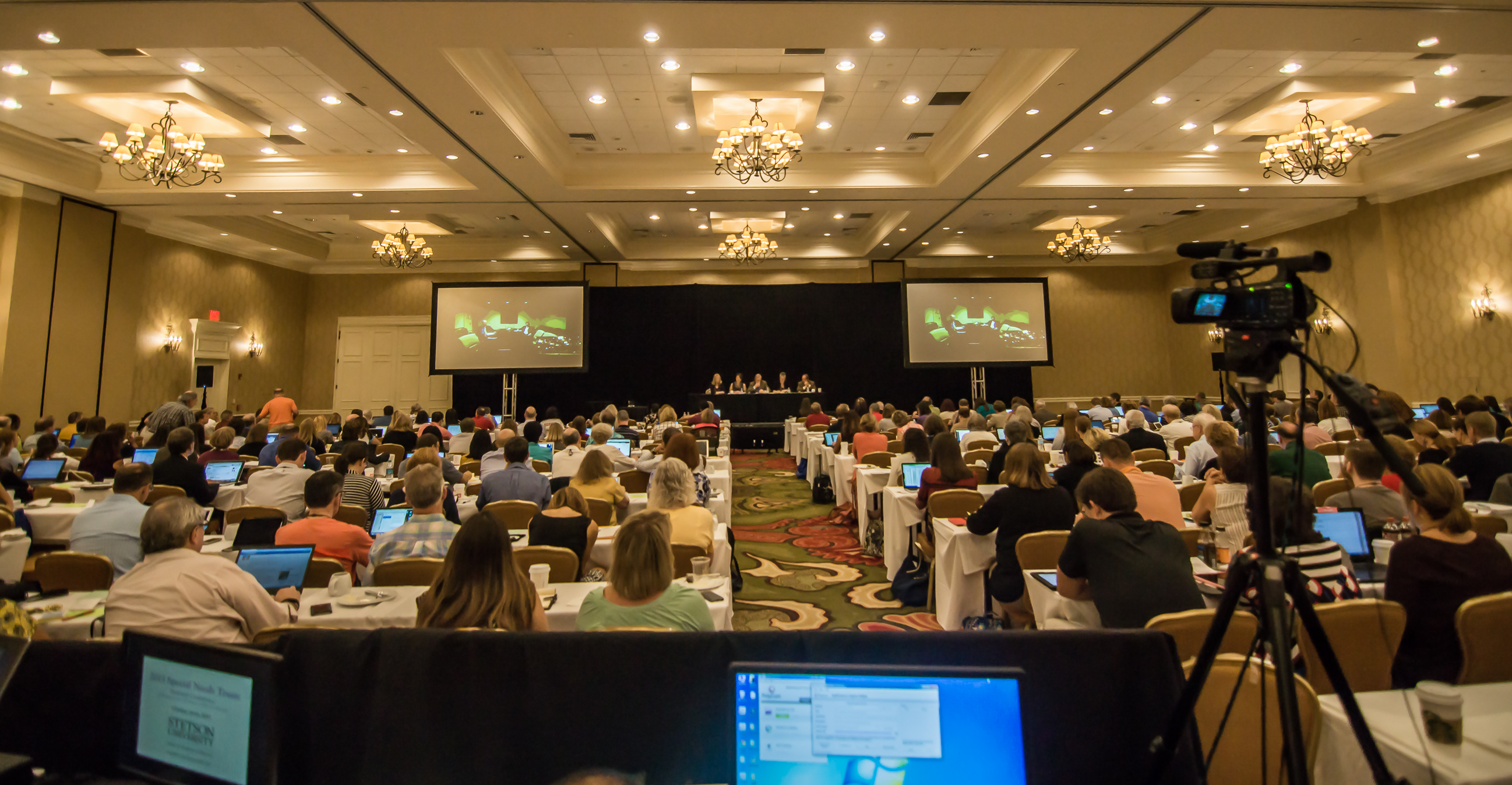
Stetson’s National Conference on Special Needs Planning and Special Needs Trusts is at the Vinoy from Oct. 17-19.
Stetson University College of Law’s National Conference on Special Needs Planning and Special Needs Trusts, now in its 20th year, brings together national experts in special needs trusts, tax, pooled special needs trusts, disability and veterans law on Oct. 17-19 at the Vinoy Renaissance St. Petersburg Resort & Golf Club in St. Petersburg, Florida. CLE credits have been approved.
The conference will include pre-conference options on Oct. 17, with a full-day tax intensive, a full-day pooled trust intensive, and a half-day veterans benefits intensive.
The half-day veterans benefits intensive will feature three hours of training with U.S. Court of Appeals for Veterans Claims Judge Michael P. Allen and Stetson Veterans Law Institute Director and professor Stacey-Rae Simcox, an overview of the Office of General Counsel of the Department of Veterans Affairs by VA Deputy Chief Counsel Rebecca Tranthem, and an update from U.S. Court of Appeals for Veterans Claims Chief Judge Robert N. Davis.
The national conference will begin on Oct. 18, with general sessions in the mornings followed by breakout sessions in the afternoons.
Topics include presentations on the Social Security Administration, advising persons with disabilities, and tax reform.
Samara Richardson, associate commissioner for the Office of Income Security Program, will join the program via video conference.
For a full agenda of presentations, and to register, visit www.stetson.edu/SNT.
The student organization Child Advocates of Stetson Law announces the publication of “Know Your Rights,” the first comprehensive legal rights guide for teens in foster care. The program begins with introductions at 10 a.m. The guide, authored entirely by Stetson Law students, will be unveiled during a panel discussion with child welfare attorneys at 12 p.m. on Oct. 27 at the Tampa Law Center, 1700 N. Tampa St.
Stetson’s Child Advocates of Stetson Law presents “Know Your Rights.”
“This guide was created because there seemed to be a complete lack of awareness by teens in foster care of their legal rights,” said Child Advocates of Stetson Law student president Ciera Lipps. “If teens have access to this book and know what rights they have under the law, they can speak up for themselves, or find someone who can speak up for them to ensure that their legal rights are not being violated.”
The guide provides guidance on critical rights ranging from obtaining medical and mental health services to receiving allowances for Social Security benefits for teens in foster care.
The American Bar Association has provided a grant to print enough copies of the guide for every teen in Pinellas and Pasco county foster care, and Gulfcoast Community Foundation has supplied a grant to print copies of the guide for teens in Sarasota, Manatee and Desoto counties.
“The book is an invaluable resource not just for teens in foster care, but for anyone who works in the dependency system,” said Lipps, who is also a Guardian ad Litem who grew up in foster care.
The “Know Your Rights” guide was spearheaded as part of a social justice advocacy research project by Stetson Law alumna and Child Advocates of Stetson Law founder Taylor Greenberg J.D. ’18. Greenberg works as an Equal Justice Works fellow sponsored by Greenberg Traurig LLP and The Florida Bar Foundation to serve as an attorney for teenagers in group home foster care through the L. David Shear Children’s Law Center of Bay Area Legal Services.
Panelists include Donald Frenette, assistant general counsel at the Florida Statewide Guardian Ad Litem Office; Jessica Rae, legal content manager of Florida Justice Technology Center; and Stephanie Zimmerman, Department of Children and Families Deputy Director and Statewide Director of Appeals. Retired family court and Stetson Law adjunct professor Judge Irene Sullivan will moderate the panel discussion on how to better protect the legal rights of teens in foster care.
From Selma, Alabama, to Cape Town, South Africa: Recent graduate spends summer exploring social justice on two continents
By E. Alan Brock J.D. ’17/LL.M. ’18
I have spent the past four years studying at Stetson, earning my J.D. and LL.M. in International Law, and along the way, I have developed my advocacy skills, made great friends, and seen the world. Stetson has provided me with more opportunities than I had ever imagined. When I first applied here, I knew I’d receive an excellent legal education and an edge as an attorney, but the opportunities to expand my legal training internationally has exceeded all of my expectations. This summer, once again studying in the field and abroad, has been an amazing capstone to my time at Stetson Law.
This summer took all of the concepts I have learned and brought them into focus. I saw how people here, and around the world, use their legal training to further the cause of justice. When Stetson announced an opportunity to study international human rights in Cape Town in July of 2018, I knew I wanted to be a part of the inaugural class. This program combined my international law studies with the social justice work I undertook before law school. I also participated in Stetson’s Law and the Civil Rights Movement course this past June. And although unconventional, I am grateful that the school allowed me to arrange my schedule to delay my graduation until August and have an impactful and amazing summer of experiences.
Students Sy-Woei Hao, Brittany Atwell, Raven Hollaway (Nova), Meagan Hurley (Mercer), E. Alan Brock, Jennifer Winn studied in Cape Town this summer. Pictured: Kristen Bosch Botanical Garden near Table Mountain. Photo by Sy-Woei Hao.E. Alan Brock. Photo by Sy-Woei Hao.
Law and the Civil Rights Movement
This course is a joint experiential learning course that began over 10 years ago as a passion project of Professor of Law Emeritus Robert Bickel, continued by Assistant Dean of Student Affairs Tammy Briant, and Professor Gregg Sapp. The course begins with two weeks of classroom studies, followed by a week of travel to sites known for their role in America’s civil rights struggle. Students gain a firsthand understanding of where, and how, major civil rights actions took place throughout the south.
Every year, the course is unique. The program includes in-person meetings with civil rights leaders, past and present. From meeting the people active in the movement during the tumultuous 1960s to those who fight for civil rights today, firsthand experiences provide invaluable insights into the struggles for equality and justice. This summer marked 50 years since the assassination of Martin Luther King Jr. and was the first program to be offered since the opening of the National Memorial for Peace and Justice in Montgomery, Alabama. The monument has several parts, but the visual centerpiece and most impactful is the collection of columns hang from the ceiling of the monument. Each column represents a county with a documented racial terror lynching. The column records the name(s) and dates of the victims. Some 800 columns hang in silence. Nearby, in the EJI Legacy Museum, a jar of soil stands as a monument to each individual lynching, with the soil collected from the site where it took place. The museum details the ongoing struggle for civil rights in America today.
I found this memorial to be the most emotionally moving and impactful part of the course. The physical manifestation — so solemnly vast — of the casually accepted atrocities of our past provided a heart-wrenching testament to where we have been as a country. When viewed in concert with the museum, which detailed the accepted and ongoing disparities of the criminal justice system, I felt angry, sad, and anxious to find solutions. The major advantage of this course is students gain a deep awareness of the current civil rights struggles going on throughout the U.S. of which they might otherwise only have a passing awareness.
Alumna Maria Bogomaz takes a moment to reflect at the Civil Rights Memorial in Montgomery, Alabama, during the civil rights travel course in 2011. Photo courtesy Maria Bogomaz.
It is easy for a law student born in the late 1990s to feel like the years of segregation and discrimination are far behind us as a nation. It is true that the U.S. has made huge strides towards equality, but it is also true that we have a long way to go. The students in this program come from a variety of backgrounds and have varied interests. But these few weeks present a safe space for the students to share their perspectives and personal life experiences while broadening their perspectives. Meeting the civil rights heroes from years past provides a real connection to the civil rights struggle in our country, and frames the current inequality issues in a deeper, richer context. It allows us to examine the disparities in the criminal justice system more critically, with a foundation that helps us as law students to better understand how, and why, the system was created. This understanding allows us to start working towards a better, more equal, criminal justice system for the future.
Professor Emeritus Robert Bickel with Freedom Rider Rip Patton during a past visit to Stetson Law in Gulfport.
One of the heroes that we, as students, were privileged to have along with us on the traveling portion of the class was Mr. Ernest “Rip” Patton. Mr. Patton traveled with us for most of the trip, retracing the path that he took as Freedom Rider in 1961 when he was a student at Tennessee State University. He organized a group of fellow freedom riders and hosted the students at Woolworth’s in Nashville, home to the infamous sit-ins when the black students worked to integrate the stores. There, he invited in his peers who had participated in the sit-ins with him. We had the chance to speak with these individuals, who risked everything to help bring about a better version of the United States, and hear from them about their experiences.
Mr. Patton is still working to promote equality and reform the criminal justice system. He took time to speak most of the students along on the trip, shared his personal contact information, and continues to keep up with the students well after the trip has ended. This personal connection helps continue the effort he started over 50 years ago, and inspires so many of us to continue the fight. It is hard to imagine someone meeting a Freedom Rider and then not working to do all they can to continue that effort.
One of the students on the trip this summer was rising 3L, Assista Toure. She is also the incoming president of the Black Law Students Association. Toure said she believes the civil rights course was one of the most impactful courses she has taken while at Stetson.
“A lot of the information we learned in the in-class portion was not new to me, but the travel portion really drew an intense emotional reaction out of me. I found myself crying at how impactful some of the museums were,” said Toure. “Having the opportunity to speak to the many people who were alive during that time and seeing the evidence left behind from that horrific era really touched me in a way that is almost unexplainable.”
Students visited the Civil Rights Memorial in Montgomery as part of Stetson’s course in 2011. Photo courtesy Maria Bogomaz.
Nothing can truly prepare you for a week of visits to places like the 16th Street Baptist Church, where a bomb killed four little girls, or to walk out of Selma over the Edmund Pettus Bridge, where demonstrators were attacked trying to bring an end to segregation. As the week of travel concluded, we students were a closer group of friends, and our commitment to social justice was strengthened.
With this empowered feeling, I flew back to Tampa, did my laundry, and headed to the airport to catch my flight to South Africa.
Stetson’s first study abroad program in Cape Town, South Africa took place in 2018, shown here: Meagan Hurley, Raven Hollaway and Sy-Woei Hao during a visit to Robben Island. Photo by Sy-Woei Hao.
Cape Town and International Human Rights
Stetson’s inaugural Cape Town study abroad program sought to educate, inform, and create a better understanding of the world of international human rights in the context of South Africa’s evolution from apartheid to democracy. I believe that the program exceeded this goal, inspiring 23 students and changing their lives forever.
The program attracted a diverse group of students from Stetson Law and law schools across the U.S. The mix of law students from other schools expanded networking opportunities and the intensity of the program built a camaraderie that binds people together and makes for fast friends.
Assistant Dean of International Programs JR Swanegan noted that the students seemed genuinely interested in cultural immersion, and learning from the professors, guest lecturers and cultural experiences. This year would have been Nelson Mandela’s 100th birthday. The whole country is celebrating him and his legacy. This, combined with Cape Town’s shared cultural ties with the common law system, the English language, and its diversity, made it ideal for a comparative law course that expands and builds off of Stetson’s existing social justice course offerings.
E. Alan Brock joined Raven Hollaway and Sy-Woei Hao at Camps Bay for Stetson Law’s first study abroad in Cape Town, South Africa. Photo by Brittany Atwell.
While professors from the partner schools are invited to teach at the international programs, there is always at least one class taught by one of Stetson’s law professors. In Cape Town this year, the Stetson professor was one of Stetson’s most popular professors, Ellen Podgor.
As a great admirer of Nelson Mandela and his efforts to end the injustice of Apartheid, South Africa has long been a place that Gary R. Trombley White-Collar Crime Research Professor Ellen Podgor has wanted to visit. When she learned about the new program, she designed a class on Mandela and international human rights that would serve as a cornerstone for this summer program. Her class focused on how the United Nations Universal Declaration of Human Rights inspired Mandela, and how through his work he managed to take that declaration and expand upon it – providing modern South Africa with one of the most progressive and inclusive constitutions in the world.
Professor Ellen Podgor shown in the foreground with her class, including students from Stetson and across the U.S., in Cape Town. Photo by Sy-Woei Hao.
“The students have so much passion and a genuine eagerness to learn about the South African struggle,” said Professor Podgor. “I believe that their time in South Africa will give them a better perspective on justice and make them better attorneys overall.”
Mandela’s influence is still felt in Cape Town. The whole country is celebrating Mandela’s 100th birthday. He also was a motivating factor for many of the students who chose to participate in the Cape Town study abroad program.
“Growing up in the U.S., I always heard about the struggles of South Africa and how iconic Nelson Mandela was,” said Stetson LL.M. student Salah M. Muhammad. “To be able to visit the country that everybody was always talking about or to see the place that was always in the news stories was truly a blessing.”
Students visited historic sites in Cape Town including the Cape of Good Hope. Stetson students Jennifer Binder, Daniela Gomez, Addison Elliott, Brittany Atwell, Jennifer Winn, Salah Muhammad, E. Alan Brock, Assistant Dean of International Programs JR Swanegan, Sy-Woei Hao and Ashleigh Thornton. Photo by Sy-Woei Hao.
As a group of students, we toured Robben Island, and the prison where Mandela and his comrades were held prisoner. We also all attended a special production of the “Nelson Mandela Trilogy,” a musical about Mandela’s life story.
Students watched the unveiling of a statue of Mandela celebrating what would have been his 100th birthday at Cape Town City Hall. Photo by Sy-Woei Hao.
Nelson Mandela was a man who managed to change his corner of the world for the better. Twenty-seven years after he was released from prison, he would recommit to the struggle when he was finally free in the community again. Mandela’s commitment to justice and equality above all else is inspirational. After 27 years in prison he chose not to pursue revenge, but instead focused on truth and reconciliation. This has allowed his country to start to build an integrated community. South African democracy is still young, but it is still working. It is hard to give proper weight to interacting and learning from the local South Africans.
“What we learned in history class doesn’t really begin to scratch the surface of what really happened here, and what we hear on the news today is sugarcoated,” said LL.M. student Jennifer Binder. “We don’t really hear about the struggles such as redistribution of land and how it might affect the country as a whole, or that not every South African wants redistribution. What we learned during this study abroad session are things that cannot be learned any way other than being here and seeing it firsthand.”
Colorful historic dwellings in the Langa Township once used as housing in Cape Town. Photo by Sy-Woei Hao.
Personally, the most anticipated field trip for myself and most of the students was our trip to Robben Island. It is a short ferry ride from Cape Town, through ice cold seal and shark infested waters, to reach the island. Once there, we were all surprised at how much bigger the island was than we had anticipated, but after the tour of the outskirts of the island by bus, we were dropped at the infamous prison gates. There we were met by a former prisoner of Robben Island and taken on a personalized tour of the facilities. The cells were incredibly tiny. The prisoners were kept there without many of the most basic amenities that one would expect. It is hard to imagine how anyone coming out of these sparse conditions would possess the capacity for forgiveness or reconciliation.
Another cultural trip that has to be experienced to be appreciated was our visit to the Langa Township outside of Cape Town. In the early 1900’s, prior to apartheid, this was where all black people residing around Cape Town were required to move and live. This rule became stricter after the South African government passed the Group Areas Act in 1950, and apartheid became the law of the land.
E. Alan Brock studied social justice in Cape Town and the U.S. this summer. Pictured: Camps Bay. Photo by Sy-Woei Hao.
The Group Areas Act required everyone be classified by race: White, Black, or Coloured. The disparity of wealth within the township is evident. Some people live in brick homes with all the modern conveniences, while others were living in tin buildings without running water. We were given a tour by a local Khosa man who grew up in Langa. He shared with us his personal perspective and experiences growing up in this community and segregated environment. Despite the institutionalized racism they continue to struggle to overcome, these are a proud people. It was moving to hear their personal accounts, knowing these challenges would surely destroy lesser people.
Stetson 3L Sy-Woei Hao said upon arriving in Cape Town, “Everything almost seemed too modernized to fit my idea of Africa. However, as I began exploring the city, the mirage of westernization became an attempt rather than actuality. You come here being told that there was going to be a social gap between the people here, but you can never prepare yourself for the extremes. Even within the township, there were people fortunate enough to live in government- rebuilt living structures, yet others remained in small, metal-sheet houses, with sides cluttered with random belongings and trash.”
Hao encouraged others to study abroad in South Africa given the opportunity. “Capetonians have been among one of the proudest people I have ever met,” said Hao. “They are proud to be who they are and they proud to tell the stories of who they are.”
Justice Peggy Quince joined the study abroad program in South Africa. Pictured: Table Mountain overlooking the city of Cape Town in South Africa. Photo by Sy-woei Hao.
Stetson scheduled a prestigious slate of guest speakers throughout the semester. These included the University of Cape Town Law School Dean, diplomats, and social justice leaders from the local area and some from the United States. Most notably, Florida Supreme Court Justice Peggy Quince spoke to the class. Quince is a member of the Stetson Law Hall of Fame and served as a longtime member of the Board of Overseers.
Justice Quince joined the trip for the first two weeks, participating with the students and all of their activities. She rode the bus to class every morning, participated and learned alongside the students. Justice Quince explained, “My friend asked me why I was sitting in the classrooms, and I told her it is because I am learning too.”
“I know that I will be a better attorney because of my time in South Africa and with Justice Quince,” said rising 3L and SBA vice-president Jennifer Winn. “Having the chance to become friends with a justice was an unexpected treat, and it is an invaluable experience.”
Justice Quince presented to the class on her experiences as a Florida Supreme Court justice and the path she took to becoming a justice. She compared and contrasted her life story with what we were all learning about South Africa, that the summer’s theme of equality and justice.
Student Daniela Gomez explores the incredible beauty of South Africa’s waterfront. Photo by Sy-Woei Hao.
Justice Quince was born in Virginia. She grew up and was educated in a segregated school system. It would not be until 1965, during her senior year of high school, when Virginia finally integrated its schools. After high school, she enrolled in Howard University, a historically black university located in Washington, D.C. She went on to enroll at the Catholic University of America for law school, and this was the first time that as a black woman she had ever been a minority student. Later, she would move to Florida with her husband to begin working for the Florida Attorney General’s office, which would lead to her appointment to the Florida Supreme Court.
Her path to the bench, growing up in rural, segregated, Virginia, gave her an interesting perspective on apartheid in South Africa. She made a point to make sure that our class understood that American segregation was the model for apartheid. She shared that when she travels alone from Tampa to Tallahassee, there are still places in our state where she feels unsafe stopping as a black woman. She also was clear that, although both our countries have further to go to reach our ideal societies, she is glad that America has overcome many of the issues still faced by South Africa.
“I want the current, future, and past Stetson students to know that these trips are once in a lifetime,” said LL.M. student Muhammad. “The rich cultural experiences immersed in both programs is something that you cannot get out of a textbook or sitting in a classroom. You get to actually meet the people who participated in the sit ins, who were out marching and protesting, and who did hard time in internment camps such as Robben Island.”
E. Alan Brock visited Table Mountain, shown in the background, during study abroad in Cape Town. Photo by Sy-Woei Hao.
My study abroad experiences have always given me a new and broader perspective on our own legal system, but the transition from Selma, Alabama, to Cape Town, South Africa, really accentuates our own strengths and weaknesses. I am pleased with how far our country has come but committed to working to keep our country moving forward.
I started this school year expecting to graduate at the end of May, with my peers. Instead, I found myself in an immersive social justice education experience. While Stetson has prepared me well for my future career goals, this summer provided me with insight into the ongoing struggle for social justice in America.
Stetson University College of Law Interim Dean and Professor of Law Kristen D. Adams has been appointed to the American Bar Association Commission on Homelessness and Poverty.
“Many of my professional heroes have been involved in the work of the Commission in educating the public and the bar about homelessness, poverty, and ways in which lawyers can help to address both,” said Dean Adams. “I am proud and thankful to have the opportunity to be part of this important national conversation.”
Dean Adams has been a faculty member at Stetson for more than 17 years, where she supervises the Homeless Advocacy Externship.
She has worked with the Florida Bar and community leaders on issues regarding homelessness, the homeless courts, and public service opportunities for law students and graduates. Adams is the author or co-author of six books and 17 scholarly articles, writing on topics including the right to housing.
Adams also is the faculty advisor for Stetson’s nationally acclaimed Dispute Resolution Board and has been one of the faculty coordinators of the Social Justice Advocacy Concentration program for the past few years.
She is a member of the ABA Business Law Section Council, is editor-in-chief of the Uniform Commercial Code Law Journal, a member of the Board of Regents for the American College of Commercial Finance Lawyers, an elected member of the American Law Institute, and on the Executive Committee of the Board of Directors for Gulfcoast Legal Services.
Stetson University College of Law will present the Edward D. Ohlbaum Professionalism Award to Sara L. Williams during its annual Educating Advocates: Teaching Advocacy Skills Conference in May.
Williams, a star litigator in Alabama, is managing attorney for Alexander Shunnarah Personal Injury Lawyers where she practices in the areas of trucking and automotive litigation. Williams was recently awarded a $12 million judgment against the Birmingham Max Bus system in the Jefferson County Bessemer Division. Alabama Super Lawyers magazine has named her a “Rising Star” since 2011 and she was recognized by the Birmingham Business Journal as one of Birmingham’s “Top 40 Under 40” in 2017.
An adjunct professor in the Cumberland School of Law advocacy program, Williams also serves as a coach for Cumberland’s nationally ranked mock trial teams. Williams’ legacy as an advocate began early in her career. While she was still a law student at Cumberland, Williams served as chief judge of Cumberland’s Trial Advocacy Board and was a member of the National Trial Team and National Mediation team that won their region in 2006, becoming the first team to ever win every single judge’s ballot during competition. Williams and her partner also won the ABA’s National Mediation Competition in 2005, and were invited to compete at the I.C.C.’s International Mediation Competition in Paris in 2006.
The Edward D. Ohlbaum Award honors an individual whose life and practice display sterling character and unquestioned integrity, coupled with ongoing dedication to the highest standards of the legal profession and the rule of law. The award is designed to recognize a trial team coach and program director who exemplifies the late Professor Ohlbaum’s commitment to doing things with a high degree of professionalism, integrity and competency. In 2011, Ohlbaum received Stetson’s Lifetime Achievement Award for Excellence in Advocacy.
Since 1900, Stetson University College of Law has pushed the leading edge of innovation in legal education, requiring students to enroll in a hands-on trial advocacy “Practice Court” course decades before skills training became more mainstream in legal education. Stetson Law is today home to the top-ranked program in the U.S. for trial advocacy. Stetson earned an “A” for curricular offerings in trial advocacy in the winter 2017 issue of preLawmagazine.
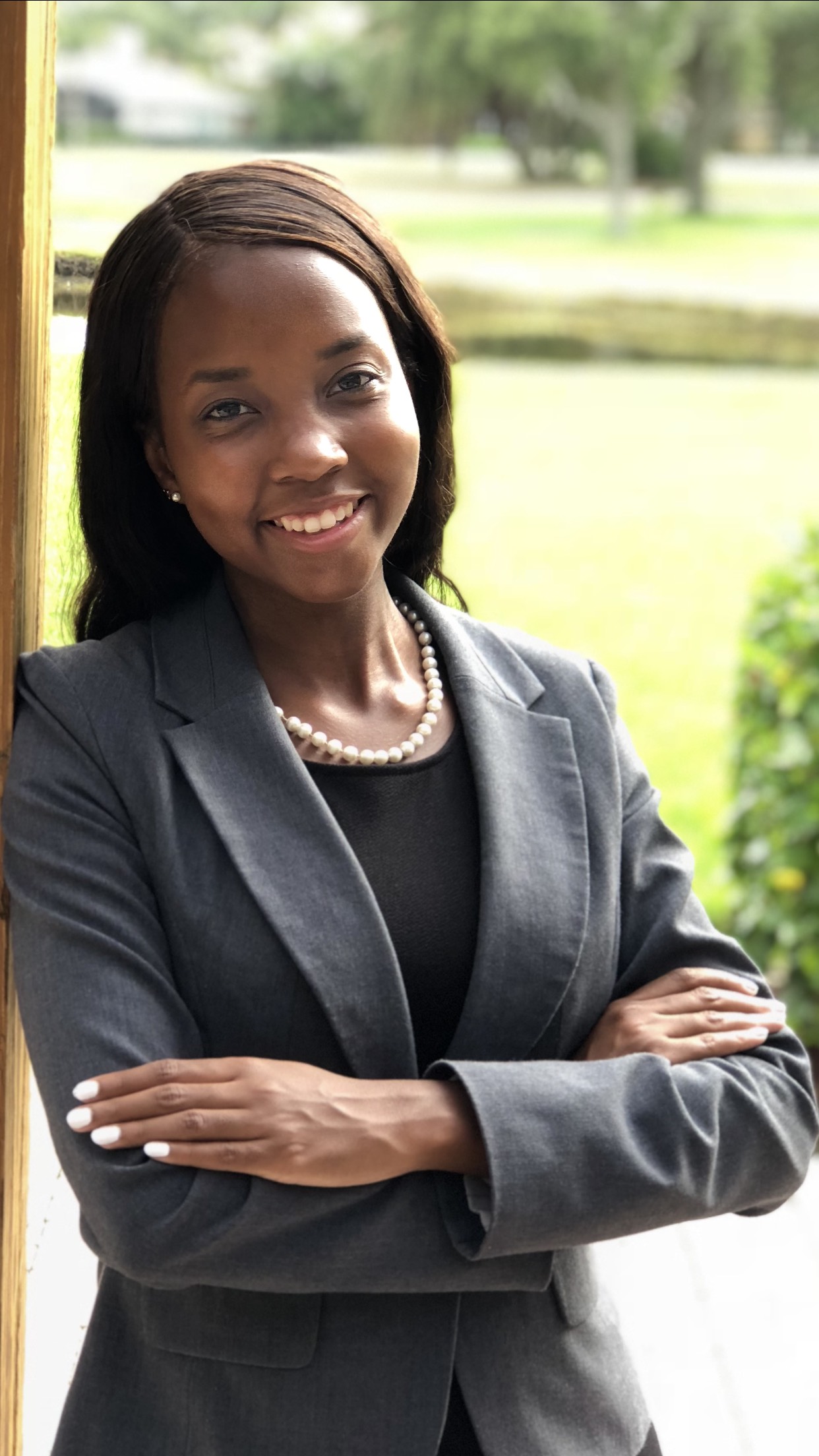
Stetson University College of Law third-year student Brielle Tucker was recently named a Ms. JD Fellow. Tucker is only the second student from Stetson University to be named a Ms. JD Fellow.
A member of both Stetson’s nationally ranked Moot Court and Trial Team, Tucker was named a regional finalist in the 2018 National Appellate Advocacy Competition. She is a Stetson Ambassador who has served as a representative on the Student Bar Association and as sub-regional director of the Southern Region Black Law Students Association. Tucker is a summer associate at Bush Ross, P.A. in Tampa. She has clerked for Smith, Kling & Thompson, P.A., in Tampa, and served as a judicial intern for U.S. District Judge Charlene E. Honeywell.
Tucker is an alumna of the Jack Kent Cooke Foundation who graduated cum laude from the University of Tampa. As an undergraduate student, Tucker volunteered at Metropolitan Ministries, the local Boys and Girls Club, and tutored students at an afterschool enrichment camp. As an undergraduate student, she became interested in the law while competing regionally through the American Collegiate Moot Court Association, and became a member of the Bruce R. Jacob Criminal Appellate American Inn of Court.
Tucker is originally from Washington, D.C., where she served as a congressional intern during high school at The Madeira School.
Ms. JD awarded fellowships to nine law students from across the U.S. this year, selected for their academic performance, leadership, and dedication to advancing the status of women in the profession.
“I hope to foster a sense of support among women within the legal profession,” said Tucker.
Through the Bay Pines VA Healthcare System Medical-Legal Partnership program, Stetson University’s Veterans Law Institute will assist veterans with civil legal services at community clinics in Bradenton and Sarasota from July through December.
Legal clinics for veterans will be available at:
Bradenton Community Based Outpatient Clinic from 9:30 a.m.-3 p.m. in the Mental Health Group room on Monday, Aug. 20; Monday, Oct. 1; Monday, Nov. 5; and Monday, Dec. 3.
Sarasota Community Based Outpatient Clinic from 9:30 a.m.-3 p.m. in the first-floor conference room on Monday, July 16; Monday, Sept. 17; Monday, Oct. 15; and Monday, Dec. 17.
Legal services available include family law, housing, consumer, bankruptcy, advanced directives, licensing, sealing/expungement, disability service connected, and discharge upgrades, and will be provided on a first-come, first-served basis with the last application being accepted at 2:30 p.m. each day.
The Medical-Legal Partnership progam, launched in February of 2017, is a health and legal alliance between the C.W. Bill Young VA Medical Center, Stetson University’s Veterans Law Institute, and Bay Area Legal Services. The program was designed for veterans enrolled for care with the Bay Pines VA Healthcare System in need of legal representation/consultation for non-criminal offenses who may not otherwise afford legal representation. Services are provided by the Medical-Legal Partnership program attorneys at no cost to the veterans.
Legal services for veterans are regularly available in building 100, room 1E-241 at the C.W. Bill Young VA Medical Center in Bay Pines on Tuesdays and Wednesdays from 9 a.m.-3:30 p.m., walk-ins are seen in the morning from 9 a.m.-11:30 a.m., and scheduled appointments are available in the afternoon.
Stetson University College of Law’s National Clearinghouse for Science Technology and the Law is presenting complimentary training programs for prosecutors and defense attorneys in August in Texas and in September in Pennsylvania as part of the Crime Scene to Courtroom Forensics: Train the Trainer series. The training programs, funded by a grant from the Bureau of Justice Assistance at the DOJ, are designed to teach seasoned prosecutors and defense attorneys about proper forensic evidence use in capital litigation.
Attendees will also be provided with training resources, including webinars, PowerPoints and the National Clearinghouse for Science, Technology and the Law database.
Allowable expenses for attendance, including pre-approved travel and lodging, will be covered under the BJA grant. Contact the Office of Professional Education at Stetson Law for additional details: [email protected].To learn more about the National Clearinghouse for Science, Technology and the Law at Stetson University, visit http://www.ncstl.org.