Skip to content

Stetson’s Pride Scholarship rewards students who fight discrimination based on sexual orientation and gender identification

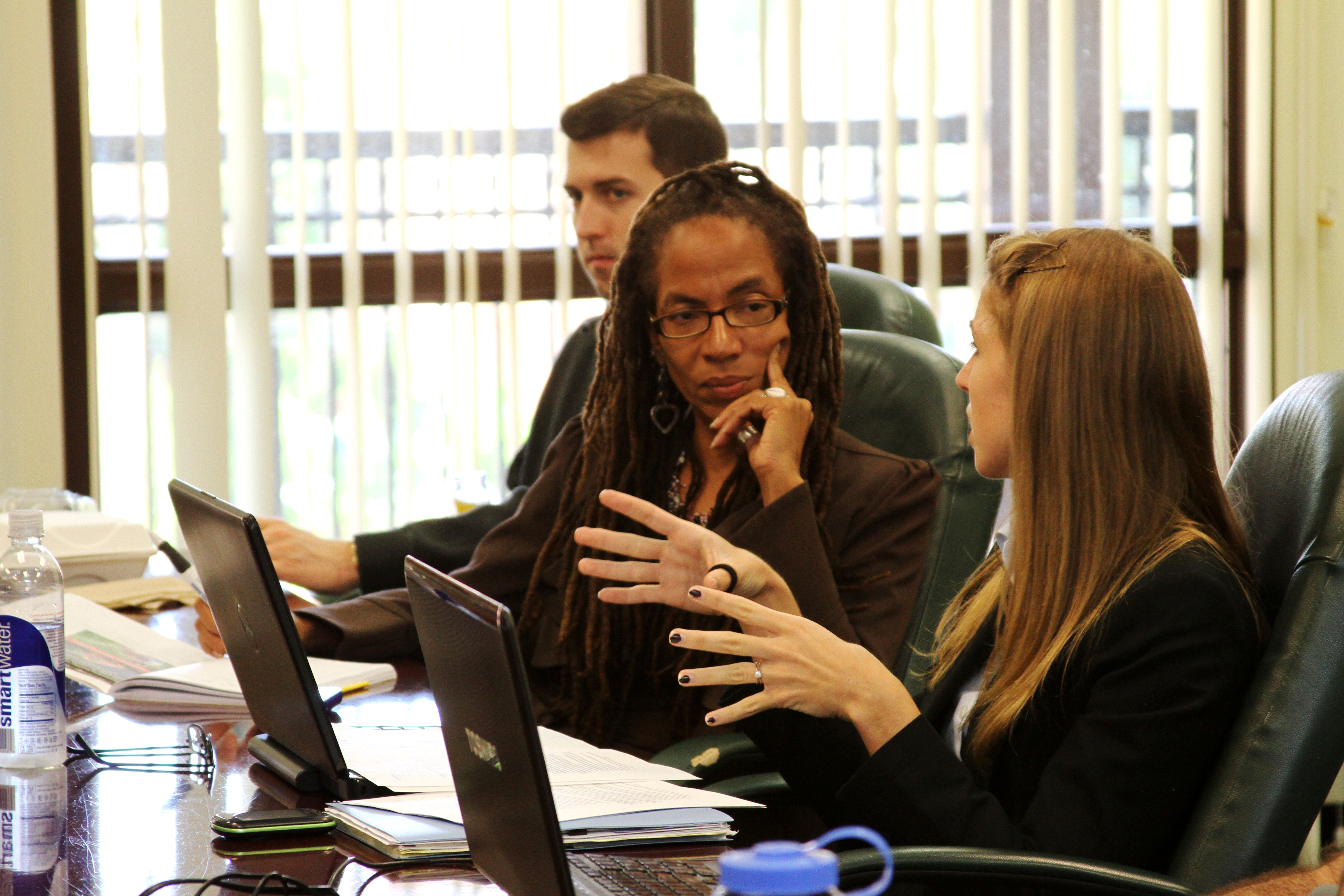
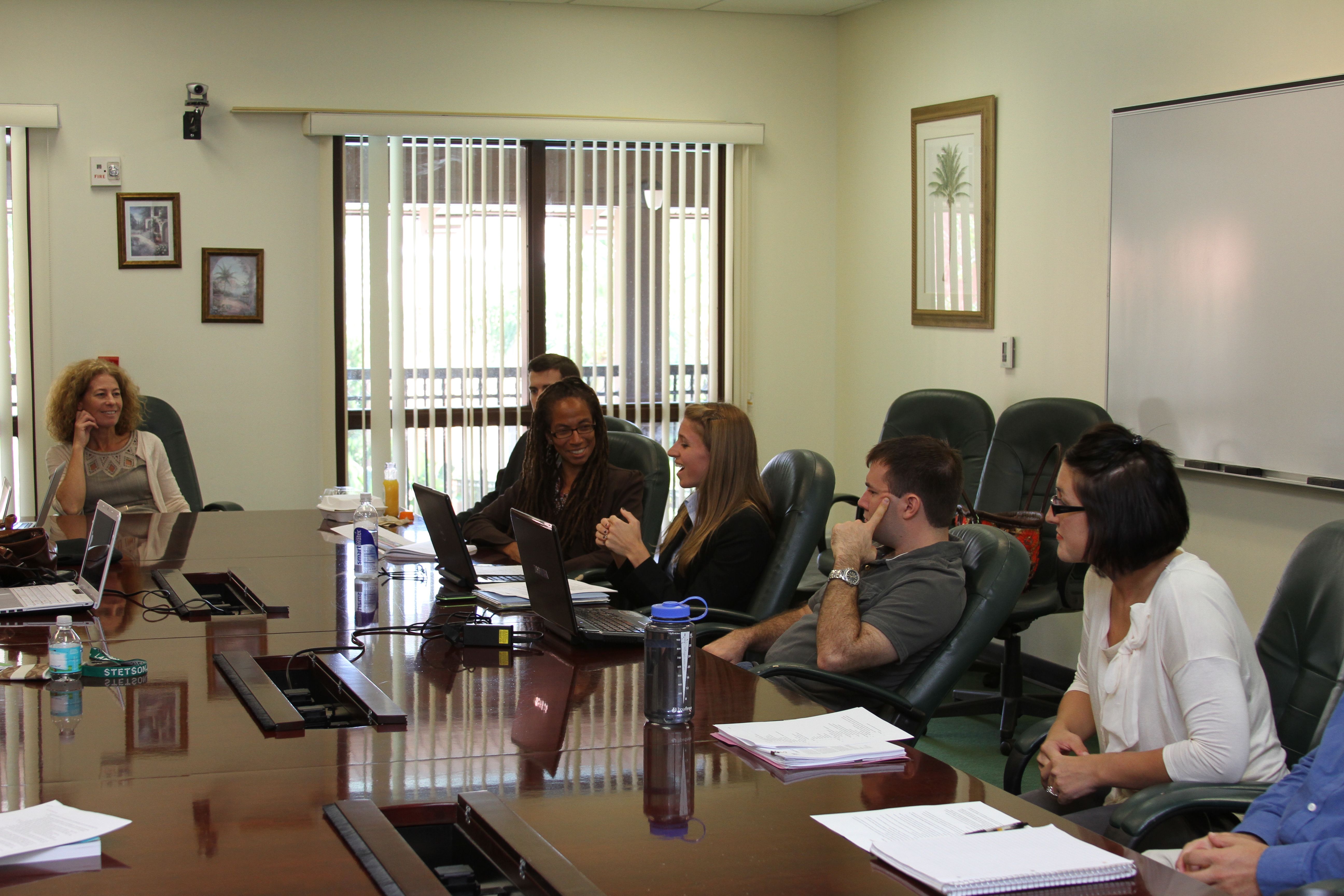
On Oct. 25, a crowd of faculty, students and alumni helped celebrate Stetson Law’s Pride Scholarship for students at an evening reception at the Mindy Solomon Gallery in St. Petersburg. Stetson Law alumni Matthew Bachman ’07, Elizabeth C. Barnes ’11, Thomas Yaegers ’05, and professors Robert Batey, Joseph Morrissey, Jason Palmer and Ellen Podgor joined the Pride Scholarship committee to show their support for law students who dedicate themselves to extracurricular activities and service related to LGBTQIA issues.

Stetson Law students, alumni and faculty gathered to support the Pride Scholarship at the Mindy Solomon Gallery on Oct. 25.

“The Pride Scholarship is an important component of Stetson’s efforts to assist students who give back to the community in this important and needed legal area,” said Professor Podgor. 

“The law is rapidly changing in Florida and the country regarding the rights of the LGBTQIA community,” said alumna Elizabeth Barnes. “By sponsoring and promoting this scholarship, Stetson is not only showing its support for our community; it is also showing that the Stetson tradition of leadership and excellence extends beyond moot court and trial team. This scholarship fosters knowledge and leadership in Stetson students and alumni, empowering them to be leaders in a rapidly changing and important realm of the law.”

Since graduating this year, Barnes has joined the board of the Pinellas County ACLU.

“It is important to celebrate diversity among students, because by embracing diversity, the entire student body as a whole will be more successful,” alumnus Matthew Bachman said.

While he was still a student at Stetson Law a few years ago, Bachman was recognized by the Gulfport City Council for helping to expand the city’s human rights ordinance to prohibit discrimination based on sexual orientation or gender identification. Around the nation, more than 100 local city and county governments have anti-discrimination ordinances that include sexual orientation or gender identification.

To learn more about scholarship programs at Stetson Law, visit the Admissions page here. To learn more about giving to Stetson, call 727-562-7818 or e-mail [email protected].

Professor, law students discuss constitutionality of Obama healthcare overhaul

Story by Philip Hadley and Steven Lacks

It’s been more than a year since President Obama signed the Patient Protection and Affordable Care Act (PPACA), but the Stetson Law community, like much of the rest of America, remains abuzz over the contentious legislation.

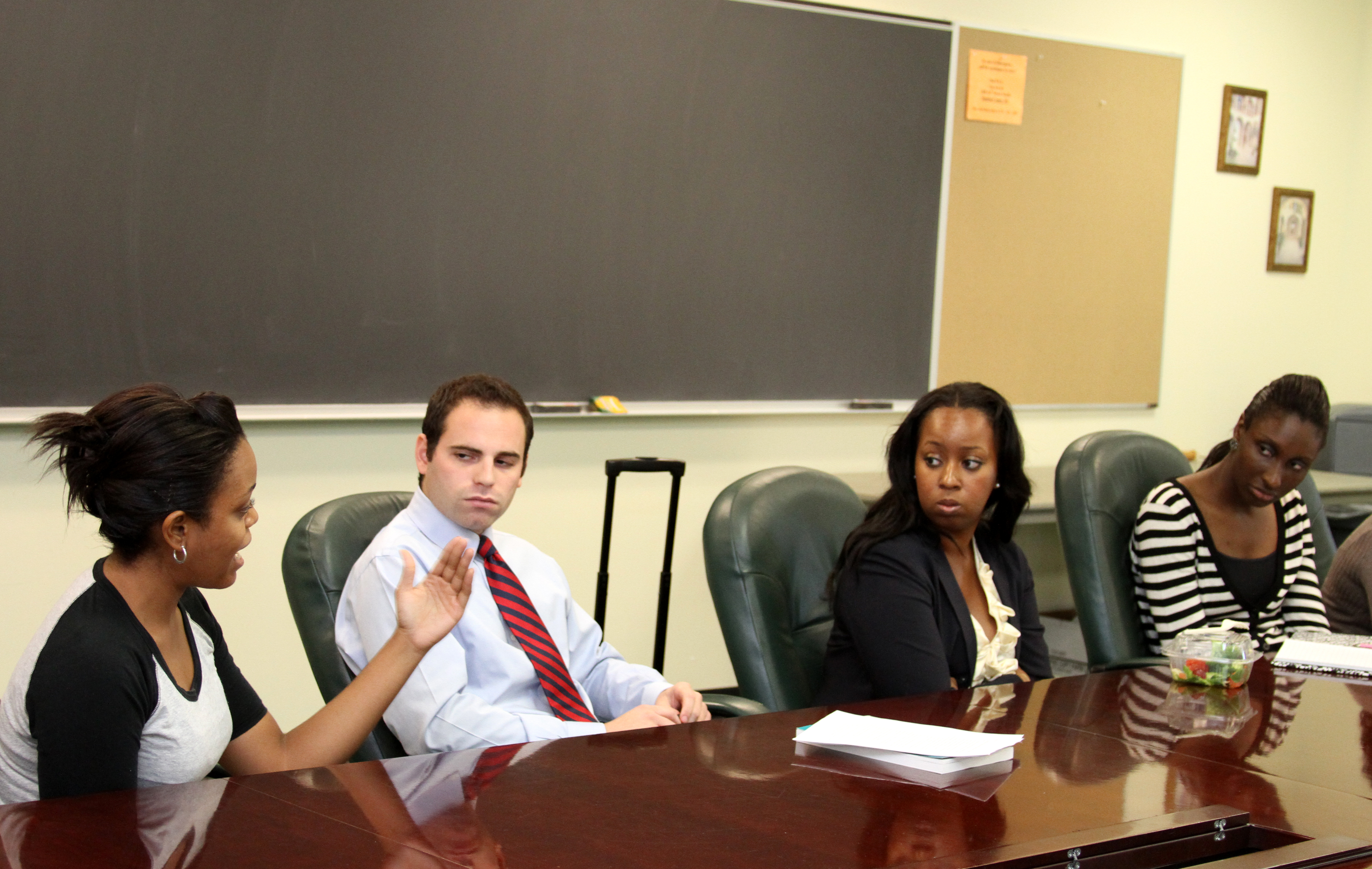
Professor Michael Allen talks with students about Obama's healthcare overhaul on Oct. 24.
Professor Michael Allen talks with students about Obama's healthcare overhaul on Oct. 25. Photo by Steven Lacks.

In a room packed with law students, Professor Michael Allen gave a presentation on the constitutionality of PPACA for Stetson Law’s American Constitution Society in Gulfport on Oct. 25.

Professor Allen began his presentation with a brief history of cases he anticipates will influence the Supreme Court, should the constitutionality question make it that far up the judicial ladder.

Three federal appellate courts have already issued decisions. The 6th Circuit, pointing to the effect of health care on interstate commerce, ruled two-to-one that the individual mandate clause is constitutional, while the 11th Circuit ruled two-to-one in the opposite direction. The 4th Circuit, in contrast, declined to decide the constitutionality question entirely, citing procedural grounds.

“These cases collectively provide the Supreme Court with the opportunity to address a wide range of constitutional issues, ranging from the power of Congress to ‘tax’ or ‘regulate commerce among the several states,’” Professor Allen said. “But they also provide the means for the justices to avoid the constitutional issues entirely by relying on a statute that could limit the jurisdiction of the federal courts to enjoin certain revenue raising statutes.” 

Ultimately, the question of whether the individual mandate is constitutional might never reach the Supreme Court; the Court may not even decide whether or not to hear the case until next year.

“It is a cliché,” Professor Allen said, “but only time will tell how the Court decides to confront this issue, let alone how it will ultimately be resolved.”

Author, civil rights scholar Jack Bass visits Stetson Law

Professor Jack Bass spoke with Stetson Law students on Oct. 21. Photo by Steven Lacks.

Writer and civil rights scholar Jack Bass met with faculty and students at Stetson University College of Law in Gulfport on Oct. 21. He talked to Stetson Law students on Friday about the First Amendment and the events that led to the Voting Rights Act of 1965.

Bass received the 1994 Robert Kennedy Book Award grand prize for his book, Taming the Storm: The Life and Times of Judge Frank M. Johnson, Jr. and the South’s Fight over Civil Rights.

Bass, who has authored or co-authored eight non-fiction books about the South, is an expert in Southern politics, race relations and the role of law in shaping the civil rights era.

A journalist and journalism professor, Bass was twice named the South Carolina “journalist of the year,” and is Professor Emeritus of Humanities and Social Sciences at the College of Charleston.

Students win best brief award at the National Veterans Law Moot Court Competition

Stetson Law students Diana Evans and John Henley, coached by Professor Michael Allen, won the Best Petitioner’s Brief Award at the National Veterans Law Moot Court Competition, in Washington, D.C., Oct. 15-16. Evans also tied for the Best Oralist Award at the competition.

The competition is hosted by the Court of Appeals for Veterans Claims Bar Association and the George Washington Law School.  During the final round, the students argued in front of the actual judges of the Court of Appeals for Veterans Claims.

Stetson’s award-winning Moot Court Board competes year-round in interscholastic competitions across the U.S. and around the world. Competitions cover a wide variety of legal fields.

William and Mary School of Law students win first place at National Pretrial Competition at Stetson Law

William and Mary School of Law winners
William and Mary School of Law winners (L-R): Emily Riggs, Janani Iyengar, Caitlyn Cotter and Janet Lee.

A team of students from William and Mary School of Law won first place at the National Pretrial Competition at Stetson University College of Law on Oct. 16 in Gulfport. Student Emily Riggs, of William and Mary School of Law, was named Best Advocate in the Final Round.

A team from Charleston School of Law received the Best Brief Award.

The National Pretrial Competition, now in its fourth year, attracts students from around the country. This year, 16 teams—the largest number ever—competed on Stetson Law’s Gulfport campus.

“Because the competition captures what lawyers do each and every day, it helps prepare students for the rigors of the legal practice,” said Professor Brooke Bowman, Moot Court Advisor and competition committee member.  “This is a unique competition in that students write two briefs, present motion arguments, present evidence, and make closing arguments.”

Best Brief team from Charleston School of Law, (L-R): Suzanne Hogg, Chuck Dukes, Angel Daniels and Kevin Pratt.

Stetson Law is home to the top-ranked trial advocacy program in the country, according to U.S. News & World Report. To learn more about advocacy at Stetson Law, visit the Center for Excellence in Advocacy.

To download high-resolution images from this event, visit Stetson Law’s Flickr page here.
 
Media Contact:
Brandi Palmer
Communications Office
727-562-7381


Stetson law student creates Heroes Weekend

Former Marine and current Stetson Law student Javier Centonzio is spearheading Heroes Weekend, a series of public events to honor  military service men and women and veterans on Nov. 10, 12 and 13 in Gulfport.

The public is invited to enjoy a free concert, a parade and a musical performance benefiting the Wounded Warrior Project. Centonzio joined forces with the American Legion Post 125, the Gulfport Chamber of Commerce, and the City of Gulfport to create the Heroes Weekend.

Events include:

  • Thursday, Nov. 10, 7 p.m.: The South Pasadena Community Band performs a free concert sponsored by the Gulfport Chamber of Commerce at the Gulfport Casino, 5500 Shore Blvd. S. Doors open at 7 p.m. and the concert begins at 7:30 p.m.


  • Saturday, Nov. 12, 4 p.m.: The City of Gulfport sponsors a parade along Beach Blvd. in Gulfport. Those interested in participating in the parade should contact Gail Biron with the City of Gulfport at (727) 893-1118 or [email protected]. The deadline to register for the parade is Nov. 8.


  • Sunday, Nov. 13, 5:30 p.m.: “JELVIS” will be performing a “Tribute to Elvis” at the Gulfport Casino. The tickets are $10 each and will be sold at the Gulfport Chamber of Commerce and at the American Legion Post 125. Tickets will also be sold at the door. Tables that seat eight can be reserved in advance for $200. Doors open at 5:30 p.m. and the show will begin at 6 p.m.


Reservations, tickets or additional event information:

Javier Centonzio  (913) 706-9340

or [email protected].


Donations to the Heroes Weekend can be mailed or delivered in person care of the American Legion Post 125, 6440 5th Ave. S., St. Petersburg.

Stetson University students to attend Florida Audubon Society Conference

Through a partnership between the Florida Audubon Society and Stetson University, nine students from Stetson’s DeLand and Law campuses have been awarded scholarships to attend the Conservation Leadership Initiative (CLI) as part of Florida Audubon Society’s statewide conference in Lake Mary, Fla., on Oct. 14.

The 2011 Audubon Assembly is an annual event that brings together conservation leaders, scientists, educators, the business community, environmentally concerned citizens and Audubon state, local and chapter staff to take action for Florida’s environment. The Conservation Leadership Initiative is being sponsored by Disney.

As part of the CLI program, scholarship recipients will participate in a co-mentoring experience in which they will be paired with Audubon mentors to network, share and learn from each other. The students will choose one of four nature-inspired walking workshops showcasing successful conservation projects and programs including: Orlando Wetlands Park; Lyonia Preserve in Deltona; conservation tour along Wekiva River; and an ecological tour of the Wekiva River Mitigation Bank. They will also attend a Take Action Lunch, afternoon learning sessions and an evening reception.

“We’re delighted to collaborate with Florida Audubon to identify and develop the next generation of environmental leaders for our state and nation,” said Dr. Grady Ballenger, dean of the College of Arts & Sciences.

“We have strong undergraduate programs at Stetson in the environmental sciences, and our College of Law has a special emphasis on environmental law,” Ballenger said. “Our students will benefit from testing their academic understandings against the pressing issues that Audubon Society members face as citizens, naturalists, educators, and business and political leaders. We hope, moreover, that our students will use the networking opportunities Audubon is providing to strengthen their understandings about advocacy and careers in conservation.”

The Stetson students attending include:

  • Bekah Burket of Casselberry, Fla., a senior environmental science and chemistry double-major
  • Logan Dodson of Riverview, Fla., a freshman biology major
  • Tyler Garibay of Visalia, Calif., and Dania Beach, Fla., a sophomore psychology major (with minor in Spanish)
  • Ariana Gonzalez of Plant City, Fla., a second-year law student
  • Tyce Herrman of Verona, Ill., a senior environmental science and philosophy double-major
  • Jeannie Miller of Manassas,Va., a junior environmental science major
  • Elise Pautler of Tampa, Fla., a second-year law student
  • Sara Potts of North Port, Fla., a first-year law student
  • Angelina Suarez of Deerfield Beach, Fla., a senior biology major (with a minor in environmental science)

MEDIA CONTACT:

Cindi Brownfield

University Marketing

(386) 822-7214

[email protected]

Tampa Bay Business Journal publisher speaks at Stetson Law

Story by Valeria Obi

“You have to prove that you deserve the job,” Tampa Bay Business Journal president and publisher Bridgette Mill told students gathered at the Student Leadership Development Committee luncheon at Stetson Law in Gulfport on Oct. 4.

Tampa Bay Business Journal publisher Bridgette MIll spoke Oct. 4 at Stetson Law.
Tampa Bay Business Journal publisher Bridgette Mill spoke Oct. 4 at Stetson Law.

Mill came to publishing from a background in broadcast journalism and advertising to become a leader at one of the largest privately held business journals in the world. This year, the St. Petersburg Chamber of Commerce honored Mill with the “2011 Business Woman of the Year” award.  She spoke to Stetson students about the positive effects communication can have on individuals.

“Business and life are about people and how you communicate with them,” Mill told the crowd.  Although Mill said she has a passion for journalism, she said she is also inspired to consider law school in the future.

Stetson student Danielle Weaver-Rogers said she was inspired by Mill’s message.

“She talked about being a leader in the community, but still being a part of the community,” said Weaver-Rogers. “I think she shared a wonderful message: how being a leader or being in a position of authority still allows you to be personable by using effective communication.”

Bridgette Mill addressed Stetson Law students at the the Student Leadership Development Committee luncheon.

Students attending the luncheon received one credit toward Stetson’s Leadership Certificate, which is presented at graduation. The Student Leadership Development Committee is comprised of student leaders who plan and implement monthly leadership luncheons and an annual leadership retreat for students. This month’s topic was communication and leadership.

The next Leadership luncheon will take place in November. The Student Leadership Development Committee will also be bringing back its monthly essay contests. The contest is open to all Stetson students and the winner will receive a gift certificate and have an essay published in Stetson’s student news blog, The Brief.

International elder law expert visits Stetson Law, discusses issues impacting aging populations around the world

“Around the world, the elderly struggle for fundamental social and political rights, and face poverty, lack of healthcare and support systems,” said Dr. Israel “Issi” Doron, a law professor and practicing attorney from Israel, who talked with Stetson Law students on Sept. 29 in Gulfport.  “Women, children, people with disabilities have a convention, yet older people are not a protected class.”

Dr. Israel Doron spoke with students at Stetson Law on Sept. 29. Photo by Steven Lacks
Dr. Israel Doron spoke with students at Stetson Law on Sept. 29. Photo by Steven Lacks.

Dr. Doron spoke with students about how the field of elder law is expanding into traditional practice areas and across international borders. He is visiting the Stetson Law Gulfport campus through November.

“Stetson’s Center for Excellence in Elder Law is well known throughout the world, and I am honored to have this opportunity to visit for two months to work with faculty and students,” said Dr. Doron.

Dr. Doron, an expert in aging issues and social policy, is a lecturer at the School of Social Work, Department of Gerontology, and Faculty of Law at the University of Haifa, Israel.

He said he has seen a boom in the area of elder law in the past 10 years. Declining birth rates, coupled with increased longevity, have resulted in aging populations around the world. Aging populations require unique legal services, dealing with issues ranging from patients’ rights to equal work opportunities for seniors and the elderly.

In addition to serving on the faculty at the University of Haifa, Dr. Doron works with the Association of Law in the Service of the Elderly, an Israeli NGO that promotes the rights of the elderly in Israel through advocacy and legal activities. His interests span comparative law, public international elder law, and private international elder law. Dr. Doron plans to return to Israel in January to direct the Gerontology Department at the University of Haifa.

Stetson offers an LL.M. degree in elder law, directed by Boston Asset Management Chair in Elder Law and Elder Law Center director Rebecca Morgan. In 2010, Dr. Doron edited the book, Theories on Law and Ageing: The Jurisprudence of Elder Law, in which Professor Morgan contributed a chapter.

Stetson Law’s Elder Law LL.M. program offers practicing attorneys a convenient online curriculum. Stetson is also home to the elder-friendly Eleazer Courtroom, dedicated in 2005 as a model for accessibility. The Journal of International Aging, Law & Policy is housed at Stetson.

Student pro bono work translates into path to success

Story by Valeria Obi

Stephanie Favilli, a second year law student at Stetson, turned a unique pro bono assignment into multiple internships and career opportunities.

Stephanie first learned of an opportunity to serve as a Spanish language translator for the Bay Area Volunteer Lawyers Program in the fall of 2010 through the student Hispanic Bar Association at Stetson. Stephanie, who grew up in Florida, is vice president of the HBA and speaks Spanish fluently.

Stephanie Favilli is a second-year law student at Stetson.

Stephanie credits her parents, who are both from Nicaragua, with instilling in her a desire to help others.

“My mother has helped create funds to send children to school in Nicaragua and my father spearheaded programs to donate medical equipment from U.S. hospitals to Nicaragua where they are needed,” said Stephanie. “Their actions continue to motivate me  to give back to my culture.”

When Nancy Lugo, a staff attorney for Bay Area Legal Services, reached out to the HBA for assistance in translating packets of legal forms from English to Spanish for litigants, Stephanie answered the call.

Stephanie’s efforts help non-English speakers understand their legal rights.

The Volunteer Lawyers Program guides and assists pro se litigants in completing court-approved legal forms. Initially, all the packets were printed in English; however, with the help of Stephanie, copies became available in Spanish as well. Stephanie was also able to translate the Chapter 7 Bankruptcy flow chart. The Spanish version will be used by Spanish-speaking pro se litigants in the U.S. Bankruptcy Court for the Middle District of Florida.

“The chart has become a very helpful tool for Bay Area Legal Services clients in understanding the Chapter 7 Bankruptcy process and what to expect,” said Susan Sandler, an attorney at Bay Area Legal Services. “Stephanie’s assistance in translating the brochure into Spanish allowed access to individuals who did not understand the brochure as written.”

Stephanie said that the experience she gained while translating at Bay Area Legal Services provided her with another opportunity. After completing two semesters, she received an internship with the Bay Area Legal Services Forms Clinic this past summer. While there, Stephanie was able to aid the pro se litigants in completing the same packets that she initially helped translate.

This past summer, Stephanie also worked in the law office of Vazquez Legal, P.A., which had a large Spanish-based clientele. She assisted in corresponding with clients and opposing counsel.

Currently, Stephanie interns with Robert Terenzio, an attorney specializing in reproductive technology law. Stephanie said that she plays an important role in client intake, providing correspondence with the clients and translating contracts from English to Spanish.

Although Stephanie is unsure of what type of law she would like to practice, she said that she plans to volunteer at the forms clinic even after becoming an attorney. She is also seeking more students to volunteer with Bay Area Legal Services this year.

“That initial opportunity provided me with so many other opportunities and I would like to see the same happen for others so they can carry on Stetson’s legacy,” said Stephanie.

Stetson Law’s active student organizations have a strong tradition of community and public service, logging more than 19,000 hours of pro bono service annually at more than 100 local and statewide organizations. Last February,  alumnus David Fernandez, then-president of Stetson’s Hispanic Bar Association and Law and Order, became the first law student to receive the Clearwater Bar Foundation Excellence in Pro Bono Award. Fernandez received the award for his work to provide Spanish-speakers with access to legal documents through a translation project. In 2006, Stetson’s HBA was honored by the Florida Supreme Court with the Chief Justice’s Voluntary Bar Association Pro Bono Service Award.


Professor is crossing borders in animal law

VIDEO: Professor Fitzgerald discusses animal law. (3 min:55 sec)

It is easy to spot Professor Peter Fitzgerald on the Stetson Law campus in Gulfport. He is usually with Duncan and Dora, two special golden retrievers. Duncan is a certified therapy dog and Dora is in training for her therapy dog qualification. Fitzgerald rescued Duncan a day before he was scheduled to be euthanized. He recently brought Dora back with him from Scotland after a sabbatical to the U.K. Last year, Professor Fitzgerald visited Cambridge in England and the University of Edinburgh in Scotland to research his forthcoming new book, International Issues in Animal Law. » Read more about Professor Fitzgerald’s fellowships

Fitzgerald and his wife Susan have been active with golden retriever rescue for close to 15 years, adopting and fostering dogs. An international commercial law expert, Fitzgerald talked during a recent interview about how he discovered a way to blend his personal interest in animal rescue with his academic interests. He has been researching what happens when animals cross international borders in the agricultural trade, and how international trade and environmental agreements affect domestic animal welfare laws.

Last year, during the International Wildlife Law Conference at Stetson, Fitzgerald described the debate over the European Union’s ban of seal imports. There is now a case pending before the World Trade Organization regarding the EU’s seal products regulations. When the European Commission decided that seals were not to be hunted and banned their import, they may have inadvertently created a trade barrier, Fitzgerald explained.

“When animal law and trade issues come up, they don’t match up very well,” Fitzgerald said.

Crossing borders can complicate trade issues involving animals.

Duncan and Professor Fitzgerald recently visited the UK.

“The way animals are treated around the world is very different from region to region and country to country,” Fitzgerald said. “The cultural attitudes that we have are very different, and that both informs and influences the debate over: do animals have rights, are they property, or are they something in between?”

In Europe, Fitzgerald explained, animal welfare science is formally incorporated into the passage of new laws and policies dealing with animals to a much greater extent than occurs in the United States.

“Science does not answer all the questions, but it provides a lens to help cut through a lot of the theological debates where you may never be able to get a clear consensus on the status of animals,” Fitzgerald said.

Fitzgerald noted that the new constitution for the European Union specifically states that animals are “sentient beings” in the same section of the Treaty that also recognizes nondiscrimination and equality obligations.

“It does have a lot of caveats and exceptions, but for a lawyer to have language like that in a fundamental document is a wonderful peg to hang one’s hat on,” Fitzgerald said.

Here in the U.S., recent work has been done to introduce dogs into the courtroom to assist witnesses with difficult testimony, especially in cases involving children. Animals are being used in pretrial interviews to calm witnesses describing abuse, and also during trials. This new role for animals helps to bring awareness to their special value to humans. Still, not all animals are viewed equally, Fitzgerald explained.

“The big dichotomy is the distinction between companion animals, those that are with us every day, and those involved in factory farming in the food chain,” Professor Fitzgerald said, seated next to companions Dora and Duncan on a well-worn couch in his faculty office.

“The things we don’t see are how food production animals are treated, the way factory farms are run, what happens to chickens, sheep and cattle,” said Professor Fitzgerald. “There has been little visibility into what’s happening in those practices since we moved away from living on farms in the 21st century.”

Duncan joins a panel Sept. 20 at Stetson discussing careers in animal law.
Duncan joined a panel Sept. 20 at Stetson discussing careers in animal law.

Human relationships with animals have had a long and varied history. Animals have been worshipped as deities, served as pet companions, and have been used in food production. One of the first animal cruelty laws was passed by the Puritans in the 1640s. During the early 19th century in England, William Wilberforce, who was instrumental in the abolition of slavery in the U.K., took up the issue of animal rights and founded the Society for Prevention of Cruelty to Animals. In the 1970s in the U.S. and elsewhere, more expansive views of our relationships with animals questioned whether animals have their own rights. The 21st century relationship still continues to evolve, with animals being used to provide therapy, comfort and assistance to humans while simultaneously serving in factory food production.

This dichotomy may be one reason why so many people appear to be fascinated with animal law.

“Animal law is growing very rapidly,” said Professor Fitzgerald. “There’s a lot of interest in it and it’s a great area of public discussion as well.”

On Sept. 20, a meeting room at Stetson Law in Gulfport filled to capacity with law students interested in learning more about careers in the emerging area.

“Animal law is a booming area in the U.S. There are now some 130-140 courses being taught around the country,” Professor Fitzgerald said at the panel, organized by the Student Animal Legal Defense Fund at Stetson.

Hosted by student ALDF president Lauren Sennenger, the panel included career development, faculty experts, a volunteer with SPOT Tampa Bay rescue, and two special golden retrievers.

“Animal law is a fascinating and exciting field, and it’s growing,” Fitzgerald said.

From estates and trusts involving pets to constitutional law and free speech issues involving people protesting animal abuse, faculty panelist Jennifer Dietz said there is almost no area of law that potentially couldn’t have an animal-related aspect to it.

“Get involved,” said Assistant Director for Career Development Jennifer McGinnis. “That’s the first step.”

Dora and Duncan, seated under the panelists’ table, were patient and silent.

Media Contact:
Brandi Palmer
727-562-7381 work
727-430-1580 cell
[email protected]

Rebuilding Rwanda: Young genocide survivors speak at Stetson about struggle and perseverance

Rwandan Genocide survivor Allen Kazarwa speaks to Stetson Law students Sept. 22 in Gulfport.

Story by Valeria Obi

On Sept. 22, two surviving victims of the Rwandan Genocide, 26-year-old Noella Abijuru and 20-year-old Allen Kazarwa, spoke to students at Stetson about the massacres that took place in their country in 1994 when they were both still children.

The genocide killed approximately  800,000 people in just 100 days. While the two women remarked on their own experiences with the tragedy, they emphasized to the students the importance of never giving up despite any obstacles that may arise. They said that the process of rebuilding Rwanda happens every day and that there is plenty of hope for the future. While many remember Rwanda for the genocide horrors, Noella and Allen discussed the many positive improvements taking place in their country.

Both Noella and Allen are members of the Akilah Institute for Women. The Akilah Institute is a hospitality school located in Rwanda whose mission is to empower young women to transform their lives so they can become leaders in East Africa.

A Stetson alumna played a pivotal role in establishing the institution. Lisa Shasteen received her LL.M. degree from Stetson and is chairwoman for the Akilah Institute. The Akilah Institute worked with the International Law Society, international law professor Luz Nagle and alumna Ivette Silva in Stetson’s International Programs Office to bring the two women to the Gulfport campus to share their inspiring stories.

“The two young ladies were an inspiration for all young people who have ever faced a difficult situation at some point in their lives,” said student Francisco Garcia, secretary of the International Law Society. “Their stories personified the insurmountable power behind human perseverance and provided us all with the hope for a more peaceful Africa.”   

Student Dawn Hunter said, “It’s so important for everyone to know the lasting effects of the genocide, but it is just as important to see the lasting positive impact of these women on Rwandan culture.”

The Akilah Institute, along with Noella and Allen, will remain in the U.S. for two more months attending fundraising and speaking events. According to Elizabeth Dearborn Davis, co-founder and CEO of the Akilah Institute, they hope to “continue bringing empowerment messages to everyone throughout the world.”