Skip to content

Student pro bono work translates into path to success

Story by Valeria Obi

Stephanie Favilli, a second year law student at Stetson, turned a unique pro bono assignment into multiple internships and career opportunities.

Stephanie first learned of an opportunity to serve as a Spanish language translator for the Bay Area Volunteer Lawyers Program in the fall of 2010 through the student Hispanic Bar Association at Stetson. Stephanie, who grew up in Florida, is vice president of the HBA and speaks Spanish fluently.

Stephanie Favilli is a second-year law student at Stetson.

Stephanie credits her parents, who are both from Nicaragua, with instilling in her a desire to help others.

“My mother has helped create funds to send children to school in Nicaragua and my father spearheaded programs to donate medical equipment from U.S. hospitals to Nicaragua where they are needed,” said Stephanie. “Their actions continue to motivate me  to give back to my culture.”

When Nancy Lugo, a staff attorney for Bay Area Legal Services, reached out to the HBA for assistance in translating packets of legal forms from English to Spanish for litigants, Stephanie answered the call.

Stephanie’s efforts help non-English speakers understand their legal rights.

The Volunteer Lawyers Program guides and assists pro se litigants in completing court-approved legal forms. Initially, all the packets were printed in English; however, with the help of Stephanie, copies became available in Spanish as well. Stephanie was also able to translate the Chapter 7 Bankruptcy flow chart. The Spanish version will be used by Spanish-speaking pro se litigants in the U.S. Bankruptcy Court for the Middle District of Florida.

“The chart has become a very helpful tool for Bay Area Legal Services clients in understanding the Chapter 7 Bankruptcy process and what to expect,” said Susan Sandler, an attorney at Bay Area Legal Services. “Stephanie’s assistance in translating the brochure into Spanish allowed access to individuals who did not understand the brochure as written.”

Stephanie said that the experience she gained while translating at Bay Area Legal Services provided her with another opportunity. After completing two semesters, she received an internship with the Bay Area Legal Services Forms Clinic this past summer. While there, Stephanie was able to aid the pro se litigants in completing the same packets that she initially helped translate.

This past summer, Stephanie also worked in the law office of Vazquez Legal, P.A., which had a large Spanish-based clientele. She assisted in corresponding with clients and opposing counsel.

Currently, Stephanie interns with Robert Terenzio, an attorney specializing in reproductive technology law. Stephanie said that she plays an important role in client intake, providing correspondence with the clients and translating contracts from English to Spanish.

Although Stephanie is unsure of what type of law she would like to practice, she said that she plans to volunteer at the forms clinic even after becoming an attorney. She is also seeking more students to volunteer with Bay Area Legal Services this year.

“That initial opportunity provided me with so many other opportunities and I would like to see the same happen for others so they can carry on Stetson’s legacy,” said Stephanie.

Stetson Law’s active student organizations have a strong tradition of community and public service, logging more than 19,000 hours of pro bono service annually at more than 100 local and statewide organizations. Last February,  alumnus David Fernandez, then-president of Stetson’s Hispanic Bar Association and Law and Order, became the first law student to receive the Clearwater Bar Foundation Excellence in Pro Bono Award. Fernandez received the award for his work to provide Spanish-speakers with access to legal documents through a translation project. In 2006, Stetson’s HBA was honored by the Florida Supreme Court with the Chief Justice’s Voluntary Bar Association Pro Bono Service Award.


Rebuilding Rwanda: Young genocide survivors speak at Stetson about struggle and perseverance

Rwandan Genocide survivor Allen Kazarwa speaks to Stetson Law students Sept. 22 in Gulfport.

Story by Valeria Obi

On Sept. 22, two surviving victims of the Rwandan Genocide, 26-year-old Noella Abijuru and 20-year-old Allen Kazarwa, spoke to students at Stetson about the massacres that took place in their country in 1994 when they were both still children.

The genocide killed approximately  800,000 people in just 100 days. While the two women remarked on their own experiences with the tragedy, they emphasized to the students the importance of never giving up despite any obstacles that may arise. They said that the process of rebuilding Rwanda happens every day and that there is plenty of hope for the future. While many remember Rwanda for the genocide horrors, Noella and Allen discussed the many positive improvements taking place in their country.

Both Noella and Allen are members of the Akilah Institute for Women. The Akilah Institute is a hospitality school located in Rwanda whose mission is to empower young women to transform their lives so they can become leaders in East Africa.

A Stetson alumna played a pivotal role in establishing the institution. Lisa Shasteen received her LL.M. degree from Stetson and is chairwoman for the Akilah Institute. The Akilah Institute worked with the International Law Society, international law professor Luz Nagle and alumna Ivette Silva in Stetson’s International Programs Office to bring the two women to the Gulfport campus to share their inspiring stories.

“The two young ladies were an inspiration for all young people who have ever faced a difficult situation at some point in their lives,” said student Francisco Garcia, secretary of the International Law Society. “Their stories personified the insurmountable power behind human perseverance and provided us all with the hope for a more peaceful Africa.”   

Student Dawn Hunter said, “It’s so important for everyone to know the lasting effects of the genocide, but it is just as important to see the lasting positive impact of these women on Rwandan culture.”

The Akilah Institute, along with Noella and Allen, will remain in the U.S. for two more months attending fundraising and speaking events. According to Elizabeth Dearborn Davis, co-founder and CEO of the Akilah Institute, they hope to “continue bringing empowerment messages to everyone throughout the world.”

Speed-mentoring brings crowd of Stetson students, lawyers to Tampa

Story by Valeria Obi

A speed-mentoring event brought a crowd of Stetson students and lawyers to Tampa on Thursday night.

Stetson students and attorneys met for speed-mentoring in Tampa. Photo by Valeria Obi.

The Florida Association for Women Lawyers at Stetson co-sponsored its annual Speed Mentoring event at the Chester H. Ferguson Law Center with the Hillsborough Association for Women Lawyers on Sept. 22.

The event provided students with opportunities to network with local attorneys and judges in the Tampa Bay area and to choose mentors for the upcoming year.

With well over 100 mentors and mentees in attendance, this annual event had its largest turnout since it first began in 2005.

High school students celebrate Constitution Day at Stetson Law

Martin Dyckman, former chief editorial writer for the St. Petersburg Times, talked to Tampa Bay area high school students on Sept. 16 at Stetson University College of Law in Gulfport to celebrate Constitution Day.

Martin Dyckman spoke to Tampa Bay high school students about the Constitution at Stetson Law.

“Students who don’t understand history become uninformed voters,” Dyckman told the group. He urged the students to register to vote and to thoroughly research issues. “Use your minds. Think. Let’s keep the republic if we can,” Dyckman told the young students.

The students were visiting Stetson Law as part of the first James Otis Lecture, sponsored by the Tampa Bay Chapter of the American Board of Trial Advocates.

Stetson constitutional law professor Louis Virelli, Stetson Law students, and ABOTA leadership also talked with the group of students from Pasco, Largo, Jefferson and Gibbs high schools. Professor Virelli discussed the impact of constitutional powers on real life.

The program about the U.S. Constitution was created to help Florida schools provide educational programs around the anniversary of the signing of the Constitution every year.

Stetson student presents a solution to treat mental illness among the homeless

On Sept. 15, Stetson Law student Paul Sarlo presented his paper on how the State of Florida might revitalize its outpatient treatment law to care for the severely mentally ill among its homeless population while saving millions in mental healthcare expenses.

Student Paul Sarlo addresses Stetson Law students and faculty on Sept. 15.

In 1999, a tragedy in New York turned the spotlight on the issue of untreated mental illness when a journalist named Kendra Webdale was pushed in front of an oncoming subway train by a homeless, schizophrenic man.

New York responded by enacting Kendra’s Law, an involuntary assisted outpatient treatment law that requires mentally ill individuals who are likely to commit violent acts to adhere to a prescribed medication program as a condition for living in the community. Other states, including Florida in 2004, adopted their own outpatient treatment laws. Still, mental illness among the homeless often goes untreated, and Florida has one of the largest homeless populations in the U.S., after New York and California.

Sarlo explained to students and faculty, “Jails and prisons have become our de facto mental health institutions where thousands upon thousands of our mentally ill reside today.” Of the 125,000 mentally ill arrested every year in Florida annually, many are homeless, Sarlo said.

Sarlo cited studies showing that severely mentally ill are generally re-hospitalized. He identified some ways that largely unpopular homeless ordinances might be used to provide the severely mentally ill the treatment they need before they commit violent acts.

Students and a panel of faculty experts who specialize in health law — Suzanne Elinger, Michael Finch, and Adam Levine — commented on Sarlo’s paper.

“Getting mental health care in this community is incredibly challenging,” said Dr. Levine, a recent Stetson Law graduate who practiced medicine for several years in Hillsborough County. Levine shared that when drugs make people feel better, they stop taking the drugs, and the mental illness returns.

Sarlo said that homeless ordinances might be used to bring people in for treatment and psychological evaluations that lead to outpatient treatment. The outpatient treatment model can be very successful, he said.

Sarlo’s article will be published in the upcoming edition of the Stetson Law Review, which will be available online at http://www.stetsonlawreview.com in the coming year.

Serving justice through advocacy: veterans making a difference

Military service changes the lives of many, including the soldiers who are today veterans. Many continue to serve justice in several ways.

“Veterans took an oath to support and defend the Constitution of the United States against all enemies, foreign and domestic, and to bear true faith and allegiance to the same,” said Charles Rose, the director of the Center for Excellence in Advocacy at Stetson University College of Law.

A display of flags on the Stetson Law campus in Gulfport in memory of 9/11.

Rose served as a judge advocate and retired from active duty service in the U.S. Army in 2004, when he joined the faculty at Stetson Law.

“Those of us in a law school environment, whether teaching or learning, continue to fulfill that oath each and every day,” Professor Rose said. “It is, in a very real sense, a lifelong commitment to those principles upon which our country rests.”

Stetson Law’s advocacy program provides opportunities to continue to serve justice. “There is a direct correlation between the influx of veterans as law professors and veterans as students,” Rose said.

“From the conversations I have had with my fellow veterans around campus, I feel that law school does serve as a call to action to continue serving others,” said Javier Centonzio, a student entering his third year of law school at Stetson who served in Iraq as a Marine. “It might not be specifically serving other veterans, or returning to the military to serve our great nation, but each veteran has their own calling to continue to serve others through the practice of law and other fields.”

“For myself, I find the skills learned at law school empower us to make change and advocate, in the purest sense of the word, for those less fortunate in our society,” Centonzio said. “That might mean fighting for veterans  seeking  benefits or ensuring that indigent criminal defendants receive quality legal representation as guaranteed in the Constitution, the Constitution that we all took an oath to uphold and to defend.”

There are more than 30 student veterans at Stetson. Stetson maintains a resource page for veterans, a Veterans Appellate Rights Clinic, and participates in the Yellow Ribbon Program and Post-911 GI Bill.

Visit Stetson Law here to learn more about this program or to read some of the inspiring stories of veteran students and alumni at Stetson Law.

Honoring Dr. King unveils justice for three Stetson Law students

When the new statue honoring Dr. Martin Luther King Jr. was unveiled on the National Mall in Washington, D.C. on Aug. 22, a crowd of hundreds swarmed the statue. It is the first time a memorial has been erected on the Mall to someone who is not a U.S. president.

Student Maria Bogomaz took this photo while traveling with the civil rights course.

Dr. King has special meaning for Stetson Law students Traci Blake, Maria Bogomaz and Howard Williams, who were part of a group who traveled over the summer to meet with veterans of the American Civil Rights Movement. The students spent the summer traveling by bus with Freedom Rider Ernest “Rip” Patton as part of a course offered by Stetson University and the University of South Florida St. Petersburg. The students visited the historic sites where bus boycotts, church bombings and confrontations with the KKK mark the struggle for racial equality in the U.S., and they met with the individuals who fought for civil rights more than 50 years ago.

“They made our country,” said third-year law student Maria Bogomaz. “Movement veterans such as Dr. King, Fred Shuttlesworth, Diane Nash, James Bevel, C.T. Vivian, and every Freedom Rider have had as much (if not more) impact on modern citizenship as James Madison or George Washington.”

Third-year student Traci Blake said she thinks that Dr. King and other movement veterans had an impact on the way we view justice.

“They helped us to realize that justice and change starts with the people—from the bottom up. It is the responsibility of each of us to make sure that we live in a more just society and to speak up when things are not right,” she said.

Howard Williams, the president of Stetson’s Black Law Students Association and a student in the part-time law program, said he hopes that the King memorial in Washington will inspire people to learn more about the Civil Rights Movement and its leaders.

“Dr. King and many of the others in the movement changed our country into the democracy that we have now,” said Williams, who credits Dr. King’s non-violent approach with effecting positive change.

Students cross the historic Edmund Pettus Bridge in Alabama with Freedom Rider Ernest "Rip" Patton, at the site of a march that helped make the Voting Rights Act of 1965 possible.

“The leaders in the Civil Rights Movement gave people the courage to take a stand and fight racism all over the country,” Williams said. “I think the Dr. King memorial is a good sign of where our country has come from, especially when you remember that just 55 years ago black people could not sit in the same establishments as white people.”

Stetson Law professor Robert Bickel created the Constitutional Law and the Civil Rights Movement course and traveled with the students.

Professor Bickel said, “It is clear that Dr. King’s leadership, and his vision of social justice, will continue to inspire both Americans who experienced this transformative era in modern American history and the future generations who will visit this memorial, as they do the Lincoln memorial and ascend the steps to the very place that bonded Abraham Lincoln and Martin Luther King, Jr. and challenged a nation to live up to the principles which Lincoln identified with democracy.”

Media Contact:
Brandi Palmer
727-562-7381 work
727-430-1580 cell
[email protected]

Spring Break in Greece

Ten Stetson Law students who recently completed a course on Grecian Law and Legal Systems traveled through the birthplace of democracy during their spring break.

The group visited the Greek Parliament, Temple of Poseidon, the Acropolis, the Parthenon, and other locations.

The students, along with Professor Candace Zierdt and Associate Dean John Cooper, visited legal institutions, explored historic sites in Greece, and met with government leaders.

To learn more about Stetson Law’s other international programs, see the Center for Excellence in International Law.

Hall of Fame Nominations

Stetson University College of Law is accepting nominations for its prestigious Hall of Fame, which recognizes individuals who have reached the pinnacle of their professions and have affected a profound, positive influence on the law school.

New members are inducted into Stetson Law’s Hall of Fame each year in the fall. The 2010 inductees were Kay Eddy,  the Firestone Family, philanthropists Edward and Bonnie Foreman, Professor Ruthann Robson ’79, Seminole Tribe of Florida general counsel Jim Shore BA ’76 and JD ’80, top-ranked Tampa attorney Gary Trombley ’73, and Judge Dan Warren ’52.

For biographies and videos about past winners, please see the Hall of Fame website.

To submit a nomination, please use the 2011 Hall of Fame Nomination Form (PDF) and send by  April 29  to Leslie Weaver in the College Relations Office at Stetson University College of Law, 1401 61st St. S., Gulfport, FL 33707. E-mails are also accepted at [email protected]. See Nominations for more information.

Contact Brandi Palmer
Manager of Media Relations
727-562-7381
[email protected]


A Shadow of Doubt: Protecting the Innocent


Watch video to learn more about the Innocence Initiative at Stetson Law.

Imagine yourself waking up one morning on a metal bed tray in an 8-foot by 6-foot prison cell, facing a concrete block wall and a small stainless steel toilet. If you’re lucky, you have a barred window. Now, imagine repeating this scene for more than 12,000 days. Every day, you realize that you are behind bars for a crime you did not commit. It is a more common nightmare than you might imagine.

James Bain spent 35 years in prison for a heinous crime, and he continuously proclaimed his innocence. In December 2009, he was freed through the help of the 10th Judicial Circuit Public Defender’s office and a student intern from Stetson University College of Law.

Tonmiel Rodriguez JD ’10 interned with the public defender during the summer of 2009, helping to locate vital physical evidence in the Bain case. After spending more than three decades in prison for the rape of a nine-year-old boy, James Bain woke up one morning to learn that his quest for a new DNA evaluation of physical evidence was granted. Imprisoned in 1974, Bain became the longest-serving prisoner to be exonerated by DNA evidence in U.S. history.

Bain’s release shines a bright light in a dark corner. The justice system ultimately worked. Still, for every James Bain, there is potentially an innocent person who will wake up tomorrow in prison. This person may be facing life in prison, or even death by execution. Who is working on behalf of the innocent people living the nightmare of imprisonment every day?

“The most surprising thing to me has been how quickly and whole-heartedly my fellow students have joined the fight against this injustice,” said law student Gabe Neibergall.
Last fall, Stetson Law students and a group of attorney mentors began assisting the Innocence Project of Florida with an overflow of case files. In the next six months, the group hopes to identify the most promising cases and submit them as candidates for reevaluation.

The Innocence Initiative at Stetson has grown this fall to include more than 60 students working with 14 Tampa Bay attorneys and a former judge. The Innocence Initiative has expanded into three divisions. One group works on case files, another targets outreach and education, and yet another conducts research and analyzes reform.

The students have been working closely with volunteer attorney mentors who walk them through every phase of examining cases, from trial to post-conviction. Students sharpen their legal writing skills, hone their research skills reviewing case law, and network with the legal community.

Karly Hughs, a member of the Innocence Initiative and Stetson’s Moot Court Board, said students learn how to work on teams while managing case files, which is similar to working in a real law firm.

Working with the project, Hughs said students develop their skills as advocates by learning about police interrogation tactics, false confessions, line-up identification problems and racial discrimination. She explained that while law school teaches students the rules, working with the Innocence Initiative teaches students about what happens when the rules are broken.
The Innocence Initiative at Stetson also works to educate the student body on wrongful conviction issues through a combination of presentations, meetings, film screenings and a newsletter written by the students.

In November, the Innocence Initiative meeting featured a rousing discussion about informant testimony and other systemic problems. “Part of our effort is to get students involved,” student Javier Centonzio said.

Lester A. Garringer, Jr., executive director of the newly formed Innocence Commission, took notice of the work of the Innocence Initiative at Stetson and met with students and faculty to ask for help researching the root of wrongful convictions.

“Working with the Innocence Commission is a wonderful opportunity for Stetson students to learn that effective advocacy does not just occur in the courtroom, but also in the halls of power where laws can be created to protect the innocent,” said Roberta Flowers, Wm. Reece Smith Jr. Distinguished Professor who co-directs the Innocence Initiative at Stetson.

Students are conducting research for the Innocence Commission on the primary causes of wrongful conviction, including false confessions, invalid scientific evidence and jailhouse snitches. Ultimately, the student researchers will help make recommendations to the government on how to correct systemic problems.
“I am proud to be a part of a network of students, attorneys, and community activists that place justice at the top of its legal agenda by providing hope and assistance to the wrongfully convicted,” Innocence Initiative co-director Professor Judith Scully said. “This is a unique opportunity for our law students to influence policy and reform. Our students are on the cutting edge of this movement in the state of Florida.”

By Brandi Palmer

Two Students Intern with Supreme Court of Georgia

interns_with_justices
(Front, L-R): Julia McKee and Jordan Isringhaus. (Back, L-R): Justice Harold Melton, Justice Hugh P. Thompson, Presiding Justice George H. Carley, Justice P. Harris Hines, Chief Justice Carol W. Hunstein ’76, Justice Robert Benham, and Justice David E. Nahmias.
Published: 11/30/10
Contact: Frank Klim
727-562-7889
[email protected]

Stetson Law students Julia McKee and Jordan Isringhaus are completing one-semester internships with the Supreme Court of Georgia. “We witnessed, first-hand, effective methods of appellate advocacy,” said Isringhaus, who has also served as editor of the Journal of International Wildlife Law and Policy through Stetson.

McKee described her experience as “a rare insight into the day-to-day work done by the Georgia Supreme Court justices.” Approximately 40 students compete annually for the opportunity to work with the supreme courts of both Florida and Georgia.

Georgia Supreme Court Chief Justice Carol Hunstein is a 1976 graduate of Stetson University College of Law and a member of its Hall of Fame.

New Hall of Fame Members Inducted

Contact Brandi Palmer

727-562-7381
[email protected]

Stetson University College of Law inducted the newest members into its Hall of Fame on Oct. 23 in Gulfport. Stetson Law’s Hall of Fame now includes more than 50 members and six of this year’s inductees are graduates of the law school.

“All of these individuals have reached the pinnacle of their professions and have effected a profound positive influence on Stetson University College of Law,” said Stetson Law Vice President and Dean Darby Dickerson.

This year’s inductees include:


Kay Eddy

Kay Eddy
Kay Eddy. Click for hi-resolution image.

Watch Video

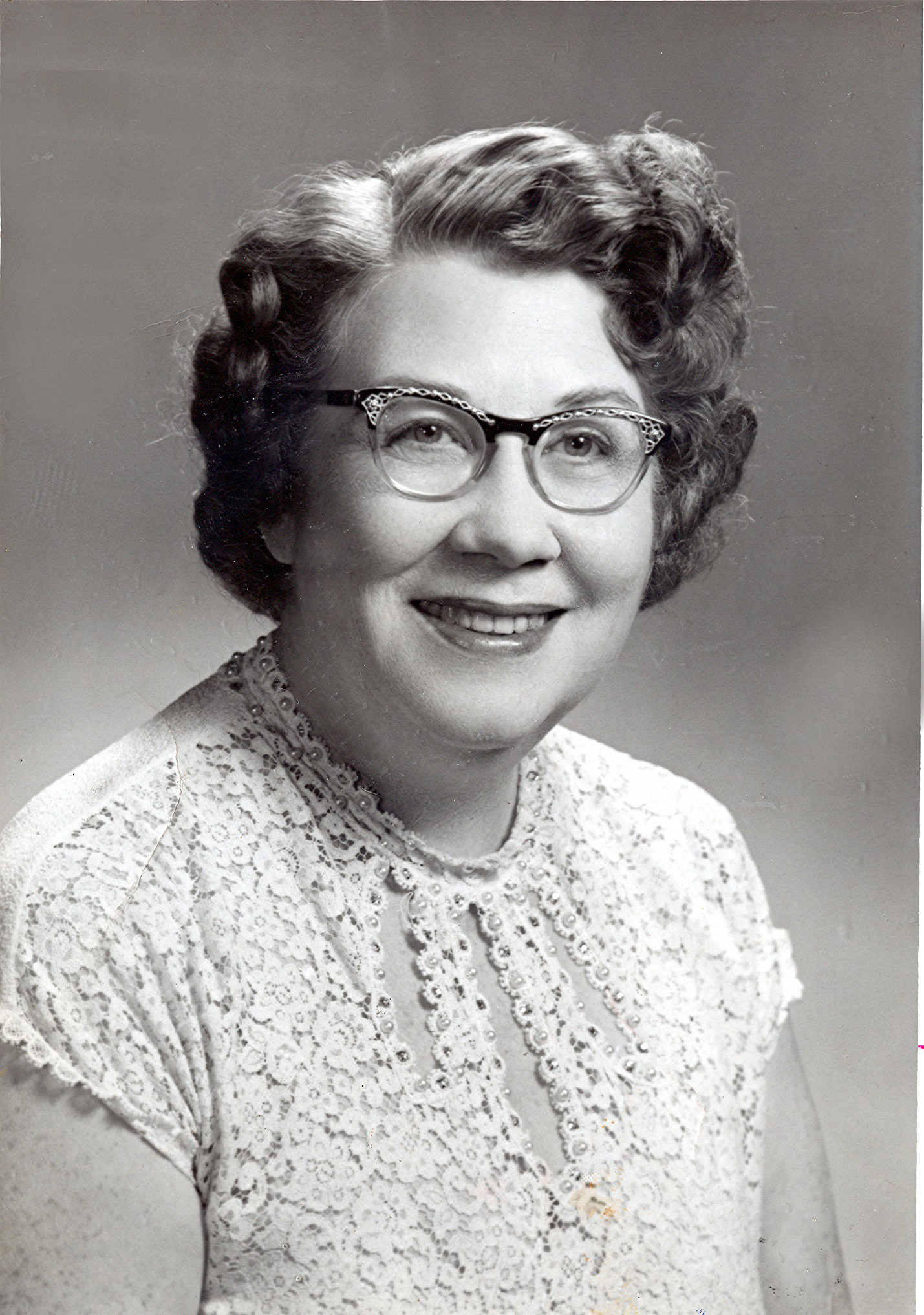
Kay Eddy served as assistant to the dean, registrar and director of admissions for almost two decades after the College of Law moved to Gulfport. Students of the era described Eddy as a problem-solver who helped and assisted students. Prior to joining Stetson Law, Eddy owned and operated a business and secretarial college.


Firestone Family

Harvey Firestone III
Harvey Firestone III. Click for hi-resolution image.

Watch Video

Harvey Firestone III ’59 began law school at Stetson in 1955 at the encouragement of his father, Harvey Firestone Jr., then-president and CEO of Firestone Rubber Company of Akron, Ohio. He graduated third in his class, overcoming the physical challenges of cerebral palsy. In 1960, Harvey Firestone III died tragically, falling from a hotel balcony where he was vacationing with friends. His father was a major benefactor of Stetson, transforming the campus with capital improvements including a new classroom, faculty offices, guest suite and a modern courtroom. Thirteen years after his son’s death, Firestone Jr. helped Stetson Law rebuild and expand its recreation facilities, with new tennis courts, a basketball court, workout area and a swimming pool.


Edward BA ’67, JD ’71 and Bonnie BA ’68 Foreman

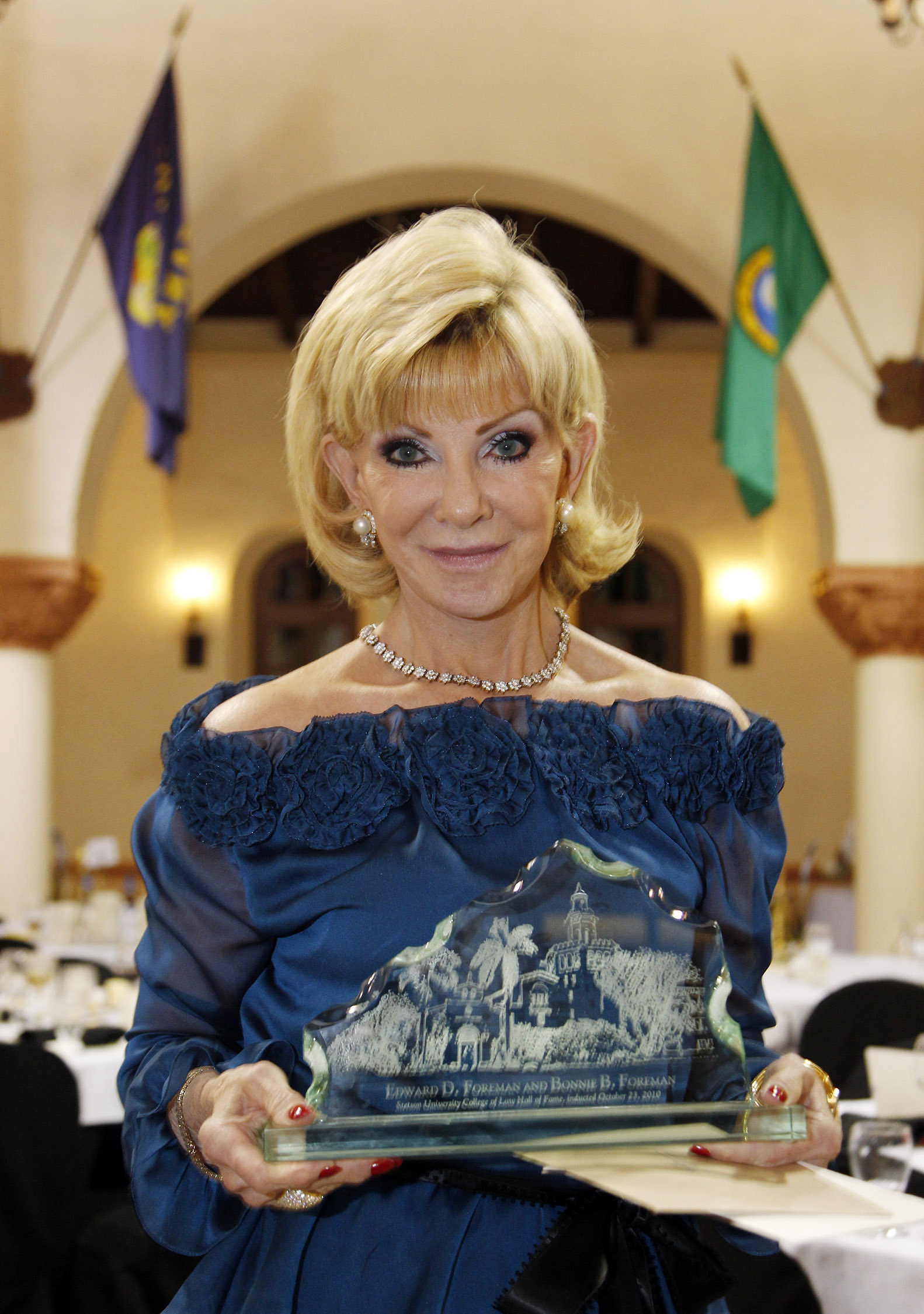
Bonnie Foreman
Bonnie Foreman. Click for hi-resolution image.
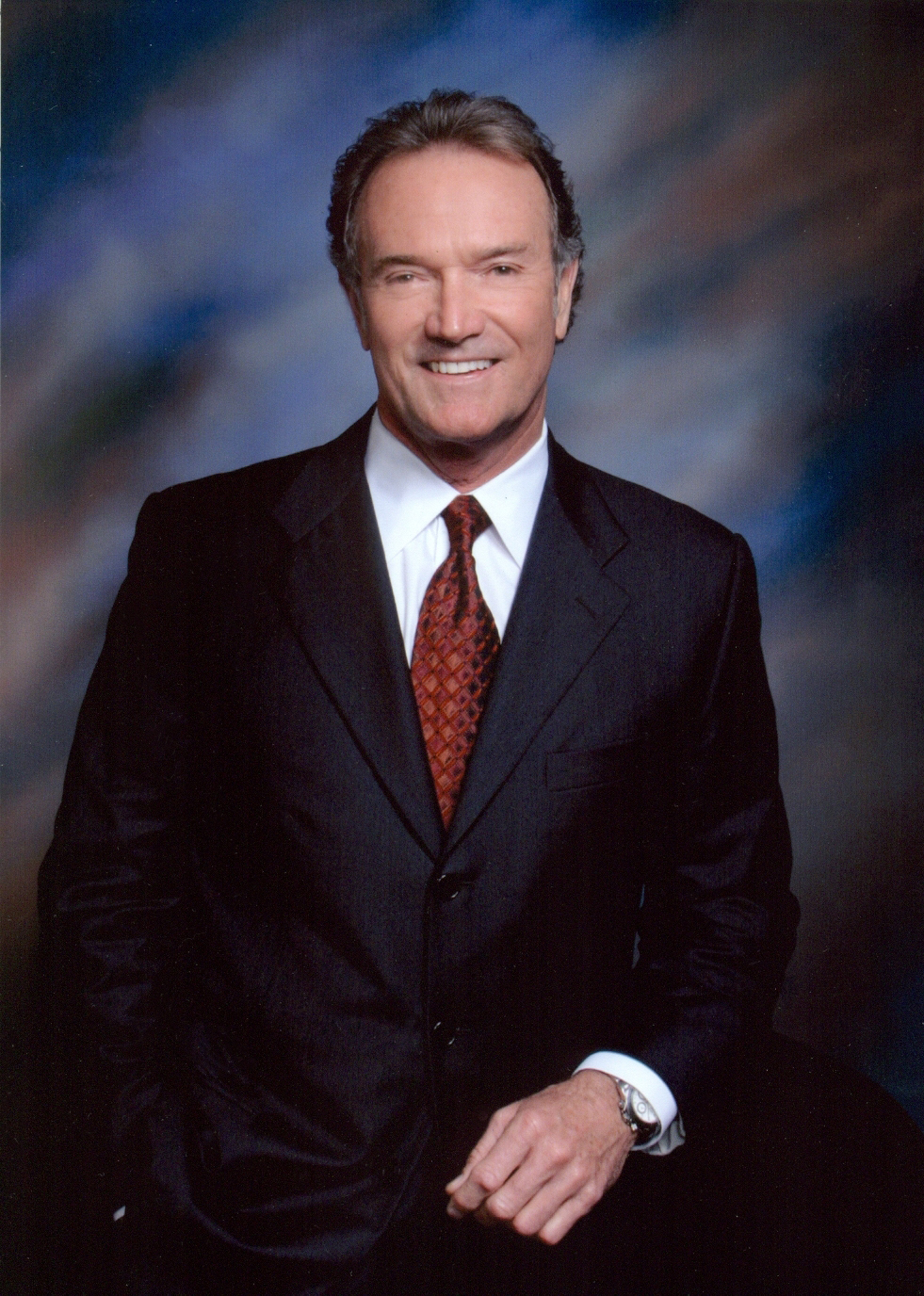
Edward Foreman
Edward Foreman. Click for hi-resolution image.

Watch Video


Bonnie Brown and Edward Foreman met at a festival on Stetson University’s DeLand campus and married in October 1967. Their partnership continued through Edward’s law school and legal career, while Bonnie guided young people as a school teacher. Four decades of community contributions from the couple continued until Edward died in 2004. In May 2004, Bonnie Foreman created the Edward D. Foreman Most Distinguished Student Award, the most prestigious award given at Stetson Law’s graduation. The award honors the “best all-around student” for both passion for the legal profession and commitment to community service. Bonnie has served on the College of Law Board of Overseers and University Board of Trustees. Her philanthropic work includes academic scholarships and a new SPCA Adoption Center, which bears Edward Foreman’s name and honors his love of animals and wildlife.


Ruthann Robson ’79

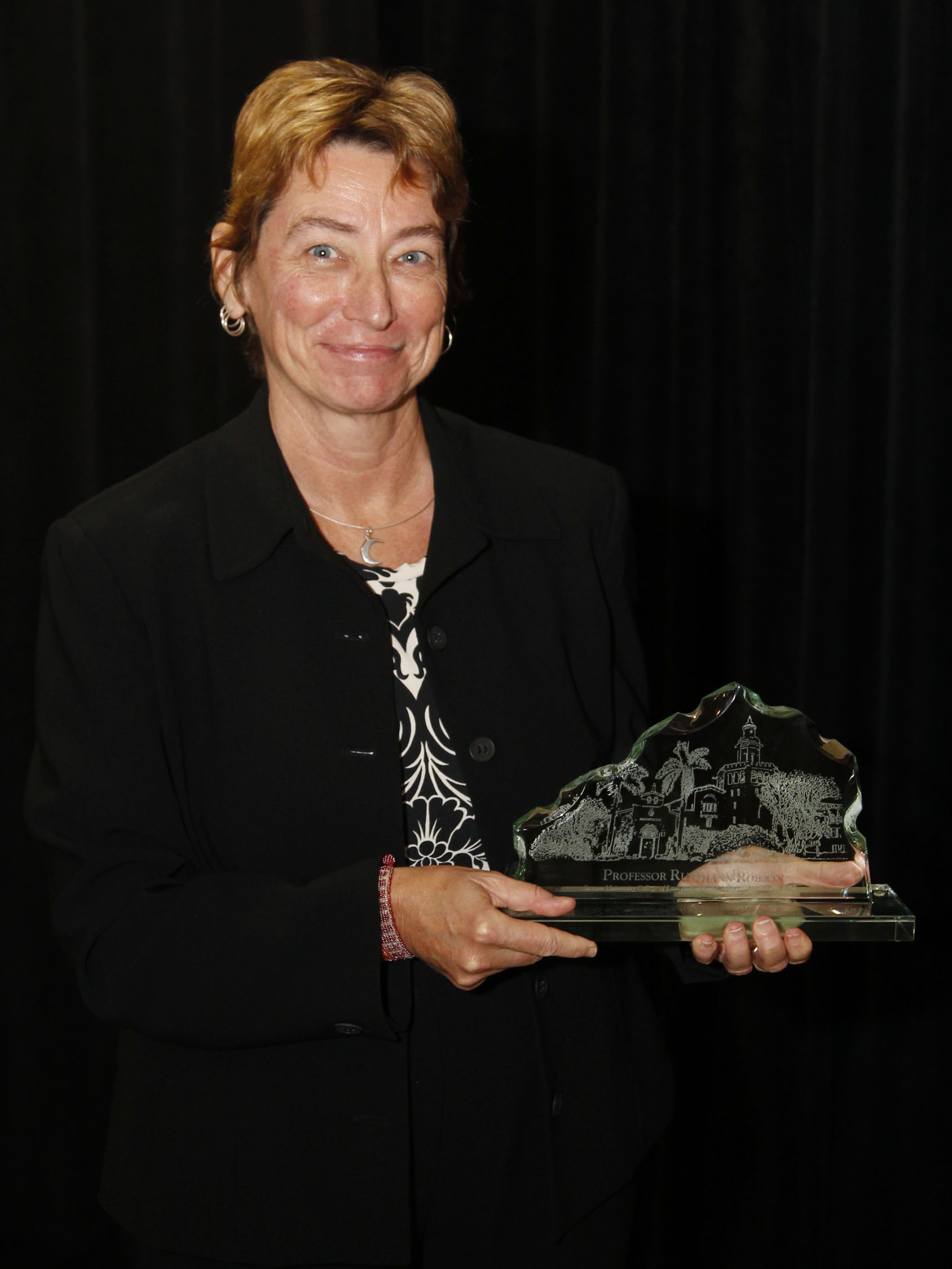
Ruthann Robson
Ruthann Robson. Click for hi-resolution image.


Watch Video

Ruthann Robson has taught at the City University of New York School of Law since 1990 in the areas of constitutional law and sexuality and the law. She has made academic presentations throughout the United States, Australia and New Zealand. Professor Robson has been called a pioneering legal theorist in the field of lesbian jurisprudence. She is also an award-winning novelist, accomplished poet, essayist, and dedicated mentor and teacher. In 2007, Robson was named a Distinguished Professor. Robson received her J.D. degree from Stetson and an LL.M. from the University of California at Berkeley. She clerked for Senior U.S. District Judge William Castagna of the Middle District of Florida and U.S. Circuit Judge Peter T. Fay of the Eleventh Circuit Court of Appeals.


Jim Shore BA ’76, JD ’80

Jim Shore
Jim Shore. Click for hi-resolution image.


Ruthann Robson. Click for hi-res image.


Watch Video

Jim Shore was born blind in one eye and lost his remaining vision in an automobile accident in 1970. He became the first person in the Seminole Tribe to graduate from law school. After finishing law school, Shore became the deputy counsel, and later became general counsel, of the 3,000-member Seminole Tribe of Florida. He helped form the Seminole Police Department and advocated in several land and water use challenges with state and local governments. Shore’s negotiations made the 2007 Seminole Tribe gaming agreement with the State of Florida possible. He negotiated the Tribe’s acquisition of the Hard Rock hotel, restaurant and casino operations with 168 venues in 52 countries. Shore also volunteers with a variety of non-profit civil organizations.


Gary Trombley ’73

Gary Trombley
Gary Trombley. Click for hi-resolution image.


Watch Video

Gary Trombley is the principal attorney of Trombley & Hanes, P.A., and has concentrated in federal and state criminal investigations, trials and complex civil litigation for the past 25 years. A highly awarded attorney, Trombley has been named among Florida Trend‘s Legal Elite and the Best Lawyers of America. While attending Stetson Law, Trombley was a member of the Stetson Law Review and Phi Delta Phi. From 1973 to 1977, he served as Assistant U.S. Attorney in the Middle District of Florida, where he prosecuted complex criminal cases and received the Attorney General’s “Outstanding Performance in Trial Practice Award.” Active in community and educational organizations, Trombley served as president of the Stetson Lawyers Association and as a member of the College of Law’s Board of Overseers. He received the Paul M. May Meritorious Service Award for continuous support of the College of Law in 2004.


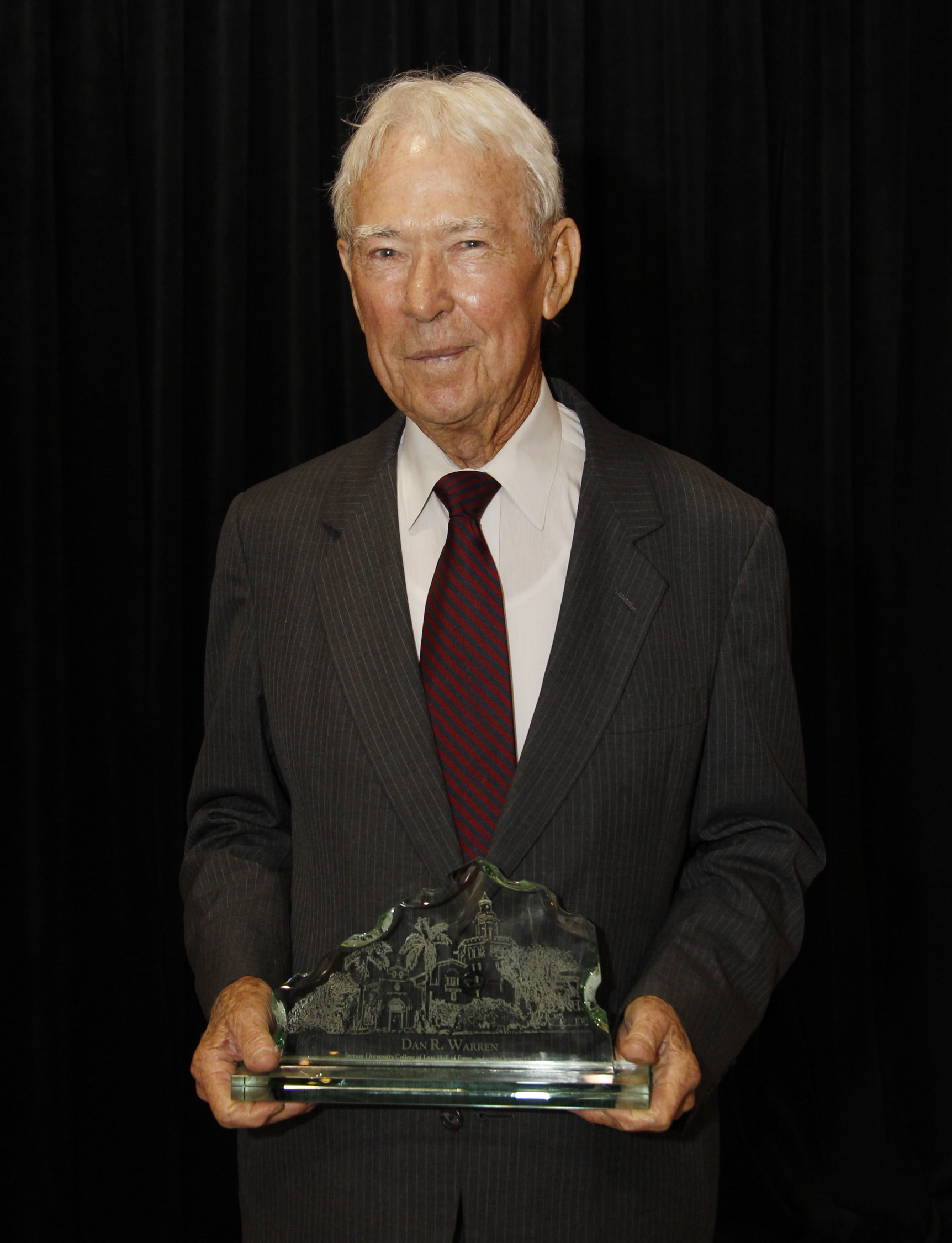
Dan Warren ’52

Dan Warren
Dan Warren. Click for hi-resolution image.


Watch Video

Dan Warren has served as a Daytona Beach municipal judge, justice of the peace and city commissioner. In the 1960s, he served as special counsel and state attorney working on the St. Augustine civil rights crisis. He chronicled the experience in the book, If It Takes All Summer: Martin Luther King, the KKK, and State’s Rights in St. Augustine, 1964. Warren ordered the desegregation of St. Augustine public beaches and had members of the KKK arrested and prosecuted for violence. He met privately with Dr. Martin Luther King Jr. to reach a peaceful settlement, and empanelled a grand jury to appoint a bi-racial committee to stop the violence. Since 1968, Warren has spent his legal career defending the constitutional rights of others, especially minorities.