First-Year Bonner Scholar’s Inspiring Journey of Finding His Voice
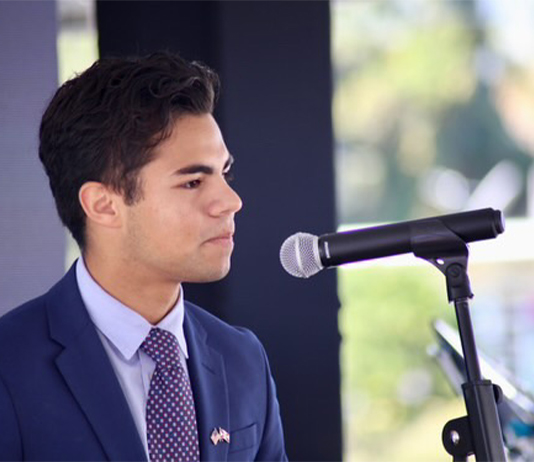
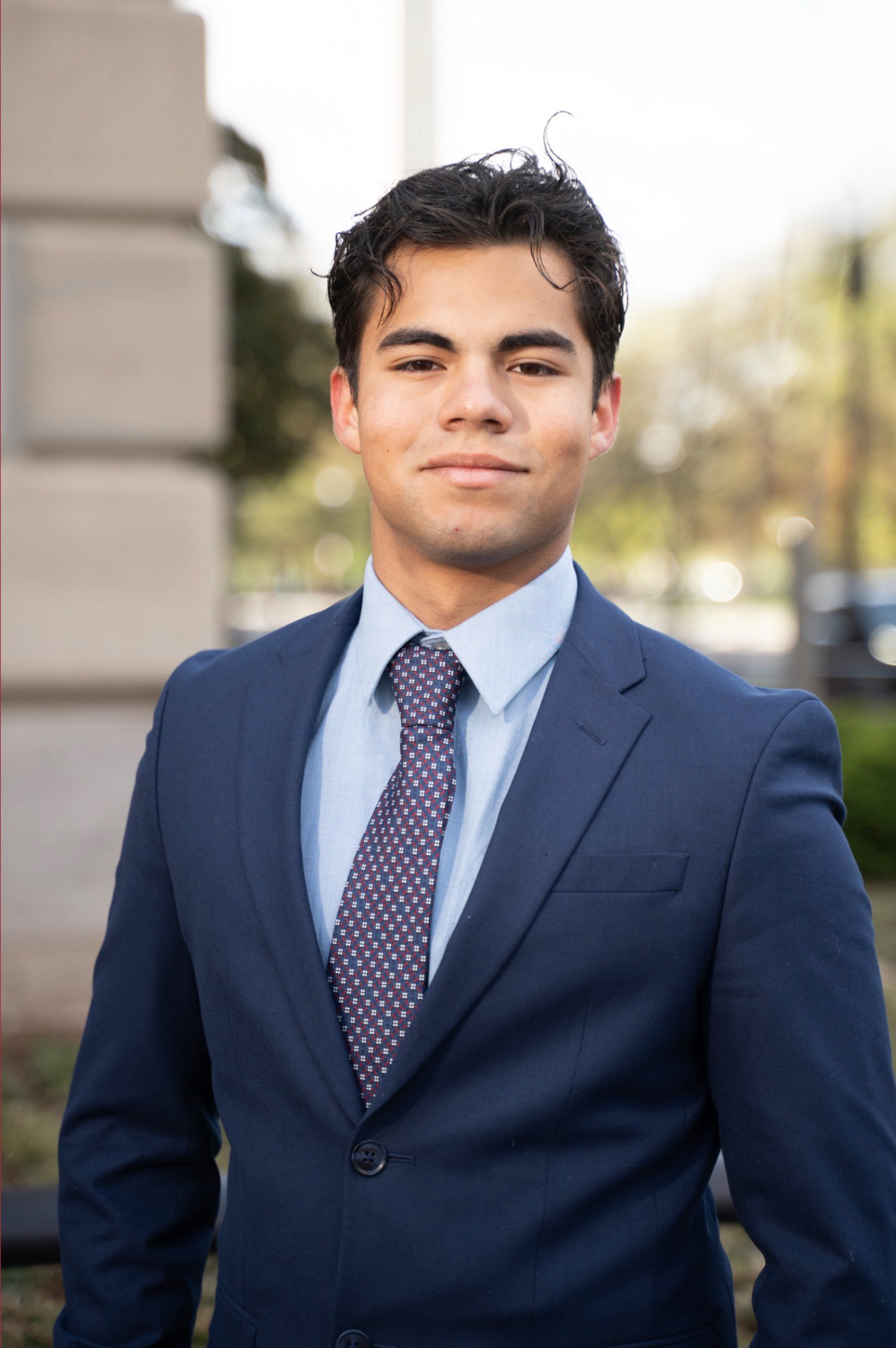
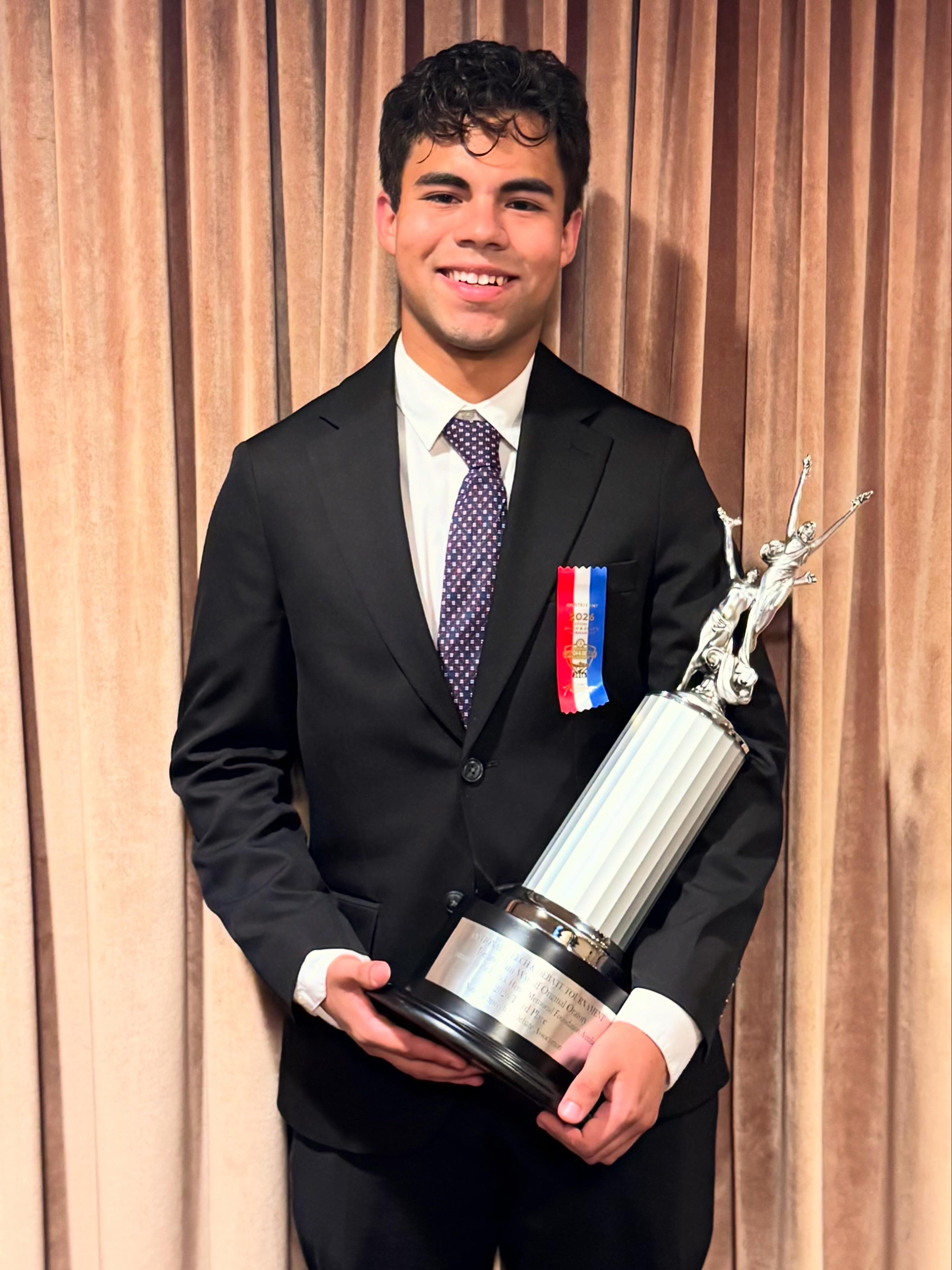
When first-year Bonner scholar Luis Latozefsky immigrated to the United States from Venezuela as a 10-year-old, he would never have imagined that years later, as a high school senior, he would be standing in the historic Sanders Theatre at Harvard University surrounded by applause, having tied for first place in Original Oratory at the Harvard National Speech and Debate Tournament.
That’s because, as a child, he had a speech impediment, one that made it hard for him to pronounce most words in the English language. The language barrier made it difficult for him to relate with his peers as well.
“I couldn’t find my place to be quite certain,” he said about his first years in the U.S.
From Shy ESOL Learner to Speech and Debate Champion
But things started to change in high school, when he was assigned to a speech and debate class taught by Jennifer Burg.
“She saw some type of potential, even though nobody else could imagine something similar to that because I couldn’t speak — it was horrible. But she saw something in me and said she wanted me to join the speech and debate team, and I joined,” he said.
Burg didn’t cut him any slack. In fact, until he could overcome his speech impediment and pronounce more English words, he wasn’t allowed to participate in any competitions. Add to that the pushback he received from his peers for coming from a different cultural and linguistic background, his first year with speech and debate was a grind, to say the least.
Things didn’t necessarily improve a whole lot when he finally got the go-ahead to compete in tournaments his sophomore year.
“When I went to competitions, the feedback was generally, ‘You have such a nice way of saying things, but I just cannot understand what you’re saying,’” he said, describing how critique for his oratory often focused more on his accent than his argumentation or logic. “You get used to those comments, but they still matter, and it’s very impactful to you as a student.”
He also started to notice that not all students enjoyed equal access to speech and debate. “Students like me, students who maybe could be very good speakers and very good thinkers, were limited to participate in these extracurricular activities because they’re just new to the language,” he said. This led him to create the Hispanic Debate Society, giving space for Hispanic students who do not speak English as a first language — but show leadership and civic potential — to practice speech and debate in Spanish, so that they could eventually break into speech and debate in English.
A different setback awaited Latozefsky in his junior year. Burg, his speech and debate coach, resigned from her role at his school to join the Florida Debate Initiative, a nonprofit with a mission of expanding access to speech, debate and civics education for middle and high school students across Florida, as its director of educational programs.
“That was a very hard moment for me,” he recounted. “I was so ready to continue the year and fight, but she wasn’t there anymore and that hurt my heart a lot, truly, because she was like a mom — a second mother who teaches you and leads you to things that you never felt comfortable doing in the first place.”
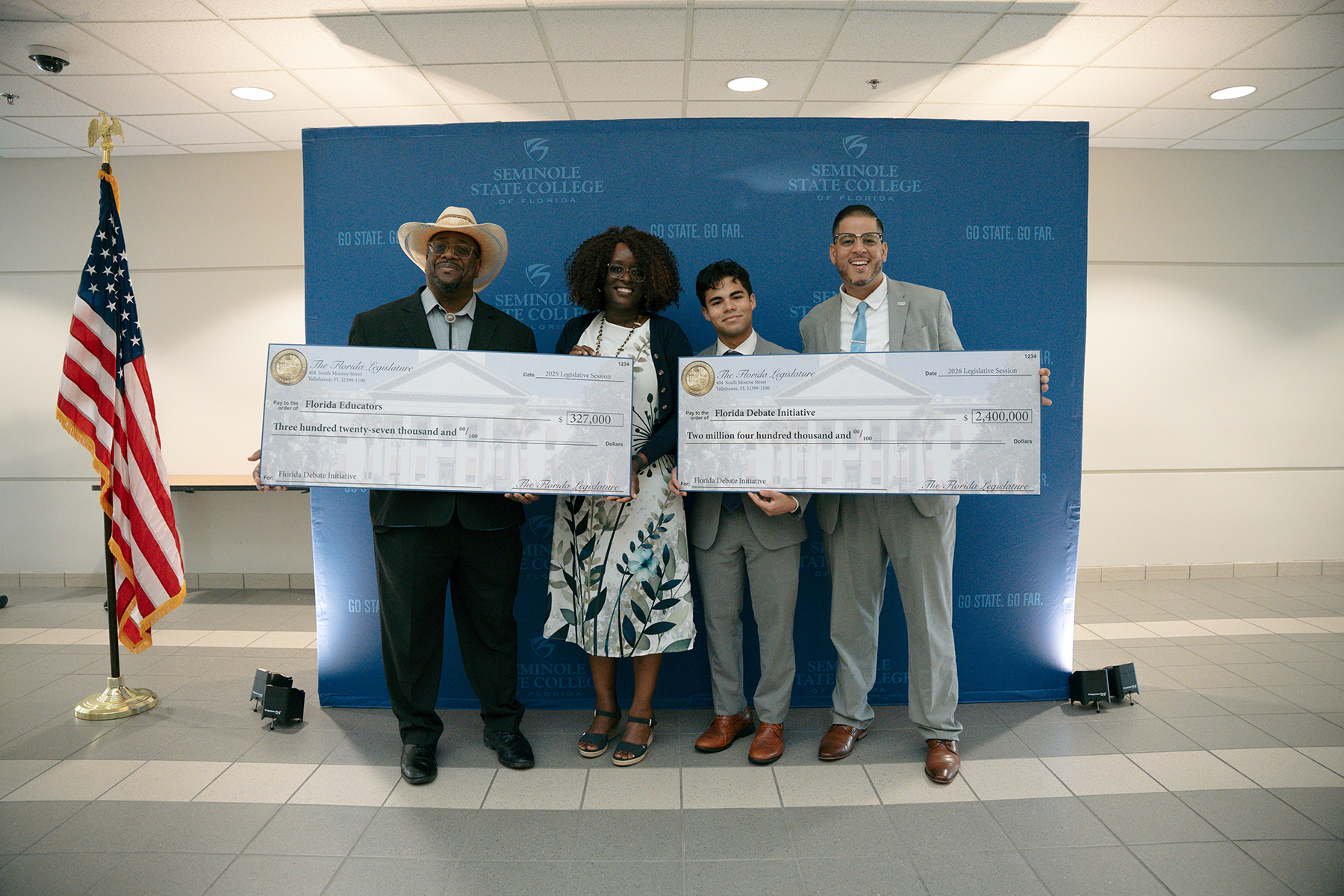
But Burg’s departure turned into a fresh opportunity when she invited him to join the FDI as a fellow and help advance its cause. Happy to oblige, he helped the organization with the development of American Dream Debate, a bilingual debate tournament held in both English and Spanish that aims to help Hispanic students hone their speech and debate skills and connect with civic leaders who embody the American dream.
Senior year of high school was when Latozefsky’s hard work in speech and debate really came to fruition.
In fall 2025, he was named the first-place winner for Original Oratory at the Florida Blue Key Speech and Debate Tournament, the largest forensics competition in the Southeast. The following year, not only did he come on top at the Harvard National Speech and Debate Tournament, arguably the most prestigious invitational forensics competition in the country, but he also placed in the top three in two other competitions: the National Catholic Forensics League Grand National Tournament and the National Speech and Debate Tournament.
And there’s more. The year culminated with Latozefsky going to Tallahassee and speaking to lawmakers at the Florida State Senate and House of Representatives, where he advocated for more funding toward speech and debate programs in the state on behalf of the FDI. Thanks in part to his efforts, for the 2026-2027 school year, the state is investing $2.4 million in funding to support the FDI as it continues to build a statewide infrastructure for speech, debate and civic learning that students in all of Florida’s 67 school districts can access — especially ESOL students, justice-involved youth and those from rural, high-need communities.
On the part he played in helping the FDI secure state funding, Latozefsky said, “My main role was to give a testimony, and to showcase what can happen when the resources that we are asking the [state legislature] to give are provided to people who are not expected to be good.”
Big Plans Ahead
Although Latozefsky had options when deciding which school to attend for his undergraduate degree, Stetson University was the obvious choice for two reasons: location and its Bonner Program.
The Bonner Program is a four-year, service-oriented community engagement and scholarship program that allows students to work closely with nonprofit community partners while aligning their service activities with their academic pursuits. Stetson is one of only three schools that are part of the Bonner Network in Florida.
“I’m not a person that likes to do a job and never finish it. I want to continue and finish my job,” Latozefsky said, explaining that he wanted to stay in the Orlando area and continue his work with the FDI by making it a community partner for the Bonner program.
An aspiring criminal lawyer, Latozefsky is interested in a career in public office in the future and has been continuing to pursue his passion for speech and debate at Stetson by joining the nationally competitive Mock Trial team.
He’s come a long way, and while there may still be a long way to go, his inspiring story of resilience and perseverance suggests a bright future ahead of him.
–Siyon Kim