Stetson Poll: Donalds, Moody Lead in Final Pre-Election Survey as Races Tighten
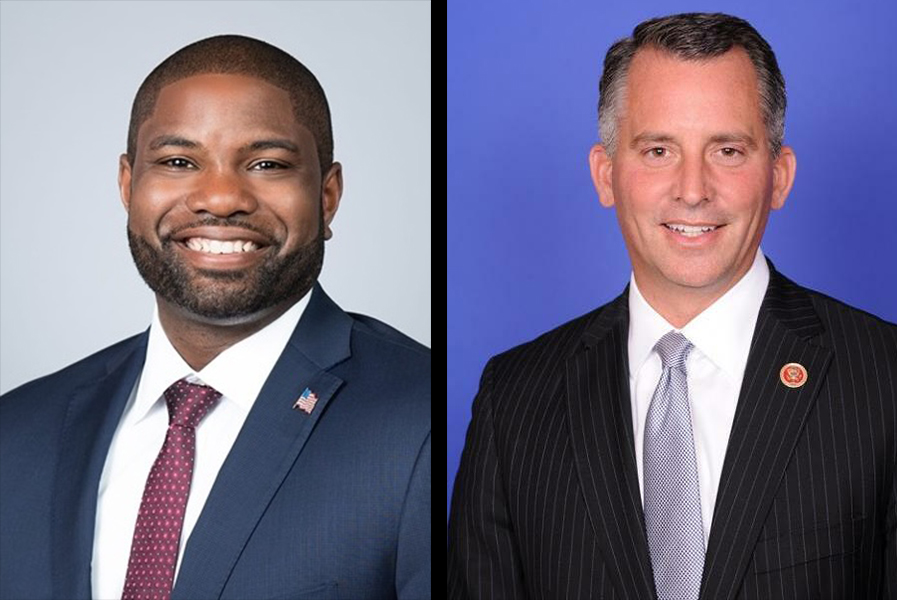
Republican candidates lead Florida’s races for governor and U.S. Senate, but by notably narrower margins than two weeks ago, and Republicans lead by 3 points on the generic congressional ballot, while none of the three proposed constitutional amendments has reached the 60% support required for passage, according to a final pre-election statewide survey from Stetson University’s Center for Public Opinion Research (CPOR).
The survey of 1,000 Florida adults — including 861 registered voters, on whom all electoral results are based — conducted Oct. 26–30, finds Republican Byron Donalds leading Democrat David Jolly 51% to 45% in the governor’s race among modeled likely voters.
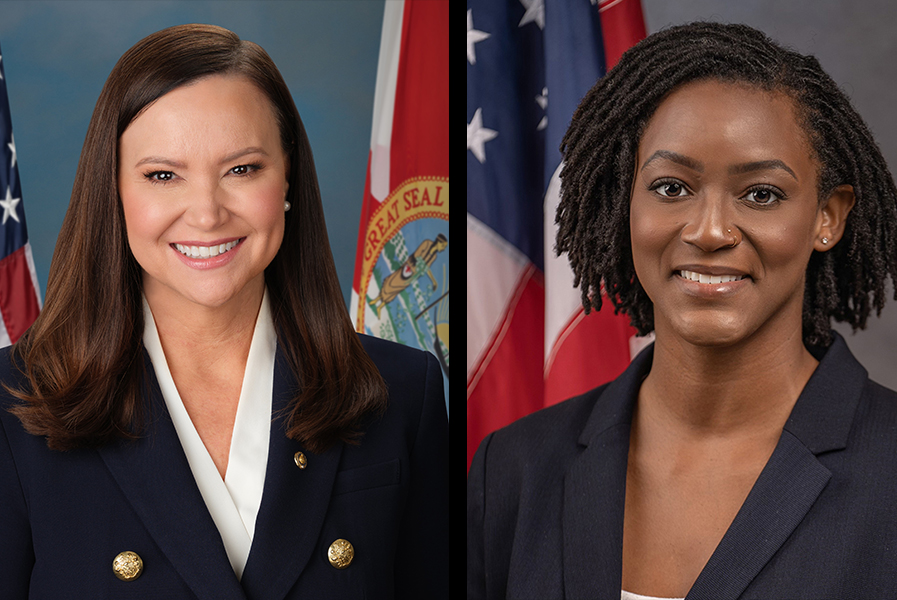
In the U.S. Senate contest, Republican Sen. Ashley Moody leads Democrat Angie Nixon 49% to 45%. Because Florida’s early voting period was underway during fielding, the estimates combine the reported votes of the 55% of likely voters who say they have already cast a ballot with the intentions of those who have not; undecided respondents who leaned toward a candidate are allocated.
About 2% remain undecided in the governor’s race, with another 1% supporting a different candidate. In the Senate race, 3% remain undecided and 3% prefer another candidate. Compared with CPOR’s mid-October survey, Donalds’ margin has narrowed by roughly six points and Moody’s by roughly eight. Each comparison individually sits near the edge of the survey’s precision estimates, but the movement is consistent across both statewide races and the generic ballot.
“The headline from our final survey is a real tightening,” said Gustavo Venturelli, PhD, an assistant professor of political science at Stetson and co-director of CPOR. “Republicans still lead both statewide races, but the margins are roughly half of what we measured in mid-October — and with a majority of likely voters telling us they have already cast a ballot, much of this election is no longer about persuasion. It’s about who shows up between now and Tuesday.”
A generic congressional ballot points to the same pattern. Asked which party’s candidate they support or voted for in their U.S. House district, 49% of likely voters chose the Republican candidate and 46% the Democratic candidate, with 4% undecided. The 3-point Republican edge compares with 9 points in CPOR’s mid-October survey, though it continues to stand apart from national generic-ballot polling, which has shown Democrats ahead this fall.
The survey also measured whether voters know each candidate and whether they would rule them out entirely. In the governor’s race, 49% of likely voters say they know Donalds and could vote for him, 36% know him but would never vote for him, and 11% have never heard of him. For Jolly, 43% say they could vote for him, 39% reject him outright, and 14% do not know who he is.
In the Senate race, 50% know Moody and could support her, 34% would never vote for her, and 12% are unfamiliar with her. Nixon is known and acceptable to 44% of likely voters, rejected by 36%, and unknown to 16%. With few voters left undecided and most ballots already banked, these measures suggest how little room remains for either campaign to grow in the final days.
The proposed constitutional amendments remain short of passage. Amendment 1, which would raise the maximum size of Florida’s budget stabilization fund, draws 46% support, 35% opposition, and 19% undecided. Amendment 2, which would exempt certain agricultural equipment and agritourism property from property taxes, receives 57% support, with 25% opposed and 19% unsure — the closest of the three to the threshold.
Amendment 3, which would raise the homestead exemption for non-school property taxes, draws 53% support, 28% opposition, and 20% undecided, compared with 56% support in mid-October. None of the three measures reaches the 60% required to pass in the current survey.
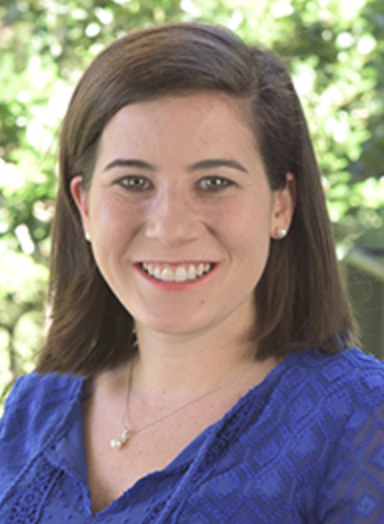
“Sixty percent is a high bar, and with most ballots already cast, none of the three amendments has shown the level of support it would need to pass,” said Kelly Smith, PhD, an associate professor of political science at Stetson and co-director of CPOR. “Support for ballot measures is softening as Election Day nears — the homestead exemption has already slipped three points since mid-October — so the voters who are still unsure will likely decide how close these proposals come to passing.”
The full report is available on CPOR’s website.
Methodology
The CPOR late October 2026 Survey interviewed 1,000 Florida adults through Qualtrics’ online non-probability panel from Oct. 26–30, 2026. Results were weighted by age, gender, race, ethnicity, education, and region. Electoral estimates are based on 861 self-reported registered voters and incorporate each respondent’s modeled probability of voting; respondents who reported having already voted provided their actual vote, are assigned a turnout probability of one, and are included in the registered-voter base, as casting a ballot establishes registration. As of CPOR’s mid-October survey, these estimates are calibrated to the certified 2024 presidential election result; the weighted share of likely voters reporting having already voted (55%) is consistent with ballots cast in the Florida Division of Elections’ returns during the field period. Full details are in the report’s methodology section. The report provides design-effect-adjusted precision estimates of ±3.1 percentage points for the full sample and ±3.6 for likely voters; these are not conventional random-sampling margins of error for the opt-in panel. Prior survey waves were re-estimated using the current weighting approach for trend comparisons.