‘Part of Stetson’s Spirit’: Pets Enhance Student Life at Stetson

From facilitating social interactions to providing emotional support during mental health challenges, pets have become an integral part of the Stetson experience for students who choose to live with them on campus.
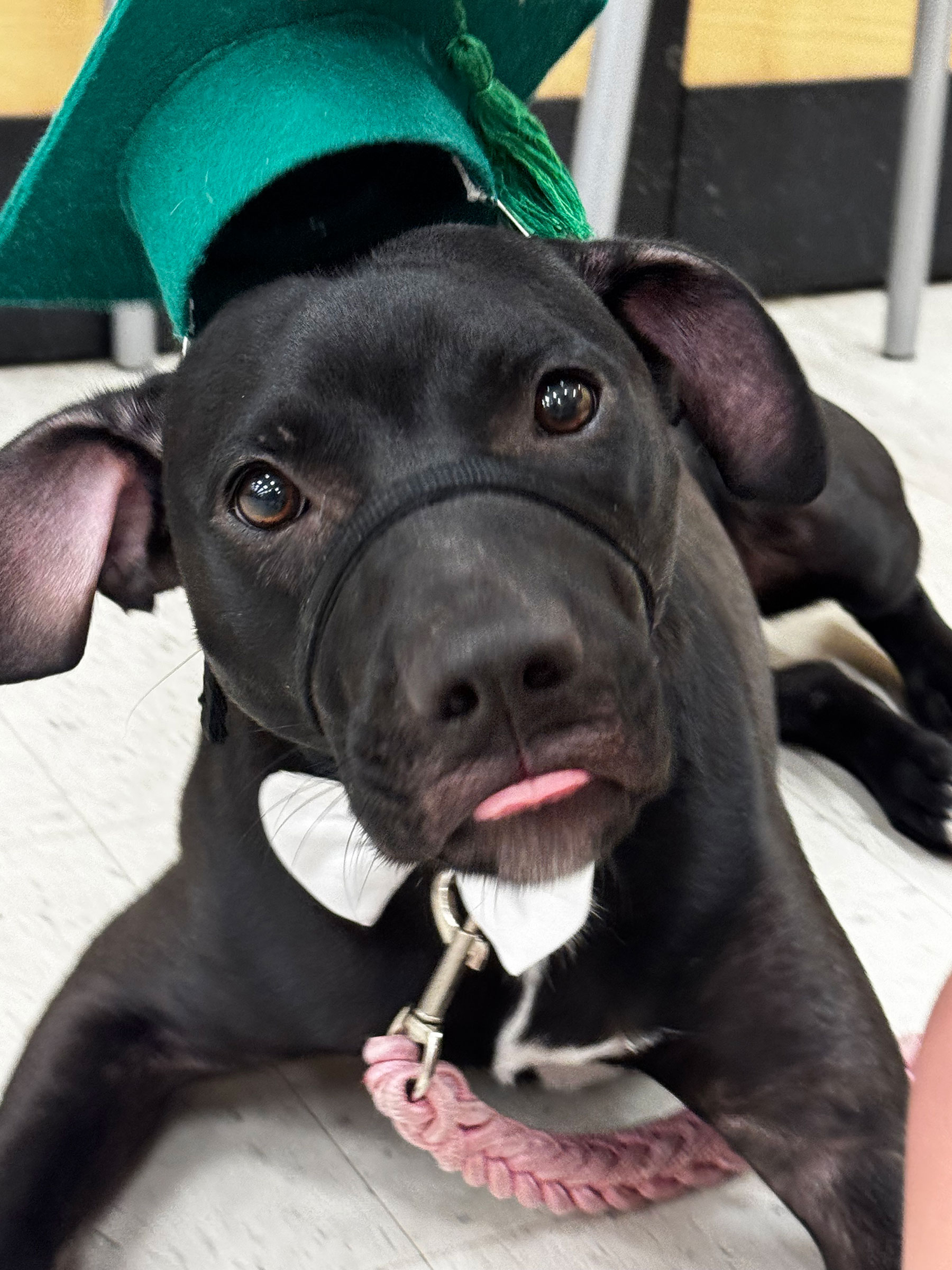
Stetson first introduced pet-friendly housing in 2010, when Nemec Hall opened its doors to 23 animal residents. Since then, students have continued to take advantage of this unique policy, which allows them to bring a piece of home to campus for a smoother transition into college life.
Approved campus animals as defined by Residential Living & Learning include dogs under 50 pounds, cats, dry aquarium animals such as bearded dragons and geckos, small, caged animals like rabbits, hamsters, chinchillas, and guinea pigs, fish, and hermit crabs. Animals can live on campus as pets, emotional support animals or service animals. Students can also request to house service dogs-in-training through Stetson’s partnership with local service animal organizations.
For the Fall 2026 semester, 45 animals — 13 dogs, 31 cats and one rabbit — were registered with Residential Living & Learning as residing on campus. There are four animal-friendly housing locations: University Hall, Stetson Oaks, Stetson Cove and University Village. The total animal population on campus may be larger, as fish and hermit crabs are not subject to registration requirements.
Animal-friendly housing has also earned Stetson a place on many Most Pet-Friendly Colleges in America lists, including from U.S. News & World Report, CollegeRaptor, College Rank and Dogster.

Caitlyn Cameron, a senior computer science major from Pensacola, brought Lab mix Ryder with her to campus this fall. On her decision to bring a dog to college, she said, “When I didn’t have an animal on campus, I was like, there’s nothing at home that I can go, ‘Hey, let’s go play. Let’s go cuddle. Let’s have fun.’ And now I just go back to my apartment and open my door and say, ‘Ryder,’ and get him out of his crate and he gets so excited. It’s awesome.”
Cameron added, “I find it really awesome that if I know someone that has an animal, I could go, ‘Can I say hi to your pet?’ It’s just part of Stetson’s spirit.”
Blake Christensen, a finance major set to graduate in the spring next year, agreed that animal companions can serve as an effective social lubricant. “Even when you’re just walking around, you get more social interaction, but if you bring them to events, it really helps. People usually come up and say, ‘Can I pet your dog?’ It’s a conversation starter, which is great,” he said.
Christensen credits his furry roommate for enabling him to come to Stetson amidst health challenges his father faced. Being 600 miles away from his family in Sylva, North Carolina, would have been difficult without Waffles, a Lab mix who lives with him as his emotional support animal, he said.
Living on campus with an emotional support animal made a world of difference for Sydney Bishop, a senior majoring in biology, as well. When she was struggling with mental health challenges during her sophomore year, she was able to adopt Snoop, a Plott Hound mix, from a local animal shelter in DeLand. “Emotionally, he helped me dramatically,” Bishop said. “He forced me to go outside, and he forced me to go on walks.”
When asked what she thinks about Stetson’s animal-friendly housing option, Bishop continued, “Personally, I love it. I think that it definitely can help certain people. If I didn’t get a dog, I would not be where I am right now.”
While acknowledging that there are pros and cons to running an animal-friendly housing program, Jes Day, executive director of Residential Living & Learning, commented, “Students come to campus being able to bring a piece of home with them; most of the time this is a supportive transition. Having pets also allows students to find balance in their day, creates a sense of familiarity in their living space, and helps them manage transitional stress.”
She continued, “I believe the animal-friendly housing program supports our mission, the relationship-rich environment we want our students to have, and further supports our commitment to helping students learn how to take personal and social responsibility in their daily lives.”
–Siyon Kim