
In your bid to purchase Blackacre, that fictional parcel of land familiar to generations of law students, you may be able to sign legal documents using your smartphone. But many of the legal concepts that still shape property ownership in the U.S. were already centuries old when the Mayflower set sail. Today, Stetson Law Dean D. Benjamin Barros is helping lead a national effort to determine whether those rules can be simplified and modernized for a new era.
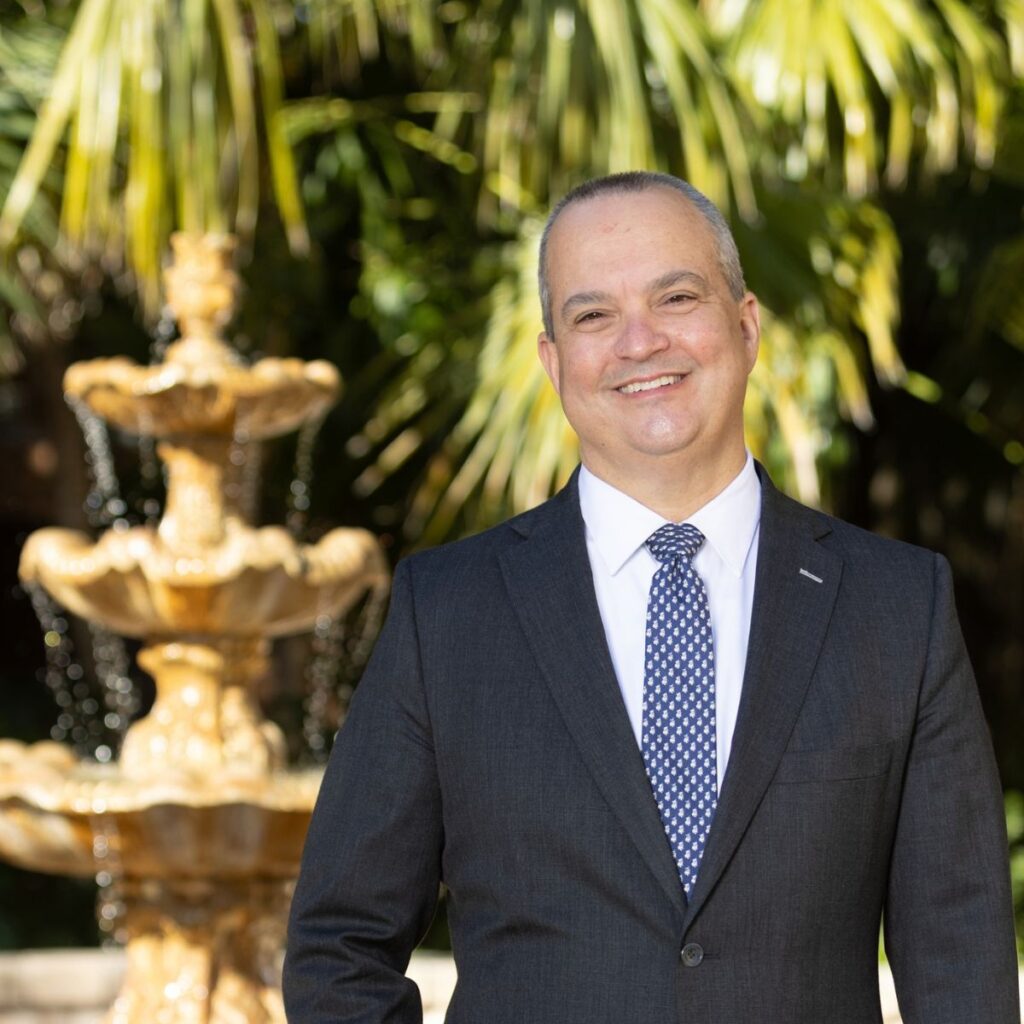
Reflecting his decades of scholarship and a passion for putting doctrine into practice, Barros has been appointed reporter for the Study Committee on Simplification of Present Estates and Future Interests, a project of the Uniform Law Commission (ULC).
A national nonpartisan organization, the ULC develops model legislation for state lawmakers to consider, often with the aim of clarifying and modernizing current laws without losing meaning or diminishing legal protections. The committee is examining whether the ULC should propose a uniform law that simplifies our property law by eliminating unneeded complexity that has accumulated over hundreds of years. This work can ultimately influence estate planning, family inheritance, and the transfer and development of property.
As reporter, Barros serves as the primary academic authority for the committee. His research and analysis will support its decision on whether to recommend that the ULC draft a uniform or model act. He will help provide the committee with research and analysis as it evaluates whether longstanding legal doctrines governing property ownership can be simplified and modernized.
“Many of the core principles in our property law are unnecessarily complex because they have their origins in feudal England. They often reflect issues that were present 500 years ago but aren’t present today,” Barros said. “I am excited to help with this project exploring ways to make our property law simpler and more clear. I’m grateful to the ULC for this opportunity.”
A nationally recognized property-law scholar, Barros has authored a highly regarded casebook on the topic and was founding editor of the Journal of Law, Property, and Society, a peer-reviewed publication by the Association of Property, Law, and Society. Notably, his 2008 paper, “Toward a Model Law of Estates and Future Interests,” anticipated many of the issues now under consideration by the committee and explored how these doctrines might be simplified through model legislation. His appointment reflects both his subject-matter expertise and his leadership within legal academia
The committee’s recommendations could ultimately influence future law-reform efforts and, if advanced into a drafting project, help shape model legislation designed to promote greater clarity, consistency, and predictability in state property laws.
If the committee recommends drafting model legislation, its work may help shape laws that state legislatures across the country will consider, potentially supporting more robust property rights for future generations.