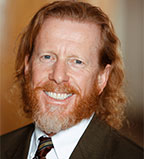
Traditional contract doctrine holds that there is no place for “fault” in Anglo-American contract law, in which a promisor is said to be held strictly liable for breaching a contract and is merely required to compensate the promisee for its disappointed expectations. However, in a recent article, “Retribution in Contract Law,” Professor Jimenez argues that if we focus on what judges do rather than on what they say they do when they decide contracts disputes, the wrongfulness of the promisor’s breach plays an important role in determining the remedy a court will ultimately award, indicating that courts are not only compensating injured promisees, but punishing breaching promisors as well.
About Professor Jimenez
Marco J. Jimenez is a Professor of Law at Stetson and teaches and writes in the areas of Contracts, Remedies, Western Legal Thought, International Sales Law and Arbitration, and Interdisciplinary Jurisprudence. Before joining Stetson’s faculty in 2006, Professor Jimenez clerked for the Honorable James Lawrence King on the U.S. District Court for the Southern District of Florida, and practiced in the areas of contract, antitrust, and securities law.
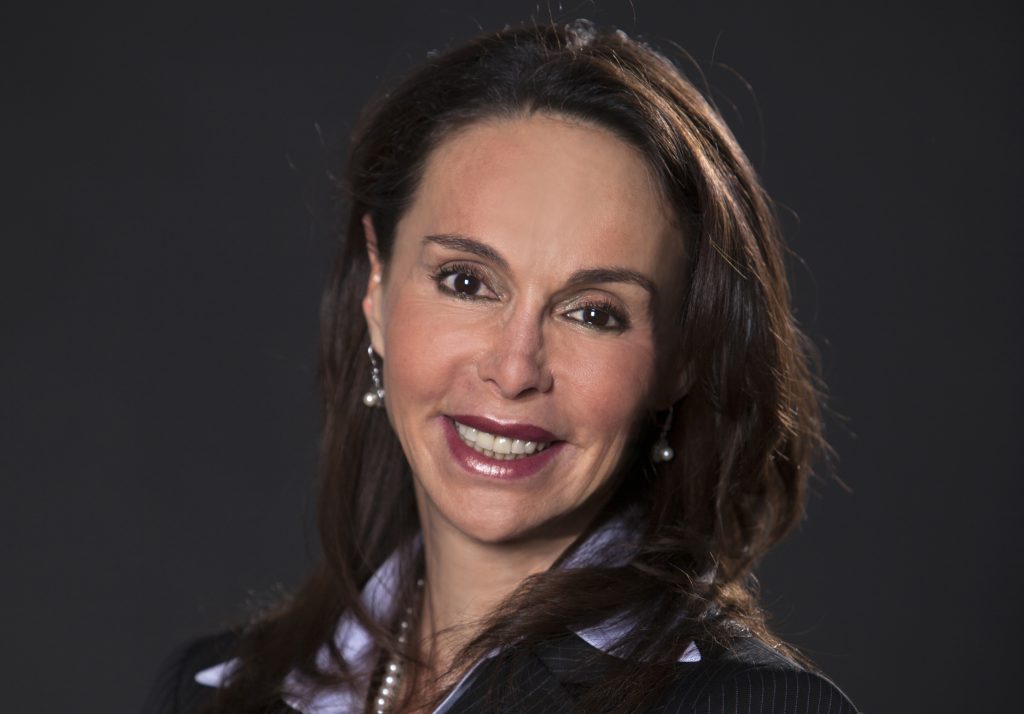
Law Professor Anne E. Mullins’s article, “Opportunity in the Age of Alternative Facts” was published in the Summer 2019 Washburn Law Journal.
ArticleSummary
Hotly contested constitutional litigation is increasingly shaped by empirical data. If judges and their clerks had more meaningful opportunities to develop expertise in empirical methodology and cognitive theory, they would be better positioned to (1) evaluate that data, and (2) be aware of any cognitive biases they may bring to that evaluation.
About Professor Mullins
Professor Mullins joined the Stetson University College of Law faculty in Fall 2018 as an associate professor teaching research and writing. She is a national leader in legal writing, serving all three major legal writing professional organizations. Mullins is currently serving as president of the Association of Legal Writing Directors. Her scholarship examines judicial writing through a cognitive theoretical framework.
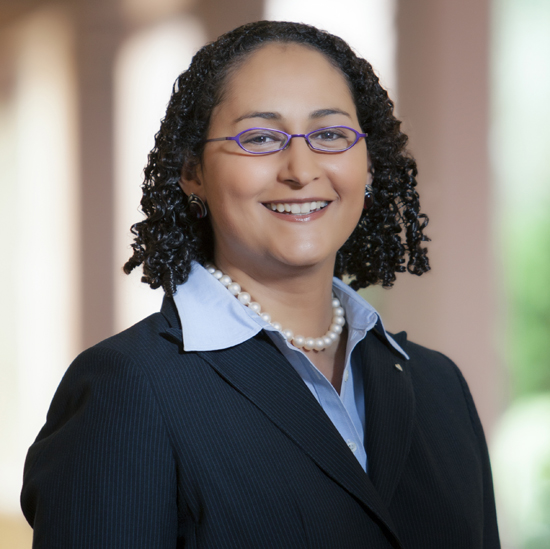
The article, “Depriving Our Veterans of Their Constitutional Rights: An Analysis of the Department of Veterans Affairs’ Practice of Stripping Veterans of Their Second Amendment Rights and Our Nation’s Response” by Professor Stacey-Rae Simcox, was accepted for publication in the Utah Law Review in March.
Introduction
“The oath that every enlisted member and officer of the United States Armed Forces takes before serving includes the solemn promise to “support and defend the Constitution of the United States against all enemies, foreign and domestic” and to “bear true faith and allegiance to the same.” This oath contains no time limit and many veterans consider themselves to be bound by these promises for their entire lives.“
ArticleSummary
In recent years, the VA has been
treading on the rights of veterans by systematically stripping them of their
Second Amendment right to possess a firearm. Divesting a veteran of his
or her constitutional rights in a manner that affords less protections than
other citizens receive creates an unconstitutional infringement of the
veteran’s Second Amendment rights under the United States Constitution.
This situation is particularly ironic and shameful when one considers the
lasting oath of all who have served in the Armed Forces of the United States to
support and defend the Constitution above all else.
This article contrasts and compares the determination of financial incompetency in the VA to other determinations of “mental defectiveness” in order to demonstrate that the VA’s standards do not rise to the level of “adjudicat[ing] [the veteran] a mental defective” necessary to be stripped of his constitutional rights. This article also argues that including veterans determined financially incompetent for VA purposes on a list of persons unable to exercise their Second Amendment rights is an unconstitutional deprivation of these rights and must be remedied not only for those veterans who may be affected in the future, but for those veterans who find themselves in this situation currently.
About Professor Simcox
Stacey-Rae Simcox is a Professor of Law and Director of Stetson University College of Law’s Veterans Law Institute and Veterans Advocacy Clinic. She teaches in the areas of veterans benefits law, administrative law, trusts and estates, and legal skills.
Kirsten K. Davis, J.D., Ph.D., Professor of Law and Director of the Institute for the Advancement of Legal Communication, has been selected as Chair of the Florida Bar’s Standing Committee on Professionalism for 2019-20.
The Committee’s work advances civility and professionalism in the practice of law and works closely with the Bar’s Henry Latimer Center for Professionalism.
“I’m excited and honored to be working this year to support
the professionalism of lawyers in Florida,” said Davis, whose expertise is in
legal communication, rhetoric, and ethics.
Stetson University College of Law Professor Luz E. Nagle will spend the fall semester in the Canary Islands of Spain, teaching and conducting research at Universidad de La Laguna in Tenerife as a Fulbright U.S. Senior Scholar in international law.
“Selection as a Fulbright Senior Scholar is a highly competitive process,” Professor Nagle wrote via email from her office abroad. “The award came as a wonderful surprise. I am grateful, humbled, and honored for the opportunity to expand my knowledge and friendships in this wonderful culture and to be allowed to observe and participate in the training of future lawyers in a legal system different from our own.”
Professor Nagle will teach and lecture on international law topics and conduct research on trade-based money laundering while on the Faculty of Law (Facultad de Derecho) of the Universidad de La Laguna in Tenerife.
“My research interest
in trade-based money laundering is well-suited to the Canary Islands, which is
an historic trade crossroads between Europe, Africa, and the Americas and has
a vibrant free-trade port zone in Santa Cruz de Tenerife,” Professor Nagle
wrote. “I intend to engage with Faculty at the Universidad de La Laguna
who represent a multi-disciplinary approach to combating transborder and
financial crimes, and hopefully develop opportunities for advanced legal
studies between our two universities. Of course, I am also excited to
experience the lifestyle and natural beauty of the Canary Islands.”
Tenerife is the largest of Spain’s Canary Islands, an archipelago off the coast of northwestern Africa.
Nagle joins elite group
Professor Nagle is one
of more than 800 U.S. citizens who will teach, conduct research, and/or provide
expertise abroad for the 2019-2020 academic year through the Fulbright U.S.
Scholar Program. Fulbright winners are selected for their academic and
professional achievement, as well as record of service and demonstrated
leadership in their respective fields.
Fulbright alumni have
achieved distinction in many fields, including 59 who have been awarded the
Nobel Prize, 84 who have received Pulitzer Prizes, and 37 who have served as a
head of state or government.
The Fulbright Program
is the U.S. government’s flagship international educational exchange program. It
operates in 160 countries and is funded through an annual appropriation from
U.S. Congress to the U.S. Department of State, as well as participating
governments, host institutions, corporations, and foundations around the world.
J. William Fulbright,
a late U.S. senator from Arkansas, introduced legislation establishing the program
in 1946. Since then, it has given more than 390,000 students, scholars,
teachers, artists, and professionals of all backgrounds and fields the
opportunity to study, teach and conduct research abroad.
Professor Luz
Nagle presented on April 26 on human trafficking to the Florida Department of
Corrections in Clearwater on “Visionary Women: Champions of Peace and
Non-Violence” as part of the Women’s Day Program on “Trafficking
Focus on Slavery: Slavery by Another Name.”
Professor Luz Nagle presented at the Internet Governance Forum 2018 in Paris, France on Nov. 12.
Professor Nagle also spoke before the Ecuador Congress in Quito, Ecuador, on Nov. 28, as part of the U.S. Speaker Program on Combating Transnational Crime in Ecuador. The event was coordinated through the U.S. Department of State’s Bureau of International Information Programs.
Professor Andrew D. Appleby co-authored an article with University of Georgia Law School Professor Walter Hellerstein published in State Tax Notes that examines the Wayfair case through the lens of substantive and enforcement jurisdiction, focusing on whether there is a constitutionally required relationship between the nexus of the person that the state seeks to enlist as the tax collector and the underlying activity that the state is taxing. The article, “Substantive and Enforcement Jurisdiction In a Post-Wayfair World,” also examines the undue burden analysis in the context of transaction tax nexus.
Professor Luz Nagle recently participated as a panelist at the International Society for the Reform of Criminal Law (ISRCL) conference, discussing the links between transborder criminal organizations, public corruption, and human trafficking from Africa into Italy and on into Europe. The conference was held in Montreal, Quebec, Canada.