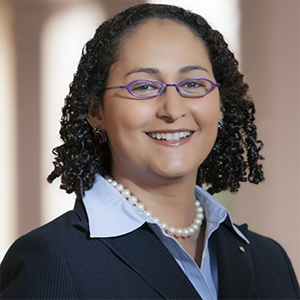
Stetson University College of Law Professor Ciara Torres-Spelliscy said Michael Bloomberg won’t have to raise money for his presidential bid, unlike most other candidates.
“He is a true billionaire. He actually has the money if he wants to go, you know, if he wants to spend half a billion dollars on a presidential run, he probably has that funding, and he can spend as much as, you know, other candidates who have been successful in the past.”
She notes, however, that such spending offers no guarantees.
“Now, we don’t have a great record of electing self-financed candidates. So, for example, Forbes ran as a self-financed candidate, and did not become president. Ross Perot ran as a self-financed candidate, and did not become president. We’ve never had a self-financed president win the candidacy, unless you’re going way back to, like, Washington. There’s always a roll for big money in politics. Only time will tell which model the American public finds more attractive.”
Law Professor Anne E. Mullins published Meta is Better in the North Dakota Law Review (94 N.D. L. Rev 325 (2019).
The article, divided into two parts, builds from the article Learning Intentionally and the Metacognitive Task by Professor Alleva and co-author Professor Jennifer Gundlach. Part I explores the core teaching and learning challenges Professors Alleva and Gundlach identified in civil procedure in the context of legal writing. Part II explores how metacognition (the critical awareness of one’s thinking and learning) can help address those challenges. The article includes concrete examples how Professor Alleva and Professor Mullins used metacognition in their classes. It also shares Mullins’s discovery that becoming more metacognitive about her role as a teacher promoted student learning in noticeable ways.
About Anne E. Mullins
Professor Anne E. Mullins joined the Stetson University College of Law faculty in Fall 2018 as an associate professor teaching research and writing.
The Child Support Enforcement Handbook provides students with an historical overview of child support and enforcement, including relevant federal and state legislative and statutory schemes. Decades of state and federal legislation, and their varying impacts, are presented to help readers decode this complex multibillion-dollar governmental enterprise.
The handbook begins by detailing the history of child support and enforcement and providing readers with a solid grounding in the various models and formulas used by states to determine the appropriate amount of child support in individual cases. Readers learn about the disparate impact of child support enforcement on families at the lowest socioeconomic levels and its importance in supporting the day-to-day livelihood of low-income parents. Additional chapters examine child support enforcement procedures, as well as challenges and issues that arise with enforcement, including paternity testing and presume parentage, same-sex parenting, assisted reproductive technology, and more.
Designed to help readers navigate an important and complex system, The Child Support Enforcement Handbook is an ideal resource for courses in family law, social work, counseling, and accounting. It can also serve as a helpful reference for practicing attorneys and those in helping professions.
About Cynthia G. Hawkins
Cynthia Hawkins teaches and writes in the area of family law, with a specialty in adoption law. She is the faculty coordinator for the Family Law Internship Program.
Kirsten Davis is a Professor of Law and Director of the Institute for Advancement of Legal Communication at Stetson University College of Law. She teaches Professional Responsibility, The First Amendment, Research and Writing I and II, Advanced Legal Writing, Legal Discourse and Rhetorical Theory, Freedom of Expression, and Comparative Freedom of Expression.
Co-authors of the article, which has more than 1,100 downloads, include Erin Okuno, Foreman Biodiversity Fellow and Adjunct Professor, as well as Dr. Kirsten Work and Dr. Ben Tanner of the Stetson University main campus in Deland, Fla.
From the abstract:
The Trump administration has proposed replacing the Clean Water Rule, a 2015 regulation that defined the statutory term “waters of the United States” to clarify the geographic jurisdiction of the Clean Water Act. Since its promulgation, the Clean Water Rule has been subjected to numerous judicial challenges. We submitted an amici curiae brief to the United States Court of Appeals for the Sixth Circuit, explaining why the Clean Water Rule, and its definition of “waters of the United States,” is scientifically sound. The definition of “waters of the United States” is a legal determination informed by science. The best available science supports the Clean Water Rule’s categorical treatment of tributaries because compelling scientific evidence demonstrates that tributaries significantly affect the chemical, physical, and biological integrity of traditional navigable waters (primary waters).
Similarly, the best available science supports the Clean Water Rule’s categorical treatment of adjacent waters based on geographic proximity. Compelling scientific evidence demonstrates that waters within 100 ft of an ordinary high water mark (OHWM) significantly affect the chemical, physical, and biological integrity of primary waters, as do waters within 100-year floodplains and waters within 1500 ft of high tide lines of tidally influenced primary waters or OHWMs of the Great Lakes. This review article is adapted from that amici brief.
About Royal C. Gardner
Professor Gardner is an internationally recognized expert in wetland law and policy. His projects include testifying before a World Bank arbitration panel, advising the government of Oman regarding wetland policy, coauthoring amicus briefs on behalf of environmental scientists, and creating interdisciplinary courses that facilitate discourse among experienced scientists, policymakers, and students.
His research and scholarship focus on U.S. and international wetland legal and policy issues, with an emphasis on biodiversity offsets. He has lectured in Africa, Asia, Europe, and North and South America.
Law Professor Jason Palmer wrote Emotional Intelligence and Homophobia for the Wake Forest Law Review in a symposium issue on Cognitive Emotion and the Law in fall 2019.
According to the abstract
Emotional intelligence dictates that individuals react in a certain way because they are wired to respond emotionally to certain triggers. These emotional triggers can be either positive or negative. Those who understand the use of negative emotional intelligence can channel manipulative behavior into concrete outcomes as a direct result of the feelings created. Negative emotional intelligence thus can be used to perpetuate groupthink, which leads to bias, prejudice, stereotypes, and stigmatization.
Bias, both deliberate and implicit, is still prevalent with
regard to the lesbian, gay, bisexual, and transgender (“LGBT’) community
despite the strides and advances that have occurred since the Supreme Court
ruling in Obergefell v. Hodges. This proposition is demonstrated in “religious
freedom” arguments presented in the Supreme Court case of Masterpiece
Cakeshop v. Colorado Civil Rights Commission. It is also apparent in the
Department of Defense’s “national security” approach to transgender
individuals. The use of these terms — “religious freedom” and “national
security” — allows people to mask their implicit bias and permits
marginalization of this minority group.
This article will demonstrate that by using the lenses of religious freedom, religious speech, and national security, anti-LGBT bias can be disguised and the dignity of LGBT individuals harmed. These lenses allow individuals to argue that it is not homophobic to refuse to bake a cake or take wedding photos, or that it is not transphobic to ban transgendered individuals from military service, but rather it is a principled stand based on religious beliefs and national security. To counter these negative attacks, positive emotional intelligence must be reinforced through reiterating and reflecting on how values such as equality and dignity should uphold the social good and not be used to harm a disenfranchised and minority group.
About Jason Palmer
Jason Palmer is the Leroy Highbaugh Sr. Research Chair and Professor of Law. He teaches legal research and writing, transactional document drafting, judicial opinion writing, law and sexuality, international litigation and arbitration, and complex litigation.
Ciara Torres-Spelliscy wrote Deregulating Corruption for the Harvard Law & Policy Review, Vol. 13, No. 2, 2019.
According to the abstract
The Roberts Supreme Court has, or to be more precise the five most conservative members of the Roberts Court have, spent the last twelve years branding and rebranding the meaning of the word “corruption” both in campaign finance cases and in certain white-collar criminal cases. Not only are the Roberts Court conservatives doing this over the strenuous objections of their more liberal colleagues, they are also breaking with the Rehnquist Court’s more expansive definition of corruption.
The actions of the Roberts Court in defining corruption to mean less and less have been a welcome development among dishonest politicians. In criminal prosecutions, politicians convicted of honest services fraud and other crimes are all too eager to argue to courts that their convictions should be overturned in light of the Supreme Court’s lax definition of corruption. In some cases, jury convictions have been set aside for politicians who cite the Supreme Court’s latest campaign finance and white-collar crime cases, especially Citizens United v. FEC and McDonnell v. United States.
This Article explores what the Supreme Court has done to rebrand corruption, as well as how this impacts the criminal prosecutions of corrupt elected officials. This Article is the basis of a chapter of Professor Torres-Spelliscy’s second book, Political Brands, which was published by Edward Elgar Publishing in late 2019.
About Ciara Torres-Spelliscy
Ciara Torres-Spelliscy is a professor teaching courses in Election Law, Corporate Governance, Business Entities, and Constitutional Law. Prior to joining Stetson’s faculty, Professor Torres-Spelliscy was counsel in the Democracy Program of the Brennan Center for Justice at NYU School of Law.
Associate Dean for Academic Affairs and Professor of Law Jason R. Bent’s article Is Algorithmic Affirmative Action Legal? was selected for publication in the Georgetown Law Journal and won the Southeastern Association of Law Schools (SEALS) Call for Papers contest. Bent also presented the article at the annual SEALS conference in Boca Raton, Fla.
According to the abstract
It is now understood that machine learning algorithms can produce unintentionally biased results. For the last few years, legal scholars have been debating whether the disparate treatment or disparate impact theories available under Title VII of the Civil Rights Act are capable of protecting against algorithmic discrimination. But machine learning scholars are not waiting for the legal answer. Instead, they have been working to develop a wide variety of technological “fairness” solutions that can be used to constrain machine learning algorithms. They have discovered that simply blinding algorithms to protected characteristics like sex or race is insufficient to prevent algorithmic discrimination. Given enough data, algorithms will identify and leverage on proxies for the protected characteristics.
Recognizing this, some scholars have proposed “fairness through awareness” or “algorithmic affirmative action” — actively using sensitive variables like race or sex to counteract unidentified sources of bias and achieve some mathematical measure of fairness in algorithmic decisions. But is algorithmic affirmative action legal? This article is the first to comprehensively consider that question under both Title VII and the Equal Protection clause of the Fourteenth Amendment. The article evaluates the legality of the leading fairness techniques advanced in the machine learning literature, including group fairness, individual fairness, and counterfactual fairness. The article concludes that existing affirmative action doctrine under Title VII and existing constitutional equal protection jurisprudence leave sufficient room for at least some forms of algorithmic affirmative action.
About Jason Bent
Jason Bent is the Associate Dean for Academic Affairs and a Professor of Law who teaches Civil Procedure, Employment Discrimination Law, Employment Law, Remedies, Federal Courts, and Worker Safety Law and Policy.
Ellen S. Podgor’s piece, A Small Slice of the Chicago Eight Trial, is published in volume 50 of the Loyola University Chicago Law Journal (2019) and examines how strong, steadfast criminal defense attorneys can make a difference in protecting key constitutional rights and values.
According to the abstract
The Chicago Eight trial was not the typical criminal trial, in part because it occurred at a time of society’s polarization, student demonstrations, and the rise of the House Un-American Activities Committee. Charges were levied against eight defendants, who were individuals that represented leaders in a variety of movements and groups during this time.
This Essay examines the opening stages of the trial from the lens of a then relatively new criminal defense attorney, Gerald Lefcourt. It looks at his experiences before Judge Julius Hoffman and highlights how strong, steadfast criminal defense attorneys can make a difference in protecting key constitutional rights and values. Although judicial independence is crucial to a system premised on due process, it is also important that lawyers and law professors stand up to misconduct and improprieties.
About Professor Podgor
Ellen S. Podgor is the Gary R. Trombley Family White-Collar Crime Research Professor at Stetson University College of Law. She teaches White Collar Crime, Criminal Law, International Criminal Law, White Collar Advocacy, Criminal Procedure: Adjudication, Diverse Issues in Advocacy, and is regularly quoted in major news outlets such as The Washington Post and Politico.
By Alexander C. Kafka The Chronicle of Higher Education Feb. 16, 2020
Professor Peter F. Lake
Excerpt
Colleges will have to tighten their belts amid the next recession and a subsequent mid-decade enrollment drop of roughly 15 percent. But one place they might not want to cut is their general-counsel offices.
That’s because on top of a widening list of free-speech, mental-health, regulatory, and other legal concerns, the forthcoming era of austerity will usher in a slew of new issues.
“I don’t think we’ve ever had to cope with the level of rightsizing we’re about to in higher education,” says Peter F. Lake, a higher-education-law expert at Stetson University. Tongue only slightly in cheek, he calls what’s coming the “edupocalypse.”
This week, the impeachment trial of President Donald Trump featured several controversial legal arguments.
Lou Virelli, professor of Constitutional law at Stetson Law School in Tampa Bay, joins 8 On Your Side political reporter Evan Donovan to break down the arguments on Battleground Florida, WFLA News Channel 8’s weekly local political show.
Watch the segment from the show or a full deep dive into the Constitutional framework surrounding the legal teams’ arguments on the station’s website at the link below.
Associate Dean Jason R. Bent’s article, OSHA, the Opportunism Police, was published in the Brigham Young University Law Review in early 2020.
From the Abstract
When is paternalistic regulation of risky work justified, and who should get to decide that question? The prevailing economic account of OSHA regulation is that market interventions are justified only by spillover and informational market failures. This article challenges that prevailing account by contending that worker safety regulations are also justified where necessary to enforce the relational expectations of employees, which are shaped not only by formal contract but also by social norms and norms internal to the employment relationship.
Drawing on the relational theory of contract, this article identifies an under-appreciated purpose for employment law: anti-opportunism. If preventing relational opportunism is a valid purpose for workplace safety law, then OSHA regulation is justified in a broader range of circumstances than has been generally assumed under more traditional analyses. This article contends that regulation is justified where necessary to prevent employers from engaging in self-interested behavior that runs contrary to the parties’ relational expectations. Applying this standard is a highly context-specific, fact-dependent task, which makes Congress’ decision to delegate enforcement authority to OSHA appropriate.