Intro to Practical Legal Skills is a new Stetson Law workshop for admitted students.
Stetson Law has created an innovative new workshop, Intro to Practical Legal Skills, to help soon-to-be first year law students start law school strong, confident and capable.
The 10-day online workshop is designed to give students a head start and make the most of their higher education investment. The workshop will focus on exposing admitted students to the fundamentals of legal education, the study of the law, critical reading, and more. In so doing, students will be familiarized with universal legal doctrines and will have opportunities to discuss important issues impacting law and society.
Students will also have the chance to learn from and interact with members of Stetson’s faculty and alumni. The goal is to ensure students discover what it means to be a Stetson Lawyer, have the opportunity to reflect on their own learning style, set personal goals for their legal education, and get a preview of what it’s like to interact in the classroom, online.
Jason Bent, Associate Dean for Academic Affairs and Professor of Law
Kristen Adams, Professor of Law and Director, Dispute Resolution Board
Brooke Bowman, Professor of Law and Director, Moot Court Board
As well as more than a dozen other professors with a variety of different areas of expertise.
A sampling of courses includes:
Finding Your Lens: Studying Law in Context
Listening, Critical Reading, and Thinking on Your Feet;
Law in the World Beyond Us: Cultural Competency and Global Citizenship.
Intro to Practical Legal Skills will run online from June 19–July 2. It is free of charge, not for credit, and is also open to rising seniors from Stetson University who may be interested in pursuing law school after graduation.
Nationally, this has been a difficult past week. Many are mourning the loss of loved ones to COVID-19, living in constant worry about the danger it poses to them, or suffering daily heartbreaks at the toll this virus has caused. No one is left untouched by the pandemic, and vulnerable communities are still reeling from its disproportionate impact.
As if these challenges were not difficult enough, national tensions are at their highest and race relations are strained. Black and brown communities are specifically vulnerable in all aspects. Times like these can challenge hope even in the most optimistic person. If you feel despondent and are seeking comfort or support, you are not alone. My source of hope is deeply tied to our collective mission to train global citizens and our specific calling to implement social justice in all we do.
In law school, we teach that our system guarantees due process, as well as freedom of speech and assembly. Lawyers on all sides work to protect these rights. And, our own College of Law’s mission of social justice and inclusion makes these legal guarantees priority. We are a learning institution, thinking and engaging in work that will benefit society. As we examine what is happening in our nation, I call on our students, faculty and staff to re-commit to strengthening our beloved community, to engaging with one another in loving and edifying ways, and to manifesting our mission of social justice through all our actions, internally and externally.
Beyond mere observers, we are all called to a measure of service. Our students are an integral part of the justice work, and they along with our faculty and staff, are called to uphold our core values. Those specifically state that we are committed to, among other things, ethics, civility, mutual respect, and integrity. I am proud of Stetson’s values and of the fact that we train leaders and change agents. What students do here and learn here will make a difference.
As Dr. King noted, “the arc of the moral universe is long, but it bends toward justice.” Despite our unsettled times, opportunities to effect positive change abound. This requires awareness, commitment, and deliberate work from all of us. I am confident that we are up to the task. And, above all, we at the College of Law are in this together.
Website honors 2020 spring grads until in-person ceremony takes place in December
Stetson University College of Law’s May 2020 commencement ceremony was rescheduled to Saturday, Dec. 19, 2020, due to COVID-19, but college officials did not want to let original date go unrecognized.
A Graduation Celebration website was created to commemorate the day and applaud graduates for their accomplishments. It features video messages from Dean Michèle Alexandre, Stetson University President Dr. Wendy B. Libby, and President-elect Dr. Christopher F. Roellke, as well as inspirational notes from alumni, student photos and more.
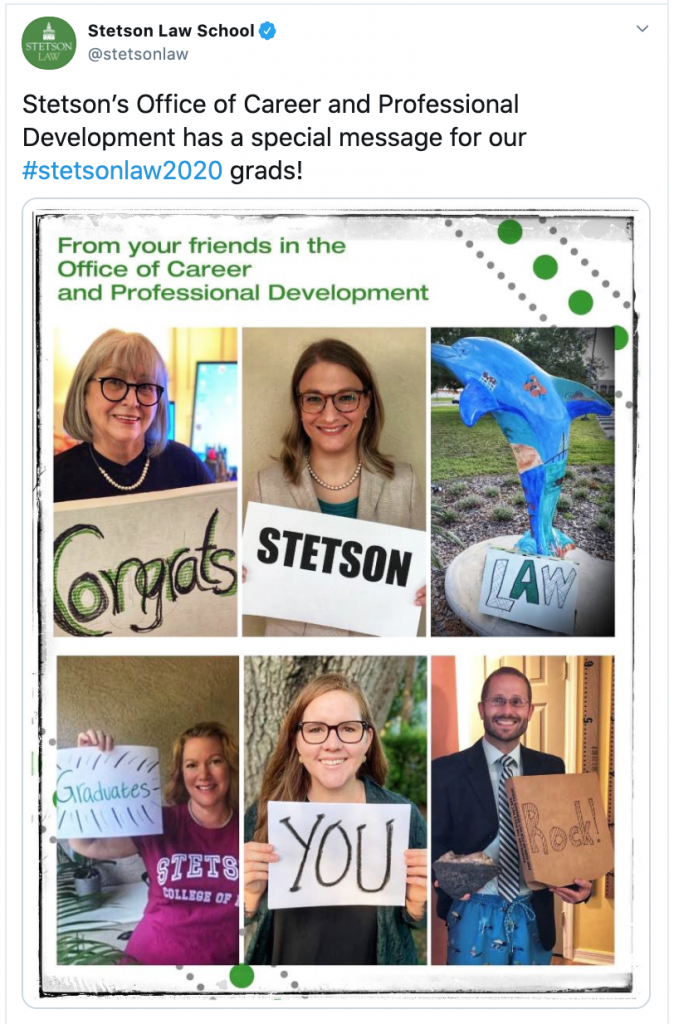
Various faculty and staff members also took to social media that day for well wishes and encouragement.
The traditional face-to-face graduation ceremony will take place in December, provided health guidelines at that time permit. The schedule is as follows:
Thursday, Dec. 17 – Graduation Brunch
Friday, Dec. 18 – Honors and Awards Celebration
Saturday, Dec. 19 – Graduation Ceremony
The graduating classes included in the events will be December 2019, May/August 2020, and December 2020. Given the special circumstances, the December 2020 finishers will have the unique opportunity to walk in and participate in this graduation ceremony.
The December 2020 Honors and Awards and Graduation ceremonies will replicate exactly the same tradition typically delivered each spring, including recognitions, speeches, photography, etc. As a special note, both President Libby and President Roellke will attend the graduation ceremony on Dec. 19, 2020.
Information about regalia and cords will be provided to students closer to the December graduation date.
Stetson University College of Law’s May 2020 commencement ceremony has been rescheduled for Saturday, Dec. 19, 2020, due to COVID-19.
“None of us could have foreseen how drastically the world would be changed come spring 2020. Graduation is incredibly important to all of us, and we do not take it lightly. We have agonized over the right remedy,” said Dean Michèle Alexandre.
College of Law officials considered all constituents and consulted multiple times with graduating students, including circulating two surveys to gather as much feedback as possible about their wishes.
Over 270 surveys were emailed to students, with 173 total votes received. The results were:
Virtual Graduation on May 16: 19.7% (34 votes)
Live Graduation at Future Date: 80.3% (139 votes)
Based on that, officials determined that the traditional face-to-face graduation ceremony will take place in December, provided health guidelines at that time permit. The schedule is as follows:
Thursday, Dec. 17 – Graduation Brunch
Friday, Dec. 18 – Honors and Awards Celebration
Saturday, Dec. 19 – Graduation Ceremony
The graduating classes included in the events will be December 2019, May/August 2020, and December 2020. Given the special circumstances, the December 2020 finishers will have the unique opportunity to walk in and participate in this graduation ceremony.
The December 2020 Honors and Awards and Graduation ceremonies will replicate exactly the same tradition typically delivered each spring, including recognitions, speeches, photography, etc. As a special note, both President Wendy Libby and President Chris Roellke will attend the graduation ceremony on Dec. 19, 2020.
Information about regalia and cords will be provided to students closer to the December graduation date.
As for the original May 16 date, even though students and their families cannot gather at the Gulfport campus as planned, the day will not go unrecognized. A virtual Graduation Celebration, featuring a special website honoring students and their accomplishments, will launch on May 16 (watch stetson.edu/law that day for details). It will feature video messages, photographs of the students, and a few other personalized surprises for them.
Hard copies of the formal Graduation and Honors and Awards brochures, as well as Honors and Awards plaques, will be mailed to students in June.
Considering the ongoing uncertainty regarding the current COVID-19 situation, college officials caution that any plans are dependent on guidance from state and local government and recommendations and standards from the CDC and the Florida Department of Health and could be subject to change.
Stetson Law Professor Ciara Torres-Spelliscy was part of a group of bipartisan and diverse scholars and thinkers in the areas of law, technology, politics, and media that created a new report to offer guidance on how to conduct fair elections during a nationwide crisis.
It contains 14 recommendations for specific actions that key players – meaning members of the media, civic leaders, social media platforms, and government officials – should take now to minimize the chances of an election meltdown in November.
What’s the reason for concern?
Even before the worldwide COVID-19 pandemic arrived in the United States, observers of American democracy questioned the public’s faith and confidence in the results of the upcoming November 2020 U.S. elections. Concerns about peaceful transitions of power were less common a decade ago, but Americans can no longer take for granted that election losers will concede a closely-fought contest after authorities (or courts) have declared a winner. Hyperpolarization, misinformation on social media, election administration errors, foreign interference, and increasingly incendiary rhetoric around the fairness of American elections have caused public confidence in the fairness and accuracy of American elections to plummet. The COVID-19 pandemic has only exacerbated these concerns.
Recognizing the need for multifaceted solutions to the issue of the legitimacy and acceptance of fair election results in the United States, Richard L. Hasen, Chancellor’s Professor of Law and Political Science at the University of California, Irvine (UCI), convened a committee to tackle this issue from an interdisciplinary perspective.
“The American election system is under tremendous stress, and if nothing is done, we face a potential political crisis on top of the health and economic crises brought on by COVID-19,” Hasen said in a press release. “I am confident that the report’s specific, actionable recommendations — carefully crafted by scholars and leaders from across disciplines and the political spectrum — can advance both the actual fairness of the 2020 U.S. elections and the public’s confidence in them.”
What are the proposed solutions?
A key recommendation is that the media educate the public about how election counts may take longer than past years and vote margins may change during the count as election officials process large numbers of mail ballots, especially in key battleground states such as Pennsylvania and Michigan. The committee also offers a number of recommendations to ensure both election integrity and voter access during the COVID-19 pandemic.
Those include:
States should adopt reforms to improve the absentee ballot and provisional ballot processes—both in terms of access and security.
States should modify election procedures as necessary to deal with the rise of COVID-19, such as having a diversity of avenues for voting—in-person, absentee, curbside, on-site at hospitals and other such facilities.
Media organizations should engage in a public information effort to provide voters with accurate information about the process by which election officials count votes and determine election winners.
To the extent possible, states should use paper ballots or electronic machinery that produces a voter-verifiable record of the voter’s choices, in the November 2020 elections to ensure the integrity of the outcome.
Q&A with Professor Ciara Torres-Spelliscy on her role
Professor Ciara Torres-Spelliscy.
Q. How and why did you get involved?
A. I was invited to join the group by Professor Rick Hasen of UCI Law. The conference had an intriguing premise, e.g., “Can American Democracy Survive the 2020 Elections?” I was inspired to participate because one of the goals was to draft a working paper that would be of use to policy makers who want to improve the resiliency of American elections for 2020. This reminded me of the work that I did as a lawyer at the Brennan Center’s Democracy Program.
Q. Did you learn anything new or unexpected from the process?
A. Most of my academic work is about campaign finance—how candidate elections are funded by private parties. This project focused on how elections are run by state and local governments. So this project allowed me to consider a whole new range of problems with how American elections are administered including the new challenges such as the need for widespread vote by mail that may arise if there is big spike in COVID-19 cases around the November election.
Q. Is there anything Stetson, as a law school, can or should be doing to help ensure a fair election in our community?
A. I encourage all Stetson students who are American citizens to register to vote and to vote in the election. Voter registration drives are going to have to be modified for safety because of the on-going coronavirus pandemic. I would encourage those who want to do voter registration drives to use their voices on social media to encourage their fellow Floridians to register to vote: https://registertovoteflorida.gov/home.
Students can also volunteer to be poll voters who work election day in a certain precinct and poll workers who work at early voting locations. For those in Pinellas County (St. Petersburg and Gulfport) you can find more information here: https://www.votepinellas.com/Election-Worker. Stetson Law will typically grant non-legal pro bono credit for being a poll worker.
Q. What about claims that voting by mail invites fraud?
A. This is a false narrative that has been investigated and written about extensively. At least five states already use mail balloting as the primary method of voting, and all voters have had the right to vote by mail ballot if they choose in at least 28 other states. In 2018, more than 31 million Americans cast their ballots by mail (about 25.8 percent of election participants). Despite this, fraud rates remain incredibly low. And states implement security measures including identity verification, ballot tracking through the U.S. Postal Service, secure drop-off locations and drop boxes, harsh penalties and more to help prevent fraud.
Q. Is there anything else you’d like to add?
A. In Florida, any voter can request to vote by mail. Just contact your local Supervisor of Elections, and they will send you a ballot for the November election. For example, if you live in Tampa, then you contact the Hillsborough Supervisor of Elections to vote by mail: https://www.votehillsborough.org/VOTERS/Vote-By-Mail. This is likely the most convenient and safest way to vote during a pandemic.
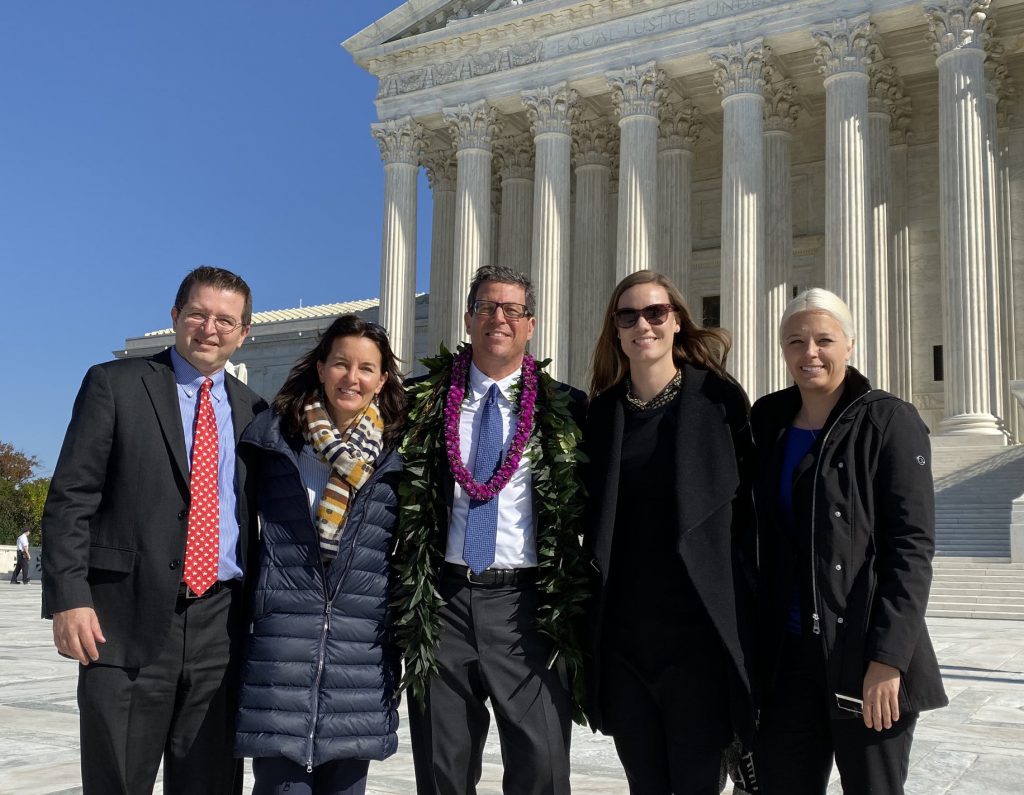
A Stetson contingent attended oral arguments before the United States Supreme Court in November 2019. Pictured, from left: Stetson Professor and Director of the Institute for Biodiversity Law and Policy, Royal Gardner; attorney Kathleen Gardner of Pollack Solomon Duffy LLP; attorney David Henkin from Earthjustice who argued the case; 3L Kate Welch; and Erin Okuno, assistant director of Stetson’s Institute for Biodiversity Law and Policy.
Stetson Law professors and students can stake a claim in a Clean Water Act (CWA) case recently decided by the U.S. Supreme Court that has nationwide implications.
Last summer, Stetson Law’s Institute for Biodiversity Law and Policy filed an amici curiae (“friend of the court”) brief in the U.S. Supreme Court in County of Maui v. Hawaii Wildlife Fund et al. on behalf of aquatic scientists and scientific societies. On April 23, the Court referenced that brief in its 6-3 decision, which held that the CWA covers the functional equivalent of direct discharges of pollutants to navigable waters.
The ruling emphatically rejected the County of Maui and the Trump administration’s attempt to restrict the CWA to direct discharges of pollutants, which would have categorically excluded pollutants conveyed through groundwater, said Royal Gardner, director of the Institute for Biodiversity Law and Policy. It also validated and elevated the importance of science and its role in determining when and how the CWA applies.
“From our perspective, the decision emphasized that science matters,” Gardner said.
Background
The Clean Water Act is a federal law that regulates the discharge of pollutants to the nation’s waters, including lakes, rivers, streams, wetlands and coastal areas. At issue in the Maui case was whether the CWA requires a permit for the discharge of pollutants when the pollutants leave a source and travel through groundwater before reaching navigable waters.
The Lahaina Wastewater Reclamation Facility in Lahaina, Hawaii (Maui County), discharges treated wastewater into the ground with its injection wells, which utilize the earth’s soil as a filter to further clean treated wastewater before it reaches a water source. However, a 2013 study confirmed the pollutants flowed underground from the treatment plant and reached the Pacific Ocean.
Environmentalists sued Maui County and prevailed in the U.S. District Court and Ninth Circuit Court of Appeals. Maui County requested the U.S. Supreme Court to hear and review the case. The county acknowledged the wastewater treatment facility is polluting the Pacific Ocean but argued the CWA covers only discharges directly to a surface water source and not a discharge to a surface water source through a groundwater pathway.
Connecting researchers with decisionmakers
Professor Gardner and Erin Okuno (assistant director of the Institute for Biodiversity Law and Policy) co-authored the brief with a team of attorneys that included Kathleen Gardner (Pollack Solomon Duffy LLP), Christopher Greer (White & Case LLP), and Dr. Steph Tai (University of Wisconsin Law School). The brief sought to explain basic hydrologic concepts, as well as the methods and tools scientists use to track pollutants in groundwater and surface water back to their source. The brief argued that science should inform the courts and agencies’ legal interpretation of when and how the CWA applies to pollutants that reach navigable waters.
Mark Rains, professor and director of the School of Geosciences at the University of South Florida, was one of several scientists who helped write the amici brief. His research is focused on hydrological connectivity and the role that science plays in informing water-related law, policy, and decision-making. He said water laws, in particular, can be challenging to understand because so much of what transpires with water is not visible because it is happening underground.
Rains said he was glad to be part of a team of experts who worked to illuminate that process so that the Supreme Court justices would be armed with the knowledge they would need to make an informed decision in the case. Ultimately, the decision was so well written and nuanced, Rains said, it was clear the justices understood and internalized much of the data in the amici brief.
“I told my students that it was a win for science,” he said.
Real world learning
The entire process—from collaborating on scientific and legal research, to blending scientific and legal writing, and observing the oral arguments before the Supreme Court in the fall—was also a win for students, both at Stetson and the collaborating universities. It created and will continue to provide a wellspring of learning opportunities.
“There’s tremendous value for students to see how the legal system plays out in real life and real time and how their professors play an active role,” Gardner said, adding that he provided updates on the case as part of the regular classroom coursework.
Justice Stephen Breyer’s decision also will provide a good example for legal research and writing classes on the use of text, structure, purpose, and legislative history in statutory interpretation, Gardner noted.
For Rains, he and his graduate students were able to see how traditional scientific prose could be tweaked and blended with legal writing to produce a finished product that was both accurate and effective. There may perhaps have been an even greater professional lesson: many in the scientific community believe they must remain disengaged from civic discourse to maintain the purity of their work. But impartiality and civic engagement don’t have to be mutually exclusive, Rains said. Scientists can contribute to civic discourse by sharing their work and thereby educating decisionmakers on how science can inform their efforts.
Professor Arie Trouwborst’s presentation was titled, “Domestic Cats and International Wildlife Law – Turning a Blind Eye to One of the World’s Worse Invasive Alien Species?”
Arie Trouwborst, associate professor of environmental law at Tilburg University in Tilburg, the Netherlands, gave the final Edward and Bonnie Foreman Biodiversity Lecture of the spring semester on April 1 as part of the 20th International Wildlife Law Conference. The event, originally planned for two days on Stetson Law’s campus in Gulfport, switched to an entirely virtual platform because of the COVID-19 pandemic, so Trouwborst delivered his lecture via GoToWebinar.
His topic is a controversial one: Domestic Cats and International Wildlife Law – Turning a Blind Eye to One of the World’s Worse Invasive Alien Species?
Regardless of how one feels about Trouwborst’s research conclusions, one fact is indisputable: “Cats hunt and kill wildlife,” he said.
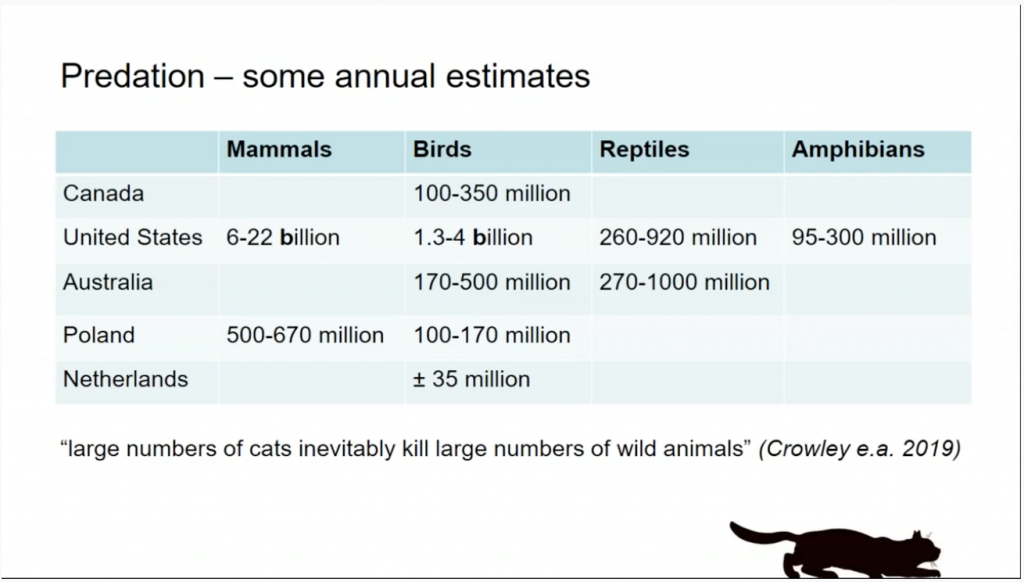
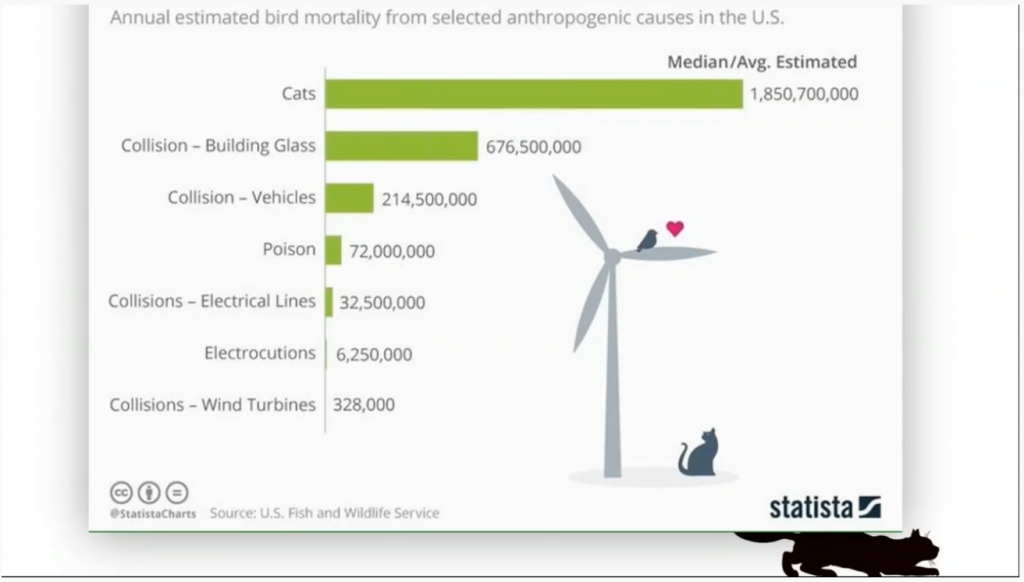
In the United States alone, cats kill billions of mammals and birds every year – much more than are killed by human-related causes such as wind turbines, power lines, and automobile collisions. A global study released in March 2020 found that pet cats kill between 4-10 times more wildlife per hectare than comparable native predator species.
“So forget that line that you often hear that pet cats are just playing the same role in the ecosystem that would otherwise be played by natural, native predators,” Trouwborst said.
The negative impact of domestic and feral cats goes beyond just killing. Other damaging effects include:
Disturbance or fear effects – for example, one study showed that briefly placing a taxidermied cat near a blackbird nest reduced subsequent feeding of their young by 1/3;
Competition – cats compete with other wild animals such as owls for small prey;
Disease – cats introduce rabies, feline leukemia and other diseases to native wildlife; and
Hybridization – cats mate with some wild species of cats, thereby affecting the gene pool.
What are the possible remedies? There are a few, but each has its own shortcomings.
Sterilization – It can stop cats from reproducing but does not halt many of their other damaging effects listed above;
Fit cats with bells, brightly-colored bibs, etc. – Those may alert adult birds and mammals to a cat’s presence but are less effective on baby birds and mammals; and
Cat-proof fencing – It can be effective in protecting specific areas inhabited by vulnerable native wildlife, but it can also be expensive, impractical at a large scale, and still has a high failure rate.
The only thing that really works is simply keeping cats indoors at all times, Trouwborst explained. This has added advantages that pet cats won’t get diseases, be hit by a car, attacked by a coyote, or face other such risks when roaming free.
Statistics on annual bird mortality from various causes shows cats are responsible for more bird deaths than collisions with buildings or any other human cause.
How do international wildlife laws address the issue? That’s what Trouwborst and his colleagues set out to learn. They quickly realized that laws are often unequally applied when it comes to cats. In the Netherlands, for example, the Egyptian goose is considered an invasive species and subject to eradication, but the feral cat may not be killed. A human must have a hunting license to kill certain birds, but there are no such restrictions against that same human’s pet cat killing said birds.
Trouwborst explained that dozens of international legal instruments have some applicability to cats, and they fall into three main categories:
Rules concerning invasive alien species – to prevent and control those that are harmful to native populations. Most such laws prevent the introduction of and/or control or eradication of those alien species that threaten ecosystems, habitats or other species.
Rules concerning site protection – areas important to the conservation of specific species and protect them from damage or disturbance, including that caused by cats. Such obligations can be triggered when domestic cats pose a threat to any wildlife which the site in question is meant to protect.
Rules concerning species protection – for example, Article 5 of the European Union’s Birds Directive prohibits the deliberate killing or capture of native birds by any method, the deliberate destruction of or damage to their nests or eggs, the taking of their eggs from the wild, and the deliberate disturbance of these birds during periods of breeding a rearing.
Trouwborst and his colleagues found that pet owners and decision makers have had no qualms about restricting essentially all other companion animals. Dogs, snakes, ferrets, etc. all must be under the owner’s control at all times. Yet cat owners are unwilling to restrict their pets, and government officials are unwilling to admit domestic cats are a problem, much less address it. Trouwborst and his colleagues hypothesized this reticence was motivated by fear of becoming unpopular with parts of their constituencies. They were proven right when they published their findings in November 2019 and February 2020.
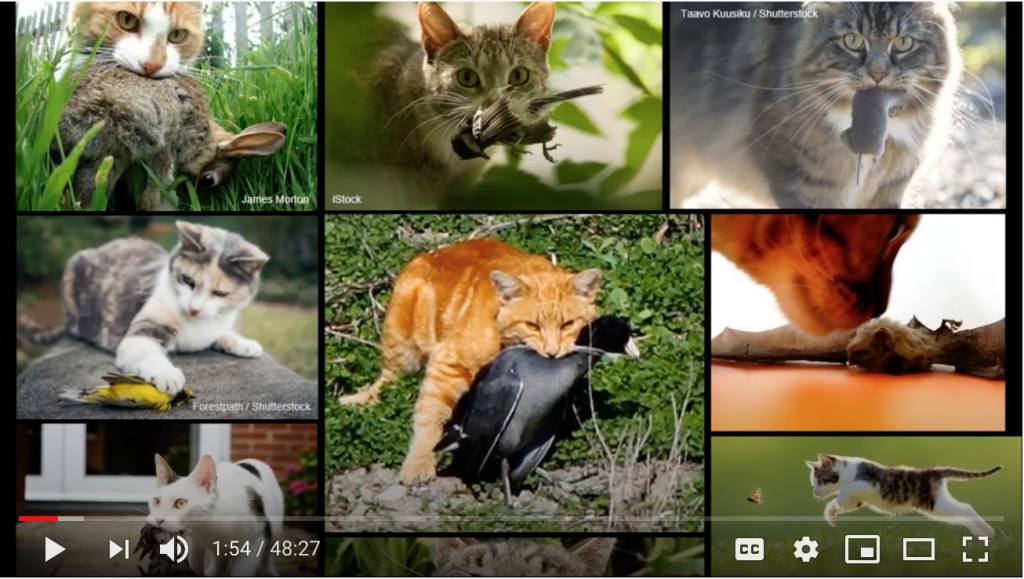
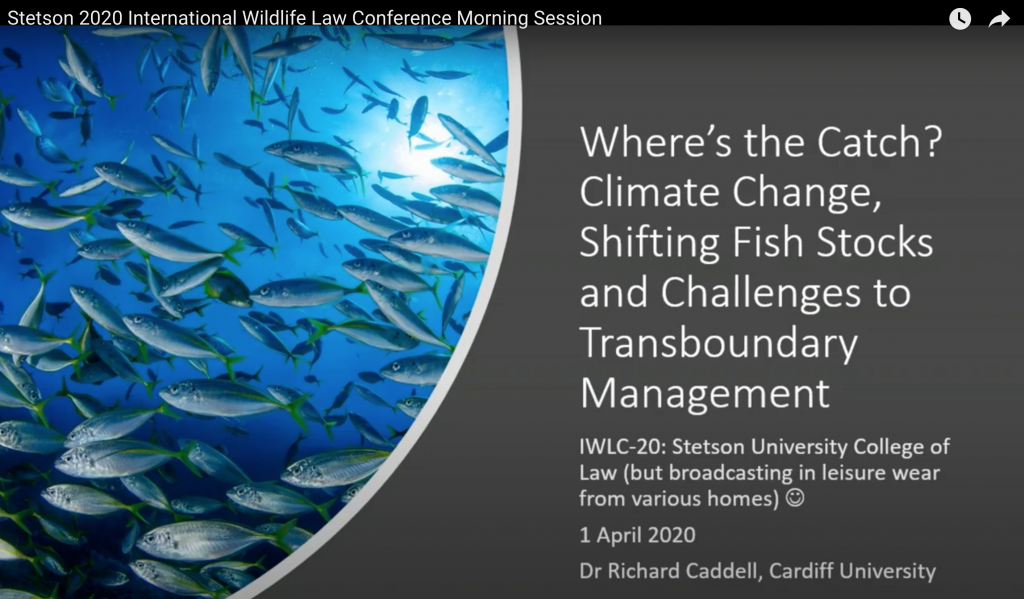
One of the slides from Trouwborst’s presentation shows the myriad prey domestic cats catch.
The researchers gave one exclusive interview, and soon after the story circulated, their phones wouldn’t stop ringing. Local, national and international media and social media went crazy. Their published research papers got more online traffic than all other law literature published last year, including papers on gun laws.
Aggression, ridicule and dismissal out of hand were the primary reactions. They also received vicious criticism and even death threats. Government officials in the Netherlands and the EU completely dismissed the scientific findings and even went so far as to dub Trouwborst and his colleagues “lunatic pseudo-scientists.”
Despite the backlash, Trouwborst remains confident in the research and conclusions. It is difficult to tackle most drivers of biodiversity loss, such as habitat degradation, climate change, and unsustainable agriculture. By comparison, addressing the free ranging cat problem is easy, he said.
“This is low hanging fruit, and it’s a shame not to pick it.”
Trouwborst likens people who are used to being able to let their cats out with people who were accustomed to being able to smoke cigarettes indoors. The change in practice was an annoyance for smokers, but it required balancing the individual’s freedom with that of others and the greater good. Smoking indoors was banned because of increased knowledge of public health effects. Trouwborst argues similar restrictions should be placed on cats because we now know their devastating effect on biodiversity.
The 20th International Wildlife Law Conference was entirely online this year because of the coronavirus pandemic. All presentations are available on Stetson Law’s YouTube Channel.
By George Thurlow Second-year Law Student Stetson University College of Law
Stetson Law hosted the 20th International Wildlife Law Conference (IWLC-20) on April 1- 2, 2020, and the two days were packed with presentations from a variety of professionals involved in wildlife conservation, including lawyers, academics, and scientists on topics such as invasive species, trophy hunting, marine biodiversity, and climate change and its impact on wildlife treaties.
The COVID-19 outbreak forced the conference to move to an online-only format, but it kicked off with an opening presentation from Stetson’s own Paul Boudreaux, followed by the final Edward and Bonnie Foreman Biodiversity Lecture of the spring, and a mix of panels and keynote speakers.
The first keynote speaker, Dr. Mar Campins Eritja from the Universitat de Barcelona, discussed ITLOS’ Judicial Interpretation of the Precautionary Principle Within the Framework of the UNCLOS. (Acronyms are very common in the field of environmental law, so for the uninitiated, ITLOS is the International Tribunal for the Law of the Sea, and UNCLOS is the United Nations Convention on the Law of the Sea.) Dr. Eritja discussed how these interact with the precautionary principle—essentially, if the impacts of something are unknown, a high degree of caution should be taken.
A slide from one of the panel presentations; all of the participants were great sports who adapted graciously to the online version of the conference.
A law student panel on Wildlife and Animal Welfare followed Dr. Eritja’s presentation. It consisted of four presentations from law students in the United States and Canada, including one from Stetson student Kate Welch, J.D. ’20. These topics generally touched on threats to species that are facing some form of endangerment, from seals in Canada, to critical animals that are often seen as “vermin” on farms, to sharks, to trafficked animals (Welch’s topic). Welch’s interest in trafficked animals comes from experience she had at an elephant sanctuary in India the summer after her 1L year and subsequent involvement in Stetson’s environmental law programs.
Another panel featuring Professor Volker Mauerhofer of Mid Sweden University and Stetson student Emily Preu J.D. ’20 tackled the Challenges with Invasive Species and Other Wildlife. The afternoon concluded with two presentations—one on China’s Wildlife Law and Public Health by Prof. Dr. Tianbao Qin and another on climate geoengineering by Dr. Wil Burns.
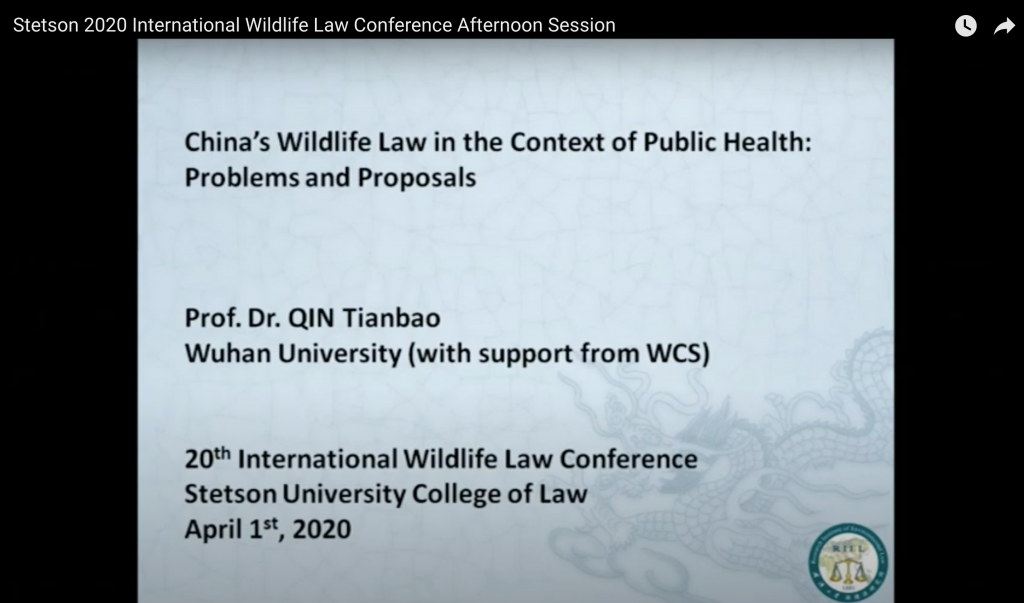
Professor Dr. QIN Tianbao’s presentation on China’s Wildlife Law in the Context of Public Health was of particular relevance. It begins at 3:20:28 on the Day 1 afternoon YouTube link.
Dr. Qin’s presentation was especially pertinent given the current theory that COVID-19 originated from animals in China and has since posed the greatest global public health threat in a century, while Dr. Burns’ topic was especially relevant in Florida. All of the day’s presentations, as well as the second complete day of the conference, can be viewed in three parts on Stetson Law’s YouTube channel.
Overall, it was an information-packed afternoon. When asked about the conference, Preu said it was “an awesome experience” and that “everyone really put together very thought-provoking presentations” despite the last-minute move online.
IWLC-20 was coordinated by the Institute for Biodiversity Law and Policy at Stetson University College of Law and co-sponsored by the Environmental Law Center at the University of Cologne, the Institute of Environment Education and Research at Bharati Vidyapeeth University, Tilburg University, and the University of Barcelona Faculty of Law. Stetson last hosted the conference in 2016; it was held in Barcelona last year. When this event is hosted at Stetson, it occurs in conjunction with the Stetson International Environmental Moot Court Competition.
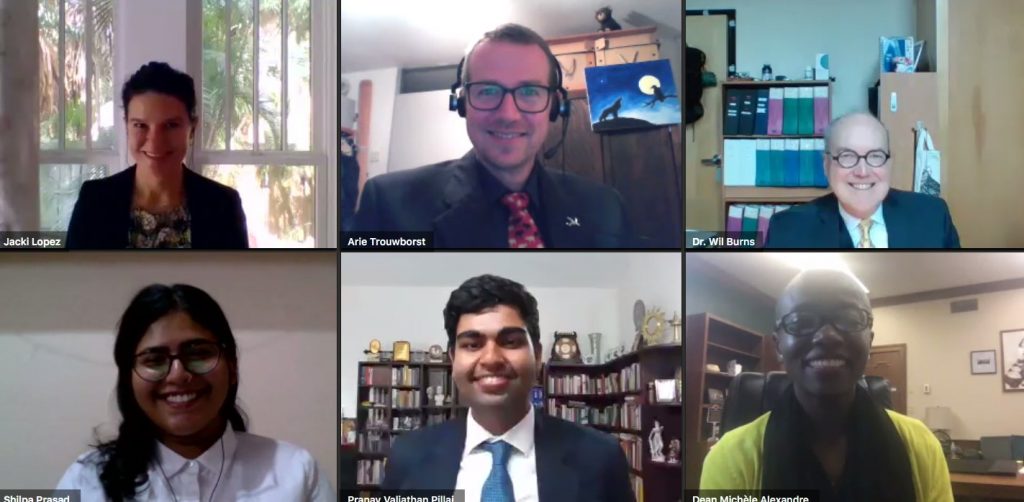
Shilpa Prasad and Pranav Valiathan Pillai from National University of Advanced Legal Studies (NUALS) in Kochi, India, won the 24th Annual Stetson IEMCC. They are pictured here with the competition judges and Stetson Dean Michèle Alexandre.
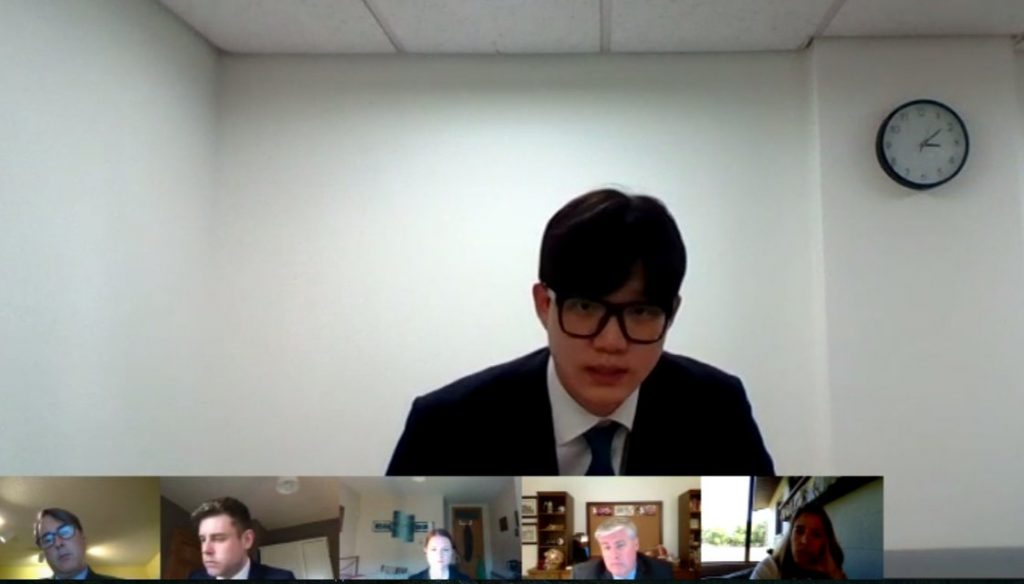
The 24th Annual Stetson International Environmental Moot Court Competition (IEMCC) looked a little different this year because of the coronavirus pandemic, but 17 teams from 10 jurisdictions participated virtually over the course of three days, April 2-4, 2020.
Shilpa Prasad and Pranav Valiathan Pillai from National University of Advanced Legal Studies (NUALS) in Kochi, India, emerged as champions. Rayana Mukherjee and Aaditya Shankar Dixit from National Law Institute University in Bhopal, India, were runners-up.
NUALS also received the award for the best memorial, and all of the teams that participated in the virtual rounds received the Spirit of Stetson Award. The full results are below.
The competition was held in conjunction with the International Wildlife Law Conference this year, and both events were moved online in light of travel restrictions and social distancing. The conference presentations can be viewed in their entirety on Stetson’s YouTube Channel, and clips from the IEMCC are available on its Facebook page.
Students logged on at all hours—even 3 a.m.—as they competed from around the globe.
It was a community-wide effort involving many people and departments from Stetson Law, including Media Services, Communications and the Web Team, Faculty Support, International Programs, the Advocacy Center, the Office of Professional Education, and the Business Office to make the virtual versions of the events a success, said Royal Gardner, director of the Institute for Biodiversity Law and Policy.
“The students were very much appreciative,” he said, and shared an excerpt of an email from one of the competing teams.
After having booked our flights and made plans to meet you all in Florida, we were extremely disappointed to find out that the rounds had been canceled due to the pandemic. We were rather hesitant to even take part in the virtual rounds.
But after having gone through this unique virtual experience, we are truly overwhelmed with the kind of resilience, support, and patience your organizing team displayed. We cannot even imagine how difficult it must have been for you to coordinate with the judges, teams, and volunteers and take such tireless efforts to conduct this moot so smoothly. We had a wonderful time and every single moment was perfect. Please thank all the volunteers on our behalf.
Once again, thank you for spearheading these efforts and giving us this chance. It truly means the world to us.
24th Annual Stetson International Environmental Moot Court Competition
International Finals – Virtual Rounds
April 2–4, 2020
Oralist Awards for the Preliminary Rounds:
Fifth Place Oralist: Rayana Mukherjee, National Law Institute University, Bhopal – 2000
Fourth Place Oralist: Lin Shi Yuan, National Taiwan University – 2083
Third Place Oralist: Beatriz Anna S. Balbacal, University of the Philippines College of Law – 2039
Second Place Oralist: Shilpa Prasad, National University of Advanced Legal Studies, Kochi – 2099
Best Oralist in the Preliminary Rounds: Urania Estrellita Amelia Remedios P. Lindo, University of the Philippines College of Law – 2039
Memorial Awards:
Third Place Memorial: National Taiwan University – 2083
Runner-up Best Memorial: Ateneo de Manila University School of Law – 2040
Best Memorial: National University of Advanced Legal Studies, Kochi – 2099
Semifinalists:
George Washington University Law School – 2009
Law Society of Ireland – 2032
Final Round:
Runner-up: National Law Institute University, Bhopal – 2000
International Finals Champion: National University of Advanced Legal Studies, Kochi – 2099
Best Oralist in the Final Round: Rayana Mukherjee, National Law Institute University, Bhopal – 2000
Spirit of Stetson Award:
All teams that participated in the virtual rounds of the competition
View photos from the competition
A gallery of photos from the virtual rounds of the competition is available on Zenfolio.
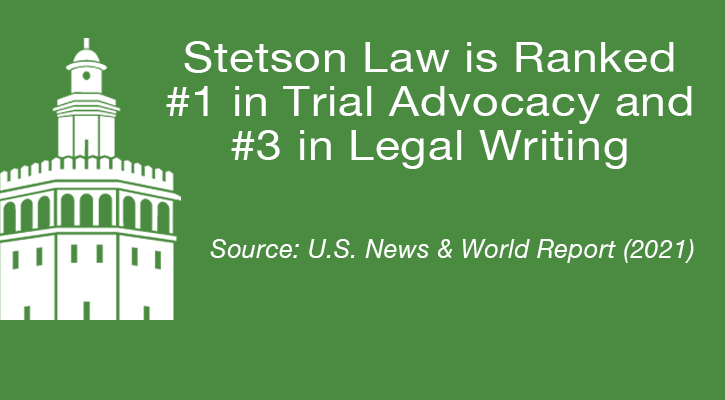
For the 22nd time, Stetson University
College of Law is ranked the No. 1 school for Trial Advocacy in the United States,
according to U.S. News & World Report. Stetson is ranked No. 3 for
Legal Writing.
“It is a remarkable accomplishment to be ranked number one in Trial
Advocacy for the 22nd time,” said Stetson University President Wendy B. Libby,
Ph.D. “This steadfast dedication to excellence underlines Stetson’s commitment
to a rigorous education where innovative faculty are deeply invested in
ensuring our law students become outstanding legal advocates in their
communities.”
This year marks
Stetson Law’s 120th anniversary, and since its inception, the
college has required its students to enroll in a practice court advocacy
course. In fact, it is believed to be the first academic course of its kind at
a law school. Through the Center for Excellence in Advocacy, Stetson continues to take seriously that
legacy of molding practice-ready lawyers every day.
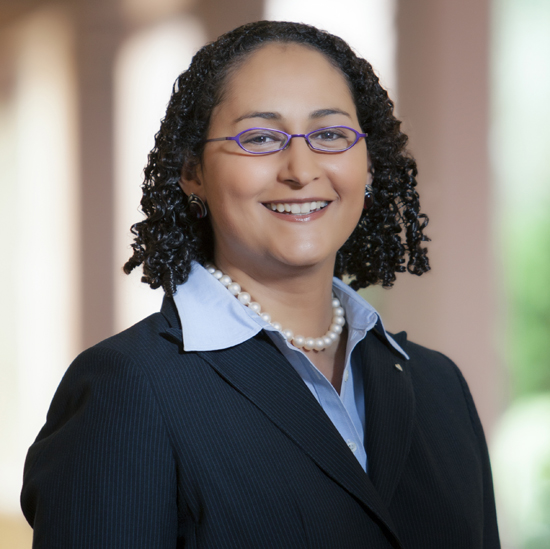
Dean Michèle Alexandre
“Stetson has remained
among the top programs in the country for Trial Advocacy for more than a
quarter of a century and in legal writing for more than a decade,” said Stetson
Dean Michèle Alexandre. “We are incredibly proud of these accolades, as they
reinforce that our mission – to transform students into advocates who are compassionate,
ethical, powerful, persuasive and overall committed to excellence, not only in
the legal profession, but in service to their communities – continues to thrive.”
Just as important as trial advocacy, legal
writing is a bedrock skill for any practicing lawyer. Stetson’s legal research
and writing curriculum provides students the tools to hone their ability to
complete sophisticated legal analysis and to write clearly and persuasively. The
faculty, through Stetson’s Institute for the Advancement
of Legal Communication, pursue scholarship and leadership in legal writing.
Dr. Kristen K. Davis
“Our mission has
always been to lead the way in legal communication,” said Dr. Kirsten K. Davis,
director of the Institute for the Advancement of Legal Communication. “That
Stetson ranks among the top legal writing programs in the country is feedback
that our program is forward-thinking and our curriculum robust. We are
thrilled.”
The Stetson BLSA Trial Team and Dispute Resolution Team members with their coaches. From left: Whitany Lewis, Abigail Dean, Emeraude Lerebours, Professor James Sheehan, Coach Justin Scott, Noel Gonzalez, Jasmine Mattear, and Conklin Howard.
Stetson Law’s BLSA Trial Team and Dispute Resolution Team extended the long green line of Stetson success with second and third places, respectively, in competitions at the 52ndNational Black Law Student Association (NBLSA) Convention in Cincinnati, Ohio, March 6-8, 2020.
The Trial Team placed second overall out of 17 teams in the Constance Baker Motley (CBM) Mock Trial Competition, missing the title by a single point. The Dispute Resolution placed third out of 12 teams in the Nelson Mandela International (NMI) Negotiation Competition. The NBLSA hosts three competitions during the convention, and Stetson was the only school to place in the top 3 in more than one contest.
Noel Gonzalez, Emeraude Lerebours, Coach and alumnus Justin Scott, Jasmine Mattear, and Conklin Howard placed second in the trial team competition.
The students
had to overcome some distinct hurdles: All of the team members were competition
rookies; though Stetson BLSA teams have attended the CBM Trial Competition in
the past, they made never made it to Nationals; and this was the first time
Stetson BLSA competed in the NMI Negotiation Competition.
Trial Team
members were Noel Gonzalez, Emeraude Lerebours, Jasmine Mattear, and Conklin
Howard. Dispute Resolution Team members were Abigail Dean and Whitany Lewis.
Stetson Alumnus Justin Scott and Professor James Sheehan served as coaches.
“I am
grateful for the opportunity to coach this talented group of advocates – it
makes coaching easy! None of this would have been possible without the vision
and dedication of BLSA President Forest Sutton and the unrelenting support and
dedication of Professor Julia Metts and the Advocacy Center,” Scott said.
Stetson BLSA Dispute Resolution team Whitany Lewis and Abigail Dean took third at nationals.
It was
Sutton, a veteran of Stetson’s Trial and Dispute Resolution teams, who sought
to revive a Stetson BLSA contingent of competition teams, said Julia Metts,
director of trial programs.
“I
couldn’t have been more excited to help,” Metts said. “I knew we could do great
things, but I had no idea that the team would make it to Nationals in their
first competition. And then be a finalist at Nationals!”
“Great things are possible when we give students, who have the courage to dream, the support to accomplish those dreams,” she continued. “Forest and the BLSA board organized tryouts, found a coach, supported the team during practices, and helped make this moment possible.”
Sutton, for his part, was just as pleased with the teams’ results this year and believes future students can build on the momentum.
“I couldn’t be more proud of each competitor who dedicated so much time and effort into developing their advocacy skills, but also representing BLSA at a national competition,” Sutton said. “To have gone out and made Stetson’s name known in a brand new setting is simply remarkable. Additionally, the support BLSA received from other students, faculty members, and alumna Brielle Tucker makes me optimistic about the success BLSA can build upon in the coming years.”
EDITOR’S NOTE: This event was postponed due to COVID-19 and rescheduled to Nov. 13, 2020. Read about the new event here.
GULFPORT, Fla. – The Tax Law Society at Stetson University College of Law will present the Stetson Tax Innovators Exchange (S.T.I.X.) on March 31, 2020, featuring IRS Deputy Director Sunita Lough and renowned tax attorney Marc Simonetti.
S.T.I.X. is a new and forward-thinking tax law
collaboration event focused almost exclusively on tax practitioners – those
working in the trenches every day. The nation’s top tax attorneys will
dive into bleeding edge approaches to the practice of tax law and lead group
discussions
where practitioners can
share challenges they face…and have a room full of the greatest tax minds in
the country grab a white board and work the problem out with them.
This
interactive seminar will feature topics that run the gamut, but the overall
goal is to ensure attendees leave armed with useful new techniques to advance not
only their practice, but the field itself.
The
first event in this innovative annual series will feature presentations by:
Sunita
Lough, the new IRS Deputy Commissioner of Enforcement and
Services – A graduate of George Mason
University Law School with an LLM in Taxation from Georgetown University School
of Law, Lough has filled a variety of roles in her 25 years with the IRS.
Marc
Simonetti, partner with Pillsbury Winthrop Shaw Pittman LLP – Recognized by Chambers USA: Guide
to Leading Business Lawyers in the area of tax, Simonetti is well known for
his expertise in state and local taxation.
This event is sponsored by the Tax Section of The
Florida Bar. Cost is $40 and includes two CLE credits and refreshments,
followed by a networking opportunity with open bar.