Think back to your childhood, and your clearest memories of that time. Maybe you recall details of a family vacation, your best friend, a move that took you to a new city or a new school.
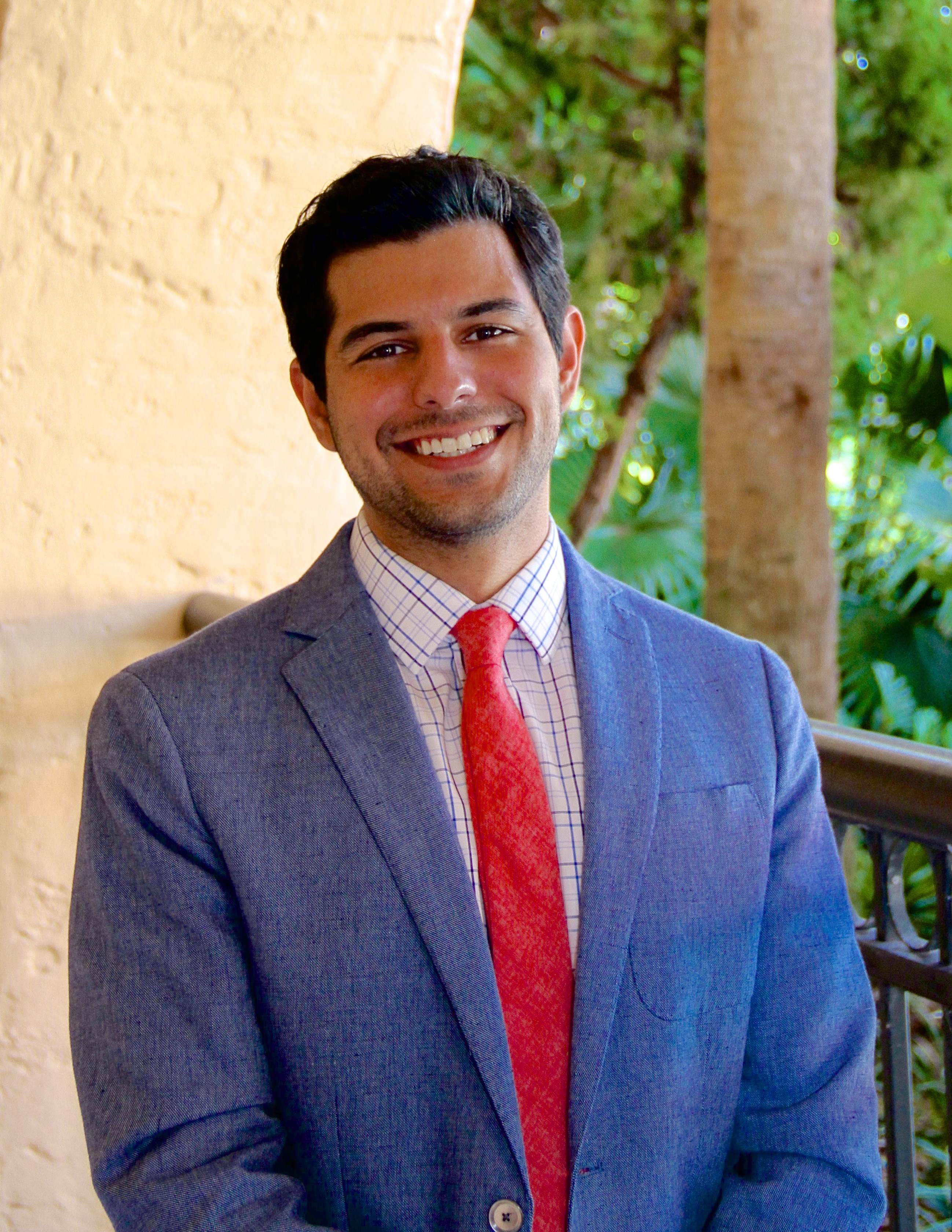
SeanCarlo Lopez is a second-year student at Stetson Law.
Perhaps what you recall most is a terrible tragedy that changed your life forever. Now imagine preserving that childhood memory on your smart phone.
An article co-authored by second-year Stetson Law student SeanCarlo Lopez argues that the legislature should provide an exception to the rule in cases of abuse in which the child victim’s only defense may be a recording. Lopez co-authored “McDade: A Search for Justice in the Face of the Inadmissibility of Secretly Taped Conversations” as an undergraduate student with University of Central Florida professor Carol Bast. The McDade case recently made headlines in May.
In 2011, a sixteen-year-old girl confronted her childhood abuser, the stepfather whom she said sexually assaulted her for six years. Her evidence against the man: a recording she made of her abuser. Her stepfather was sent away to prison for a double life sentence, but later granted a new trial because the evidence against him was deemed inadmissible by the Florida Supreme Court.
Chapter 934 of the Florida Statutes prohibits the recording and disclosure of a private conversation without two-party consent. The Florida Supreme Court overturned the trial court and ruled that the evidence should have been suppressed in line with the plain language of the statute. Richard McDade was acquitted on May 21 at the retrial.
Florida Governor Rick Scott signed a bill into effect in July allowing children to secretly tape their rapists.
“It is unfortunate that it took such a crime to carve the way for reform,” Lopez said. “It remains unconscionable to allow a child rapist to go free and clear when an actual account of his transgressions exists to prove his guilt.”
However, the evidence, collected before the governor signed the bill, was illegal. The woman’s childhood rapist remains free.
“While the future holds a glimmer of hope for the victims of child rape, the legal system has failed to provide the victim with any form of justice, and that is completely unacceptable,” said Lopez. “This should be a lesson for the legislature to construe complicated statutes such as Chapter 934 more broadly in order to allow the judicial system to administer actual justice.”
“Though the added exemption is a step forward, Florida’s laws are still deficient,” said Lopez “Florida is one of a handful of states that requires the two-party consent rule. Such a rule is archaic in today’s culture, an era of smart phone technology in which the average person has the capability to record the most intimate details of their life.”
“We should not leave such protections to chance or the interpretations of a few judges,” Lopez said, who recommends reform in line with the majority of the states. “The federal government has recognized that access to recording technology draws a very fine line between what should be deemed private and public. Applying the one-party consent rule to oral communications would be in line with the majority of the states and federal government.”
The article will be published in the Criminal Law Bulletin in the fall of 2016.
Stetson University College of Law in Gulfport, Florida, has won a Videographer Award of Distinction in the educational institution category for its alumni feature series, “Do the Extraordinary: Stetson Law Women Trailblazers.”
Stetson Law Video Production Manager Stan Arthur and Manager of Media Relations Brandi Palmer interviewed recent female Law graduates who founded their own law firms in St. Petersburg, Florida, to produce the four-part feature series.
Stetson also won an Honorable Mention Videographer Award for the feature spotlighting a 2015 J.D./M.P.H. graduate: “P.J. Nowlan: Making Change Happen.”
Arthur is an award-winning filmmaker whose latest film, “At Risk,” premiered at the Skyway Film Festival in Bradenton in June.
Videographer recognizes outstanding achievement by talented individuals and companies in the video production field, and judges are industry professionals who look for companies and individuals whose talent exceeds a high standard of excellence and whose work serves as a benchmark for the industry. About 14% of entries were Award of Distinction winners. Past winners have come from all 50 states and numerous countries. There were approximately 1,300 entries from throughout the U.S., Canada and several other countries in the 2015 competition.
In May, Stetson Law’s communications team was also honored with multiple Hermes Creative Awards for its video features spotlighting students and alumni. Hermes Creative Awards is an international competition for creative professionals who work on concept, writing and design using traditional materials and emerging technologies.
Editor’s Note: To view the 2015 winners, visit the Videographer Awards website at www.videoawards.com.
Third-year Stetson Law student Brandon Williams is spending his summer as an associate at a law firm in Madrid, Spain. The 26-year-old turned a Stetson study abroad experience into a springboard for a summer associate position at the Avego Abogados law firm in Spain.
While working in a different country can pose cultural and language barriers, Williams said that the law firm made him feel welcome. He described the connections he made while working in Madrid as the greatest reward of the experience.
“When I arrived, I was welcomed into the law firm as a long lost family member,” Williams said. “Everyone here was so helpful and generous and did everything to make sure my stay in Madrid was perfect.”
Student Brandon Williams (center) is working with the Avego Abogados law firm this summer in Madrid, Spain. (L-R): Claudia Aispurúa M., Marta Gómez-Luengo, Brandon L. Williams, Ana Belén Aguado, Sylvia Salterain.
A J.D. student in Stetson’s international concentration program, Williams is helping to draft contracts, assist with litigations, and translate and brief corporate documents and field projects while working at the law firm in Madrid.
“Ultimately, with my degree, in the short-term, I want to either return to Avego next year or take a job at an international firm here in Madrid,” said Williams. “My long-term plan is to finish my career as in-house counsel or general counsel at a company or large corporation like HSN.”
Williams meeting with the Avego Abogados law firm partners. (L-R): Luis Vericat, Marta Gómez-Luengo, Brandon L. Williams, Sylvia Salterain.
Williams is a St. Petersburg native who also serves as a role model for youth in the area. Williams mentors middle and high school students about how to avoid the school-to-prison-pipeline. He also works with the Tampa Bay Academy of Hope, counseling youth on expungement of juvenile records. He is a member of the Street Law program at Stetson and is part of a team of Stetson students helping to build a piece of legislation to improve contemporary expunction laws that govern the expungement of juvenile records.
The Stetson Law student previously attended the University of Central Florida and the Center for Advanced Technologies at Lakewood High School in St. Petersburg.
Stetson Law offers study abroad opportunities for students in the Cayman Islands, Cuba, England, the Netherlands, and Spain.
Stetson Law student Brittany Brochard traveled with Stetson’s civil rights course this summer, June 19-24, to trace the footsteps of the Freedom Riders. She described her journey.
Photos and story by Brittany Brochard, 2L
(L-R): Brittany Brochard with Freedom Rider Rip Patton.
At one point or another we all study the Civil Rights Movement – generally for a class period or two in our U.S. History class in high school. For those of us who are interested enough, we spend time delving into the history of the movement during our undergrad years and then, if we’re really lucky, we read a book or an article here or there as we get older. But for the men and women that my classmates and I met on this incredible journey we recently took, they lived it. They were the movement. In the unforgettable words of Betty White Strong Boynton: “I was a foot soldier. I am a foot soldier.”
SLIDESHOW:
We began our journey in Nashville, where we were joined by a great orator and Student Nonviolent Coordinating Committee Freedom Rider, Ernest “Rip” Patton. SNCC was the student-based organization that Rip was introduced to by a “Fisk girl” he was interested in. Rip was a student at Tennessee State University (f/k/a Tennessee A&I College) at the time. Rip’s interest in the movement may have begun because of a girl, but it continued because of him.
While in Nashville, Rip introduced us to four of his Freedom Rider friends who were all students at Tennessee State at the same time as him. While listening to these incredible individuals, one of the comments that stuck out the most to me was when they talked matter-of-factly about writing out their wills the night before getting on the busses in Alabama. The Congress of Racial Equality was ready to end the Freedom Rides, but SNCC and the Southern Christian Leadership Conference, led by Dr. Martin Luther King Jr., was not. The Freedom Riders knew the dangers, as did the leaders, and they were willing to do what it took to try to change the status quo of this country. Even understanding the power that the Freedom Rides would have, Matthew Walker Jr. of the SNCC vividly remembers saying to Dr. King, “Martin, we don’t want you on the bus. You’re too valuable.”
“This year’s class timing was especially unique – we left right after nine black Americans were murdered in a church in Charleston and came back to campus as the SCOTUS Marriage Equality decision unfolded. The class is as unique and poignant as the times in which we live and the individuals we met along the way who rose above being spit on, beat on, and beat down – and continue ‘as soldiers’ in the fight for civil rights. Nothing but an open mind and heart prepares you for this unique experience.”-Nathan Bruemmer, 2L
The Freedom Rides themselves came on the heels of the Supreme Court’s decision in Boynton v. Virginia, a monumental decision that struck down segregation in a restaurant that was deemed interminably linked with an interstate bus terminal and therefore interstate commerce. The Freedom Rides were to be a nonviolent demonstration of the constitutional ability to interstate travel and commerce. While our group was in Selma, we met Bruce Boynton – the named plaintiff in this monumental case. Upon hearing his familial background, it became clear to the class that making his case was more a way of life for Boynton than a one-time fluke. Boynton’s own mother was well-documented as being beaten until near-death on what became known as ‘Bloody Sunday’ – a first attempt at a peaceful march from Selma to Montgomery across the Edmund Pettus Bridge. The marchers were met with brutality by the Alabama State Troopers both on foot and on horseback. There were batons and teargas – the police were wearing gas masks. The outcry against Governor George Wallace and Alabama came from across the South, as well as the country.
‘Bloody Sunday’ did not mark the end of the attempt to march. There were many backroom deals and negotiations going on to try to make this march come to fruition. There was, and is to this day, much frustration with the leaders of the SCLC in how the full march was prolonged. ‘Turnaround Tuesday,’ as it became known, was a symbolic march across the Edmund Pettus Bridge. The leaders of the movement chose to turn the marchers around when the police confronted them because they knew that they would be in the legal wrong in going up against the police this time. Many of the marchers were upset and disheartened by this appearance of cowardice. We heard about this from Betty White Strong Boynton when she described her experiences to us as a teen involved in the Selma marches.
“The Civil Rights Course provided an eye-opening experience I did not expect. It has made me focus my law school education to gear up for a career in this area. Meeting people who were so influential in the movement and learning their high and low moments made me realize this is the path I want to take, working towards equality for all people. This class and trip was such a powerful experience it is hard to put into words. I only hope many more scholars will have the opportunity to take this course in the future.”-Anna Urie, 3L part-time
One month and four days after the original march day, the third, and final, march from Selma to Montgomery actually began. It took the marchers five days, but they made it to their final destination – the capitol building in Montgomery . Later that day/night, marchers were taken back to Selma by cars driven by different volunteers. This is when a white woman, and mother of five, from Detroit was assassinated by local Klansmen for assisting the movement . Her name: Viola Liuzzo. Mrs. Liuzzo was one of three deaths that came about during the Selma crisis.
One of the aspects of this trip that stuck with me the most was that in meeting all of the people that we met, every single one of them said something along the lines of “bitterness kills the soul.” These particular words came from Anthony Hinton – a man who spent 30 years on death row “because [he] was born black.” Mr. Hinton was introduced to our group by the Equal Justice Initiative who exonerated him. Mr. Hinton may be struggling with demons unimaginable to the rest of us who have never been in his shoes, but he can still look upon his experience without a bitterness that many a lesser human being would be unable to. “I met some of the nicest, caring people…and I never would’ve met them if I hadn’t been on death row,” Hinton told our group. There is a lesson to be learned from this man’s tragic experience.
The biggest mistake that any of us can make upon reading this or studying the movement is to think that it is in our past. The movement is not over. It will not end as long as there is bigotry and hatred in any form in people. The movement may change, it will evolve with the needs of the time, but it will not end. We can all be foot soldiers in the movement towards positive change.
(L-R): Jeffrey Berglund (3L), Ciara Willis (3L), Chantay Perry (2L), and Natalie Yello (2L).
Stetson’s chapter of the Florida Bar Young Lawyers Division Law Student Division won “Chapter of the Year” for the second year in a row. The award was presented during the division’s annual meeting in conjunction with the Florida Bar Annual Convention June 24-27 in Boca Raton.
Stetson’s chapter was recognized for its overall excellence, dedication and loyalty to the Law Student Division and for serving as a model chapter.
“Having the Stetson chapter recognized as the best chapter for the second year in a row is a great feeling,” said Jeffrey Berglund, vice president of the Stetson Board of Governors. “It confirms that we were able to maintain the high level of professionalism and productivity from the previous year while continuing to bring great events to our fellow students.”
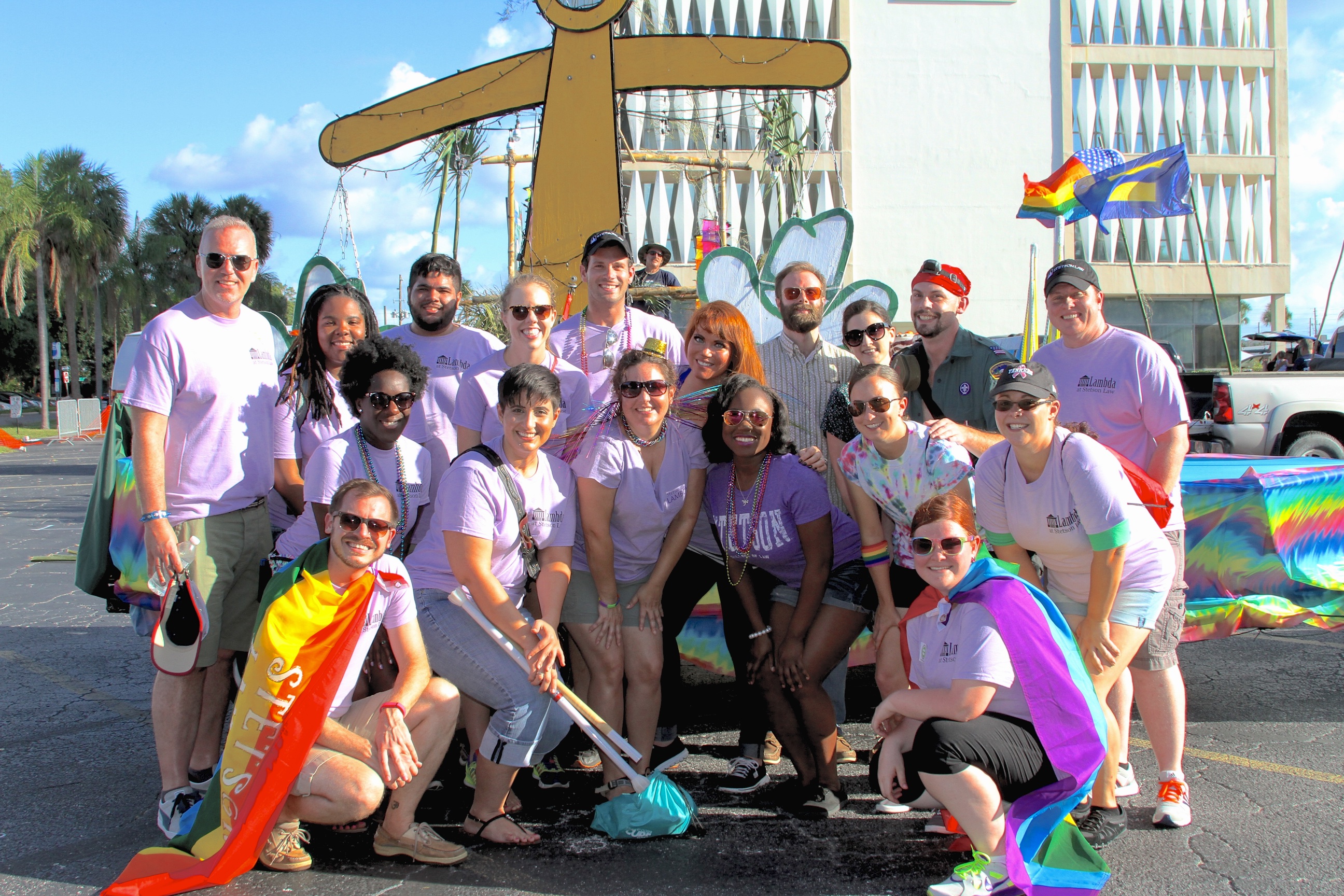
The Lambda Legal Society at Stetson participated in the annual St. Petersburg LGBT Pride Parade, on June 27 in St. Petersburg. The weekend parade followed the Supreme Court’s historic decision regarding gay marriage on June 26.
Stetson Law students built a float, participated in the St. Petersburg LGBT Pride Parade. Photo by SeanCarlo Lopez.
Stetson students participating in the parade event shared their perspectives.
“It’s Fantastic,” said 2L Nathan Perry. “Everyone is smiling, everyone is colorful and the weather is perfect for a celebration. It’s like God wanted this to happen.”
“This is pretty phenomenal,” said 2L Christina Hartman. “Stetson has been a big part of this parade for many years and so the fact that we can be here after such a historic decision has come down is not only great for Stetson but for the community as well.”
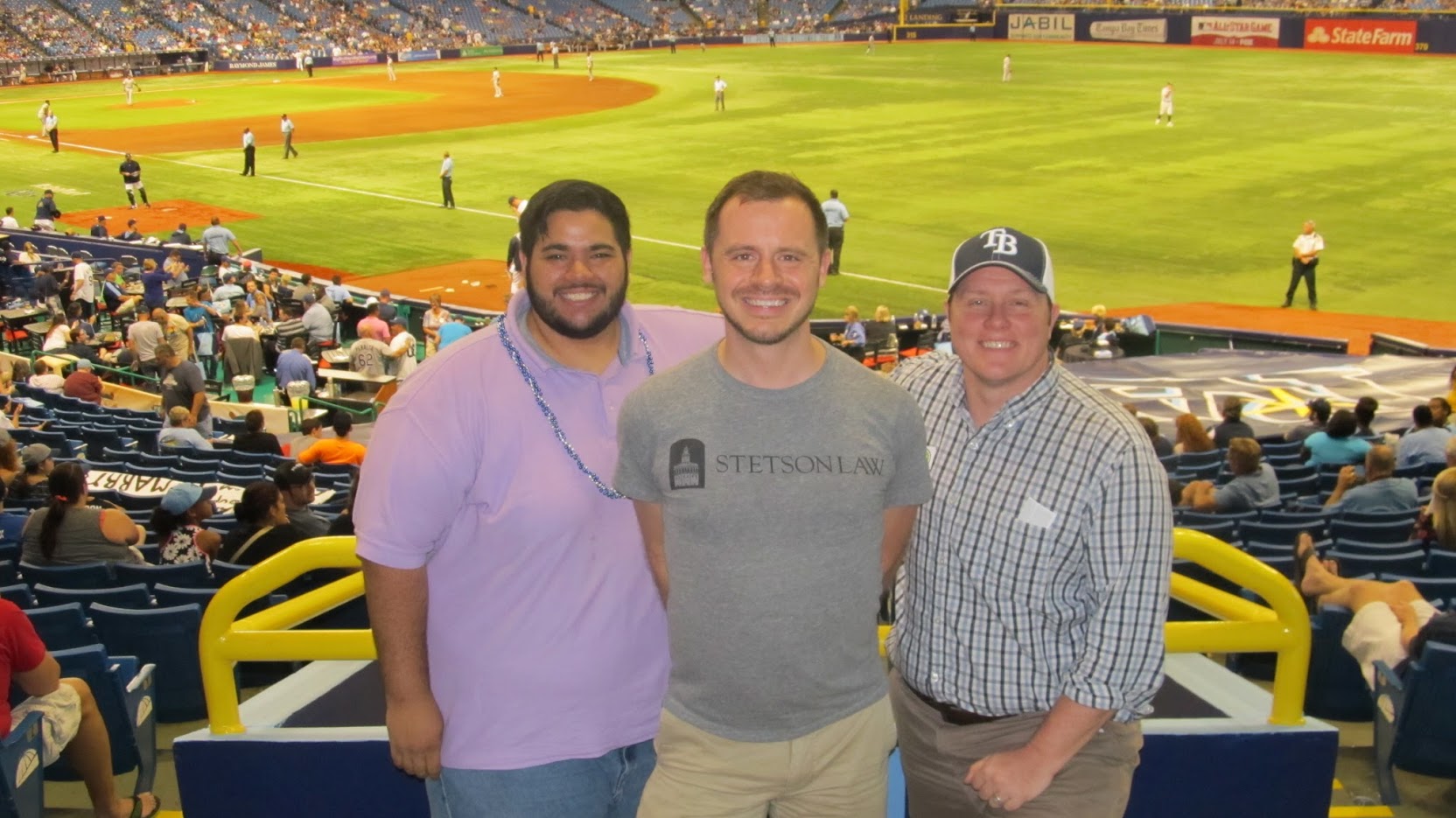
Stetson’s Lambda Legal Society celebrated Pride Night at Tropicana Field on June 12. (L-R: Francisco Lopez, Steve Cozzi, and Nathan Bruemmer). Photo by Brittany Brochard.
The LGBT Pride Parade, spanning the Historic Kenwood Neighborhood and Grand Central District in St. Petersburg, featured more than 150 organizations and businesses supporting and celebrating the Tampa Bay LGBT community.
The parade is one of the largest of its kind in Florida, drawing more than 200,000 people.
Stetson’s Lambda also offered tickets to Pride Night during the Rays v. White Sox baseball game at Tropicana Field in St. Petersburg on June 12 to all members of the Stetson community.
Hundreds of Stetson Law graduates were ranked among the best lawyers in the state of Florida again this year.
This year, more than 400 Stetson Law graduates are named in the 2015 Florida Super Lawyers.
Stetson placed third among the list of law schools with the most honorees this year in Florida Trend’s Legal Elite.
Florida Super Lawyers includes 307 Stetson Law graduates and Florida Super Lawyers Rising Stars includes 178 Stetson Law graduates. Stetson Law alumnus Christian D. Searcy is listed among the Top 10 2015 Florida Super Lawyers. Stetson Law graduates Tae Kelley Bronner, Tracy Raffles Gunn, Lynn Welter Sherman and Caroline Black Sikorske are listed among the Top 50 Women Florida Super Lawyers. The Top 100 Florida Super Lawyers list includes Stetson Law graduates Stephen D. Busey, Shane J. Kelley, Christian D. Searcy, Lynn Welter Sherman, Caroline Black Sikorske and Troy K. Smith.
A total of 117 Stetson Law graduates were selected for Florida’s Legal Elite in the July 2015 Florida Trend magazine. Stephen D. Busey, Mark A. Hanley and Rhea F. Law are included in the Legal Elite Hall of Fame. This year, 18 Stetson Law graduates were selected by their peers as “up and coming” attorneys and six Stetson Law graduates were voted outstanding attorneys working in the government and non-profit sectors among Florida Trend’s Legal Elite.
Super Lawyers magazine rates lawyers from more than 70 practice areas who have attained a high-degree of peer recognition and professional achievement through independent research, peer nominations and evaluations.
Florida’s Legal Elite, now in its 12th edition, showcases attorneys chosen by their peers who exemplify a standard of excellence in their profession.
Have you always wondered if law school is for you? Stetson University College of Law is hosting an open house in July and repeating in August about the admissions process for part-time law school applicants. Students interested in the full-time law program at Stetson are also invited to attend.
Prospective law students interested in attending should RSVP for one of the open house sessions:
Thursday, July 30, 12:15 p.m.-1 p.m. at the Tampa Law Center, 1700 N. Tampa St.
Thursday, Aug. 27, 6-7:30 p.m. at the Gulfport campus, 1401 61st St. S.
“I have commitments to work and to my family, so it was either part-time or not at all,” said third year part-time law student Drew McDannold. “If you want something badly enough, you’re going to make it happen and the part-time program at Stetson is a wonderful means to that end.”
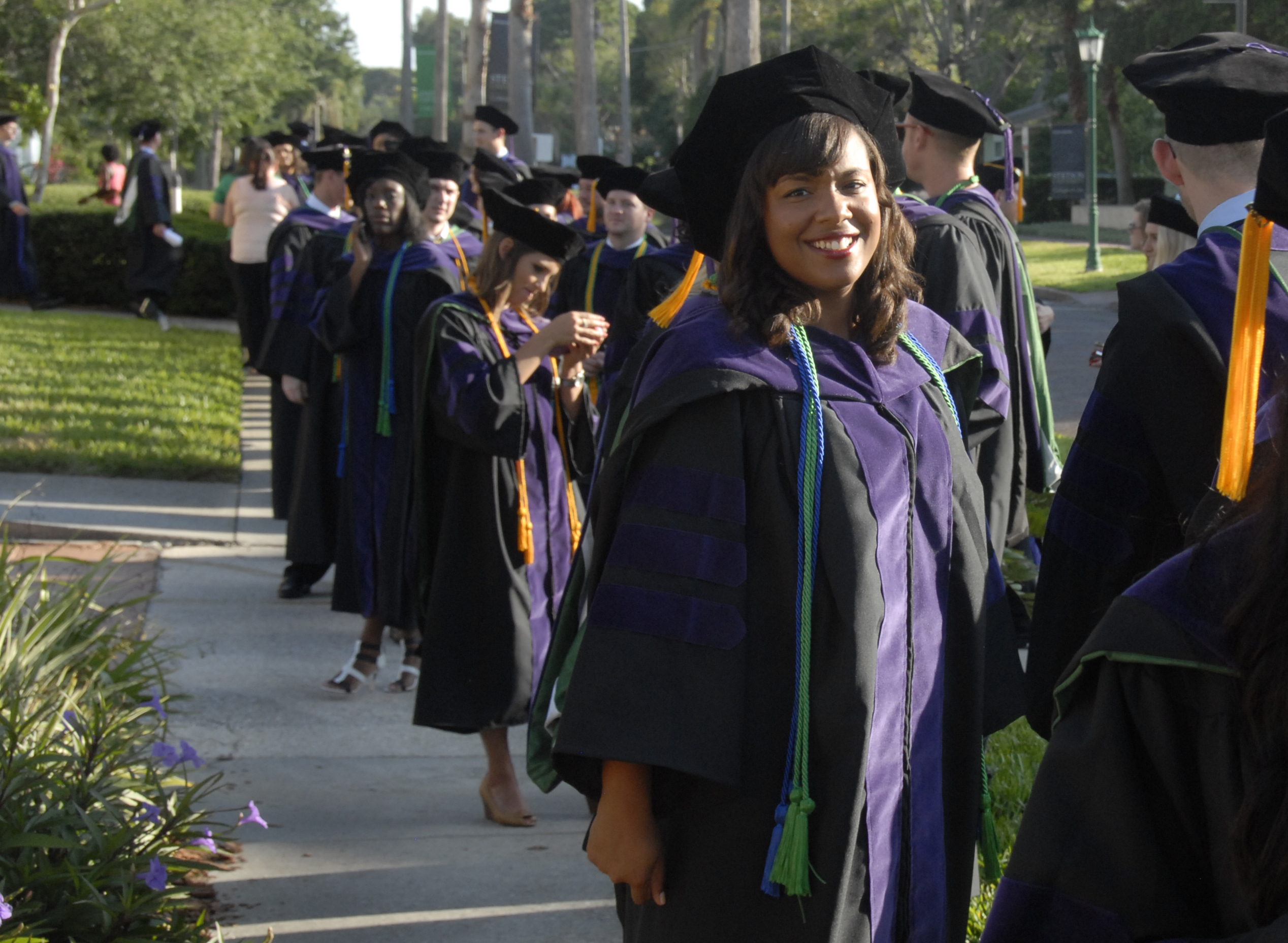
Sharma lined up with classmates prior to the procession into the courtyard during Stetson Law’s commencement on May 16.
She arrived excited the afternoon before Stetson Law’s commencement to practice her processional across the stage. She assessed the stage quickly, and sped towards the ramp. It was hot, May in Florida, and the sun was in her eyes.
Monica Sharma had graduated with her J.D. early in December 2014. She had received the Walter Mann Award. She had already passed the bar. Her favorite photograph showed her signing in as a new member of the bar during her recent swearing in ceremony. On Saturday morning, May 16, she would join 243 other students in the graduate tent in Stetson Law’s crowded Gulfport courtyard.
She was a blur crossing the stage the Friday before commencement. She eyed the rows of seats facing the stage, and pointed to where her family would be watching on Saturday. She said she told them to arrive early for the best seat. Then she smiled broadly and cruised across the stage again, practicing the procession one more time.
Sharma was recently sworn in as a new member of the bar.
“Stetson has simply spoiled me,” Sharma said before taking one more practice spin for commencement. “The professors and faculty are very kind and helpful. So many things were taken care of without my even asking. It’s been an amazing experience, and I’ll miss being a student.”
Stetson University College of Law’s student chapter of the Florida Association for Women Lawyers has been named the 2015 Outstanding Student Chapter.
Stetson’s FAWL executive board 2014-2015 L-R: Katie Salemi, Jessica Ford, Brittany Jones, Courtney Cox, Ellen Fichtelman and Joann Grages Burnett.
FAWL adviser and associate director of career development Joann Grages Burnett was named Student Organization Advisor of the Year and the outgoing Stetson FAWL student president Ellen Fichtelman was named Stetson Student Organization Leader of the Year.
Burnett, who serves as the law school liaison for FAWL, has also been selected for inclusion in the FAWL 2015 Class of Leaders in the Law.
“FAWL always works hard to provide excellent and relevant programming to its members and represents Stetson very well on and off-campus,” said Burnett.
Stetson’s chapter will receive its award during this year’s FAWL Annual Gala during the Florida Bar’s annual convention on June 24 in Boca Raton.
Part-time J.D. student Stephen Lewellyn is not a typical law student in Stetson’s law program. Lewellyn balances law school at Stetson with working at the Maxey Law Offices, PLLC in St. Petersburg, Florida. He has been practicing administrative patent law since 2002, when he was admitted to practice before the U.S. Patent and Trademark Office.
Part-time Stetson Law J.D. student Stephen Lewellyn.
“Administrative patent law is a bit of a strange animal in that a law degree is not required to practice. Rather, you must have an engineering or science degree to sit for the Patent Bar Exam,” said Lewellyn. “I took and passed the exam shortly after getting my mechanical engineering degree. And similar to passing a state bar exam, to pass the Patent Bar Exam, you must demonstrate legal skill and knowledge in administrative patent law.”
On May 12, just four days before walking in the College of Law commencement, Lewellyn will be traveling to Alexandria, Virginia, to present as lead counsel before three judges on the Patent Trial and Appeal Board. Lewellyn will be going toe-to-toe with credit giant MasterCard for his client, an individual fighting to protect his patents.
“I think one of the biggest challenges during the hearing will be presenting a lot of technical information in a short period of time and in a manner that is straight forward and persuasive,” said Lewellyn.
Lewellyn explained that his client is seeking holds patents on a secure credit card transactions system and method. The patents cover the use of a substitute credit card number used to secure credit card transactions and prevent identity theft. In 2013, Lewellyn’s client filed a patent infringement lawsuit against MasterCard, Discover and Citigroup in Delaware federal court. MasterCard responded by filing challenges to the patents, alleging they are invalid. Lewellyn will be presenting oral arguments to defend his client’s patents during the May 12 hearing.
“I picked Stetson for a few reasons, including its national recognition as a leader in legal advocacy and writing and because of its part-time program,” Lewellyn said. “I think the best advice I could give someone considering the part-time program is to be prepared for the commitment and to discuss this with family and work.”
Student Starcee Brown, a single parent in Stetson University College of Law’s part-time J.D. program, received a scholarship from the law firm of Katz & Phillips, P.A. on March 3.
The essay-based scholarship benefits high-achieving single parents who plan to attend or are currently attending law school.
Student Starcee Brown.
Scholarship applicants were asked to write about how single parenthood has affected their education, an obstacle encountered in pursuing legal education, or how a scholarship assists them and their family as they pursue an education.
Brown plans to graduate with her J.D. from Stetson Law in 2016. She completed her master’s in criminal justice from the University of Central Florida in only 16 months after finishing a bachelor’s in criminology at Florida State University.
“One piece of advice that I would give another single parent getting ready to start law school is to manage your time so that you can give as much attention to your child as you do to your studies.”
Brown plans to practice as a criminal defense attorney and a family law attorney after graduating from Stetson.