Stetson Poll: Donalds, Moody Maintain Double-Digit Leads in 2026 Elections

Republican candidates continue to hold double-digit leads in Florida’s races for governor and U.S. Senate, and 9 points in a generic ballot, while three proposed constitutional amendments have yet to reach the 60% support required for passage, according to a new statewide survey from Stetson University’s Center for Public Opinion Research (CPOR).
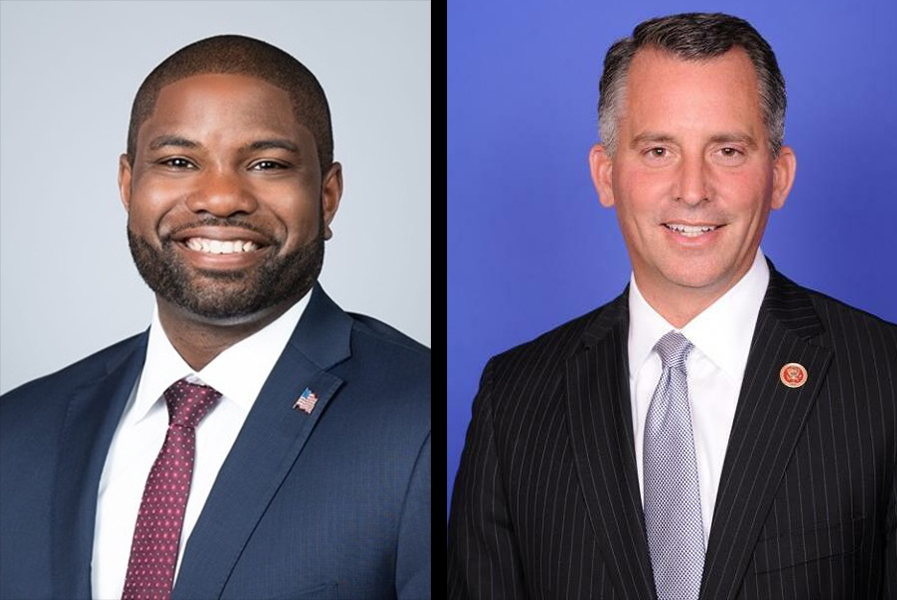
The survey of 826 Florida adults – including 716 registered voters, on whom all electoral results are based – conducted Oct. 1-9, finds Republican Byron Donalds leading Democrat David Jolly 52% to 41% in the governor’s race among modeled likely voters. In the U.S. Senate contest, Republican Sen. Ashley Moody holds the same 52% to 41% advantage over Democrat Angie Nixon. The results include respondents who initially said they were undecided but subsequently leaned toward a candidate.
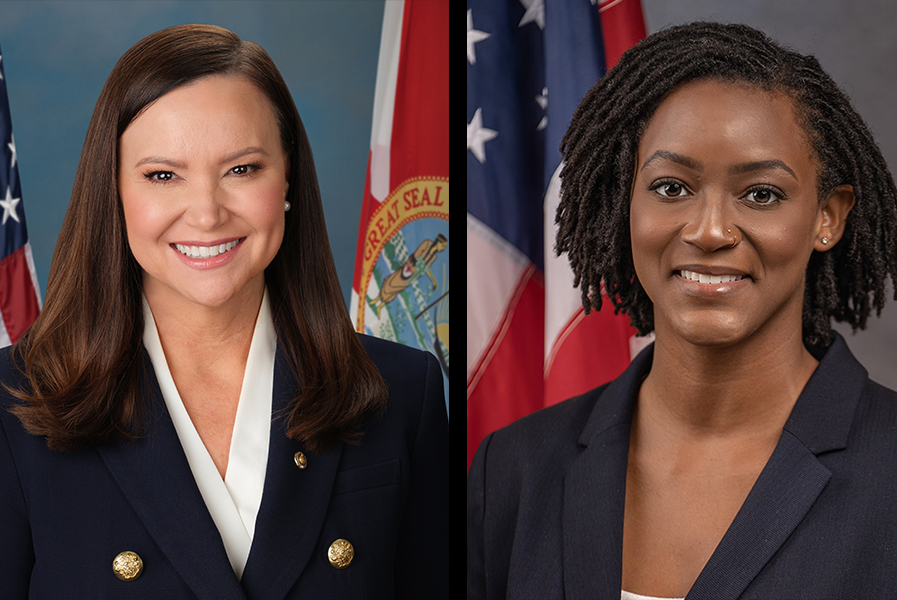
About 5% remain undecided in the governor’s race, with another 3% supporting a different candidate. In the Senate race, 6% remain undecided and 2% prefer another candidate. The findings remain close to CPOR’s September estimates, with neither contest showing a meaningful change between the two surveys.
“Republicans continue to have an advantage in both races; the Senate race has narrowed slightly, though within the survey’s margin of error,” said Kelly Smith, PhD, an associate professor of political science at Stetson and co-director of CPOR. “As Election Day approaches, turnout remains an important part of the picture.”
A generic congressional ballot points to the same Republican advantage independent of the candidates on the ticket. Asked which party’s candidate they would support for the U.S. House in their district, 50% of likely voters chose the Republican candidate and 41% the Democratic candidate, with 8% undecided. The 9-point Republican edge in Florida stands in contrast to national generic-ballot polling, which has shown Democrats ahead this fall – a measure of how far the state’s electorate now sits from the national average.
The survey also finds that most voters describe their choice as support for a candidate rather than opposition to the other party’s nominee. Among those naming a candidate, 63% say their governor vote is more for their preferred candidate, while 16% say it is more against the opponent. In the Senate race, 59% say they are voting more for their candidate, compared with 16% voting more against the opponent.
The survey also measured job approval for key officeholders. President Donald Trump stands at 50% approval and 49% disapproval among Florida likely voters, while Gov. Ron DeSantis – term-limited and not on the November ballot – stands at 55% approval and 41% disapproval. Sen. Ashley Moody, appointed to her seat in 2025 and now seeking a full term, is at 55% approval and 34% disapproval, with 12% saying they haven’t heard enough about her to say.
Cost of living and inflation remain the leading concern, with 40% of likely voters naming them as the issue that matters most when deciding how to vote. Threats to democracy rank second at 14%, followed by immigration and border security, property taxes and housing affordability, each at 7%.
The proposed constitutional amendments present a more uncertain picture. Amendment 1, which would raise the maximum size of Florida’s budget stabilization fund, draws 46% support, 30% opposition and 23% undecided. Amendment 2, concerning property-tax exemptions for certain agricultural equipment and agritourism activities, receives 56% support, with 21% opposed and 23% unsure.
Support for the homestead exemption amendment has grown since September but remains below the 60% threshold with 56% support, 21% opposition and 23% undecided. Although both Amendments 2 and 3 receive majority support, none of the three measures reaches the 60% required to pass in the current survey.
“Getting a majority is not enough for a constitutional amendment in Florida,” Smith said. “With nearly a quarter of voters still unsure about each proposal, there is considerable uncertainty about how these measures will fare in November.”
Another finding points to a contrast in voters’ confidence in election administration. Fifty-six percent of likely voters say they are very confident votes in Florida will be counted accurately in November, compared with 37% who express the same level of confidence about vote counting in other states. “Floridians express substantially more confidence in their own state’s election administration than in the rest of the country’s,” said Gustavo Venturelli, an assistant professor of political science and co-director of CPOR at Stetson.
At CPOR’s website you can find the full report, which also examines attitudes toward data centers, Flock license plate cameras and other policy questions.
Methodology
The CPOR October 2026 Survey interviewed 826 Florida adults through Qualtrics’ online non-probability panel from Oct. 1-9, 2026. Results were weighted by age, gender, race, ethnicity, education and region. Electoral estimates are based on 716 self-reported registered voters and incorporate each respondent’s modeled probability of voting. Beginning with this wave, these estimates are also calibrated to the certified 2024 presidential election result; full details are in the report’s methodology section. The report provides design-effect-adjusted precision estimates of ±3.7 percentage points for the full sample and ±4.2 for likely voters; these are not conventional random-sampling margins of error for the opt-in panel. Prior survey waves were re-estimated using the current weighting approach for trend comparisons.