As an enrollment freeze loomed at the University of California at Berkeley, Inside Higher Ed explored the issue and its root causes in depth – namely, community opposition to a proposed campus expansion. To accomplish this, the publication sought insights from Stetson Law Professor Peter Lake, who is director of Stetson Law’s Center for Excellence in Higher Education Law and Policy.
Story excerpt:
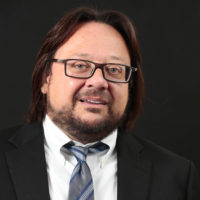
Peter Lake, the Charles A. Dana Chair and director of the Center for Excellence in Higher Education Law and Policy at Stetson University College of Law, described the legal situation as unusual and one that will be watched closely.
“It’s a fascinating standoff,” Lake said. “Can a college do what it wants to create the environment it wants or will community impact begin to have to be part of admissions thinking? If we bring in another 1,000 students, will there be a place for them to live where there isn’t this impact on infrastructure? It’s never been a broad legal requirement for admissions committees to think that way. It’s almost as if they’re being pulled into some community-planning dynamic.”
Ultimately, Lake expects the case to end up in the hands of the California Supreme Court.
By Carson Frame National Public Radio’s American Homefront Project January 23, 2022
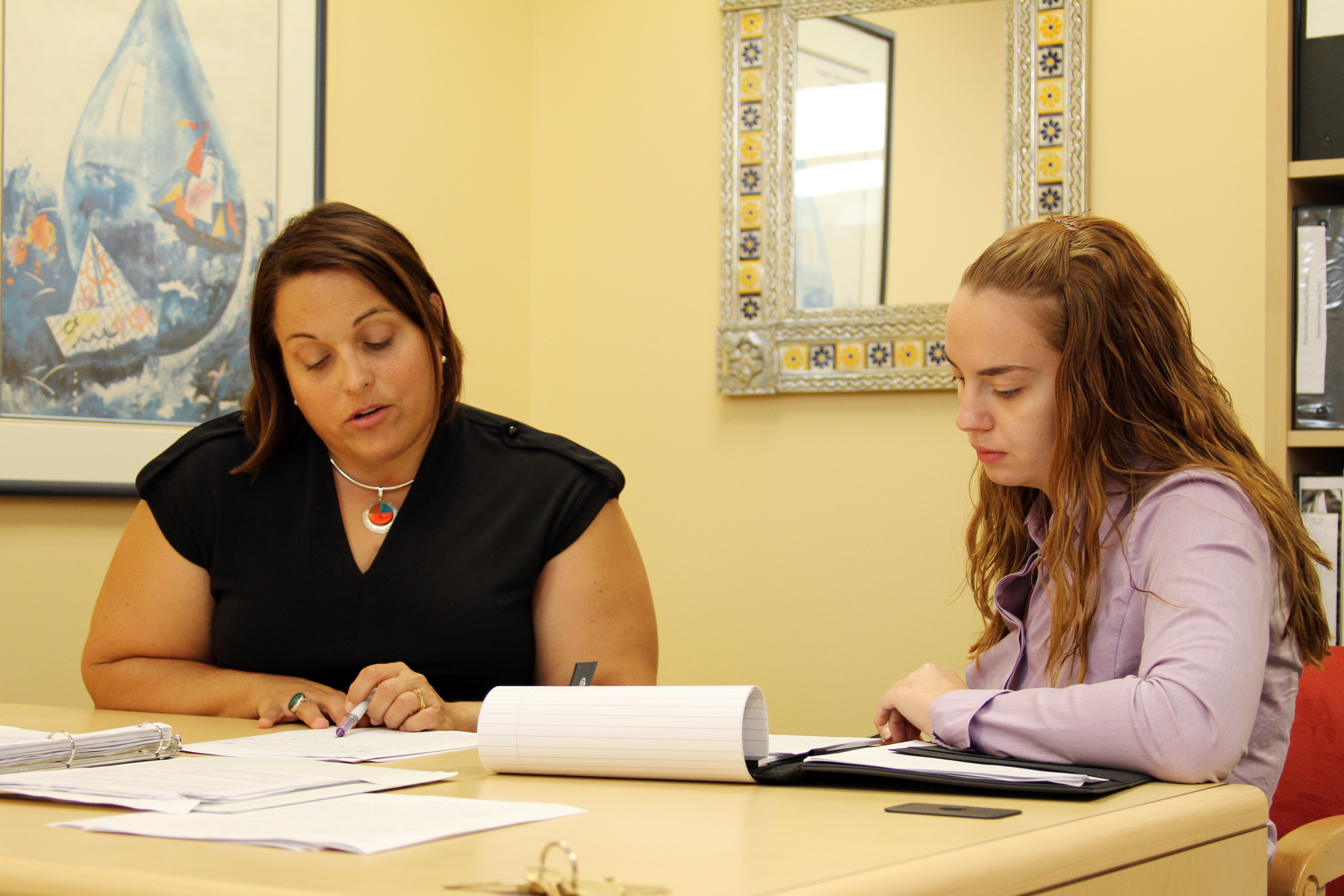
Law Professor Stacey-Rae Simcox
In light of recently discovered delays in Department of Veterans Affairs assistance to Vietnam veterans newly eligible for benefit payouts, Stetson Law Professor and Director of the college’s Veterans Law Clinic spoke to National Public radio about the situation’s potential impact.
Excerpt
Veterans advocates say the VA’s communications are often boilerplate, and veterans can have a difficult time applying the information to their specific issues or claims.
“That leads to mass amounts of miscommunication and misunderstanding amongst veterans,” said Stacey-Rae Simcox, a law professor and director of the Stetson University veterans advocacy clinic. “It also means veterans run around trying to get information they don’t need to get, because the VA already has it.”
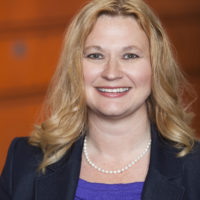
Professor Kirsten K. Davis was selected as a recipient of the 2021 COVID-19 Innovation Award from the Stetson University Board of Trustees.
Board members realized that despite the disruption of the past several semesters, the university community worked to prioritize safety, emphasize student outcomes, invest in technology, and encourage faculty’s freedom to innovate for the benefit of continued learning. They created the COVID-19 Innovation Awards to recognize faculty who:
demonstrated particular efforts as educational innovators for online teaching;
created a new normal for students’ experiences moving forward;
took on additional responsibilities for planning, training, and teaching;
were bold teachers willing to teach face-to-face with creativity and excellence to meet students’ interests or disciplinary needs; and
were engaged, positive leaders who were perpetually optimistic in the face of incredible change.
“Kirsten led and stewarded the faculty in all matters involving innovation of online education and helped train them on new platforms with continuing education on novel methodologies for online delivery,” wrote those who nominated Davis for the award.
Embracing technology for better teaching has been a career hallmark for Davis, but it became more urgent once the pandemic struck. She said she knew she needed to know more about how to engage law students in an online classroom.
“So, I did what I encourage my students to do—be self-directed and learn all that you can about whatever it is you are doing,” she said.
That commitment turned into an opportunity to create learning experiences for her faculty colleagues and help them adjust to the increased demands of online education. Davis developed online education training materials and workshops for her colleagues. What started out as volunteer service work led to Davis being appointed Faculty Director of Distance Education by Dean Michèle Alexandre.
Davis said she was honored by the recognition of her efforts.
“My work in the past year and a half with online education was about is ensuring that Stetson Law Students have engaging, effective, and transformative educational experiences no matter how that education is delivered. The award demonstrates that the Stetson Board of Trustees cares deeply about the educational experiences of Stetson students.”
Professor Kirsten K. Davis has been appointed by the new president of The Florida Bar, Mike Tanner, to serve on a newly created statewide Special Committee for the Review of Professionalism in Florida.
The Florida Bar, through its Board of Governors, approved and created this Committee to develop specific recommendations to the Board and to The Florida Supreme Court for: 1) any necessary changes to the definition of professionalism or to the current professionalism standards; 2) improvements in how and when professionalism is taught during the course of a lawyer’s career; and 3) improvements to how professionalism standards are enforced, including greater emphasis on the use of the local professionalism panels.
When Tanner was sworn in earlier this month, he said the committee will be, “a complete top to bottom review of the professionalism” in Florida, according to The Florida Bar News.
“We’re going to look at how we teach it, how we define it, when we teach it, how we enforce it, how we promote it, what its relationship is to mental health and wellness,” he said, with the goal of creating “suggestions to the court for improvements in these areas.”
Davis has devoted much of her career to the topics of attorney ethics and professionalism. In addition to being the director of Stetson Law’s Institute for the Advancement of Legal Communication, she teaches courses on professional responsibility. She also served on The Florida Bar’s Standing Committee on Professionalism for six years, including as chair from 2019-2020.
“Questions about what professionalism means – what the standards should be and how those standards should be enforced – is a question that is being explored by state bar organizations and state supreme courts all around the country,” Davis said. “The work to revisit and refine the meaning of professionalism is important work. The practice community’s sense of professionalism is meaningful not only to licensed lawyers but also to law students in forming their professional identities.”
The Florida Bar is the governing organization of the more than 100,000 lawyers licensed to practice law in the state. It works to ensure the highest standards of legal professionalism and protects the public by prosecuting unethical attorneys and preventing the unlicensed practice of law.
The range of donors to the GiveSendGo voter fraud campaigns reflect surveys showing that many Republicans are skeptical of the election results. A quarter of Americans think Trump is the “true president,” according to a Reuters/Ipsos poll, and a Monmouth University poll found that 65% of Republicans believed Biden’s victory was the result of voter fraud.
Stetson University Law Professor Ciara Torres-Spelliscy said that’s emblematic of the working class and the upper class of the Republican Party buying into voter fraud narratives.
“This has infected their thinking in a really damaging way to the legitimacy of our democratic processes,” Torres-Spelliscy said.
In her latest White Collar Crime Prof Blog post, Professor Ellen Podgor writes, “The Supreme Court issued the Van Burencase this morning, providing a strict interpretation to the words ‘intentionally accesses a computer without authorization or exceeds authorized access.’ It’s a 6-3 decision with an odd mix of the players.” Check out the full post on the blog.
Andrew Appleby, assistant professor of law at Stetson University, told Tax Notes that he thinks the brief understates the impact on states’ rights, possibly because New Hampshire does not impose a personal income tax.
“If the state at issue did [have an income tax, such as] Connecticut for example, which participated in an amicus brief, it is clearer that the rule at issue is creating a significant fiscal impact for the residence state that is granting a credit for taxes paid to the source state. With that said, the brief recognizes that there may be situations when sourcing telecommuter income to the employer state is justified by the benefits being provided by that state, but concludes that the determination is too fact-specific for an original jurisdiction matter,” Appleby said.
Civil rights attorney and Stetson law professor Judith Scully will teach some of those virtual lessons in the five-day course that runs from July 19-24.
“Through civic education we’re hoping to really get students to understand, not just what is the government and how do the laws operate, but what is their role as a citizen in terms of influencing law and policy and how can they even as teenagers become advocates for their own interests, for the interests of their community,” Scully said.
But simply opening the books on corporate political spending isn’t enough, some experts say. The Interfaith Center on Corporate Responsibility, a coalition of over 300 institutional investors, is pushing companies to align their lobbying on climate issues with their stated corporate values, says Josh Zinner, CEO. Alpern also calls on companies to analyze and report on the alignment between their political spending and their publicly stated values and policies. With BlackRock’s support, one such proposal got 47% support among Pfizer Inc. PFE, -1.49% shareholders in April.
Another next step: Give shareholders a vote on corporate political-spending budgets, says Ciara Torres-Spelliscy, a professor at the Stetson University College of Law in Florida. “This goes back to the reputational risks corporations are taking,” she says. Given the risk of consumer boycotts and investor disenchantment, she says, “corporations that get involved in politics really risk shooting their brands in the foot.”
Louis Virelli III, a constitutional law expert at Stetson University and author of a book about Supreme Court recusals, told Insider there was almost no chance Barrett would recuse herself from the abortion case, Dobbs v. Jackson Women’s Health Organization, over the past speaking engagements.
“Justices regularly speak to groups like this — to groups that might have an interest in a case before the court,” Virelli said. “I can’t think of a case where simply having spoken to a group who then has an interest in a case before the court would trigger recusal.”
Prof. Theresa J. Pulley Radwan with the She Stepped Up Award.
Theresa J. Pulley Radwan, transitional business administrator and professor of law, was one of six women in higher education in Florida to be recognized with the “She Stepped Up Award: Recognizing Extraordinary Leadership During COVID-19.”
The award, presented by the American Council on Education Women’s Network – Florida during its fourth annual conference on April 9, was a special honor this year to recognize women who played a pivotal role in leading their respective institutions during the challenges of the past 14 months. Lisa Jones, state chair for the ACE Women’s Network – Florida, said their Executive Board reviewed nominees and selected the winners whose leadership made a difference in the lives of students and/or employees on their campuses.
Radwan is the co-chair of the Safer Campus Task Force and therefore charged with advising university senior leadership on the operational elements needed to move Stetson University and Stetson University College of Law safely through the pandemic.
“It’s an honor to be recognized for leading the efforts, but the reality is that none of it would have worked without the efforts of the entire community to remain diligent in our mitigation efforts,” Radwan said. “Helping to lead the institution regarding pandemic protection measures reminds me of how connected we are as a community, and of how much everyone cares about Stetson.”
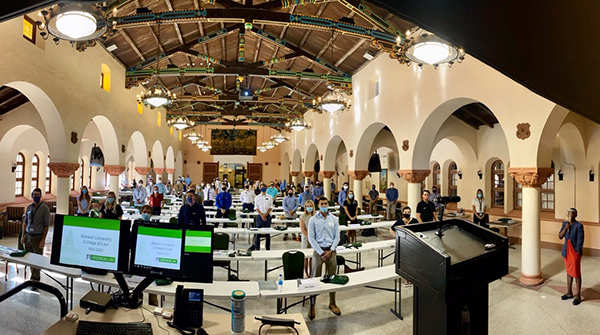
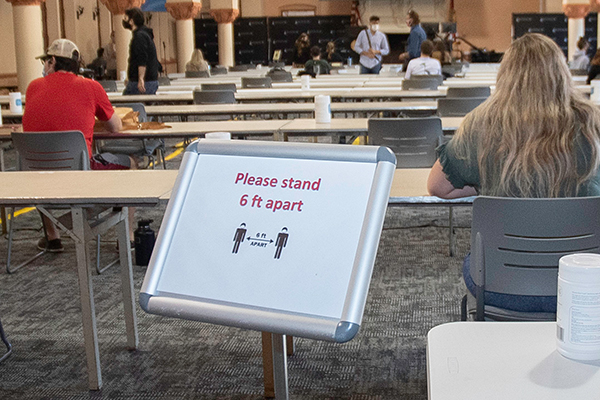
Stetson Law’s return to campus included a face covering policy and distancing.
Dr. Lua Hancock, vice president for Campus Life and Student Success at Stetson University, nominated Radwan and her co-chair, Stetson Dean of Student Lynn Schoenberg, shining light on their professional and critical work moderating the weekly Safer Stetson Task Force meetings with high respect for all stakeholders.
“Terri provides input that is always focused on the health and wellness of the whole Stetson community while being open to all points of view,” Hancock said. “She provides feedback in a timely manner when asked about matters related to the College of Law and is a great resource for Stetson Health Service.”
Radwan insists the work done over the past year has been a true collaborative endeavor.
“The efforts weren’t always easy, and certainly not everyone agreed on the appropriate measures to take,” Radwan said. “But at the end of the day, everyone stepped up. Whether it was our Facilities Department working hard as the school year began to modify our HVAC system to ensure appropriate airflow, or our Public Safety Department handling visitor protocols, or Student Life and Human Resources managing our testing events, or the entire campus population wearing face coverings and maintaining distancing – or any of the other countless measures that were taken by our community this year – everyone participated in order to maintain a safe learning environment.”
Signs posted helped maintain safety.
The ACE Women’s Network is a national system of networks within each state, Puerto Rico, and the District of Columbia with the goal of advancing and supporting women in higher education. The Florida chapter’s conference theme this year was The Hill We Climb: Leading with Hope. Lynn Schoenberg, dean of students at Stetson University, also received a She Stepped Up Award at the event.