Skip to content

Should college students be required to get the COVID-19 vaccine? It’s too early for colleges to decide

By Susan Snyder
The Philadelphia Inquirer
Jan. 10, 2021

Excerpt

Strong encouragement can be quite successful, said Peter F. Lake, a professor at Stetson University College of Law in Florida. Incentives, possibly a tuition break, or other reward may help, he said.

“The carrot often works as well as the stick, sometimes a lot better,” he said.

This article was originally published on The Philadelphia Inquirer website on Jan. 10, 2021, with the headline, “Should college students be required to get the COVID-19 vaccine? It’s too early for colleges to decide.”

What happens next after rioters interrupt Congress certifying election results?

By Josh Sidorowicz
WTSP
Jan. 6, 2021

Excerpt

Stetson University constitutional law professor Lou Virelli says the delay will not derail the procedural process to formalize Joe Biden’s victory.

“Delaying the process doesn’t change the outcome at all,” Virelli said. “The system is set up to accommodate as much as 100 hours of debate – if every state were objected to and every state gets two hours of debate.”

Given the anticipated objections from about a dozen Republican members of Congress, the process was already expected to take longer, Virelli said.

“This really has been a formality, as it’s supposed to be,” he said. “Let’s be very clear this is not supposed to be a rehash of the election.”

This article was originally published on the WTSP website on Jan. 6, 2021, with the headline, “What happens next after rioters interrupt Congress certifying election results?.”

CEOs spurn Trump and his allies: How big a blow?

By Laurent Belsie
The Christian Science Monitor
Jan. 15, 2021

Excerpt

The operations of the privately owned Trump Organization are so opaque that it’s hard to tell how meaningful these losses are. What is clear is that the Trump brand has taken a big hit because of the Capitol riot. From the pandemic to his controversial presidency and reported large business debts, the risks to the Trump corporate empire are significant. 

“What may be disastrous for Trump is being seen as a failed businessman and being seen as a dishonest businessman,” says Ciara Torres-Spelliscy, a fellow at New York University’s Brennan Center for Justice and author of the 2019 book “Political Brands,” which examines the 2016 election.

This article was originally published on The Christian Science Monitor website on Jan. 15, 2021, with the headline, “CEOs spurn Trump and his allies: How big a blow?

EPA boss plays Santa for Florida developers

By Craig Pittman
Florida Phoenix
Dec. 24, 2020

Excerpt

So why haven’t other states jumped on this? I checked with a couple of Clean Water Act experts, University of Buffalo School of Law professor Kim Diana Connolly and Stetson University College of Law professor Royal Gardner, who once served as the Army’s top wetlands lawyer. Both told me the reason was simple: Money — rather, the lack of it.

No matter who’s in charge, issuing wetland permits is complicated and messy work, Connolly said. The cost of doing it right is not cheap. But federal law offers the states no help.

“When a state assumes the [wetlands] program, it doesn’t get any dedicated money from the federal government,” Gardner said. That means taking on a ton of new work from the feds without getting a dime from the feds to pay for it.

This article was originally published on the Florida Phoenix website on Dec. 24, 2020, with the headline, “EPA boss plays Santa for Florida developers.”

The Real Trees Delivering Fake Corporate Climate Progress

By Ben Elgin and Zachary Mider
Bloomberg
Dec. 20, 2020

Excerpt

GreenTrees declines to say how many of its landowners enrolled existing trees, but it appears to include the majority. A project report from 2017 that lists planting dates for 380 tracts of land participating in the carbon program indicates that 258 (or 68%) were seeded before the GreenTrees project began in 2008. “It’s hard to see the climate benefit in that,” says Royal Gardner, a law professor at Stetson University who studies environmental markets.

This article was originally published on the Bloomberg website on Dec. 20, 2020, with the headline, “The Real Trees Delivering Fake Corporate Climate Progress.”

Constitutional expert lays out President Trump’s legal options

By Beau Zimmer
WTSP
Nov. 4, 2020

Excerpt

Stetson University constitutional law expert Louis Virelli has been following the election closely and had a strong reaction to the president’s statements.

“I think the nicest thing to say about it is that it was really disappointing,” Virelli said. “To accuse the elections officials of the country of presiding over a false election is a serious accusation that requires some evidence.”

That’s not to say that the Trump legal team can’t challenge the results.

“They can ask for a recount, they can challenge the legitimacy of certain ballots but they can’t stop anything in the sense that state election officials count the votes and it will be certified eventually sometime next week,” Virelli said, noting it’s the same process that happens every election. “What they can try to do is change the number of votes that are actually going to be certified and change them in a way that will result in them having more votes than their opponent. You would have to have some claim for why certain ballots were inappropriate.”

This article was originally published on the WTSP website on Nov. 4, 2020, with the headline, “Constitutional expert lays out President Trump’s legal options.”

Turkish CentCom officer will go to Turkey to answer for wife’s false imprisonment

By Dan Sullivan
Tampa Bay Times
Oct. 9, 2020

Excerpt

It is common for countries to enter into status of forces agreements when sharing military resources. Such an agreement exists among all the countries in NATO, including the U.S. and Turkey.

“The SOFA agreements, they are key to all of this,” said Luz Nagle, a professor at Stetson University College of Law, who specializes in international law. “It really comes down to, we don’t want to fight with our allies.”

This article was originally published on the Tampa Bay Times website on Oct. 9, 2020, with the headline, “Turkish CentCom officer will go to Turkey to answer for wife’s false imprisonment.”

Judith Scully discusses racial disparities in the justice system on Bay News 9

By Saundra Weathers
Bay News 9
Aug. 19, 2020

Excerpt

Bay News 9 checked with Bay Area counties to find out if black juveniles were charged as adults at higher rates than their white counterparts. They reached out to Professor Judith Scully, who explained the concept of “adultification” of black juveniles and how that plays a role in the criminal justice system.

“That bias, that racial bias, that makes people think, people in authority believe, that black children aren’t really children, that they’re just like miniature adults and that they really possess mischievous behavior that causes problems for society — that assumption, which is racially bias, we see that across the board.”

This segment was originally published on the Bay News 9 website on Aug. 19, 2020, with the headline, “Justice For All: Racial Disparities for Juveniles Charged as Adults.”

Luz Nagle discusses inequality in the justice system with the International Bar Association

By Jennifer Venis
International Bar Association
Aug. 12, 2020

Excerpt

Professor of Law Luz Nagle.
Prof. Luz Nagle

But the process of changing the law is still currently achieved through amendments to the existing structure. Little things change, one at a time, but we still have to accept the existing framework. Luz Nagle is the former Co-Chair of the IBA Crimes Against Women Subcommittee and Professor of Law at Stetson University College of Law in Florida, US. She says, “we are always amending the existing system. But the existing system wasn’t built equitably.”

This article was originally published on the International Bar Association website on Aug. 13, 2020, with the headline, “Inequality before the law.”

Face masks just the latest of public safety battles

By Katherine Snow Smith
Legal Examiner
Aug. 13, 2020

Excerpt

At the turn of the 20th century, there was a big debate over worker safety laws limiting how many hours someone could work in a day, according to Lou Virelli, who teaches Constitutional Law at Stetson University College of Law in Florida.

In the name of product and employee safety, governments mandated a workday shorter than 10 hours. 

“The argument was from employers and employees. The employees said, ‘If I want to work those longer hours, I should be able to,’” Virelli said. “In 1905 the Supreme Court said ‘it is your right to decide what your workday should look like and we will not allow the legislature to limit your choices.’ ” 

Then, 30 years later, the Supreme Court took another look at the issue and said the legislatures can infringe on the hours a person works. This was during the New Deal and views on workers’ rights had changed, he said. 

Virelli stressed that the current mask debate has nothing to do with the Constitution. 

“People involve the Constitution more often than it applies. If you don’t like your mask, you can complain that they are not a good idea, but you don’t have a constitutional right not to wear one,” he said. 

The general consensus is it’s a free country and therefore the government can’t tell citizens what to do. 

“Since the invention of laws, we have been limiting people’s choices,” Virelli said. “A large part of what law does is it protects, but then it invariably infringes on other people’s limits.”

This article was originally published on the Legal Examiner website on Aug. 13, 2020, with the headline, “Face masks just the latest of public safety battles.”

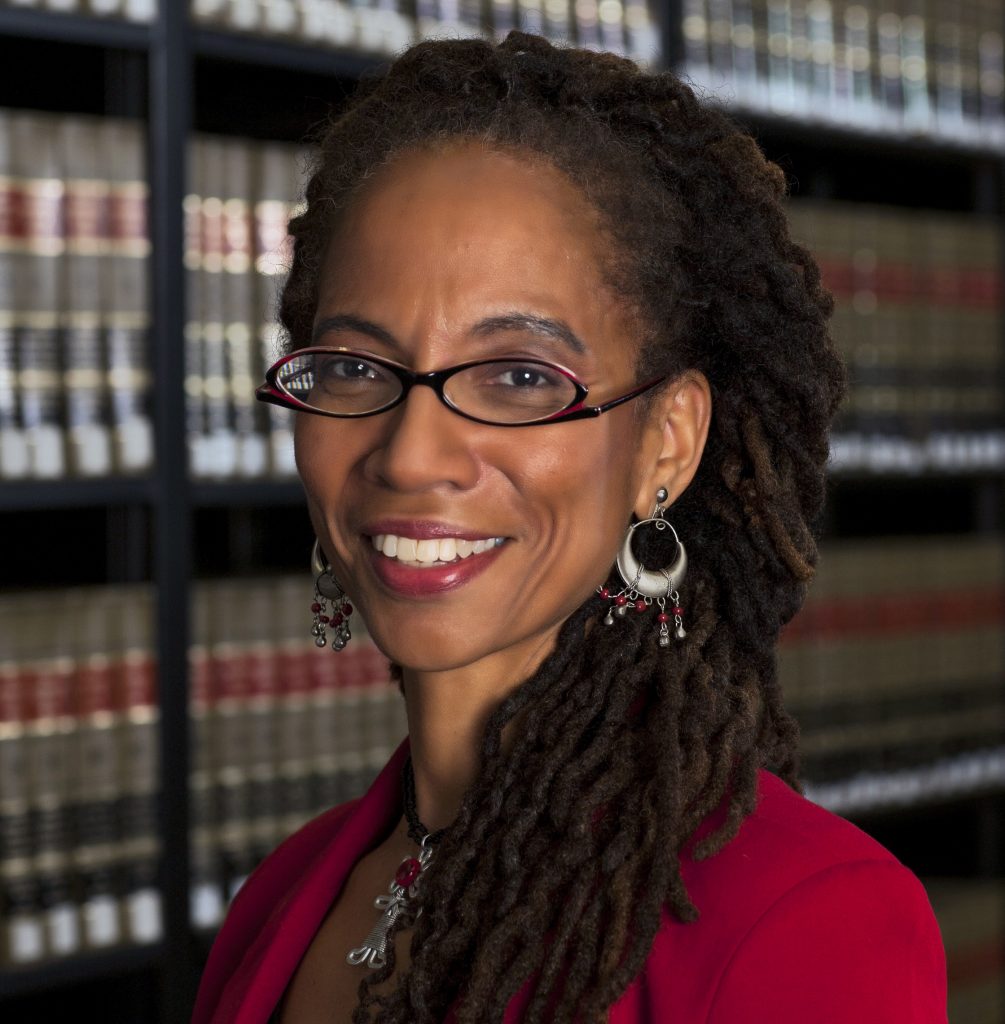
Louis J. Virelli III talks to WTSP about constitutionality of masks

By Josh Sidorowicz
WTSP Tampa Bay
Aug. 26, 2020

Excerpt

Stetson law professor Lou Virelli says legally it’s a cut and dry case because it’s not a legal issue so much as a policy issue.

“When public safety is the issue, our elected officials have the ability to change the way we behave in order to protect that public safety,” he said. “The law is not going to be the avenue by which this gets changed because it is within the legislature’s power to do.”

This article originally aired on WTSP and was published on WTSP’s website on Aug. 26, 2020, with the headline, “Lawmaker’s loud crusade to fight local mask mandates continues to get quietly shot down by judges.”