Skip to content

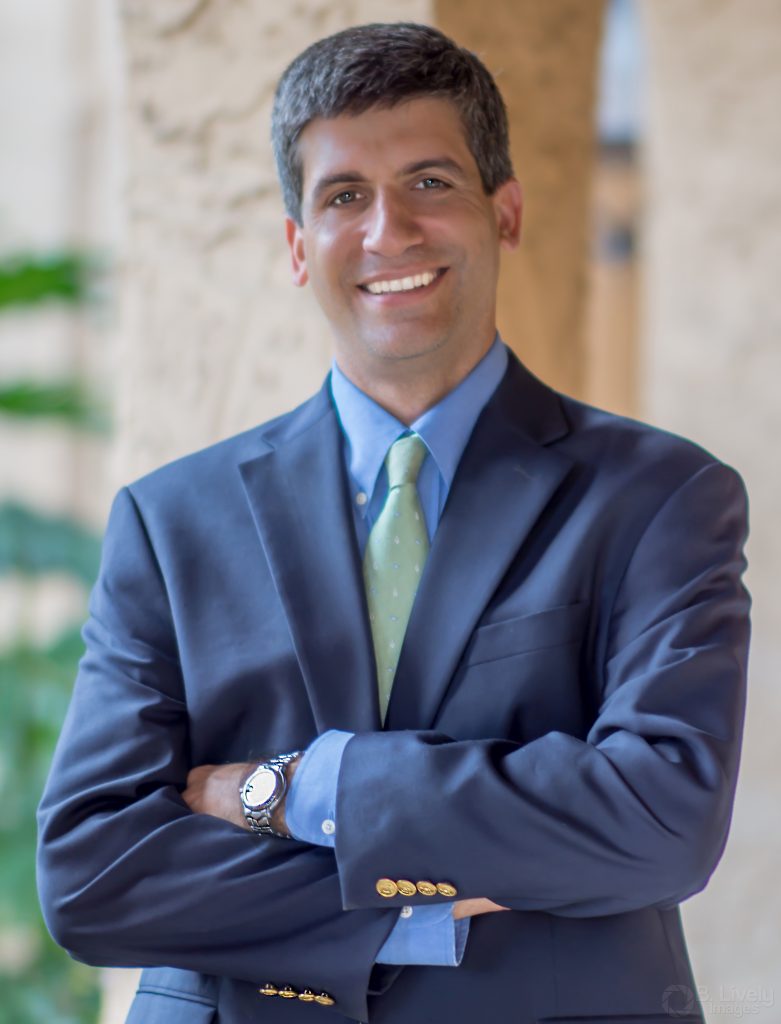
Louis J. Virelli III discusses with WFSU the legal battle of schools reopening

By Ryan Dailey
WFSU
Aug. 25, 2020

Excerpt

Professor Louis Virelli teaches constitutional law at Stetson University – he explained why a stay is commonly applied in high profile cases on appeal.

“When that appellate court makes a decision, if it is different than the decision the trial court made, then whatever the trial court put into effect will have to be reversed,” Virelli told WFSU Tuesday. “So, if the teachers are in the classroom they can be brought out, or vice versa. In a situation like that, the appellate court often stays the trial court decision in order to keep the status quo in place, so we avoid lurching back and forth between all these dramatic changes, while we’re waiting for the final decision on appeal.”

Virelli says the same thing can happen between an appellate court and the state Supreme Court. He made clear why a stay is so often applied in cases involving the state:

“It would be common when the state is a party to the suit, because generally speaking, an instruction by the court to the state is going to have significant consequences to the people in that state,” Virelli said.

This article originally aired on WFSU and was published on WFSU’s website on Aug. 25, 2020, with the headline, “State’s Appeal In School Reopen Legal Battle Means Districts Still Under DOE’s Order, For Now.”
Ciara Torres-Spelliscy looks at fate of Supreme Court with Trump victory in Vox article

By Ian Millhiser
Vox
Aug. 25, 2020

Excerpt

America could become even less democratic if President Donald Trump gets to fill another Supreme Court seat.

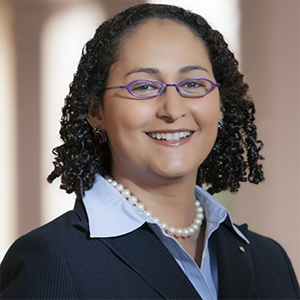
“There are already five conservative votes on the Supreme Court to dismantle campaign finance reforms,” according to Ciara Torres-Spelliscy, a law professor at Stetson University and an expert on money in politics. In this sense, Torres-Spelliscy told me, a third Trump justice would only provide a “superfluous sixth vote” for the Court’s decisions undermining these laws.

This article was originally published on the Vox website on Aug. 25, 2020, with the headline, “What happens to the Supreme Court (and the Constitution) if Trump wins.”

Stacey-Rae Simcox leads expert panel on veterans law for ABA Day

Professor Stacey-Rae Simcox.

As part of digital ABA Day, Professor Stacey-Rae Simcox led a panel of experts from the National Law School Veterans Clinic Consortium — a group dedicated to addressing the unique legal needs of military veterans — in discussing the importance of Legal Services for Homeless Veterans Act.

As part of her introduction, Simcox explained Stetson’s Veterans Law Institute’s role in the community.

“We specifically focus on benefits issues for veterans, particularly the most difficult ones because we have a medical-legal partnership with another university’s medical school so we are able to get our veterans diagnoses and evaluations for evidence purposes,” she explained of Stetson’s Veterans Advocacy Clinic.

The panel discussion is available to view online from the ABA insideWashington Twitter account @ABAGrassroots.

Louis J. Virelli III co-authors 8th edition of administrative law tome

Professor Louis J. Virelli III

Louis J. Virelli, III, with co-authors Charles H. Koch, Jr. (William and Mary Law School), William S. Jordan, III (The University of Akron School of Law), and Richard W. Murphy (Texas Tech University School of Law), published the eighth edition of Administrative Law: Cases and Materials and accompanying teacher’s manual, through Carolina Academic Press this year.

From the publisher

This casebook is designed to help students develop a holistic and pragmatic sense of administrative law through use of an extended hypothetical based on a (fictional) model enabling act, the Wine Trade Commission Act. Each topic in the casebook begins with a problem that requires students to apply doctrines and principles drawn from the materials that follow. As the semester progresses, students gain valuable practice applying administrative law’s abstractions to concrete situations while learning how the provisions of the enabling act and the APA interrelate.

Judith Scully offers insight on Black Lives Matter protests and recent Supreme Court rulings

By Sean Kinane
WMNF 88.5
June 15, 2020

Professor Judith Scully.
Professor Judith Scully

Excerpt

Hillsborough State Attorney Andrew Warren announced Monday that his office will not file charges against the 67 protestors arrested for unlawful assembly in Tampa on the night of Tuesday, June 2.

Warren says in each of those arrests, “the evidence shows that the individuals arrested were peacefully protesting; there was no violence, no vandalism, and no attack on a police officer.”

WMNF asked Stetson University College of Law Professor Judith Scully for her reaction to Warren’s decision.

“Well I think that’s the right decision for the prosecutor’s office and for the people of the city of Tampa, particularly for the protestors,” Scully said. “That’s absolutely the right decision to not prosecute. The problem of course is that those protestors should never have been arrested. Right? That is the problem, but in terms of state’s attorney Warren’s decision, I think he is making the right decision there.”

This interview originally aired on WMNF 88.5 on June 15, 2020, with the headline, “MidPoint with WMNF News Monday.” A written recap with audio excerpts is available online also.

Theresa Pulley Radwan explains bankruptcy process and what consumers can do to protect themselves

By Courtney Robinson
WTSP Channel 10
June 5, 2020

Excerpt

Professor Theresa Radwan Pulley
Professor Theresa Pulley Radwan

Stetson University College of Law professor Theresa Pulley Radwan specializes in bankruptcy. She went through the documents.

“The unfortunate reality is people are going to get paid some percentage presumably of what they’ve put down but certainly not all of it,” she said.

She says the court appointed trustee will have to figure out if there are other assets.

“Has there been money transferred shortly before bankruptcy so they can bring that money back into the estate. Things like that.”

Radwan also offered advice for others who might find themselves dealing with a company that owes them money but has declared bankruptcy. 

She says first, make sure you have your documents together to show what you paid.

Radwan also says pay attention to court orders.  In this case, the federal court issued an Order of Relief and put a stay on all attempts to collect. 

Radwan says if you attempt to collect, you could violate that order and end up having to pay damages to the debtor.  She says even something as small as an email could be viewed as an attempt to collect.

This article was originally published on the WTSP Channel 10 website on June 5, 2020, with the headline, “Veterans owed thousands after tour company files for bankruptcy.”

Linda S. Anderson publishes book on Florida Bar Exam essay prep

Linda S. Anderson, professor of law, wrote Florida Bar Exam Essay Prep: Strategies and Study Materials published by Cognella Academic Publishing. The book is a combination of substantive rules important for the Florida Bar Exam essays and specific study techniques and tools.

With the Florida Bar Exam now scheduled for an online format in August because of COVID-19 challenges and concerns, this new book offers students additional guidance as they prepare.

From the publisher

Florida Bar Exam Essay Prep: Strategies and Study Material helps students cultivate the legal writing skills necessary to craft effective responses to the essay portion of the Florida Bar Exam. The text covers essential rules for a variety of subjects and equips students with tools and strategies for studying, memorizing, and retaining large amounts of information.

The Florida Board of Bar Examiners identifies a long list of subject areas from which they create the questions on the Florida Bar Exam. This book focuses on the subject areas that have been tested more frequently than others and emphasizes rules specific to Florida.

Opening chapters provide an overview of the Florida Bar Exam, basic skills for writing a bar essay, and proven study strategies. Additional chapters address intentional torts, negligence, strict liability and product liability, Florida constitutional law, contracts, real property, landlord-tenant law, family law, trusts, and professional responsibility. End-of-chapter checklists, sample essay questions, and introductions reinforce key learnings.

Florida Bar Exam Essay Prep is an essential resource for law students preparing for the bar or attorneys licensed in other states who wish to practice in Florida.

Luz Nagle discusses how Covid-19 has led to increase in domestic abuse and need for government action

By Jennifer Venis
International Bar Association
May 26, 2020

Excerpt

Professor of Law Luz Nagle.

Domestic abuse has increased exponentially since lockdowns were introduced to combat Covid-19, with some countries reporting a 25-50 per cent increase. These statistics look set to worsen – at the end of April, the United Nations Population Fund predicted at least 15 million more cases of domestic violence globally in 2020 as a result of pandemic restrictions…

Charlotte Gunka and Luz Nagle, Chair and former Co-Chair of the IBA Crimes Against Women Subcommittee respectively, say governments must find a way to reach out to people whose access to help might be blocked…

Nagle, who is also Professor of Law at Stetson University College of Law in Florida, says ‘extra funding for shelters and charities is not enough. On the contrary, it is giving a false sense of the government doing “something.” Funding shelters alone fails to address the root of the problem. Funding must go hand in hand with implicit bias training for law enforcement, prosecutors, and judges’ to ensure victims can access justice.’

This article was originally published on the International Bar Association website on May 26, 2020, with the headline, “Covid-19: increase in domestic abuse requires swift government action.”

Louis J. Virelli III publishes report on recusal standards for agency adjudicators

Professor of Law Louis Virelli.

Law Professor Louis J. Virelli’s commissioned report for the Administrative Conference of the United States was published in early May. The report, Administrative Recusal Rules: A Taxonomy and Study of Existing Recusal Standards for Agency Adjudicators,  is the second part of a project Virelli created for the ACUS. The initial report, Recusal Rules for Administrative Adjudicators was published in November 2018.

From the introduction

Administrative adjudication is a critical aspect of administrative government. Adjudications from benefits determinations to licensing decisions and enforcement actions represent the full panoply of agency authority and touch on nearly every aspect of modern society. What’s more, when agencies adjudicate, they directly affect the rights and liberties of individuals. The sheer scope and public impact of administrative adjudication are therefore enough on their own to highlight the significance of promoting integrity and confidence in agency adjudications. Questions of agency ethics and trustworthiness are even more important as government bureaucracy in general and administrative agencies in particular increasingly become targets—fairly or not—of public critique and skepticism.

Ciara Torres-Spelliscy weighs in on DOJ dropping the Michael Flynn case

By Sean Illing
Vox
May 8, 2020

Excerpt

On the same day that the Supreme Court decided the Kelly v. US case, better known as the Bridgegate case, the Department of Justice’s dropping charges against Michael Flynn makes this a banner day for corruption.

In Kelly v. US, the US Supreme Court decided unanimously that Bridget Anne Kelly would not go to jail for her role in Bridgegate because even though “for no reason other than political payback, Baroni and Kelly used deception to reduce Fort Lee’s access lanes to the George Washington Bridge — and thereby jeopardized the safety of the town’s residents. But not every corrupt act by state or local officials is a federal crime.” The Kelly case is likely to make corruption prosecutions involving lying to the public more difficult, if not impossible, to prosecute.

Meanwhile, the Department of Justice’s choice to drop charges against Michael Flynn is disgraceful. Michael Flynn lied to the FBI and admitted that he lied both in his guilty plea and then in person to the judge in his case. Lying to federal authorities like the FBI is a federal crime under 18 U.S. Code § 1001. Dropping the case against him does damage to the rule of law which requires the DOJ to treat like cases alike and for the United States to be a nation of laws, not men.

DOJ’s own internal guidance on 18 U.S. Code § 1001 states that individuals convicted of violating this part of the law are eligible for up to five years in prison or fines of up to $250,000. The unmistakable impression that had been left by the Flynn affair is that he is being treated differently because he is close to the President. This is not the way the administration of justice should work in America.

Between Michael Flynn’s freedom and Bridget Anne Kelly’s freedom, this has been a stellar moment for white-collar criminals getting away with crimes for which others would have been incarcerated. Today is a mournful day for anyone who still had faith in the rule of law. But it is an election year, and the electorate has a chance to change who is in power in November. A new administration would bring a new Attorney General, preferably one who will enforce the law without fear or favor.

This article was originally published on the Vox website on May 8, 2020, with the headline, “11 legal experts agree: There’s no good reason for DOJ to drop the Michael Flynn case.”

Royal Gardner says Clean Water Act ruling shows ‘science still matters’

By Philip Brasher, Steve Davies and Bill Tomson
Agri-Pulse
May 4, 2020

Excerpt

Professor Royal Gardner

Environmental groups suing over the Trump administration’s new WOTUS rule have found some support for their court challenges in a recent Supreme Court decision. That’s according to Royal Gardner, a law professor at Stetson University, who was the lead attorney for aquatic scientists and scientific societies who filed an amicus brief on the side of environmental groups in a Clean Water Act case out of Maui County, Hawaii.

The 6-3 ruling found that a CWA permit may be needed for discharges of pollutants transported via groundwater into a “water of the U.S.”

“The individual scientists who worked on the brief … were delighted that science still matters,” Gardner said on an Environmental Law Institute webinar. “The court clearly considered science in reaching its decision, and the decision itself is grounded in science.”

This article was originally published on the Agri-Pulse website on May 4, 2020, with the headline, “Daybreak May 4: Congress gears up for CARES 2.”

Peter F. Lake says class actions and pending rules could change colleges’ sex assault procedures

By Wendy Davis
ABA Journal
April 1, 2020

Excerpt

Professor Peter F. Lake

After the Department of Education finalizes new rules, the groups are expected to bring new lawsuits.

Numerous others—ranging from men’s rights groups to colleges to individual states—may well bring their own legal challenges, predicts Peter Lake, a professor at Stetson University College of Law and expert in Title IX compliance.

Groups representing accused students will likely argue that the new regulations still don’t do enough to guarantee due process, Lake predicts, while victims might claim their rights have been compromised.

He adds that litigation surrounding the regulations could be protracted, with judges upholding some provisions but sending others back to the Department of Education for revisions.

“This could take years,” Lake says. “This mess is probably going to end up in a variety of very esoteric cases involving the Supreme Court.”

This article was originally published on the ABA Journal website on April 1, 2020, with the headline, “Class actions and pending rules could change colleges’ sex assault procedures.”