Skip to content

Campus to Career: Army Judge Shares Insights on Success in Military Law

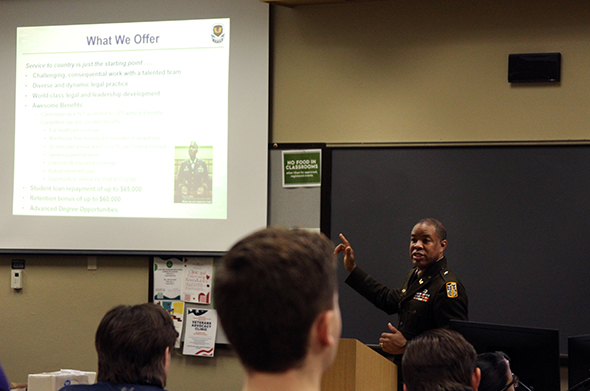
A man in a military uniform points to a slide being projected on a classroom wall.
U.S. Army Brigadier General Ronald Sullivan

Over the course of a candid lunchtime conversation, U.S. Army Brigadier General Ronald Sullivan shared insights on what it is like to pursue a legal career in the military – and tips on how to launch a successful legal career regardless of one’s chosen sector.

His remarks were part of Campus to Career, a multi-month experience that brings law students an up-close look at the many ways one can successfully transition from law student life to a successful career. Speakers come from a wide range of backgrounds, each sharing insights and tips with anecdotes and humor. While Sullivan offered perspective on life as a military lawyer, much of his wisdom applied to all professional pursuits – and life in general.

Key themes were the value of mentorship, the importance of teamwork, and the difference having the right mindset can make. “Keep perspective. Be honest with yourself,” he said when asked what 3Ls should do as they look for their first job out of law school. “Know why you’re going into the office every day.”

Pursuing a legal career in military

Sullivan, who is Chief Judge of the U.S. Army Court of Appeals, gave an extensive overview of the Army Judge Advocate General’s (JAG) Corps – “the greatest and oldest law firm in the world,” a presentation slide boasted.

Consisting of thousands of judge advocates, paralegals, and other professionals, the JAG handles cases related to military justice, national security law, administrative and civil law, and contract and fiscal law. They also support soldiers and their families through trial defense and other legal services.

Sullivan touted the benefits of a military career: the challenging work, diverse and dynamic environment, generous benefits, and opportunities for advancement – as well as the intangibles that would benefit anyone’s career.

It was, for example, Sullivan’s military background that helped him cultivate a collaborative mindset that suited him well as he advanced in his career.

“We start in uniforms with no rank on them… with no names on them,” Sullivan said. “And we work together…. We run together. We get to know each other. We push each other. We compete. And no one’s bigger than someone else. And we take that to our area of practice.”

Optimizing one’s time

It was his father, also a veteran, who taught Sullivan the importance of getting a job done right over focusing on an allotted timeframe.

 “My dad would tell me that we work to task, not to time,” Sullivan said.

He asked the students how long it takes to study for an exam.

“It depends,” said two students, nearly in unison, which elicited laughter from the room – given how often the phrase is uttered on campus.

“It might take ten hours, it might take two,” Sullivan continued. “But it takes as much time as it takes for you to get the information down. That’s the task. But if I told you it will take ten hours to study for your next midterm, and you do everything in six hours, I hope that you stop at six hours.”

But it can also work the other way; if it takes more than ten hours, you do what it takes to get the material down. In a military context, working to task and not to time can mean the difference between life and death.

“I don’t think any of you who paid your taxes this year want us to stop training before we’re ready to actually go out there and do our job,” Sullivan said. “And that’s what I’ll ask each of you to do in your practice of law.”

There’s more to come from Campus to Career this spring. See the full schedule and register for events.
Prof. Palmer on Helping Holocaust Survivors Recover Swiss Bank Funds

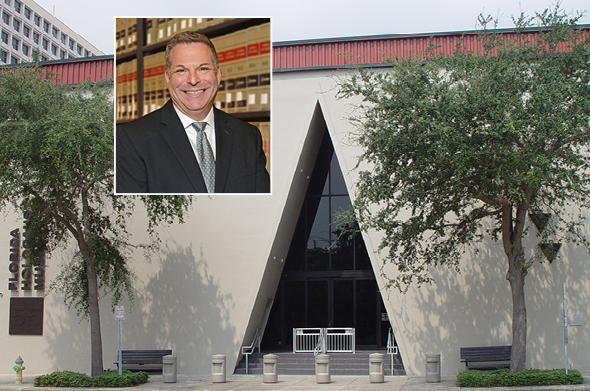
A headshot of Professor Jason Palmer with the entrance to the Florida Holocaust Museum entrance
Stetson Law Professor Jason Palmer spoke at The Florida Holocaust Museum as part of the museum’s Lawyers of Conscience series.

Before a packed room at The Florida Holocaust Museum, Stetson Law Professor Jason Palmer gave a compelling talk on the process of helping families of Holocaust victims reclaim assets from Swiss banks.

Palmer, who teaches international litigation and arbitration, legal writing, civil procedure, and law and sexuality – among other courses – wove together strands of history, collaboration, and heart-wrenching stories of families seeking justice in the wake of unprecedented atrocity as part of the museum’s Lawyers of Conscience lecture series.

“Not only did I spend five years of my life in Zurich, Switzerland, working on these matters and working on international mass claims processes, but I also have a personal connection, with a family member who was a Holocaust survivor and very close friends whose parents were Holocaust survivors,” Palmer said. “So the work that the museum does is very important and the topic is personal.”

An international collaboration

As a claims judge for the Claims Resolution Tribunal (CRT) for Dormant Accounts in Switzerland, Palmer adjudicated claims for dormant Swiss bank accounts of victims of Nazi persecution. The process was the result of legal challenges to Swiss banks that had accumulated great wealth in part from assets deposited there by individuals who later became victims of the Holocaust or were separated from their wealth when the Iron Curtain was established.

Relatives of Holocaust victims were asked to submit claims if they believed a loved one had deposited assets in a Swiss bank prior to the war. If they could prove their relation to the person who established a now-dormant account, tribunal officials awarded them with an amount of money comparable to the original deposit, with appropriate interest and fees added as of the date of the award.

Thousands of people from around the world had legitimate claims – all of which were investigated by a team of about 100 young legal professionals – lawyers, paralegals, translators – committed to doling out justice.

“Over the course of both CRTs, over $720 million was distributed to victims of the Holocaust,” Palmer said. “It was really an amazing enterprise made up of people basically in their late twenties to late thirties.”

A challenging legal landscape

Determining whether a claim should be paid required claimants to provide documentation to justify their claims – but since adjudicators could not rely on documents like death certificates (given there often wasn’t one), they had to get creative.

In one case, a claimant whose grandparents had made a deposit had only one way to demonstrate the validity of her claim: describing the place her grandparents lived, from her memories of visiting them as a little girl. The adjudicators used old maps to determine that her description of the town – the church down the street, a nearby playground – matched the layout of the town listed in the address used to open the account.

There were also challenges with multiple account holders sharing a name, and with determining which nation’s laws applied at a time when shifting borders kept an account holder’s citizenship in flux.

In some cases, the process helped reunite families whose connections had been lost to the war.

When an account was awarded that was determined to be owned by a victim of Nazi persecution, a computer model subsequently helped Palmer and his team to determine an equitable adjustment to the account amount which was also awarded to the claimant. While they couldn’t guarantee the claimants were being given the exact amount that was deposited, the CRT did its best. “It wasn’t perfect justice,” Palmer said. “It wasn’t the exact amount, but it was to right a historical wrong.”

An enduring Stetson Law connection

The event was not just the first edition of Lawyers of Conscience since before the start of the COVID-19 pandemic; it also marks the tenth anniversary of the series. Museum board member Rachael Worthington noted that the inaugural speaker of the series in 2013 was former Stetson Law Dean Bruce Jacob.

Jacob, who spent 13 years as Stetson Law dean (1981-1994), focused on the Nuremberg medical trials, which prosecuted Nazi doctors who carried out cruel experiments on Holocaust victims.

Palmer’s evening lecture was open to the general public, but the professor also led a CLE seminar on the same topic for legal professionals earlier in the day.

Learn more about The Florida Holocaust Museum.

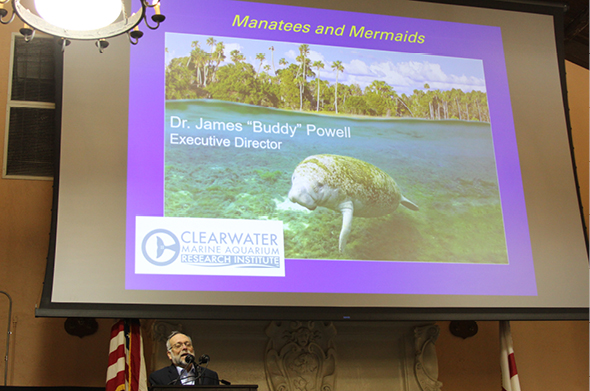
Clearwater Aquarium’s Buddy Powell on Manatees & Mermaids

A man speaks at a podium with a manatee on display in the background.
Clearwater Marine Aquarium’s Buddy Powell addressed a room full of students curious about Florida’s manatees and threats to their habitat.

A majestic sight in Florida’s rivers and coastal waters, manatees are as beloved as they are emblematic of the Sunshine State. Yet the large aquatic mammals – who may have inspired the myth of mermaids – might be more threatened than ever in Florida and other places they dwell.

That’s why, for its first Foreman Biodiversity Lecture of 2023, Stetson Law hosted Dr. James “Buddy” Powell, one of the world’s leading experts on manatees, for a compelling talk about these lovable sea creatures and how to protect them.

President of Clearwater Marine Aquarium (CMA) and director of the facility’s Research Institute, Powell has contributed to humanity’s understanding of manatees, also known as sea cows, for decades.

From Cousteau to Clearwater

Powell’s interest in manatees dates back to the 1960s. Growing up in Crystal River, Florida, a waterfront town about 100 miles north of Stetson Law’s main campus in Gulfport, he spent extensive time navigating the pristine springs that feed the river, springs with 72-degree water year-round, which attracts manatees in search of warmth when Gulf and Atlantic temperatures plummet.

 Jacques Cousteau himself hired Powell, then a high-school student, as a guide to find manatees in Crystal River.

He even has a near-photographic memory of manatees he has studied and can identify them by the unique scarring patterns on their thick skin, which are often caused by boat propellers.

A manatee swims in clear blue water in Crystal River, Florida.
An iconic species in the Sunshine State, Florida manatees face unprecedented threats to their health and habitats.

A truly fascinating species

Powell spoke passionately about the Florida manatee and its counterparts around the globe, including the Amazonian manatee, the African manatee and the dugong – the manatee’s fork-tailed relative in the Indo-West Pacific.

Though they dwell in waterways, he said, manatees are more closely related to elephants than whales or dolphins. In addition to elephants, they share a common ancestor with aardvarks and hyraxes. Like elephants, they have an exceptional memory – which helps them maintain consistent food sources and get to warm-water sanctuaries when temperatures drop.

Also, they may have inspired maritime lore for cultures the world over. “No matter where you go – Africa, South America, Central America – there is this reference and legacy to a water deity like a mermaid,” Powell said.

An inspiration for future environmental lawyers

As law students, those present at the lecture were curious about how they can use their skills to help manatees thrive despite numerous factors depleting their habitat and food supply. Powell, who has advocated for protections for manatees and their habitats in Florida, West Africa, Central America, and Cuba, had some insights.

He recalled his early efforts to get protections in Citrus County, where Crystal River is located, in 1969. Time was of the essence, he said, given how development and other factors posed a threat to their habitat.

“We realized in time that it was a really special place,” he said.

Powell and other environmental advocates proposed that Crystal River become a manatee sanctuary. Officials initially denied the request, but ultimately came around – to everyone’s benefit; manatee-spotting is now a major tourism draw during the winter months.

“I can say ‘I told you so,’” he said.

A complicated threat

The U.S. Fish and Wildlife Service downlisted manatees from endangered to threatened in 2017. The designation comes as a mortality trend on the Atlantic Coast has led to record manatee deaths. Nutrient loading in the Indian River Lagoon – fertilizer, agricultural runoff, septic tank leakage – is feeding algae blooms that affect manatees’ main food source.

“What’s happening is, this algae has decreased the water clarity, which seagrass – being grass – needs clear water and light through to the bottom to grow,” Powell said. “Now, we’ve seen a dramatic decrease in vegetation. So they’re getting there and they’re finding, well, ‘where’s the buffet?’”

Environmental lawyers can help, he said, by using their legal expertise to push for science-backed clean water protections.

“It’s about environmental regulation and environmental laws – so that we can remove those threats to manatees,” Powell said. “What’s good for manatees is good for everything else.”

Disaster Resilience Symposium comes to Stetson Law

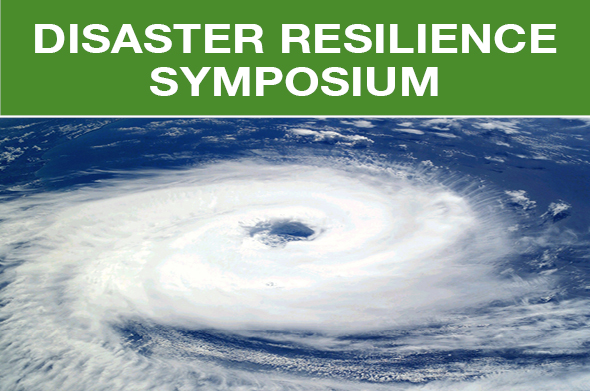
Text: Disaster Resilience Symposium March 15-16

Whether it’s the COVID-19 pandemic or Hurricane Ian, major disasters can dramatically disrupt society on multiple levels. Yet it is often the poorest and most underserved communities that are most hurt in their aftermath.

This is why Stetson Law looks forward to hosting the Disaster Resilience Symposium, which takes place March 15-16. A collaborative effort led by nonprofit Equal Justice Works and cohosted by the American Bar Association and American Bar Association Young Lawyers Division Disaster Legal Services, the event’s theme is “Building Community Resilience Through Advocacy and Systemic Change.”

Important policy discussions

The event will bring together legal, academic, and community voices instrumental in disaster law and the resilience movement for keynote presentations on current and emerging issues in disaster response and preparedness. Organizers plan to examine the question of how to build more equitable disaster resiliency and recovery strategies through the lens of law and policy.

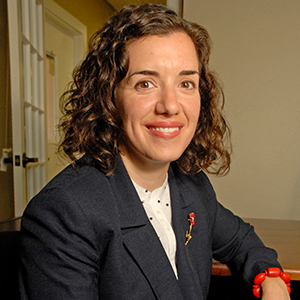
Law Professor Christine Cerniglia

“As we see on the news, disasters are occurring at an alarming rate across the globe,” said Law Professor Christine E. Cerniglia, who is Stetson Law’s Director of Clinical and Experiential Education. “How communities prepare to become more resilient will define our future – most importantly, how communities respond to ensure all members in the community are resilient – will further define us. This symposium hopes to provide a space to think about how to bolster preparedness for all, including the most vulnerable, in order to create equality in disaster response.”

Disaster resilience through a legal lens

Over the symposium’s duration, panelists and speakers will discuss the recent changes in disaster law, systemic challenges, and how disaster and preparedness, response, and recovery may evolve in the future. Attendees can also learn about legal resources and tools they can use to advocate for greater resiliency in the communities they serve.

“This conference brings together leading advocates and thinkers to share best practices and resources for increasing and improving community response and resilience to all types of disasters,” said Equal Justice Works CEO Verna Williams, “Lawyers play a critical role in disaster preparedness and recovery, and to build disaster resilience in communities, we know having a sustained presence of lawyers on the ground is crucial. We’re thrilled to work in partnership with groups that are on the frontlines of this important issue.”

Attendees can expect highly substantive sessions discussing timely topics like climate justice, how disaster effects migrants, advocacy through organizing, and more. Immersive workshop experiences, meanwhile, aim to broaden their perspectives on the critical role legal and government professionals play in helping low-income families recover in the aftermath of a disaster.

The Disaster Resilience Symposium is free to attend. Those who do so in person are eligible to earn CLE credit. Registration closes February 14. Learn more and register.

Lila Jaber ’90 Gives Compelling Tips for Building A Career

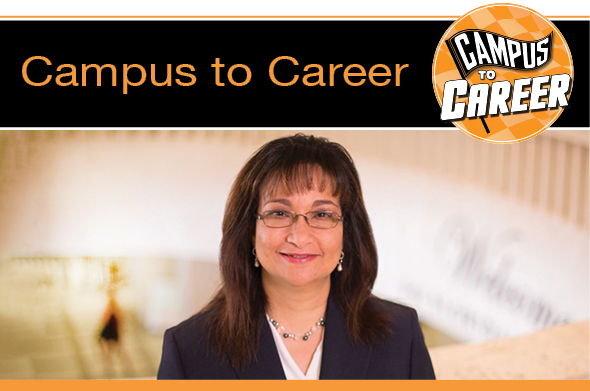
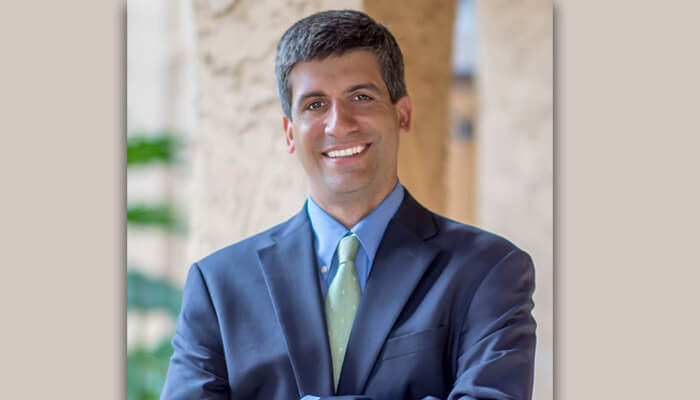
A headshot of Stetson Law alumna Lila Jaber.

At a Friday lunch event, Stetson Law students got a candid look at the incredible career path of one of Stetson Law’s most distinguished alumni.

Double Hatter Lila Jaber, who graduated from Stetson University in 1988 before earning her J.D. from the College of Law in 1990, was speaking as part of Stetson Law’s 2023 Campus to Career experience. A prominent Florida energy lawyer, she has held numerous leadership roles within her area of practice.  Recently, she served on the board of Chesapeake Utilities, was a regional managing shareholder at the firm Gunster Yoakley & Stewart, P.A., and is a member of Stetson University’s Board of Trustees. In 1999, Jaber was appointed by then-Governor Jeb Bush to serve on the Florida Public Service Commission, an entity that regulates the state’s public utilities. She was later appointed to a second term and ultimately served as commission chair. She currently runs her own consulting firm.

Emphasizing the importance of characteristics like patience, integrity, compassion, and humility, Jaber recounted how her strategy for building a successful career went from a plan to reality – even when life’s unpredictable nature made things look a little different than what she might have expected.

A clear but flexible vision

She told the students that not knowing precisely what role to which they aspire isn’t a bad thing.

“It’s true I planned a future, I didn’t necessarily plan exactly where I was going to be,” Jaber said. “And that’s why when I was speaking with some of you who said to me, ‘I’m not quite sure,’ my reaction was ‘that’s okay.’ Because sometimes, exactly what you’re going to do finds you.”

As a first-generation Palestinian American Muslim, Jaber said she applied to Stetson University without telling her parents until nearly the deadline for confirming her attendance with the school. When she finally told them, they were staunchly supportive.

Seeking mentorship, knowing the material

Early on, she sought mentorship from the likes of beloved Stetson University Professor of Political Science T. Wayne Bailey, who not only encouraged her to attend law school, but was a champion of the ambitious student.

Years later, when then-Governor Jeb Bush named Jaber to the Public Services Committee shortlist, her competition consisted of two well-known state lawmakers. At the time, she was bureau chief for the agency’s water and wastewater division and used her working knowledge to advocate for herself. She knew the work well, and it won her the appointment.

“Because when you do your homework and know everything better than the next person, you’re actually empowering the decisionmakers to make the right decision,” Jaber said. “How could they not, right?”

Suited for leadership

Other things she stressed to attendees: familiarize yourself with decisionmakers, develop and effectively communicate your message, be prepared for negative feedback, be gracious and leave the door open.

Lawyers, she said, must also recognize how their work equips them to be powerful community leaders.

“I think of the practice of law as a leadership opportunity,” Jaber said. “Because lawyers are the leaders of the community. They certainly can be – and you should be.

Learn more about Lila Jaber.

See the full Campus to Career 2023 schedule.

Stetson Law Now Offers Free Teletherapy for Students

Photo of a young woman on the phone that reads "Uwill: We're here for you when you need someone to talk to."
Uwill is a free teletherapy program now available to all Stetson Law students.

The curricula may be challenging, the schedule demanding, and the bar exam on the horizon, but law school is one of the most rewarding paths one can take. It’s not always easy, though, and finding time to manage stress in a heathy way can be tough.

That’s why Stetson Law is thrilled to announce a new program that invites students to seek counseling and access self-care tools at times most convenient for them – and it’s free.

These resources will be offered through Uwill, the leading student mental health and wellness solution.

With Uwill, students can receive free, immediate access to teletherapy with a therapist of your choice – all from their smartphone or other device.

Here’s how it works: 

  • Students may choose a therapist based on their preferences, including issue, gender, language, ethnicity 
  • They can choose a time that fits their schedule with day, night and weekend availability 
  • There are multiple methods to choose from: video, phone, chat, or message 

Access is quick and easy, so students can seek immediate, confidential counseling whether it’s between classes or in the middle of a marathon late-night exam study session. Students are invited to sign up and create a private profile now so assistance is available when they need it most.

The program also features free access to guided meditation sessions, yoga classes that can be streamed at any time, and other self-care practices to help users manage stress and cultivate mindfulness.

As always, in-person mental health counseling services are available on the Gulfport campus via the Student Affairs department during business hours.

Campus leaders hope the program will prove a critical student-wellness resource that caters to the needs of students accustomed to life in the digital space.

“As a community, Stetson Law recognizes that wellness is paramount – not just for managing the stresses of life as a law student, but for building resilience in all areas of life,” said Stetson Law Interim Dean Theresa J. Pulley Radwan. “It’s also important that we invite students to seek mental health and self-care practices that are tailored to their individual needs. It is my hope that the convenient, customizable care Uwill offers will help our students face life’s challenges – and recognize that they’re never alone.”

Students are invited to register and book their first session in just minutes by clicking here. 

Those who have questions or need assistance can contact Uwill support at 833.99.Uwill or [email protected].

The Stetson Law community is excited to offer this solution to our students.

Week 1 Recap: Campus to Career Kicks off with Compelling Events

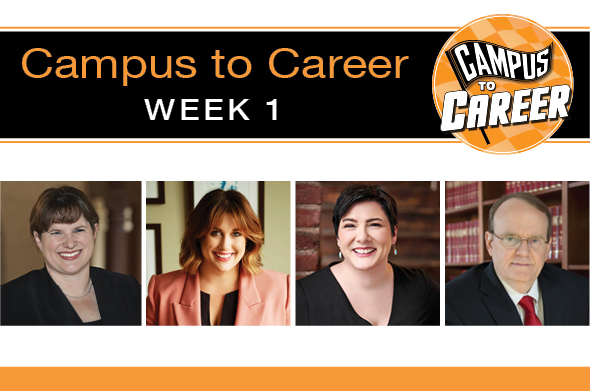
A collection of photos of people who spoke during Campus to Career 2023 Week 1.

What was previously a shorter event featuring tabling and panel discussions has evolved into a multi-month experience full of meaningful conversations and immersive exercises.

Produced by Stetson Law’s Office of Career and Professional Development, Campus to Career aims to help law students map their transition from the classroom to professional life after graduation. The first week of programming showcased a broad range of speakers, from a leading advocacy professor to a “death doula” offering advice on dealing with the emotional challenges that arise from working with clients dealing with trauma or end-of-life issues.

A lighthearted lesson in advocacy

As the first week of the Campus to Career experience opened, Law Professor Brooke Bowman, director of Stetson Law’s Moot Court Board invited students to watch a live moot court practice of the Hunton Andrews Kurth National Championship team. It was an engaging demonstration of argument fundamentals, to help prepare students for the kinds of arguments they can expect to present in courses like Legal Research and Writing II – and, someday, in the courtroom.

An added bonus for those who attended the popular session: because students can feel stressed about presenting oral arguments, desserts (“stressed” spelled backwards) were served.

Advice on “compassion fatigue”

On Thursday, students heard a compelling and thoughtful presentation on a difficult topic from Brenna Galvin, the managing shareholder and elder law attorney at Maser Amundson & Boggio, P.A. Her practice focuses on estate planning, life care planning, veterans benefits, special needs planning for individuals with disabilities, and more. She is also a “death doula” with deep expertise in helping clients and their loved ones work through end-of-life issues and other challenging issues.

She said such work can be emotionally taxing, especially as clients and their families begin to expect more from the legal professionals they hire.

“Our society’s changing,” she said. “We look to experts for more than just signing documents or pushing paper.”

A consequence of this, she said, is a condition called compassion fatigue, which can have a toll on physical and emotional health. It’s so common among legal professionals that the American Bar Association even has a definition for it.

It seems inevitable for practitioners in areas like elder law and estate planning, Galvin said, but with thoughtful lifestyle choices like a healthy diet, ample exercises, and occasionally unplugging, it is possible to mitigate compassion fatigue.

“To get through it, we have to adopt some strategies for wellbeing,” she said.

Meaningful work in the nonprofit space

Many students go to law school because they want to change the world – and it can be done, said C. Grace Juneau Whiting, a lawyer who is CEO of the National Academy of Elder Law Attorneys, and Hugh Webster, a nationally recognized lawyer and advisor to nonprofit organizations, associations, and individual executives. The two discussed the rewards of leadership and advocacy in the non-profit sector. 

They also spoke on the ways a J.D. can help an aspiring nonprofit executive excel (a lawyer’s attention to detail, for example, can help such entities avoid costly errors), and recounted their own journeys from law school to becoming trailblazers and thought leaders.

The way professionals work may be changing – even in the legal and nonprofit worlds, they said, but some things remain critical to success. Maintaining a strong network, seeking mentors, and a no-job-is-too-small attitude were among them.

Learn more about the Campus to Career experience and see the full schedule.

Professor Simcox Co-Publishes New, Clinic-Focused Veterans Law Textbook

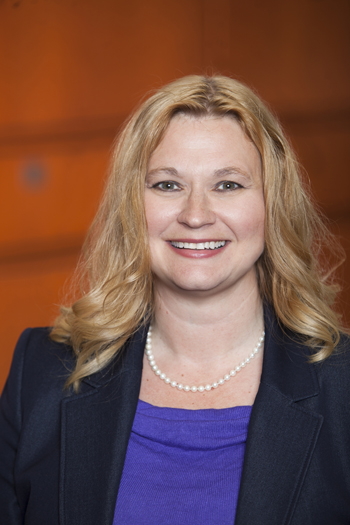
Professor Stacey-Rae Simcox.

After roughly five years of intensive research and writing, Law Professor Stacey-Rae Simcox has published a unique book that could benefit countless veterans.

A collaboration with William & Mary Law School Professor Emeritus David E. Boelzner, the book is called Veterans Benefits: Law, Theory, and Practice. Published through Carolina Academic Press, it aims to serve as “a useful and complete resource for teachers of veterans law, particularly in the practical context of preparing student advocates in law clinics to assist veterans with their claims for benefits.”

It concisely maps out the incredibly complex VA claims system and shows students how to navigate it.

A practical focus

What makes the book particularly useful to students working in veterans law clinics at law schools across the country is that it gives them concrete examples that invite students to apply what they are learning to real-world client situations.

“A clinical course requires practical application of statute, regulation, case law, and analysis to a real-life client’s legal issues,” Simcox, who is director of Stetson Law’s Veterans Law Institute, said. “This book is unique because it provides students with a number of client vignettes to allow the student to apply what they are learning to a practical client scenario, just as they would in practice.”

Another useful attribute for their intended audience: the most important cases in this area of law are summarized so students spend less time dissecting and analyzing each case and more time working on behalf of their clients.

“That allows students and instructors to move more quickly through understanding complicated material toward applying what they have learned,” Simcox said.

An ever-changing landscape

The cover of Veterans Benefits: Law, Theory, and Practice
Law Professor Stacey-Rae Simcox and her co-collaborators spent nearly five years working on this clinics-focused textbook.

One of the biggest challenges Simcox and Boelzner had was making sure the text reflected the major congressional changes to veteran benefits and the way the U.S. Department of Veterans Affairs administers them.

One example: In 2019, VA implemented a statute passed in 2017 that overhauled the appeals process for VA decisions, which meant they had to significantly alter the book. Another happened just as they went to press, when Congress passed the PACT Act, which added a number of presumptive conditions for veterans who served in the Middle East, Camp Lejeune, and Vietnam. 

“Every time these changes happened, they had to be accounted for in the book to make sure it had the most up-to-date material for students,” Simcox said. “That slowed the process down dramatically.”

Bridging a legal gap

Part of what makes veterans law clinics at law schools such a critical resource for veterans going through the VA claims process is a federal policy barring them from hiring an attorney until the agency has examined evidence and issued a decision affirming or denying the claim. This often leaves veterans without an advocate during a critical part of the disability claims process.

Since their work is unpaid, students working through veterans law clinics at their law schools are uniquely positioned to assist – provided they have a solid grasp of the system’s nuances.

“Our hope is that this book will help law students and other advocates gain a deeper understanding of veterans law and help achieve better results for our veterans and their families,” Simcox said. “And on a personal note, as a veteran myself, I consider it a great privilege to give back to my fellow veterans in this small way.”

Both authors thank Judge Michael Allen, a former Stetson Law professor was also director of the college’s Veterans Law Institute, in their acknowledgements. An early collaborator on the book, Allen was appointed a judge of the U.S. Court of Appeals for Veterans Claims in August of 2017. His appointment to the bench was an important development for veterans, given his extensive knowledge of federal courts as well as constitutional and administrative law, Simcox said.

Learn more about Veterans Benefits: Law, Theory, and Practice.

Student, Staff Member, and Prof. Make Inaugural AALS Pro Bono Honor Roll

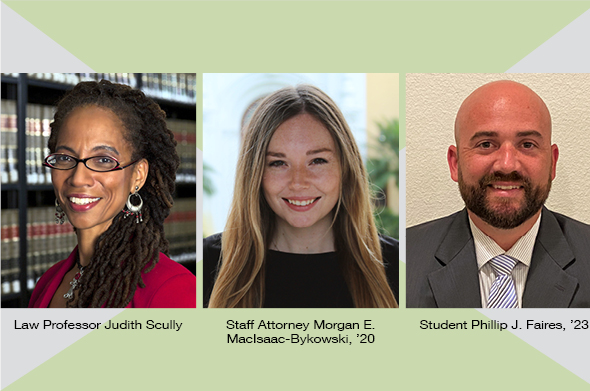
A collage of headshots featuring Law Professor Judith Scully, VLI staff attorney Morgan MacIsaac-Bykowski, and student Phillip J. Faires
Stetson Law’s inaugural members of the AALS Pro Bono Honor Roll

At Stetson Law, the spirit of service is a core part of the culture. Students, who are required to perform at least 60 hours of pro bono work in order to graduate, give generously of their time and energy, as do faculty and staff.

That’s why it’s no surprise that a Stetson Law student, staff member, and faculty member have been named to the American Association of Law Schools’ inaugural Pro Bono Honor Roll. The award aims to recognize “the pro bono work of individuals engaging in, expanding, and/or supporting their law school community” through relevant volunteer work, according to the AALS website. The organization defines eligible pro bono work as legal in nature, not performed for pay or credit, serving underrepresented or underserved individuals or groups, and, for students, supervised by a licensed attorney.

Stetson Law’s inaugural honorees are:

  • Law Professor Judith Scully
  • Stetson Law Veterans Law Institute Staff Attorney Morgan E. MacIsaac-Bykowski, ’20
  • Student Phillip J. Faires, ’23

A sense of duty

For those charged with identifying who should be recognized with this honor, members of the AALS Section on Pro Bono and Access to Justice look for individuals who use their legal knowledge, skills, and talents to expand access to justice.

“As members of the legal profession, we have a lot of privilege and a lot of responsibility,” said Angela F. Schultz, Assistant Dean for Public Service at Marquette Law School and 2022 Chair of the AALS Section on Pro Bono & Access to Justice. “We are tasked with ensuring justice is accessible to all members of our communities and not just those who can afford to hire private representation. A pro bono practice is one important part of closing the justice gap.”

Schultz commended the students, staff, and faculty listed on the AALS Pro Bono Honor Roll for committing themselves to the highest ideals of the legal profession by engaging in, expanding, and/or supporting their law school communities through pro bono service.

“We admire you,” she said.

Thousands of hours committed

Since earning her J.D. from Stetson Law in 2020, MacIsaac-Bykowski has spent countless hours in service to the Veterans Law Institute’s clients, which are veterans and their families. She has directly assisted in over 70 cases and helped train and supervise nearly 60 students – who themselves have provided over 13,000 hours of pro bono legal work to clients. She regularly publishes articles pertaining to veteran law, serves on several committees that work to support veterans, and assists in drafting amici curiae briefs as part of the National Law School Veterans Clinic Consortium. Three of these briefs were submitted to the Supreme Court of the United States, two to the United States Court of Appeals for the Federal Circuit, and one to the United States Court of Appeals for Veterans Claims.  

She said what inspires her to carry out this work for no compensation is the sacrifice of veterans in her own life who showed her the immense value of service.

“The women and men I advocate for now are some of the strongest, bravest, and most steadfast people I have encountered,” MacIsaac-Bykowski said. “I see them fighting for their well-deserved benefits for years without relief – but they never give up. They are my motivation. I have the opportunity and ability to advance their interests and feel honored to be trusted with this work.”

Learn more about Stetson Law’s pro bono program and the many ways students can fulfill their pro bono requirement.

ALI Names Prof. Virelli Among Its Newest Members

Louis Virelli
Law Professor Louis Virelli III

Known for his engaging teaching style and influential scholarship on judicial ethics, Law Professor Louis Virelli III is generous with his time when it comes to bettering his profession.

The legal profession’s thought leaders have taken notice. The American Law Institute has named Virelli among its latest inductees. Consisting of law professors, practicing attorneys, judges, government officials, and others, the ALI’s mission is critical to civil law in the U.S. The group’s members work to shape, clarify, and modernize laws to reflect society and culture.

To join ALI, prospective members must first be nominated by their peers, then elected to the group.

“I am thrilled to have been elected to the ALI,” Virelli said. “I am exceedingly grateful that my peers were willing to support my candidacy and honored to be part of such a venerable institution. I am looking forward to contributing in any way I can to the ALI’s mission, especially in its work on government ethics.”

A robust Stetson Law presence

Virelli joins several Stetson Law faculty members who are part of ALI, including Professor Ellen Podgor, who was awarded a prestigious Life Membership in 2022, as well as Interim Dean Theresa Pulley Radwan, Professors Kristen Adams, Rebecca Morgan, Luz Nagle, and Candace Zierdt, and Professor Emerita Liz Moody, who is also an ALI Life Member.

Law Professor Ellen Podgor smiles in front of the library.
Law Professor Ellen Podgor, an expert in white collar crime

“Professor Virelli will be a welcome addition to the American Law Institute, as he offers expertise in administrative law, constitutional law, and judicial recusal, all important areas for law reform work,” Podgor said of her colleague.

Interim Dean Radwan said Virelli’s rigorous scholarship and ability to convey complex legal concepts with clarity and conciseness make him an ideal fit for ALI.

“At Stetson Law, we place profound importance on demonstrating how the scholarly and philosophical underpinnings of American jurisprudence inform public policy and the legal profession itself – and this is something at which Professor Virelli truly excels,” she said. “I look forward to seeing what he brings to ALI’s vital work in his new role.”

Critical work, important milestone

The news comes at an exciting time for the institute – both in terms of major milestones and the current state of political discourse.

“In 2023, ALI will celebrate its 100th anniversary,” said ALI President David F. Levi. “We are moving into our second century at a time when the United States is divided on many issues and many Americans are skeptical of all institutions, including our courts and legal system.”

The current climate makes ALI’s work even more critical, Levi added, and new members will be essential to that work.

“It is only through the efforts of our talented, diverse, and dedicated membership body that we may continue our work protecting and preserving the rule of law,” he said. “I look forward to our new members joining us in our mission as we look ahead to our second century.”

Learn more about ALI’s most recently elected members.

Year in Review: 10 Ways Stetson Law Triumphed in 2022

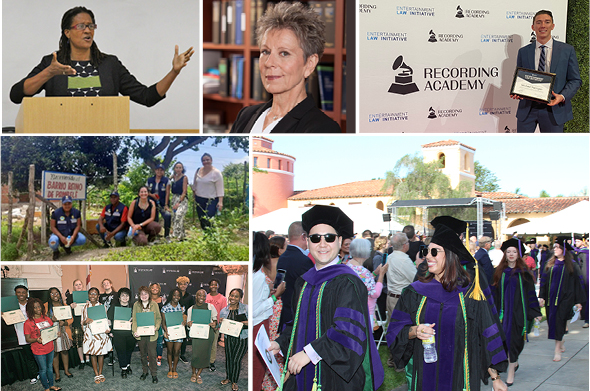
A collage of images from the year 2022.

With 2023 on the horizon, it is safe to say 2022 was an incredible year for Stetson Law. It wasn’t just ranking near the top in key U.S. News & World Report areas, having one of Florida’s highest bar passage rates, or earning the college’s third INSIGHT Into Diversity Magazine HEED Award in a row.

1. Prolific Writing & Publishing

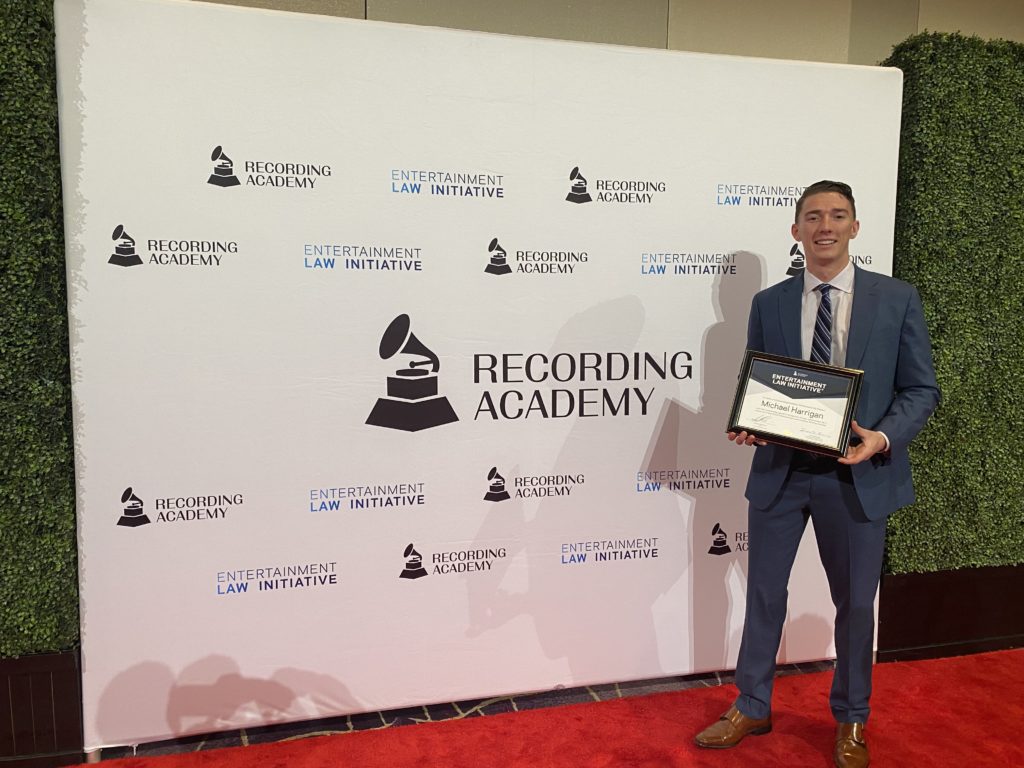
Stetson Law Student Michael Harrington holds a plaque recognizing his winning essay at a GRAMMY week event.
Law Student Michael Harrigan

With such an incredible legal writing program at Stetson Law, it’s no wonder students wrote and published award-winning pieces, including:

2. Compelling Conversations on Campus

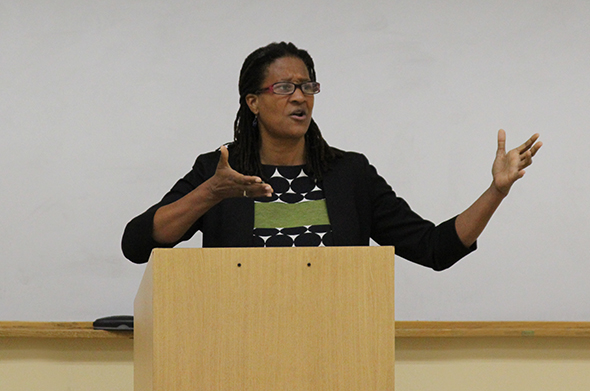
Professor Catherin Smith gives a spirited discussion
Scholar Catherine Smith

Throughout the year, the Stetson Law community enjoyed enlightening conversations with nationally known scholars, community leaders, and accomplished alumni. Among the most notable speakers in 2022:

3. Popular In-Person Conferences & Events Returned

Law Professor Peter Lake speaks at a conference
Law Professor Peter Lake, Charles A. Dana Chair and Director, Center for Excellence in Higher Education Law and Policy

As in-person events returned in 2022, Stetson Law was thrilled to invite colleagues back to industry-leading events like the 43rd Annual National Conference on Law & Higher Ed, the International Environmental Moot Court Competition, the Educating Advocacy Teacher Conference (EATS), and the National Conference on Special Needs Planning and Special Needs Trusts.

4. Winning Performances at National Competitions

Once again, Stetson Law students dominated the national moot court scene. From yet another sweep of the Florida Bar Association International Law Section’s Richard DeWitt Memorial Vis Pre-Moot in Miami to a “double-double” at the Robert Orseck Memorial Moot Court Competition at the Florida Bar’s Annual conference in Orlando, Stetson Law’s amazing competitors helped bring the college’s national championship tally to a whopping 86. See more competition stats.

5. Faculty Recognition & Leadership

A headshot of Law Professor Rebecca Morgan
Law Professor Rebecca Morgan

Throughout the year, pioneering Stetson Law faculty members saw national recognition:

6. Students Used Their Skills to Serve Others

As the college’s pro bono program turned 30, students carried on the tradition of putting their knowledge to good use. This includes everything from helping veterans confront bankruptcy to helping research and write an amici brief for an important U.S. Supreme Court clean water case.

7. Spring ’22 Graduation Was a Day to Remember

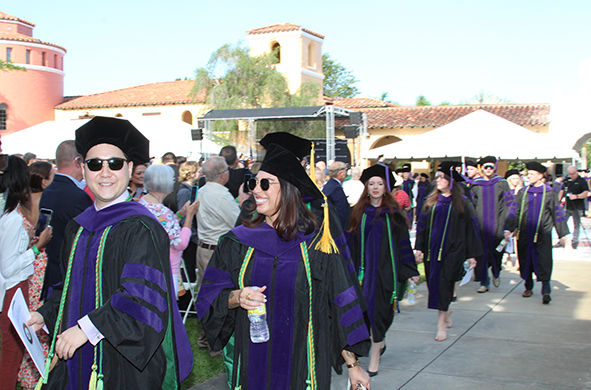
Graduates in sunglasses smile as they leave an outdoor commencement ceremony
Graduates at the Spring 2022 enjoyed sunshine and camaraderie.

On a sunny day in May, Stetson Law’s Class of ’22 officially became alumni – but not before hearing a compelling, touching, and often funny commencement address from Deputy Secretary of the U.S. Department of Veterans Affairs Donald Remy. The valedictorian was Jessica Zellitt, a passionate advocate for improving healthcare policy.

8. Advocacy Institute Construction Began

In late May, Stetson University officials heralded the start of a construction project that will bolster Stetson Law’s legacy as a destination for advocacy. When it opens, Stetson Law’s Advocacy Institute will be a destination for accomplished and aspiring advocates alike.

9. Stetson Law Reached out to the Greater Community

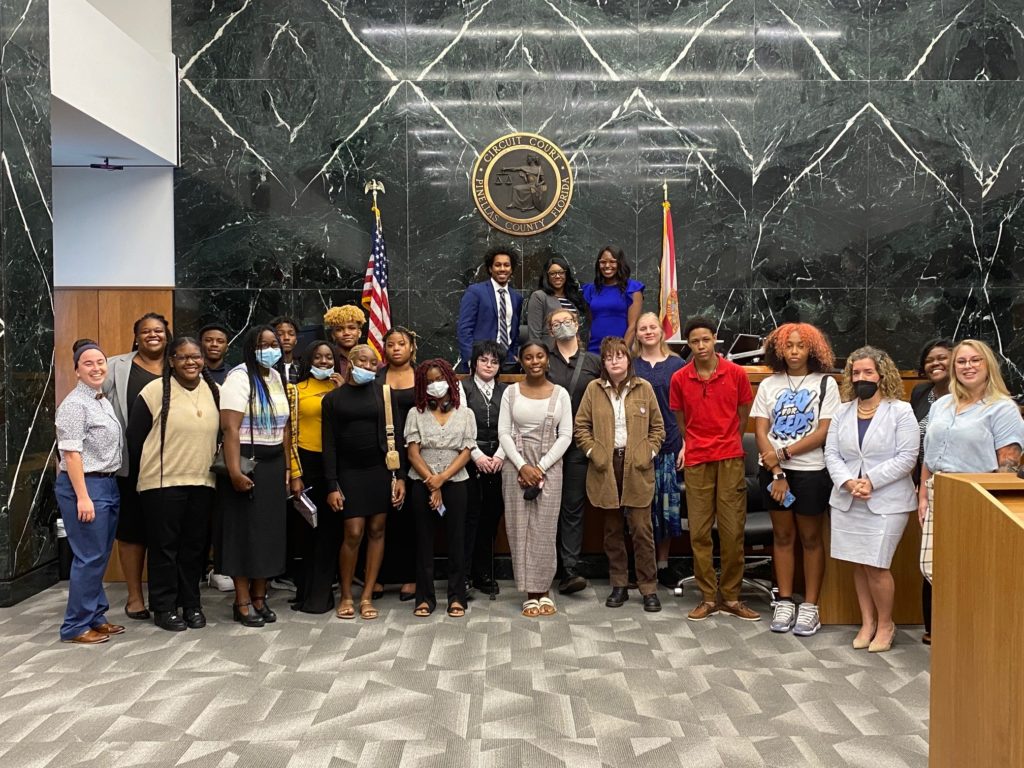
Stetson Law’s Summer Youth Civic Engagement Program, Class of 2022

By inviting youth from the surrounding community to learn about the role local, state, and national governments play in their lives, the creators of Stetson Law’s summer Youth Civic Engagement Program aimed to show them how to advocate for themselves and their communities.
Over the spring semester, Law Professor Kirsten Davis taught a course at University of South Florida St. Petersburg that introduced undergraduates to studying law.

10. Eye-Opening Travel Experiences Ensued

Law Professor Luz Nagle visits a neighborhood in Cartagena, Colombia.
Law Professor Luz Nagle advocates for human rights in Colombia

With Covid-era travel restrictions lifted, Stetson Law’s beloved study abroad programs took flight, including beloved summer programs in Oxford, England and The Hague, The Netherlands. Critical partnerships with international agencies and NGOs brought Professor Luz Nagle to Colombia to help fight exploitation of migrants and Professor Royal Gardner to add Stetson Law as a signatory to an international sea turtle protection agreement.
Stateside, Stetson Law re-launched its popular Civil Rights law travel course, which took students to important sites throughout the South for an exploration of the Civil Rights Era through a legal lens.

See all Stetson Law News.

Highlights from Stetson Law’s December Graduate Celebration

A shot of Stetson Law's iconic tower from the horseshoe driveway.

To celebrate Stetson Law students who successfully completed their law school journey over the Fall 2022 semester, officials held an intimate on-campus gathering in their honor (see the full video below).

The event was held December 15 in the Great Hall and featured remarks from campus and university leadership. Kicking off the celebration, Stetson Law Interim Dean Theresa J. Pulley Radwan commended the students for persevering through an unprecedented era.

“You are part of an unshakable cohort who have experienced more in your time in law school than most have in their lifetime,” Pulley Radwan said. “You have shined through a global pandemic – all while caring for your friends, family, and colleagues. You have weathered many shifts in the last few years and have remained resilient and excellent. We are so proud of you.”

The culmination of an unconventional journey

Acknowledging how those who complete their studies in the fall semester tend to be part of Stetson Law’s innovative part-time program, Stetson University Executive Vice President and Provost Noel Painter congratulated them for growing their careers through legal education.

“Congratulations on all that you have accomplished,” Painter said. “Your journey to this point is uniquely your own.  Celebrate the successes and embrace the challenges that made you a better person and a better lawyer along the way.”

Welcoming the soon-to-be Stetson lawyers

Stetson Lawyers Alumni Association Vice President Brittany Maxey-Fisher, J.D. ’07, told the audience that through exemplary work, Stetson Law alumni help tell Stetson Law’s story to the world while helping shape a better society.

“Together we will shine an even brighter spotlight on Stetson’s reputation for advocacy, legal writing, and our nationally recognized Centers and Institutes,” she said. “As you continue to design your footprint, strive for excellence, leadership and purpose. Create environments that celebrate differences and inspire growth in others by empowering them as they travel along their journey.”

Following Maxey-Fisher’s speech, Radwan called out the names of the students and noted the loved ones who helped them through their law school journey.

A moving speech

Law Professor Judith Scully, a champion of Stetson Law’s social justice initiatives, encouraged students to remain committed to bettering society. Noting that many law school applicants say their desire to study law comes from wanting to change the world, Scully offered five key pieces of advice:

  1. Be courageous.
  2. Be filled with gratitude.
  3. Remain hopeful no matter what.
  4. Stay focused on your work.
  5. Learn how to value, embrace, and nourish rest.

“I believe that in this December 2022 graduating class there are many small groups of you who will indeed help to change the world for the better,” she said. “I have great hopes and dreams for you.  My prayer is that your time as lawyers be well spent.  May you help to balance the scales of justice.  May you be abundantly blessed with good fortune and may you use your good fortune to benefit those around you and continue to be a source of inspiration for others.”

Watch the celebration