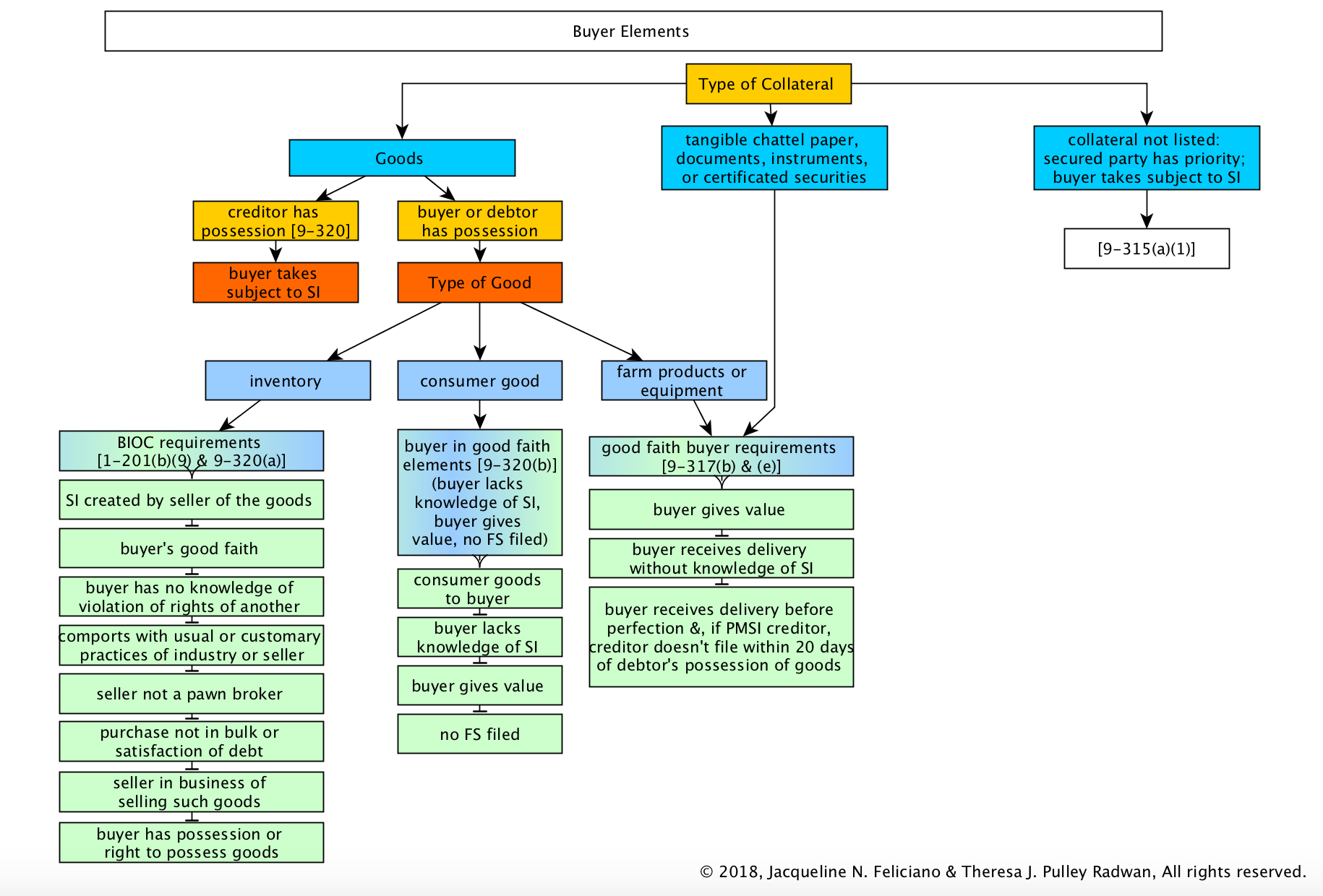
Flowchart – Slide 13: Buyer Elements Media
Date of Publication:
Recommended Citation
Theresa J. Pulley Radwan, Flowchart – Slide 13: Buyer Elements (2018)Clicking on the button will copy the full recommended citation.
Date of Publication:
Theresa J. Pulley Radwan, Flowchart – Slide 13: Buyer Elements (2018)Clicking on the button will copy the full recommended citation.

Date of Publication:
Rebecca C. Morgan et al., Elder Law In Context (Wolters Kluwer, 2017)Clicking on the button will copy the full recommended citation.

Date of Publication:
Theresa J. Pulley Radwan, Not So Friendly to Frenville: The Split Among Courts Regarding Accrual of Claims in Bankruptcy, 68 Baylor L. Rev. 728 (2016)Clicking on the button will copy the full recommended citation.
Date of Publication:
Theresa J. Pulley Radwan, With Malice Toward One? — Defining Nondischargeability of Debts For Willful and Malicious Injury Under Section 523(a)(6) of the Bankruptcy Code, 7 Wm. & Mary Bus. L. Rev. 151 (2016)Clicking on the button will copy the full recommended citation.
The federal bankruptcy system strikes a balance between the rights of debtors seeking a fresh start and the rights of creditors seeking repayment for debt. While many areas of the Bankruptcy Code provide examples of this balancing act, perhaps no area of the Code embodies this balance better than discharge of debt. Discharge of debt provides the fresh start for debtors on which the bankruptcy system rests, but the Code also protects the interests of creditors who would otherwise have their claims against the debtor discharged.
Section 523(a)(6) excepts from discharge any debt for willful and malicious injury by the debtor to another entity or to the property of another entity. Clearly, this section prohibits discharge for debts that result from a bad act of the debtor, and serves a punitive function by not allowing a debtor to use the bankruptcy system to avoid debts when the debtor acted wrongfully in incurring those debts. While the Supreme Court has had the opportunity to consider the definition of willful and malicious injury, it has done so only in the context of a tort claim, leaving courts to determine the applicability of § 523(a)(6) in the context of breach of contract claims.
This article merges traditional tort doctrine regarding levels of intent to harm, traditional contract doctrine of efficient breach, and modern developments recognizing punitive damages in contract actions to conclude that § 523(a)(6) should permit nondischargeability of intentional breaches of contract that lack business justification.
Date of Publication:
Theresa J. Pulley Radwan, Projecting the Impact of Lanning and Ransom: Calculating “Projected Disposable Income” in Chapter 13 Repayment Plans, 29 Emory Bankr. Dev. J. 59 (2012)Clicking on the button will copy the full recommended citation.
This article considers the impact of two recent Supreme Court decisions regarding how a bankruptcy debtor calculates projected disposable income that must be dedicated to repayment of creditors in a chapter 13 case. Though the Supreme Court decisions seem consistent in that both reject a “formulaic” approach to that calculation, there are subtle inconsistencies that have caused confusion in applying these decisions. The article considers how these decisions impact the projected disposable income calculation in two different factual scenarios: (1) the debtor’s income or expenses terminate during the term of the plan, or (2) the debtor’s expenses remain the same but never reach the level of deductions contemplated by the United States Bankruptcy Code. Ultimately, the article concludes that the calculation of projected disposable income should focus on the debtor’s actual income and expenses in all situations.
Date of Publication:
Theresa J. Pulley Radwan, Sword or Shield: Use of Tithing to Establish Nondischargeability of Debt Following Enactment of Religious Liberties and Charitable Donation Protection Act, 19 Am. Bankr. Inst. L. Rev. 471 (2011)Clicking on the button will copy the full recommended citation.
Date of Publication:
Theresa J. Pulley Radwan and Rebecca C. Morgan, The Elderly in Bankruptcy and Health Reform, 18 Geo. J.L. & Pub. Pol'y 1 (2010)Clicking on the button will copy the full recommended citation.
Date of Publication:
Theresa J. Pulley Radwan and Rebecca C. Morgan, Today’s Elderly in Bankruptcy and Predictions for the Elderly of Tomorrow, 6 NAELA Journal 1 (2010)Clicking on the button will copy the full recommended citation.
Date of Publication:
Royal C. Gardner and Theresa J. Pulley Radwan, Corporate Shell Games: LLPs, LLCs, and Responsibility for Mitigation Sites, 31 Nat'l Wetlands Newsletter 6 (2009)Clicking on the button will copy the full recommended citation.
Determining who is legally responsible for a wetland mitigation site is not always a straight-forward process. A wetland regulator provided us a portion of a mitigation bank application that referred to a corporation and its officers, an LLP and two LLCs. This article explains what LLPs and LLCs are, and why many mitigation bank operators opt for these business forms. We then walk through the mitigation bank document itself to try to unravel which entity actually would be responsible for the mitigation bank site. The article concludes with recommendations that wetland regulators should consider when evaluating mitigation proposals involving LLPs and LLCs, whether affiliated with a mitigation bank or not. While there is no particular reason to be worried about LLPs and LLCs as compared to traditional corporations, regulators should consider requiring notice for any changes in the ownership and management of these entities. Regulators should also ensure that financial assurances such as letters of credit and performance bonds expressly cover the entity (whether LLP, LLC, or another form) responsible for the mitigation site.
Date of Publication:
Theresa J. Pulley Radwan, Keeping the Faith: The Rights of Parishioners in Church Reorganizations, 82 Wash. L. Rev. 75 (2007)Clicking on the button will copy the full recommended citation.