This week, I focused heavily on my final project. Just to clarify how I conducted the survey: I posted it as a student working on a school project about COACH, not as a brand employee. I felt it was important to make that distinction, as I don’t have the authority to represent the brand officially, and presenting myself that way could be compromising for both me and COACH. So I chose to keep it neutral.
I only received 18 responses (which wasn’t the number I was aiming for), but those 18 participants were incredibly engaged. Many of them wrote in-depth responses about their experiences with the brand, and their feedback was extremely insightful. I plan to quote a few of their comments in my final presentation to reinforce my key points with real voices from the audience.
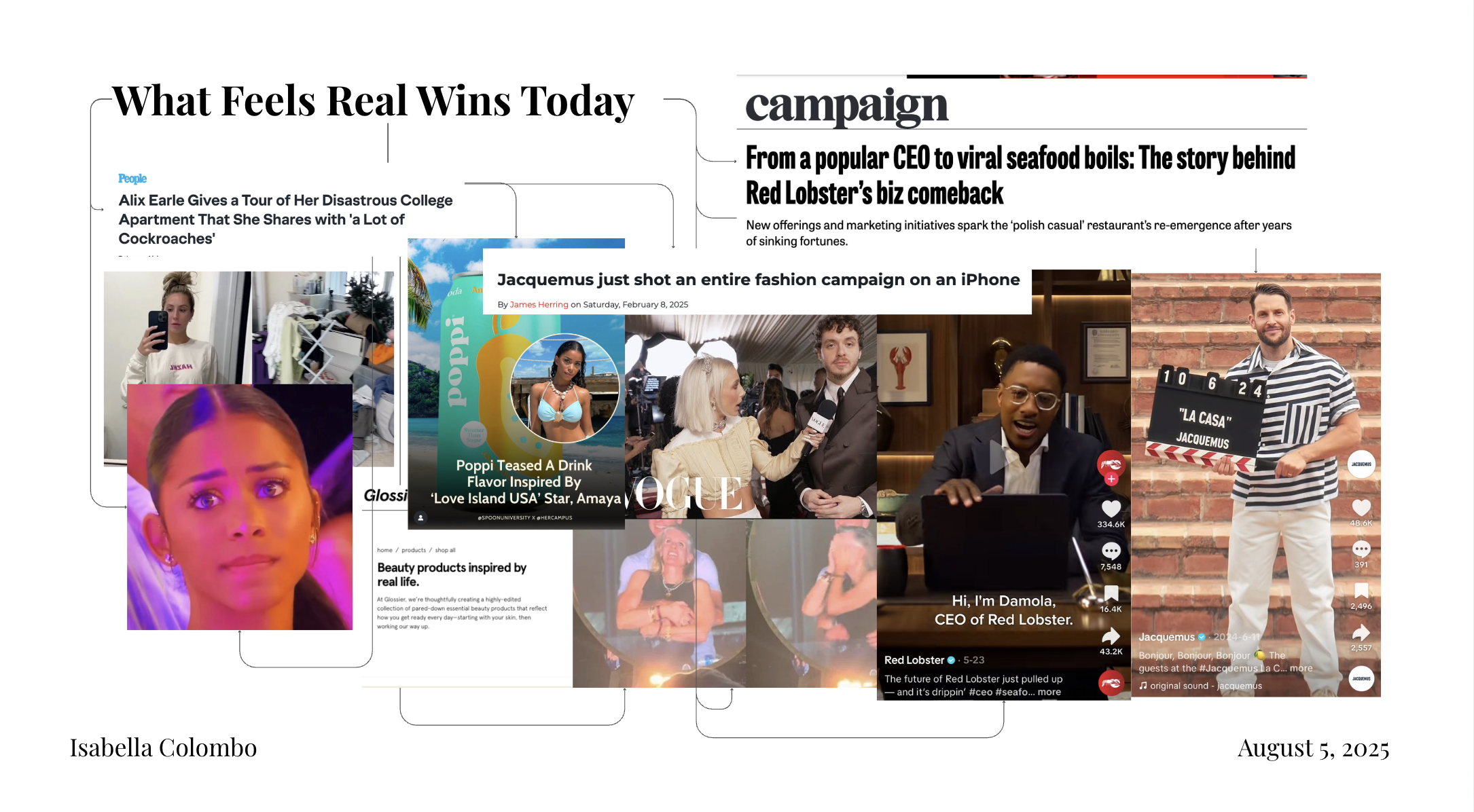
As for the presentation itself, I’m planning to open it with a look at some of the most viral content from the past two years — analyzing what they have in common and why they went viral. The answer? They all share the same quality: authenticity. Real life, unfiltered, unscripted content. Just real people doing real things. I think this is a strong way to start the presentation and get the audience thinking about why “real” content resonates so deeply, especially with Gen Z, who are craving authenticity, experience, and community. And the main place they seek that is on social media. Brands either adapt to this shift or risk being left behind.
I did a lot of research and found valuable data from recent Vogue Business reports, including performance insights from top fashion brands. The data shows how social media presence and engagement directly correlate with brand growth. Brands like Jacquemus and Dior are evolving by becoming more approachable and relatable online — a major shift from the traditional luxury image of exclusivity and distance. People now want to feel represented. They want authenticity, diversity, and emotional connection — and that is exactly the foundation of my project.
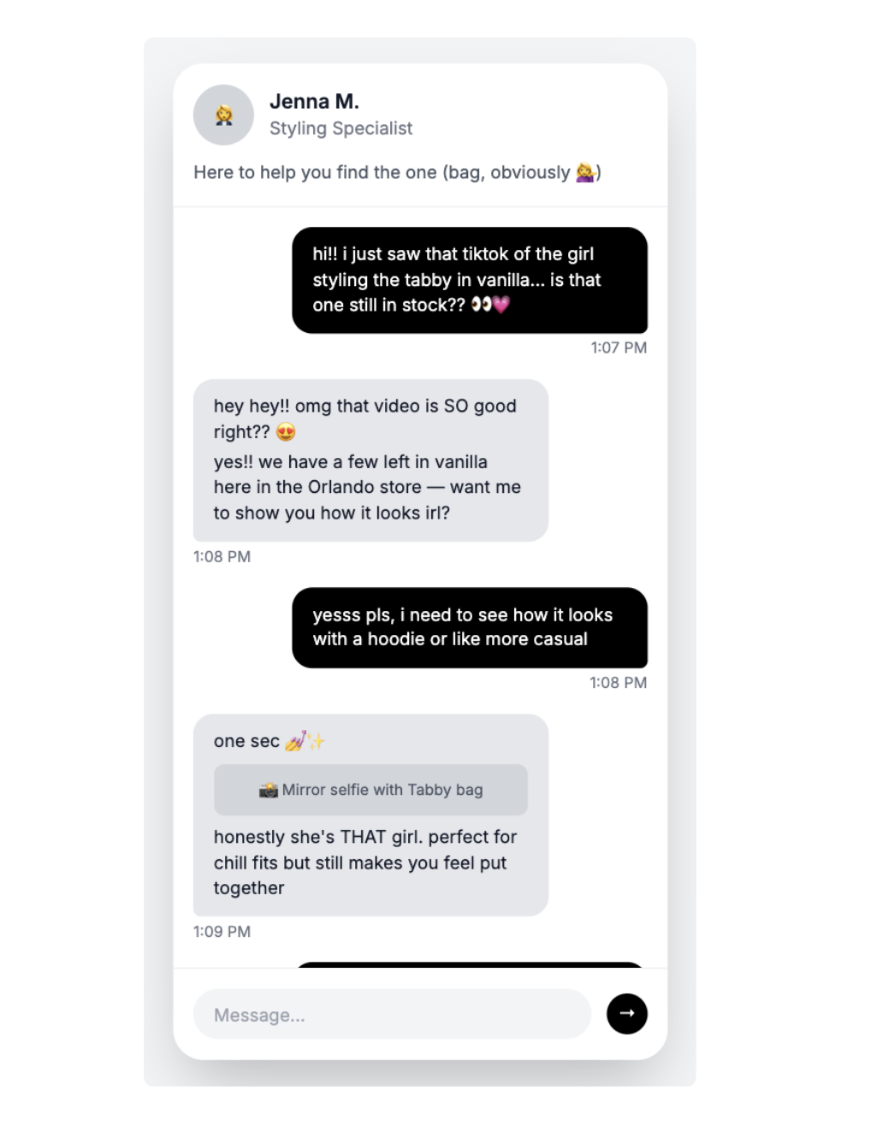
I also made great progress on the visual elements of my presentation. Using Canva AI, I created an interactive, simulated chat between a customer and a COACH sales associate. This supports one of my key strategies: clienteling. It’s all about creating a direct communication channel between the brand and the customer. Not just to support the purchase decision, but to build a deeper, more human connection. My presentation follows the “show, don’t tell” approach — no long bullet points or dense slides. Instead, I’m using visuals, examples, mockups, videos, and links to make everything seamless and easy to understand. That’s where my interest in UX really comes into play.
On the corporate side, we had two amazing calls this week. The first was about the COACH (Re)Loved + Sustainability initiative. This program transforms old, irreparable bags into something completely new and unique, giving them a second life. The call focused on how sustainability is not just an environmental responsibility, but also a key purchasing factor for younger generations. COACH is prioritizing sustainable practices more than ever, understanding that this shift is both urgent and expected by consumers.
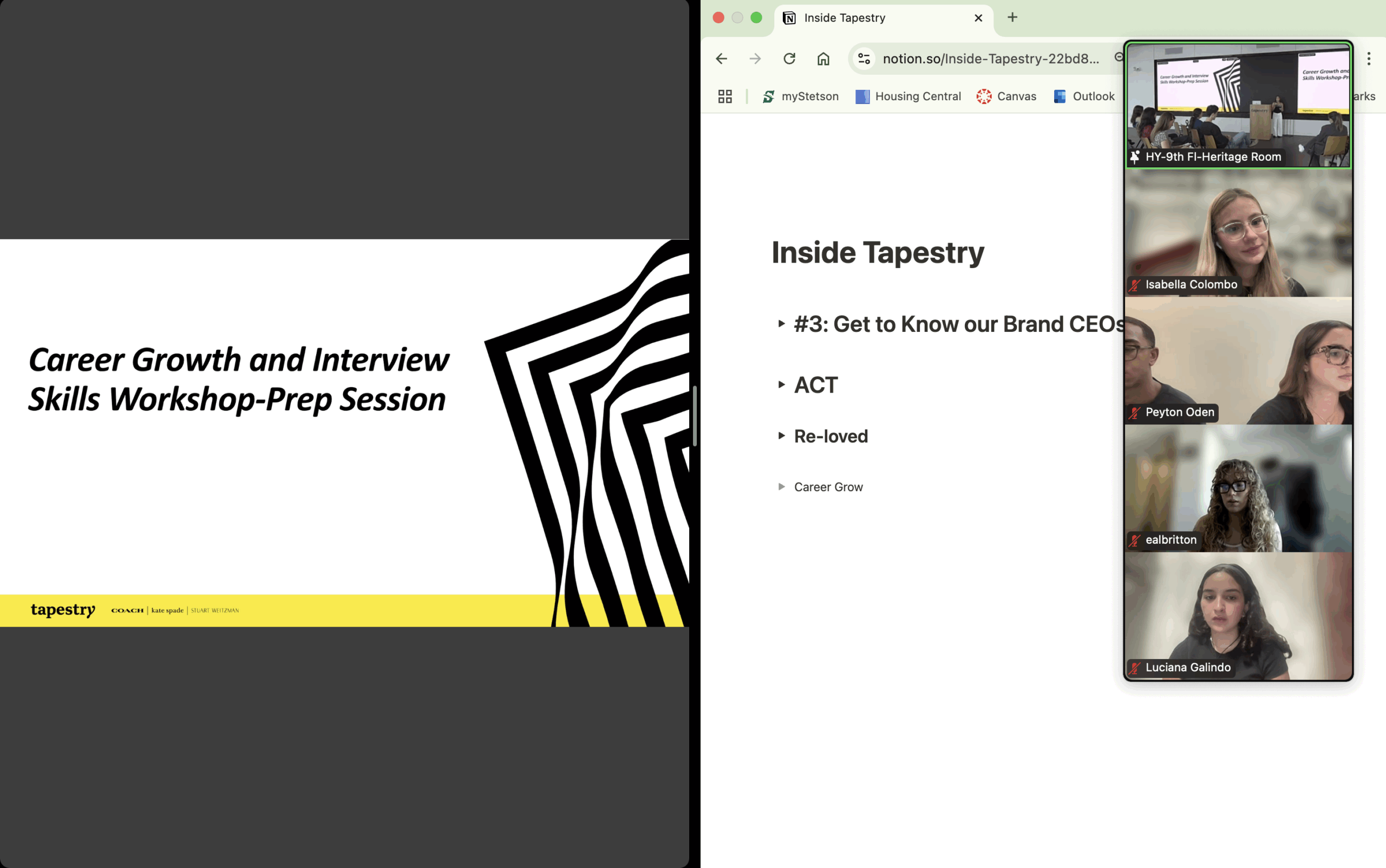
The second call was all about career growth and interview tips, led by the Talent Acquisition team. It was especially valuable because they offered specific guidance for interviews with Tapestry, in case we decide to pursue roles within the company in the future. They explained the types of questions they ask, what they’re looking for in candidates, and the rationale behind their process. As someone who is definitely interested in returning to the brand, I found this session incredibly helpful and motivating.
👍