WEEK 5 – COACH

Halfway through my Coach internship!!!

We started with an amazing Visual Merchandising workshop led by the talented Marina Campbell, where we learned how to align KPIs with visuals and store flow. It was eye-opening to see the strategy behind every decision, from the smallest details to the big picture, and how all of it works together to create a seamless and intentional customer experience. This was one of the trainings I was most excited about. She focused a lot on explaining how it’s NOT ONLY about creativity — of course that also plays an important part — but also about strategy, understanding your consumers, and knowing the intention behind everything. I think these two skills are something I’ve been training and learning to combine: creativity and strategy. So, this workshop really resonated with the areas I want to study and the abilities I want to develop.

We also had a visit from Caitelin Fagan-McCoy from the Talent Acquisition team, who checked in with us to hear about our experiences, expectations, and learnings so far. I shared with her my perspective and suggestions for the internship, and also used this opportunity to ask questions about careers at Tapestry and the opportunities available for recent graduates — especially international students, like in my case. Which is something we always need to keep in mind.

We also had an online session with the COACH CEO, Todd Kahn, and Kate Spade CEO, Eva Erdmann. It was so inspiring to hear about their journeys and how they got to where they are now. They spoke a lot about what it means to be a leader, and how it’s more about loving what you do and focusing on your career now instead of worrying about the next step. They talked about the importance of taking risks and having passion for your job. They also discussed the future of both brands — Kate Spade is going through a rougher phase compared to COACH, so it was interesting to see different analyses and perspectives on the future. Eva mentioned how this is the moment to reinvent the brand by connecting with its past, and Todd is more focused on new strategies and approaches to maintain growth. Super interesting conversation! I could write a whole essay about this meeting kkkk

Lastly, I’ve been focusing a lot on my project and made great progress. I’m dividing my proposal into a 3-phase strategy combining organic content, influencer partnerships, and digital clienteling on social media. I believe I have great data to support my ideas. Now I need to work on finishing my first draft, and start the visuals for the presentation.
Week 6

A short but very packed one. It was Fourth of July weekend so that meant a three day weekend, and that the office would probably be empty pretty early on Thursday as well. But all jokes aside there was still work to be done and of course for me, more things to model.

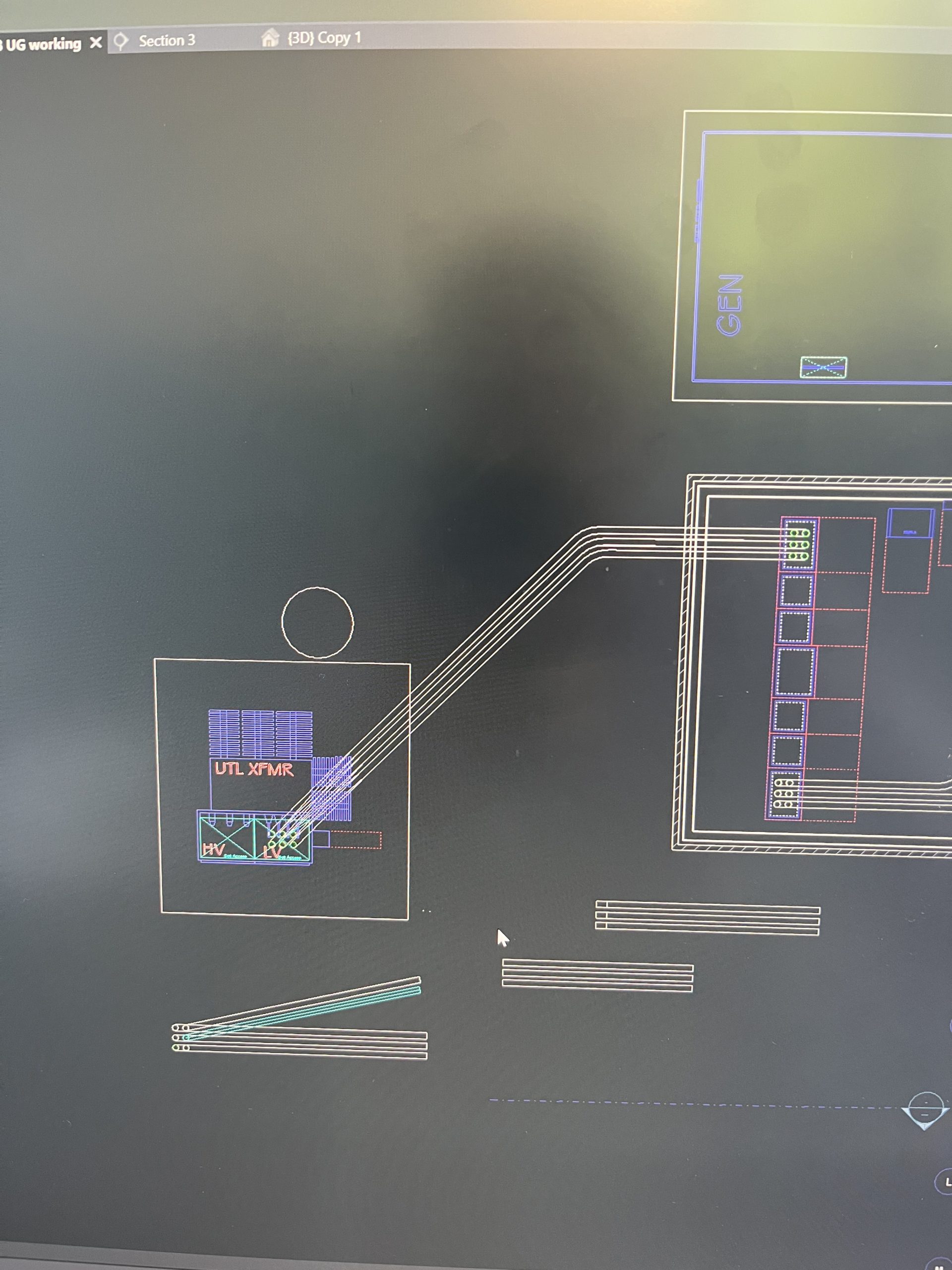
My week consisted of working mostly on underground conduit runs. A new challenge and underground is far different from overhead. The pipe is typically bigger for underground. The paths you can model are more flexible than the overhead. You can have bigger bends and not everything has to bend at 90 degrees to get where you want to go. This is because the underground conduit is ran through ducktbanks that are dig before hand and then filled with concrete once the pipe is in place.

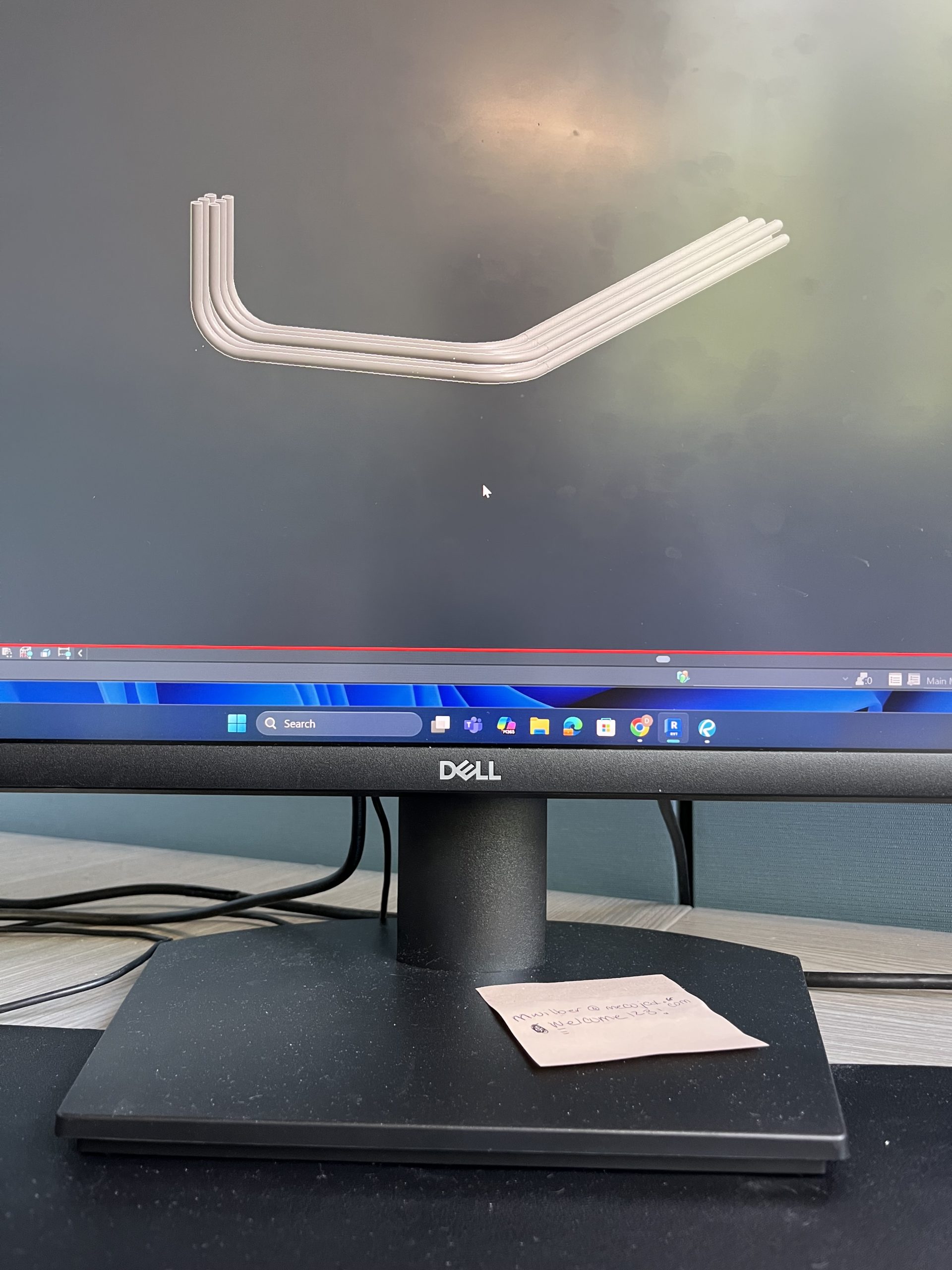
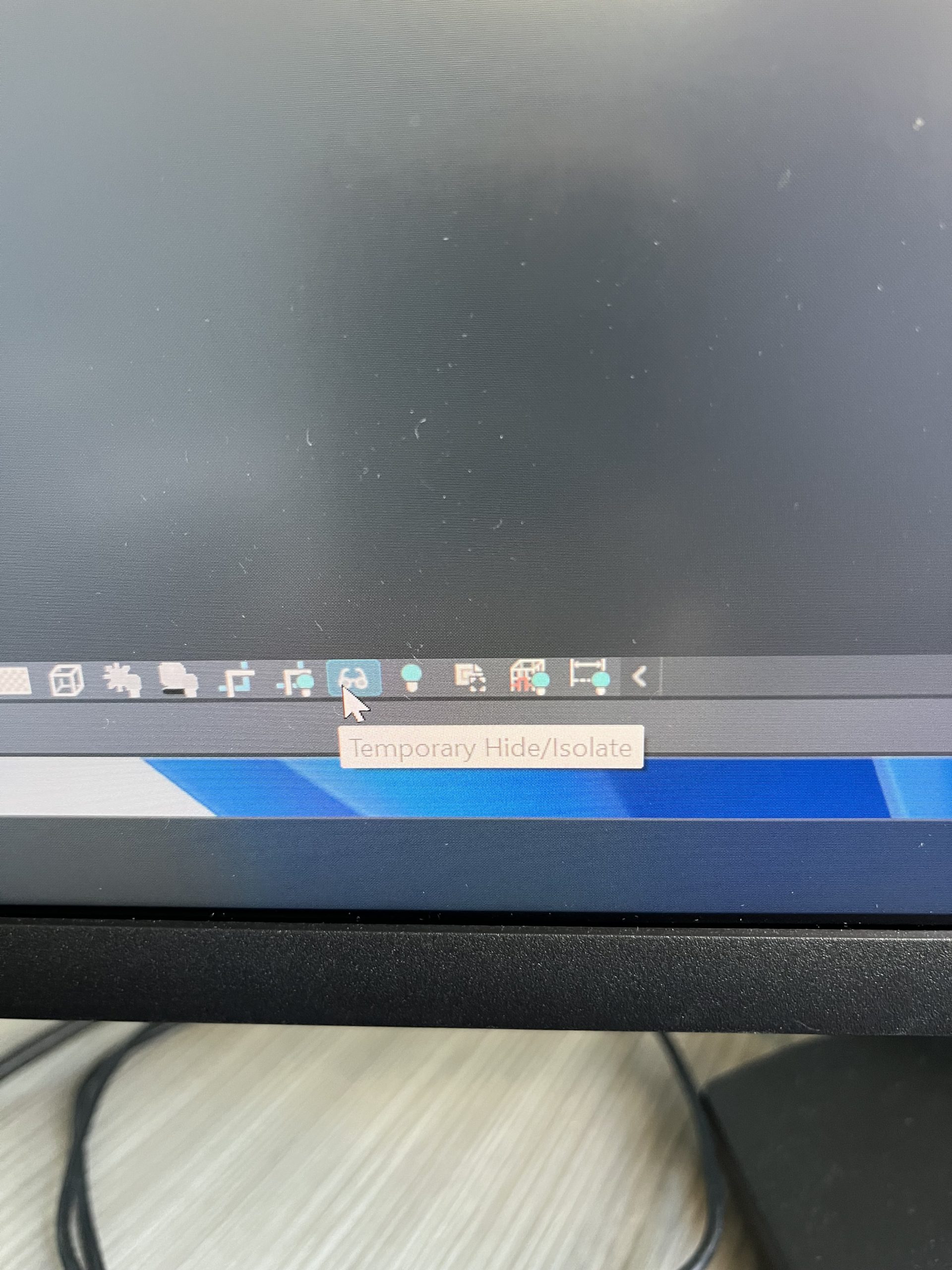
Thanks to my more than helpful manager Tim Viau and his underground wizardry. I was able to model some of the underground pretty well. I learned new tools, such as the trim connect tool. A tool that allows me to connect the pipe without having to be exact on lining it up. Revit is able to auto draw the bends and connections using this tool. I also learned how to isolate exactly what I wanted to see using the Hide/Isolate tool in the bottom of the tool bar. This enabled me to focus just on the pipe and get a better picture of exactly what I was doing. Week six was a new experience and one that I learned a lot from. I will post pictures of the software and the new tools below.

This is what it looks like after using the Hide/Isolate tool

The goggles are the the Hide/ Isolate tool on the bottom of the tool bar

This is a picture of the distant after using the trim connect tool to auto make the bends

Phoenix Generation Internship Week 5

After the excitement of Courageous Conversations, week five felt much less stressful than the previous. We moved from event organization to planning for the long term. We discussed what worked well and what didn’t at the event, and proposed the new plan for the podcasting filming.

Building the Podcast Roadmap

Monday started with brainstorming episode ideas, who we can invite for a podcast, and what dates we should use for that. By Wednesday, we had a six-episode plan finalized:

  • July 7 – Diverse Talks: 4 people from different countries come together to talk about the differences and what they know about each other’s countries. Questions like the biggest culture shock, and popular foods.
  • July 10 – Let’s Get Deep: Players will take turns picking a card with a question/prompt, leading to deeper conversations and more personal answers.
  • July 21 – Interfaith: A host and three faith leaders dig into common ground and tension points.
  • July 23 – Agree or Disagree: Players will be given a statement to which they write down a number based on how much they agree with the statement (0- Strongly Disagree, 5- Strongly Agree) and then take turns explaining why.
  • July 28 – Hillel Interview: two Fellows and two Hillel directors on campus dialogue.
  • July 30 – Can We Survive?: Series where a group plays different games that are known for “Breaking Families apart” (Uno, Monopoly, etc.)

We created detailed question sets, covering topics from “What’s a false stereotype about your country?” to “Where do you feel most at home now?” We also decided that each session will typically use a four-mic setup, but we can adjust it to match guest availability.

Strengths Finder and Bios

Mid-week, we took the CliftonStrengths survey. My top five strengths were Ideation, Strategic, Arranger, Input, and Learner. This means I enjoy connecting ideas and organizing chaos. Comparing results with the intern group was very interesting, as it appeared that we were much alike with each other than we initially thought. I also collected everyone’s headshots and mini-bios, which I was doing for the updated website of Phoenix Generation.

Debriefing Courageous Conversations

Wednesday’s debrief combined celebration with honest feedback. Wins included a flexible event flow, an eye-catching lobby design, and Jeff’s engaging storytelling. Areas for improvement are clearer check-in procedures, a longer setup period, and a real run-of-show flowchart. The main takeaway was that communication and preparation time are essential. At the end of the week, I was working as a digital organizer, and I had sorted every photo and video and put them into different folders. This will be very helpful for future work.

Reflection

Week five has been less eventful but not less exciting. We built a strong foundation for six podcasts, identified our strengths, recorded the lessons from our largest event yet, and sorted through a vast amount of media. It reminded me that great content involves planning, communication, and learning from past experiences.

Week 4 – COACH

This week was one of the most unforgettable moments of my internship and honestly, of my early career.

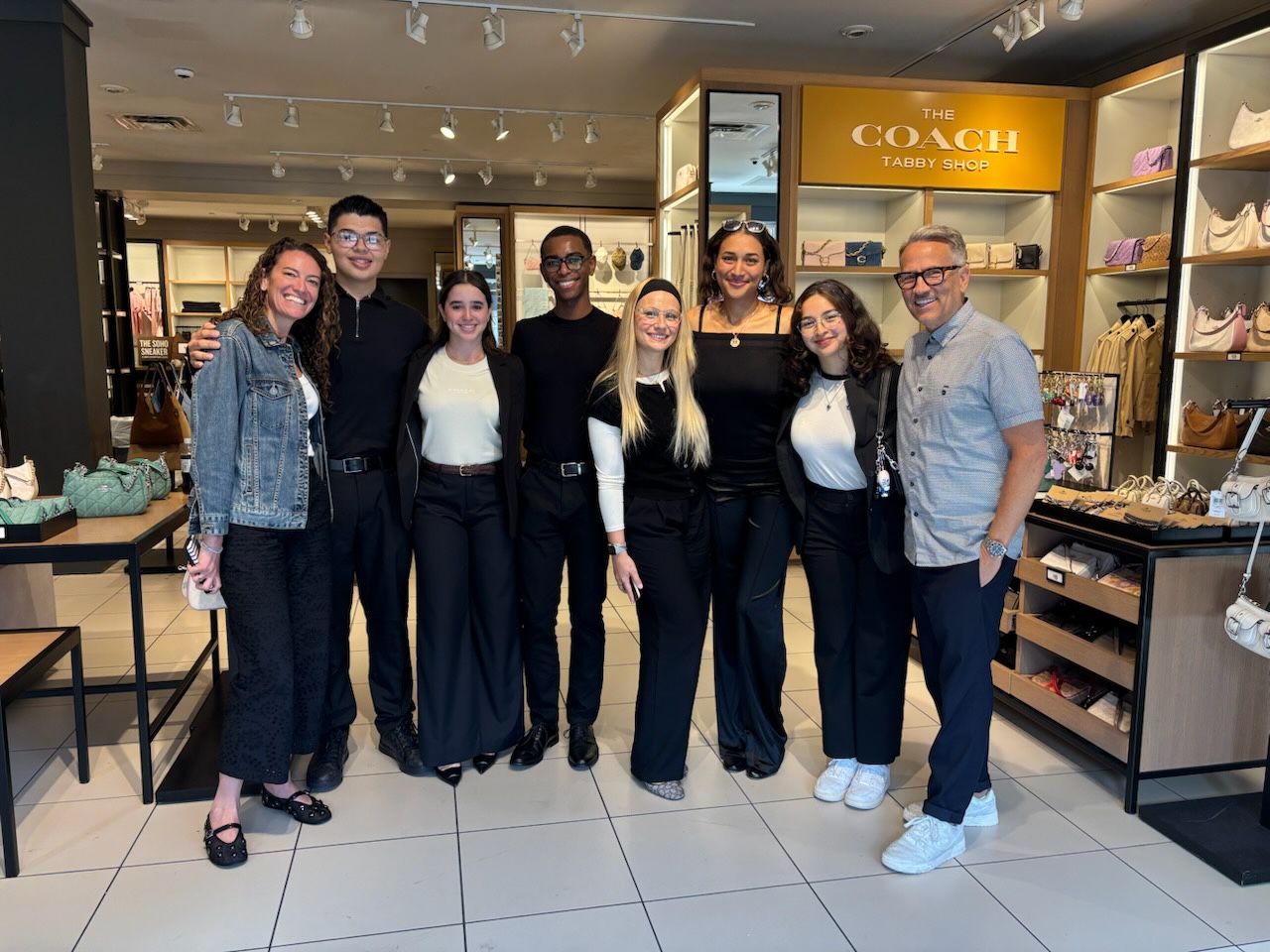
Coach welcomed over 10 team members from the corporate office in NYC to our store, including professionals from product development, visual merchandising, customer engagement, clienteling, and more. It was an incredible opportunity to hear directly from the people shaping the brand’s future. The visit was not only inspiring, but it also gave us a clearer understanding of how each area contributes to the bigger picture.

What truly stood out was the presence of President Leigh Manheim Levine and Vice President Richard Butler. On the first day of their visit, we walked them through our store’s performance, business analytics, product feedback, Gen Z trends, and overall results. They listened attentively, asked thoughtful questions, and made sure every intern in the room felt heard.

The next morning, we were invited to an intimate breakfast with them. As interns, we were encouraged to speak candidly about our experiences, what’s working, what we would do differently, how we perceive the brand as Gen Z consumers, and even our future career aspirations. That openness, curiosity, and trust left a lasting impression on me. I’ve never felt so valued in a professional setting.

Coach continues to prove that it is a brand built on people. That shows not only on the sales floor but across all levels, from store staff to the executive team. The fact that the President and Vice President flew in to sit down with interns speaks volumes. It is about connection, care, and shared growth.

This week we also participated in a training called SALES Coach, designed for leadership roles in retail. It focused on every aspect of the customer experience, from product knowledge to the in-store journey. What struck me was how much emphasis Coach places on human connection, not just selling a product, but making sure every guest feels welcomed and seen. I got a behind-the-scenes look at how leadership styles shape store culture and how customer obsession drives everything here.

As a Digital Arts major passionate about branding and consumer experience, this week gave me so much to think about. From the top-level leadership to the sales associate team, Coach continues to set a gold standard for what people-first leadership looks like in action.

Week 4 reminded me why I’m here, not just to learn, but to be inspired.

Week 3 – COACH

Week 3 of my internship at Coach was packed with exciting new learnings and meaningful experiences that gave me a deeper look into the business side of retail.

One of the highlights was diving into business metrics and KPIs. We were introduced to Coach’s Flash Dashboard, a powerful tool that tracks all the essential data for retail performance: total sales, year-over-year comparisons, traffic, conversion, productivity, and more. It was fascinating to see how much you can learn from numbers when you know where to look. We discussed how to translate these metrics into actionable insights, such as identifying growth opportunities or shaping sales strategies. We also learned how to deliver a weekly business recap, including inventory evaluation, top-selling products, and what customers are asking for in-store.

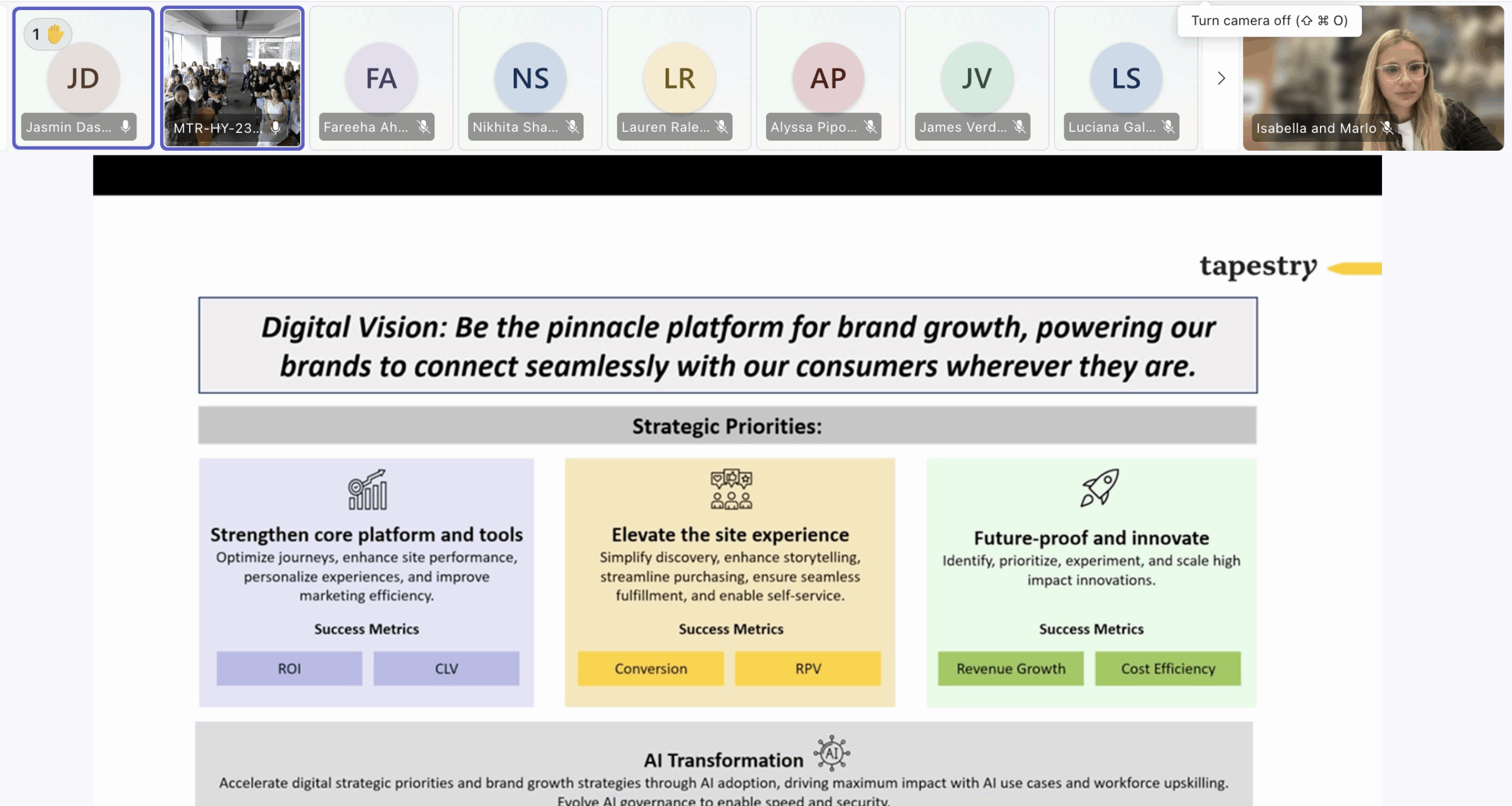
We had an amazing call with the Head of Digital Innovation at Tapestry, who walked us through the company’s Omni Channel Strategy. She emphasized the importance of starting with the right questions when working with data and explained how great insights come from thoughtful analysis and clear expectations. She also introduced us to Tapestry’s digital vision, a platform designed to power brand growth and connect with customers wherever they are.

One of the most exciting parts of the conversation was the discussion around AI. From 360-degree product videos to interactive content, we learned how AI is reshaping customer experience, along with the challenges it brings, like maintaining authenticity and protecting data. As a Digital Arts major passionate about user experience, this resonated deeply with me.

Outside of our learning sessions, I spent time conducting interviews for my final intern project. I focused on Gen Z consumers to understand how they engage with Coach on social media and how they connect with the brand. Their insights are forming the foundation of my project and it’s been incredibly eye-opening.

All in all, it was a productive, inspiring, and intellectually rich week!

MOAS – Start of Summer Camp (6/9-13)

The Summer Learning Institute Camp officially started the week of June 9th! The camp is separated into three age groups, 5- and 6-year-olds, 7- to 9-year-olds, and 10- to 13-year-olds. Each group has a designated teacher, but unfortunately, the last group’s teacher had to quit on the first day of camp. So, two of my supervisors in the education department had to oversee the class. The last-minute change was unexpected, but they both handled it with grace. And as a silver lining, I was able to shadow them and help out with watching the older kids. 

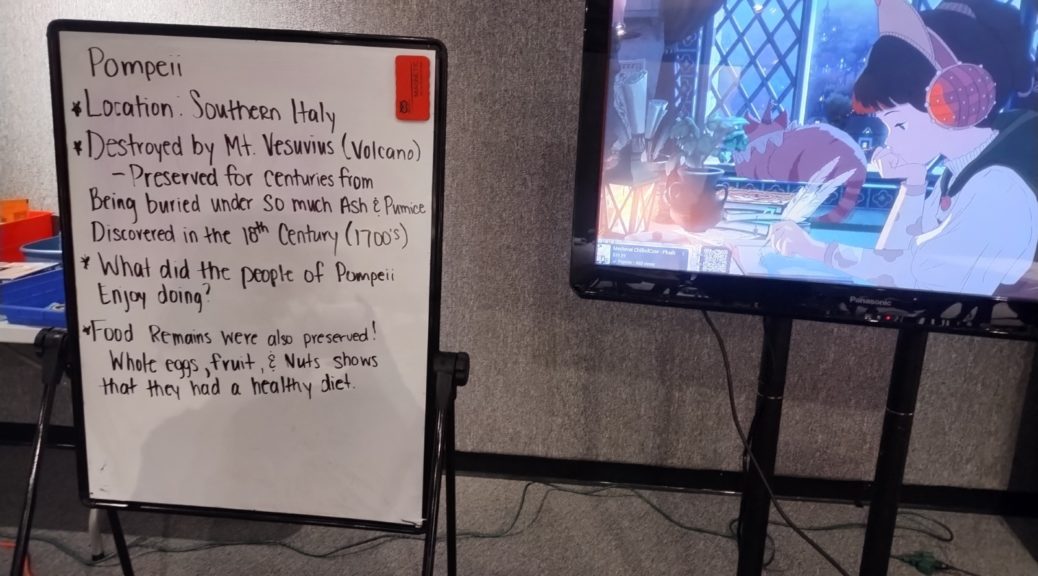
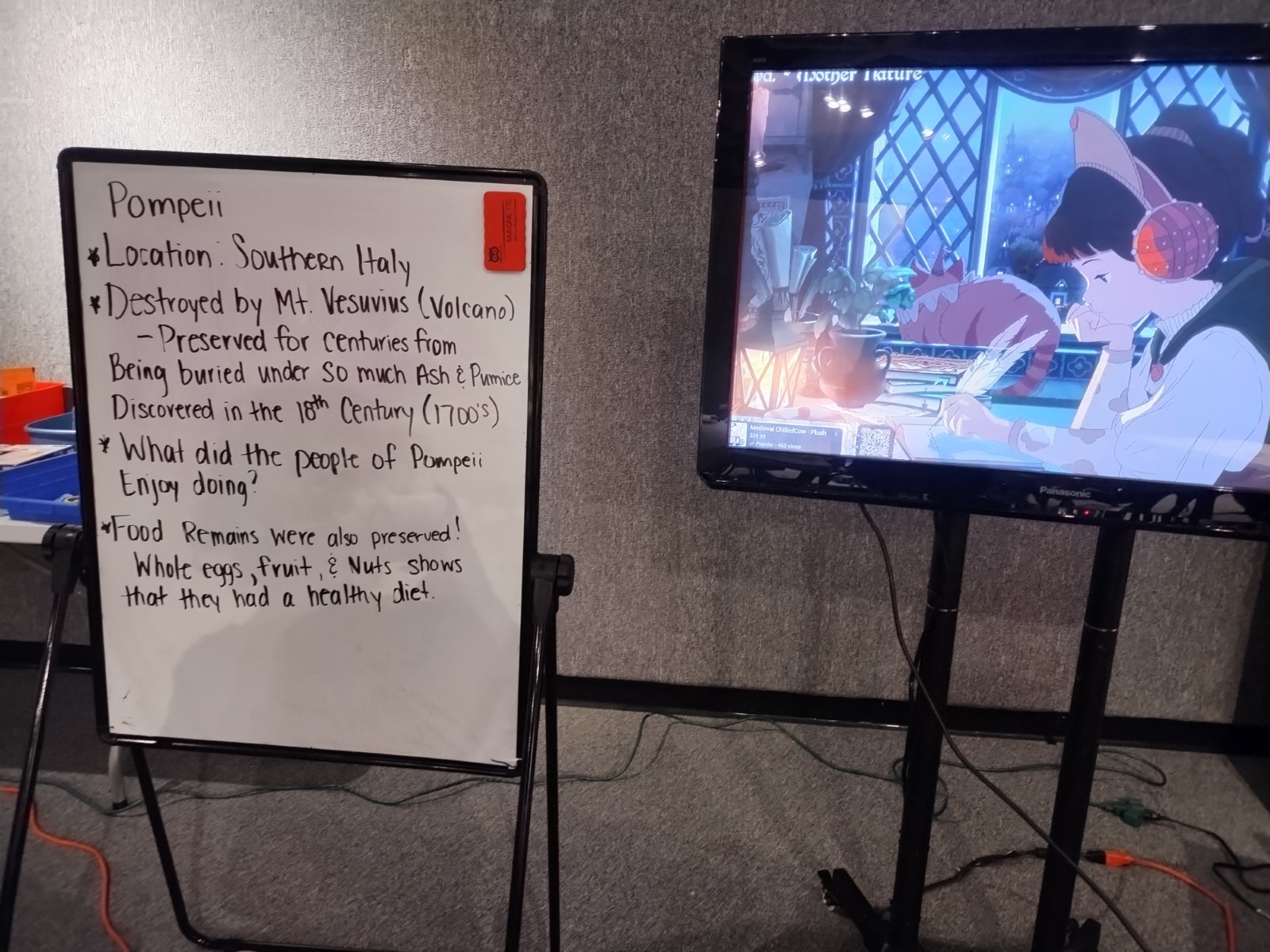
Each week of camp has a theme, for the 10- to 13-year-olds, the first week is “Time Travel.” So as an improvised lesson plan, we jumped around to various randomized time periods. We first started out by teaching the difference between B.C.E. and C.E. and put focus on prehistoric and evolutionary themes for a bit. Eventually, we touched on some prominent historical events, like the Renaissance and Pompeii. To help the lessons resonate with the kids, they created and decorated journals out of cardstock paper to write down specific facts or questions.

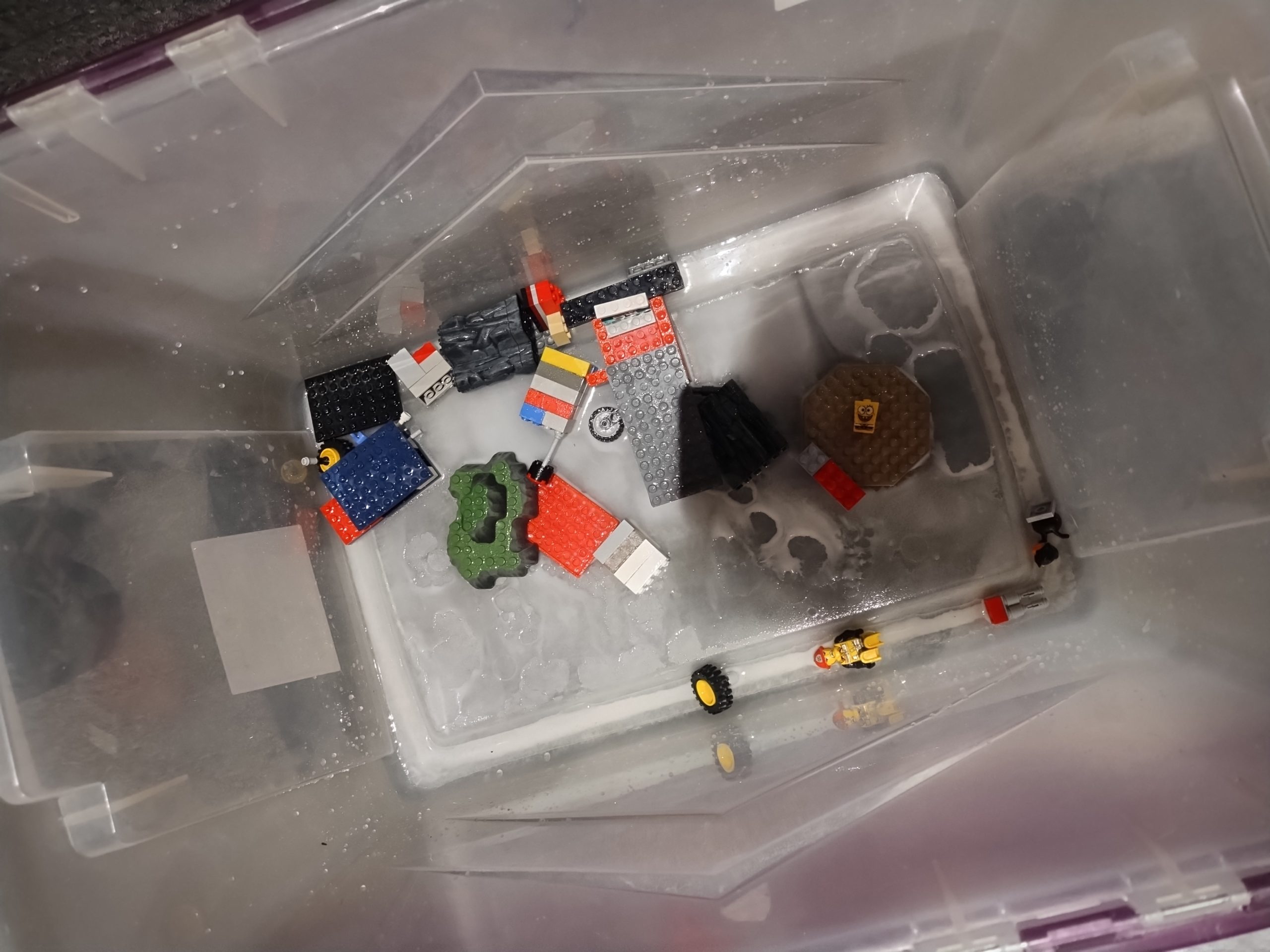
One cool activity that we did was a demonstration of the weight of the destruction that Mt. Vesuvius caused in Pompeii. The kids split into groups and created small towns with people out of Legos in bins and afterwards they destroyed the towns by shaking vinegar and baking soda into the bins. I was a bit mean and asked the kids to name the Lego people to give more gravity to the lesson, but they all still had a good time. 

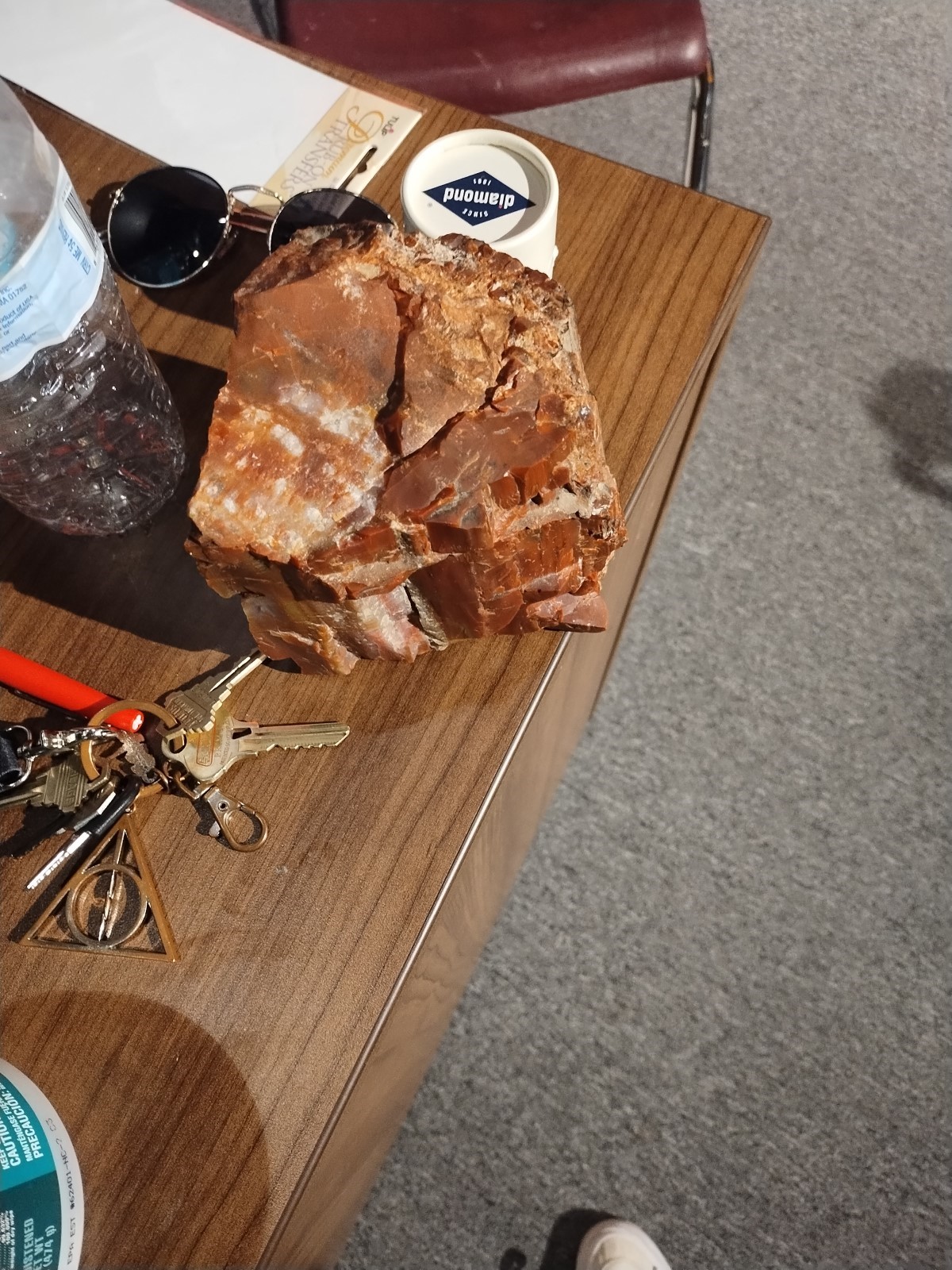
Also, here’s a random picture of petrified wood!