All posts by Migdaly Hernandez-Orozco

Museum Journal Entry #5

July 3rd || What most people and even I, as an intern, never understood was the policies and regulations that go on during museum operations. By regulations it is not maintenance duty of the equipment but the legal transaction of maintaining both the museum collection and the purpose of the museum building itself which we call collections management policies.


The management policies was made by UNESCO which stands for the United Nations Educational Scientific Cultural Organization in 1970 at Paris. UNESCO purpose of the management policies was to prevent illegal import, export and transport of the “cultural properties” (or object/specimen collection the museum preserves). The cultural properties in the museum are easily transferable–it has to go through some legal accession and documentation, especially verification by the curators, dealers and transporters that the object/specimen it of itself will not go anywhere else (or would at least prevent a theft). The three most important provisions established by UNESCO during 1970 convention was that there should be a cultural understanding/mutual respect between nations (and/or international) conventions, the cultural property should be authorized to be exported in/and out of the museum and it is prohibited to allow outsiders transport the cultural parties.
Museum Internship Entry #4

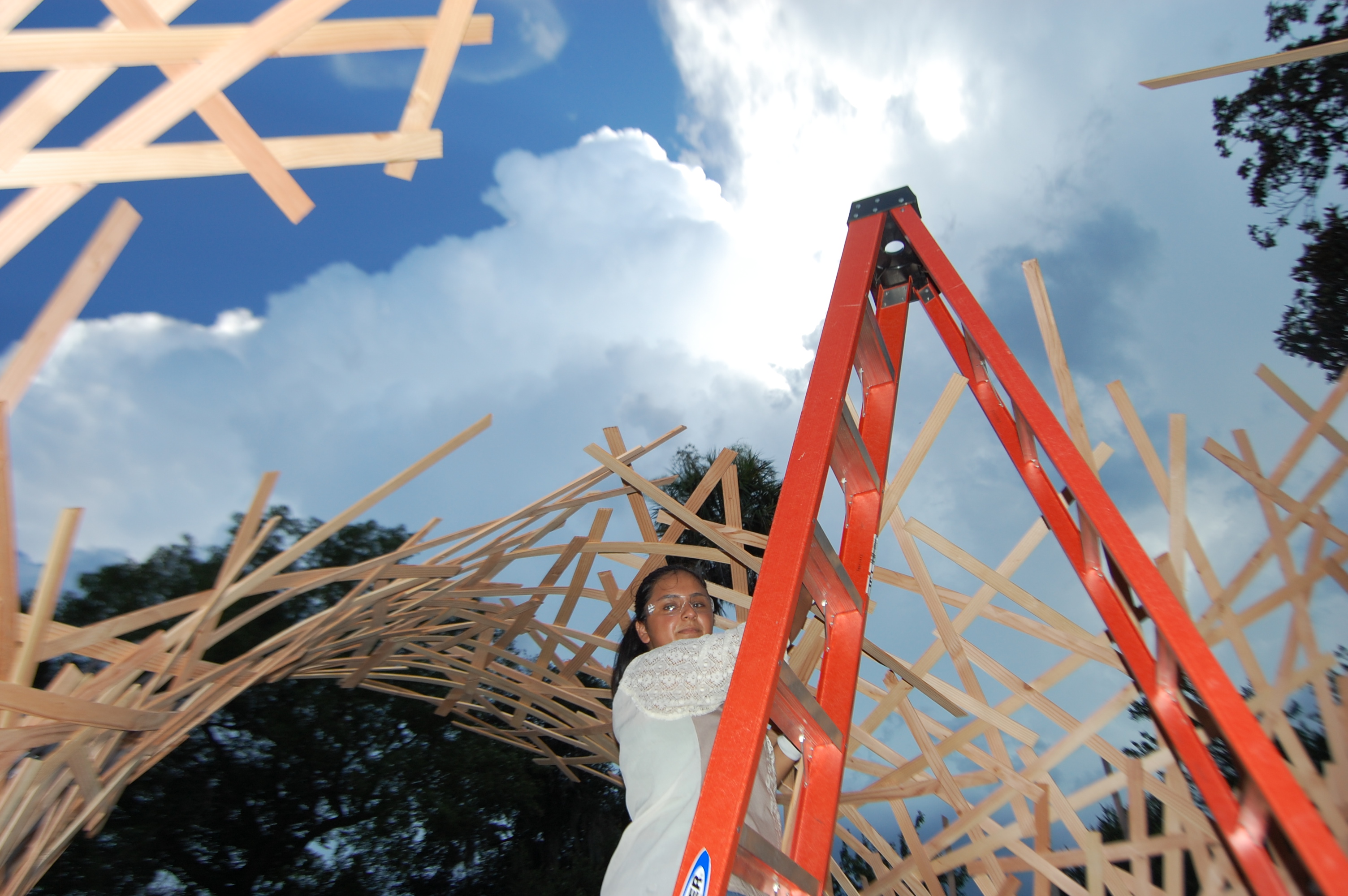
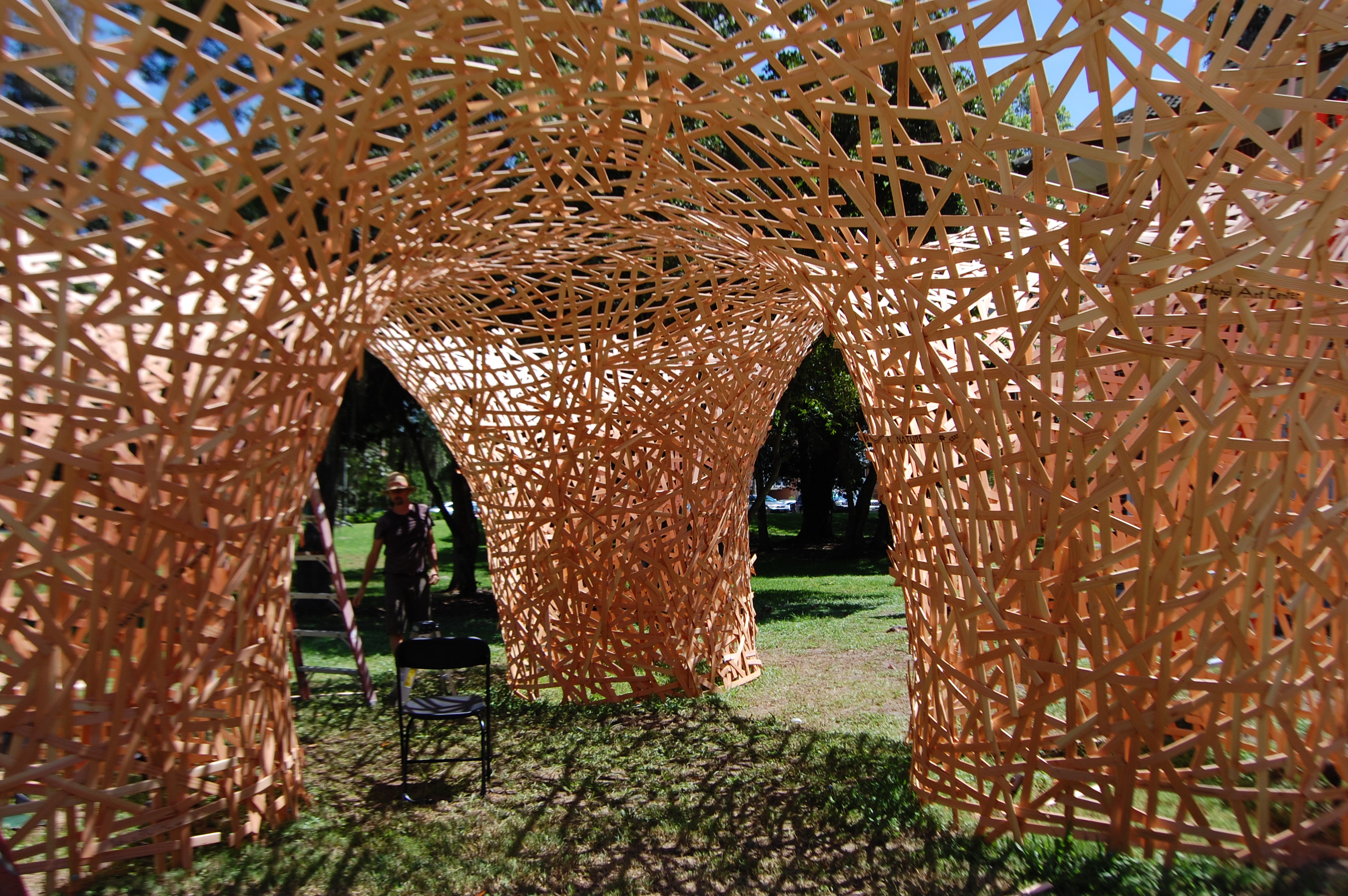
June 26th || “Art of Space is a social interaction installation that reflects society,” said Gerard Nadeau at the lecture in the Hand Art Center. In the lecture, Mr. Nadeau described both the philosophical and intellectual perspective of what the purpose of his installation was. In a way, the larger idea for Art of Space was how humans have the ability to control and manipulate space and time. “We create events out of construction. We locate in a particular place. We create community. We (as humans) know one another. (And like) art , (humans) has a role.” So, for the two weeks Gerard Nadeau was here, I took the opportunity to interact with Mr. Nadeau in his installation work and understand what his perspectives is as an artist.

DSC_0104


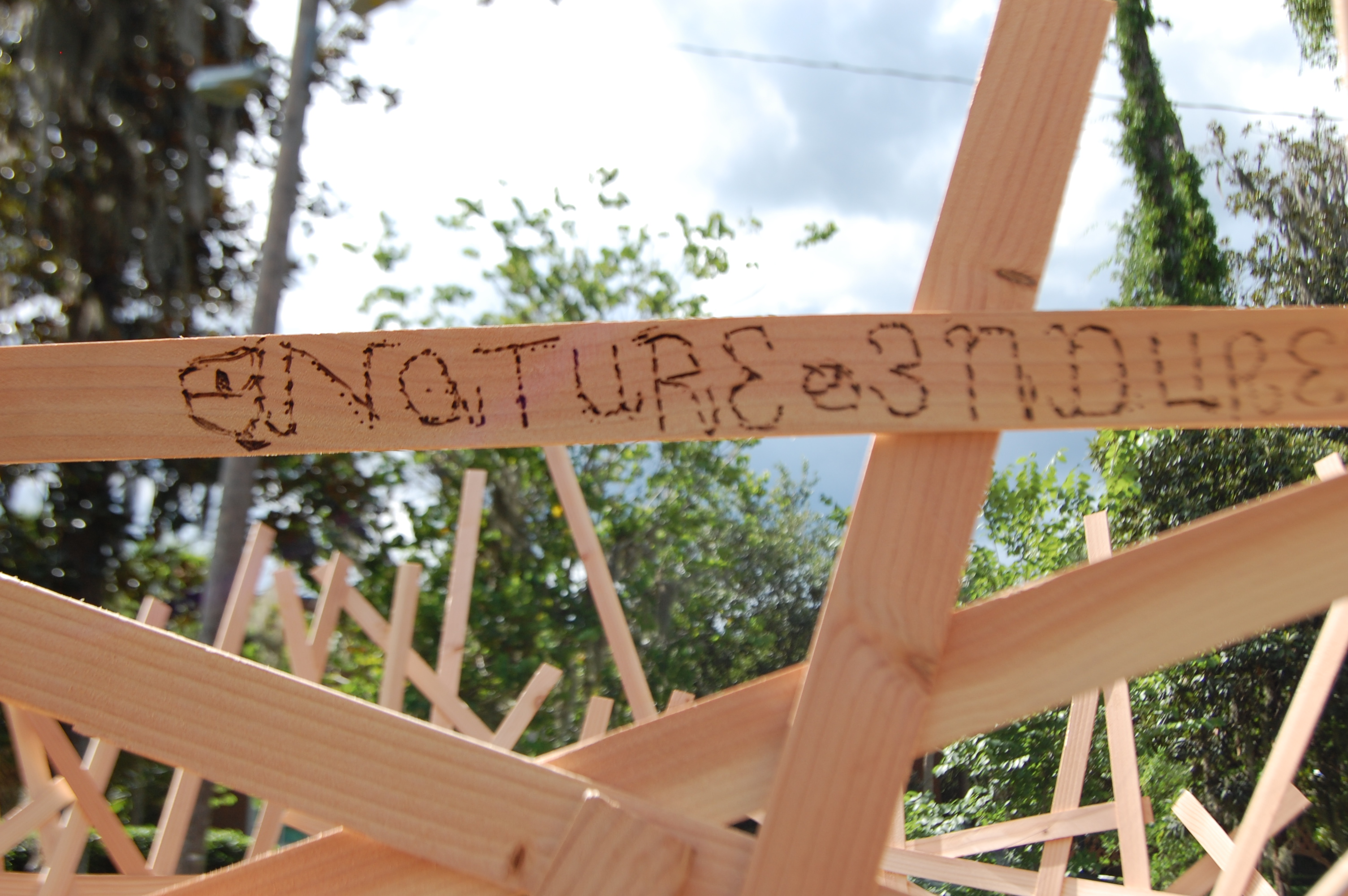
For his installation, the question was: What is nature?  For Nadeau, he wanted participants to answer the question all on our own and if we asked him if our answer was right, he would say that it was up to us to decide that. Mostly, people have positive perspective of what nature was. Only a small faction of participants wrote the negative aspects of nature however; Nadeau said that they’re answer were legitimate too since Nature in a way, reflects Society (and vice versa).

DSC_0018

Note: One of my wood slate answered, “[Like humans,] nature [also] endures [the obstacles thrown at them].”

For Mr. Nadeau, he wanted to make his installation to describe that a place is a possibility which builds the system of society; it drives the human unconsciousness question of “what is our role (in creating space, in being society)?”

DSC_0050

As the internship nearly ends, I understand that it is not only a curator’s job to manage the records of the collection but, it is also to understand the artists passion and how the museum as a place can help build a system for the art collections we have either preserved or have borrowed from other museums/artists.


Museum Internship Journal Entry #3

June 12th || I had another meeting with Susan Ryan—dean of the DuPont library—about the work ethics of a librarian. The interesting thing I discovered was that a librarian job differentiates based on the subject he or she wishes to work in. For example, a librarian who focuses on politics can work in Congress (or better yet, the White House) or, a librarian who has vast knowledge of medicine can work in a hospital. Depending on where a librarian works, he or she is assigned to archive and manage all of the historical and current information in a database. In a way, a librarian’s job is similar to a museum registrar’s job and, sometimes museums do have librarians. However, if there is a difference amongst the two, it is that a librarian does more in the administration work. For Dr. Ryan, she explains to me that her job is to manage the facility such as agreeing and allowing parts of the library to be used as work space such as the Writing Center and next fall semester, Student Success Center will be found on the second floor. Sometimes, she manages the book collections (such as which books must be added or discarded off the shelves), she makes publications of her own work and, she has to attend annual conferences. Her greatest work however, was creating the digital archives at Stetson University. When she first worked in the DuPount Library, the previous dean assigned her the job of creating the online archives. And for Dr. Ryan, she had no idea what to do. But over time, she managed to get more than 1,000 files—from the school yearbook to current memorabilia of the artist shows—into the digital archives where students on campus (or anyone else) can see for free.


Museum Internship Journal Entry #2

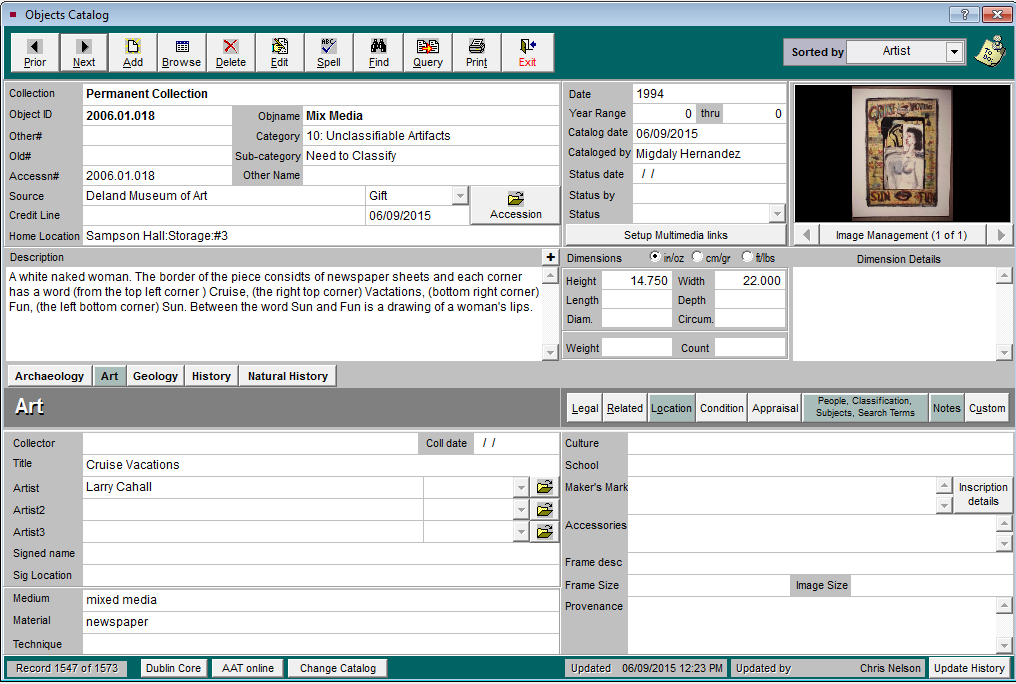
May 29th ||  Larry Cahall—a semi-abstract artist from Philadelphia—donated over 100 paintings he made to Stetson University between 2001-2006. One third of his paintings are displayed currently on campus. However, this collection was never inputted into the Past Perfect database so, Tonya has assigned me to add an accession number onto each piece. An accession number is like a recording number for the museum records. The first set of numbers is usually the year  the artist or donor gave us the piece; however, if there are no records to when the piece was donated to the museum,  then we would put the current year. The next set is just categorizing the piece into section such as XXXX.01.XXX means it is “part 1” of the collection. Finally, the last three numbers is numbering each individual piece in order from 001-999. After adding their accession numbers for most of the collection, I had to arrange and make sure each piece was stored in a proper location. Once that was over, I had to input all of the information of each individual piece in the PastPerfect program.

pastperfect002


Museum Internship Journal Entry #1

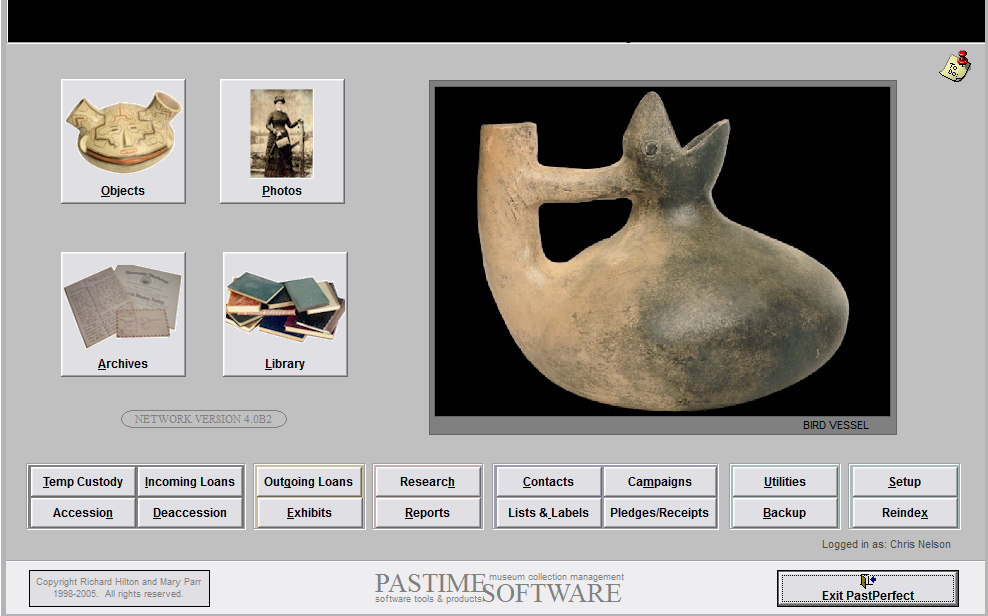
May 22nd || The PastPerfect Database—a software where the art collection the museum (or school) has is archived. Currently, the database needs to be revisited and reedit since either the collections such as Oscar Bluemner’s work has been filed in a different home location or, photographs of the art piece must be added in the database for it can be easier for the curator and staff members to know how the piece looks like. Then, in the end of the week, Tonya and I met with Susan Ryan–dean of duPont-Ball Library– to discuss a future digital archive in the library’s page for Oscar Bluemner from the Vera Bluemner Kouba Collection.

pastperfect001