Skip to content

Campus to Career: Army Judge Shares Insights on Success in Military Law

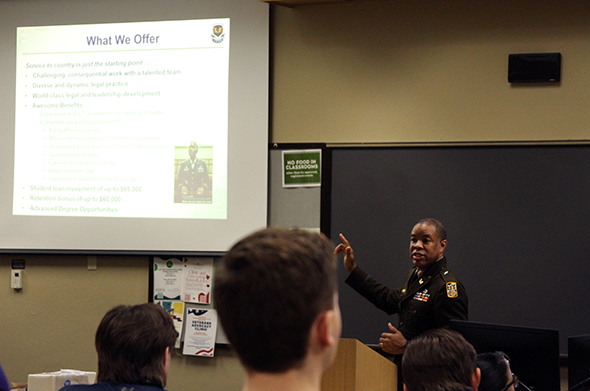
A man in a military uniform points to a slide being projected on a classroom wall.
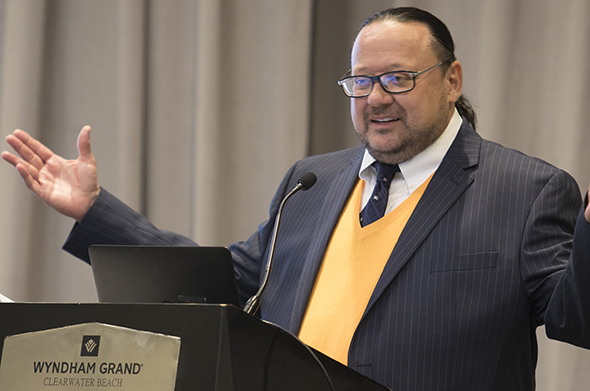
U.S. Army Brigadier General Ronald Sullivan

Over the course of a candid lunchtime conversation, U.S. Army Brigadier General Ronald Sullivan shared insights on what it is like to pursue a legal career in the military – and tips on how to launch a successful legal career regardless of one’s chosen sector.

His remarks were part of Campus to Career, a multi-month experience that brings law students an up-close look at the many ways one can successfully transition from law student life to a successful career. Speakers come from a wide range of backgrounds, each sharing insights and tips with anecdotes and humor. While Sullivan offered perspective on life as a military lawyer, much of his wisdom applied to all professional pursuits – and life in general.

Key themes were the value of mentorship, the importance of teamwork, and the difference having the right mindset can make. “Keep perspective. Be honest with yourself,” he said when asked what 3Ls should do as they look for their first job out of law school. “Know why you’re going into the office every day.”

Pursuing a legal career in military

Sullivan, who is Chief Judge of the U.S. Army Court of Appeals, gave an extensive overview of the Army Judge Advocate General’s (JAG) Corps – “the greatest and oldest law firm in the world,” a presentation slide boasted.

Consisting of thousands of judge advocates, paralegals, and other professionals, the JAG handles cases related to military justice, national security law, administrative and civil law, and contract and fiscal law. They also support soldiers and their families through trial defense and other legal services.

Sullivan touted the benefits of a military career: the challenging work, diverse and dynamic environment, generous benefits, and opportunities for advancement – as well as the intangibles that would benefit anyone’s career.

It was, for example, Sullivan’s military background that helped him cultivate a collaborative mindset that suited him well as he advanced in his career.

“We start in uniforms with no rank on them… with no names on them,” Sullivan said. “And we work together…. We run together. We get to know each other. We push each other. We compete. And no one’s bigger than someone else. And we take that to our area of practice.”

Optimizing one’s time

It was his father, also a veteran, who taught Sullivan the importance of getting a job done right over focusing on an allotted timeframe.

 “My dad would tell me that we work to task, not to time,” Sullivan said.

He asked the students how long it takes to study for an exam.

“It depends,” said two students, nearly in unison, which elicited laughter from the room – given how often the phrase is uttered on campus.

“It might take ten hours, it might take two,” Sullivan continued. “But it takes as much time as it takes for you to get the information down. That’s the task. But if I told you it will take ten hours to study for your next midterm, and you do everything in six hours, I hope that you stop at six hours.”

But it can also work the other way; if it takes more than ten hours, you do what it takes to get the material down. In a military context, working to task and not to time can mean the difference between life and death.

“I don’t think any of you who paid your taxes this year want us to stop training before we’re ready to actually go out there and do our job,” Sullivan said. “And that’s what I’ll ask each of you to do in your practice of law.”

There’s more to come from Campus to Career this spring. See the full schedule and register for events.


Celebrate Women’s History Month With Stetson Law

An illustration of a diverse group of women with text that says "Stetson Law Celebrates Women's History Month."
March is Women’s History Month – celebrate with Stetson Law.

Over the years, what was once a week-long recognition of women’s history has grown into a month-long celebration of women’s contributions to society all March long.

As an educational institution focused on equality and justice, Stetson Law enthusiastically embraces Women’s History Month and the achievements of women on campus, in the legal profession, and within society in general.

Women’s History Month Events

The celebration begins on February 27 with tabling, panel discussions, and more with the Florida Association of Women Lawyers at Stetson (FAWLS). Connect with this vibrant group at 11:00 a.m. Monday, February 27 during a tabling session in Sebring Courtyard. Learn more.

Members of the Stetson Law community are encouraged to check the Campus Docket for the latest info on events.

Women’s History Month Resources

Stetson Law invites you to learn about Women’s History Month with its resource page.

Learn about the enterprising women who made history at Stetson Law. Explore the struggles and triumphs of the Women’s Suffrage Movement. Plus, see online exhibits, discover opportunities to get involved, and find scholarship opportunities.

Visit Stetson Law’s Women’s History Month page.

Lila Jaber ’90 Gives Compelling Tips for Building A Career

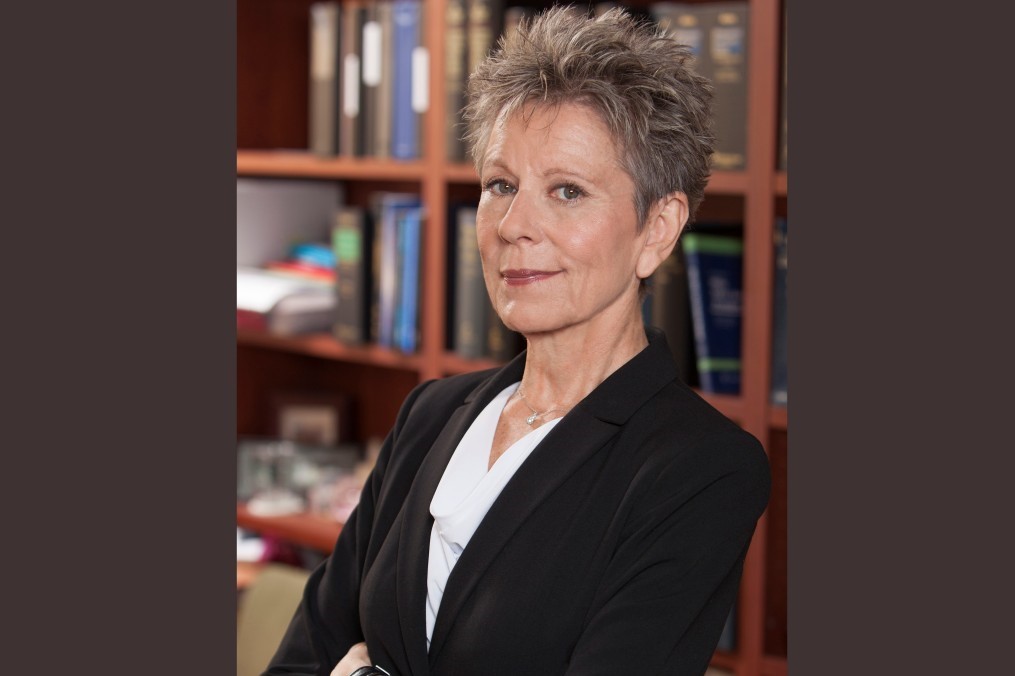
A headshot of Stetson Law alumna Lila Jaber.

At a Friday lunch event, Stetson Law students got a candid look at the incredible career path of one of Stetson Law’s most distinguished alumni.

Double Hatter Lila Jaber, who graduated from Stetson University in 1988 before earning her J.D. from the College of Law in 1990, was speaking as part of Stetson Law’s 2023 Campus to Career experience. A prominent Florida energy lawyer, she has held numerous leadership roles within her area of practice.  Recently, she served on the board of Chesapeake Utilities, was a regional managing shareholder at the firm Gunster Yoakley & Stewart, P.A., and is a member of Stetson University’s Board of Trustees. In 1999, Jaber was appointed by then-Governor Jeb Bush to serve on the Florida Public Service Commission, an entity that regulates the state’s public utilities. She was later appointed to a second term and ultimately served as commission chair. She currently runs her own consulting firm.

Emphasizing the importance of characteristics like patience, integrity, compassion, and humility, Jaber recounted how her strategy for building a successful career went from a plan to reality – even when life’s unpredictable nature made things look a little different than what she might have expected.

A clear but flexible vision

She told the students that not knowing precisely what role to which they aspire isn’t a bad thing.

“It’s true I planned a future, I didn’t necessarily plan exactly where I was going to be,” Jaber said. “And that’s why when I was speaking with some of you who said to me, ‘I’m not quite sure,’ my reaction was ‘that’s okay.’ Because sometimes, exactly what you’re going to do finds you.”

As a first-generation Palestinian American Muslim, Jaber said she applied to Stetson University without telling her parents until nearly the deadline for confirming her attendance with the school. When she finally told them, they were staunchly supportive.

Seeking mentorship, knowing the material

Early on, she sought mentorship from the likes of beloved Stetson University Professor of Political Science T. Wayne Bailey, who not only encouraged her to attend law school, but was a champion of the ambitious student.

Years later, when then-Governor Jeb Bush named Jaber to the Public Services Committee shortlist, her competition consisted of two well-known state lawmakers. At the time, she was bureau chief for the agency’s water and wastewater division and used her working knowledge to advocate for herself. She knew the work well, and it won her the appointment.

“Because when you do your homework and know everything better than the next person, you’re actually empowering the decisionmakers to make the right decision,” Jaber said. “How could they not, right?”

Suited for leadership

Other things she stressed to attendees: familiarize yourself with decisionmakers, develop and effectively communicate your message, be prepared for negative feedback, be gracious and leave the door open.

Lawyers, she said, must also recognize how their work equips them to be powerful community leaders.

“I think of the practice of law as a leadership opportunity,” Jaber said. “Because lawyers are the leaders of the community. They certainly can be – and you should be.

Learn more about Lila Jaber.

See the full Campus to Career 2023 schedule.

Stetson Law Now Offers Free Teletherapy for Students

Photo of a young woman on the phone that reads "Uwill: We're here for you when you need someone to talk to."
Uwill is a free teletherapy program now available to all Stetson Law students.

The curricula may be challenging, the schedule demanding, and the bar exam on the horizon, but law school is one of the most rewarding paths one can take. It’s not always easy, though, and finding time to manage stress in a heathy way can be tough.

That’s why Stetson Law is thrilled to announce a new program that invites students to seek counseling and access self-care tools at times most convenient for them – and it’s free.

These resources will be offered through Uwill, the leading student mental health and wellness solution.

With Uwill, students can receive free, immediate access to teletherapy with a therapist of your choice – all from their smartphone or other device.

Here’s how it works: 

  • Students may choose a therapist based on their preferences, including issue, gender, language, ethnicity 
  • They can choose a time that fits their schedule with day, night and weekend availability 
  • There are multiple methods to choose from: video, phone, chat, or message 

Access is quick and easy, so students can seek immediate, confidential counseling whether it’s between classes or in the middle of a marathon late-night exam study session. Students are invited to sign up and create a private profile now so assistance is available when they need it most.

The program also features free access to guided meditation sessions, yoga classes that can be streamed at any time, and other self-care practices to help users manage stress and cultivate mindfulness.

As always, in-person mental health counseling services are available on the Gulfport campus via the Student Affairs department during business hours.

Campus leaders hope the program will prove a critical student-wellness resource that caters to the needs of students accustomed to life in the digital space.

“As a community, Stetson Law recognizes that wellness is paramount – not just for managing the stresses of life as a law student, but for building resilience in all areas of life,” said Stetson Law Interim Dean Theresa J. Pulley Radwan. “It’s also important that we invite students to seek mental health and self-care practices that are tailored to their individual needs. It is my hope that the convenient, customizable care Uwill offers will help our students face life’s challenges – and recognize that they’re never alone.”

Students are invited to register and book their first session in just minutes by clicking here

Those who have questions or need assistance can contact Uwill support at 833.99.Uwill or [email protected].

The Stetson Law community is excited to offer this solution to our students.

Week 1 Recap: Campus to Career Kicks off with Compelling Events

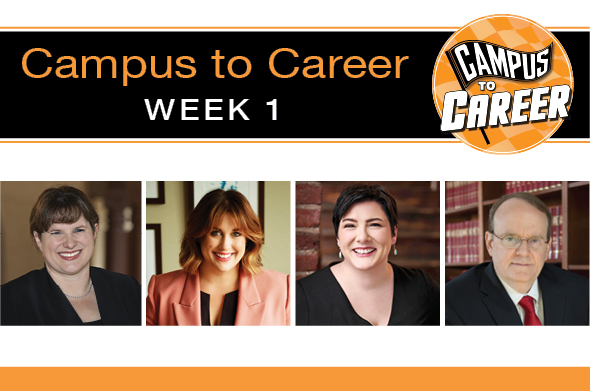
A collection of photos of people who spoke during Campus to Career 2023 Week 1.

What was previously a shorter event featuring tabling and panel discussions has evolved into a multi-month experience full of meaningful conversations and immersive exercises.

Produced by Stetson Law’s Office of Career and Professional Development, Campus to Career aims to help law students map their transition from the classroom to professional life after graduation. The first week of programming showcased a broad range of speakers, from a leading advocacy professor to a “death doula” offering advice on dealing with the emotional challenges that arise from working with clients dealing with trauma or end-of-life issues.

A lighthearted lesson in advocacy

As the first week of the Campus to Career experience opened, Law Professor Brooke Bowman, director of Stetson Law’s Moot Court Board invited students to watch a live moot court practice of the Hunton Andrews Kurth National Championship team. It was an engaging demonstration of argument fundamentals, to help prepare students for the kinds of arguments they can expect to present in courses like Legal Research and Writing II – and, someday, in the courtroom.

An added bonus for those who attended the popular session: because students can feel stressed about presenting oral arguments, desserts (“stressed” spelled backwards) were served.

Advice on “compassion fatigue”

On Thursday, students heard a compelling and thoughtful presentation on a difficult topic from Brenna Galvin, the managing shareholder and elder law attorney at Maser Amundson & Boggio, P.A. Her practice focuses on estate planning, life care planning, veterans benefits, special needs planning for individuals with disabilities, and more. She is also a “death doula” with deep expertise in helping clients and their loved ones work through end-of-life issues and other challenging issues.

She said such work can be emotionally taxing, especially as clients and their families begin to expect more from the legal professionals they hire.

“Our society’s changing,” she said. “We look to experts for more than just signing documents or pushing paper.”

A consequence of this, she said, is a condition called compassion fatigue, which can have a toll on physical and emotional health. It’s so common among legal professionals that the American Bar Association even has a definition for it.

It seems inevitable for practitioners in areas like elder law and estate planning, Galvin said, but with thoughtful lifestyle choices like a healthy diet, ample exercises, and occasionally unplugging, it is possible to mitigate compassion fatigue.

“To get through it, we have to adopt some strategies for wellbeing,” she said.

Meaningful work in the nonprofit space

Many students go to law school because they want to change the world – and it can be done, said C. Grace Juneau Whiting, a lawyer who is CEO of the National Academy of Elder Law Attorneys, and Hugh Webster, a nationally recognized lawyer and advisor to nonprofit organizations, associations, and individual executives. The two discussed the rewards of leadership and advocacy in the non-profit sector. 

They also spoke on the ways a J.D. can help an aspiring nonprofit executive excel (a lawyer’s attention to detail, for example, can help such entities avoid costly errors), and recounted their own journeys from law school to becoming trailblazers and thought leaders.

The way professionals work may be changing – even in the legal and nonprofit worlds, they said, but some things remain critical to success. Maintaining a strong network, seeking mentors, and a no-job-is-too-small attitude were among them.

Learn more about the Campus to Career experience and see the full schedule.

Year in Review: 10 Ways Stetson Law Triumphed in 2022

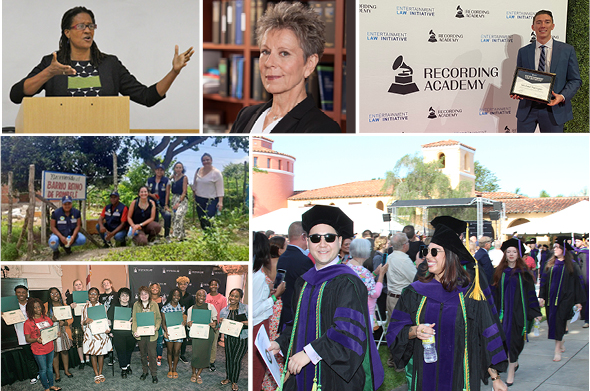
A collage of images from the year 2022.

With 2023 on the horizon, it is safe to say 2022 was an incredible year for Stetson Law. It wasn’t just ranking near the top in key U.S. News & World Report areas, having one of Florida’s highest bar passage rates, or earning the college’s third INSIGHT Into Diversity Magazine HEED Award in a row.

1. Prolific Writing & Publishing

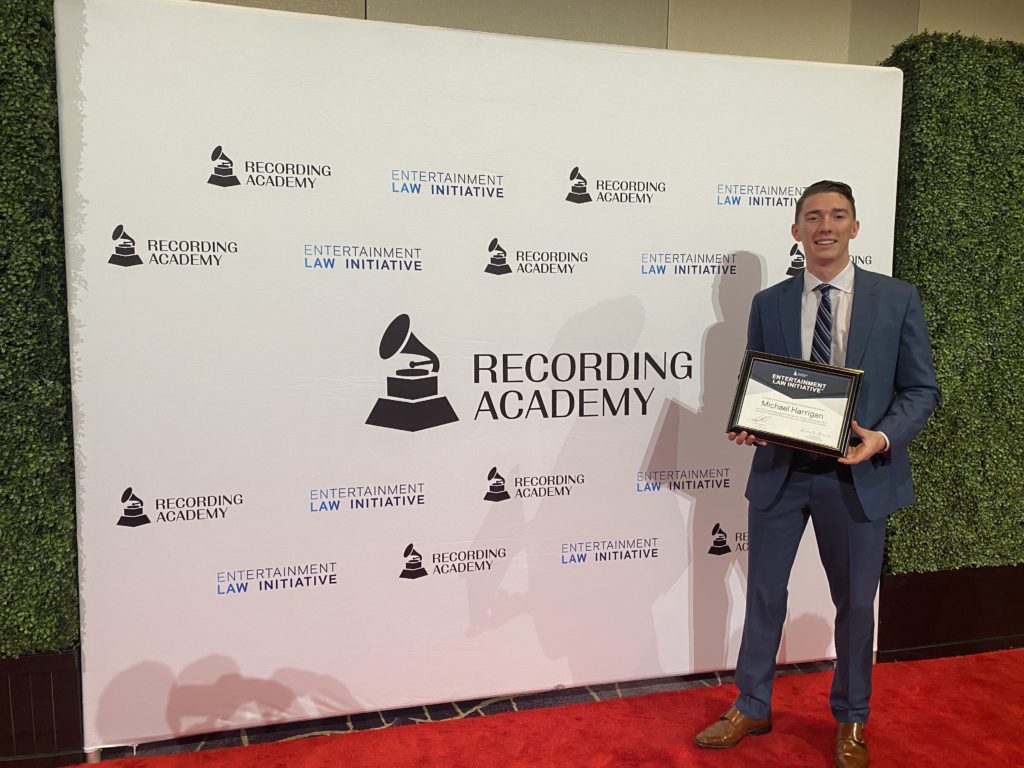
Stetson Law Student Michael Harrington holds a plaque recognizing his winning essay at a GRAMMY week event.
Law Student Michael Harrigan

With such an incredible legal writing program at Stetson Law, it’s no wonder students wrote and published award-winning pieces, including:

2. Compelling Conversations on Campus

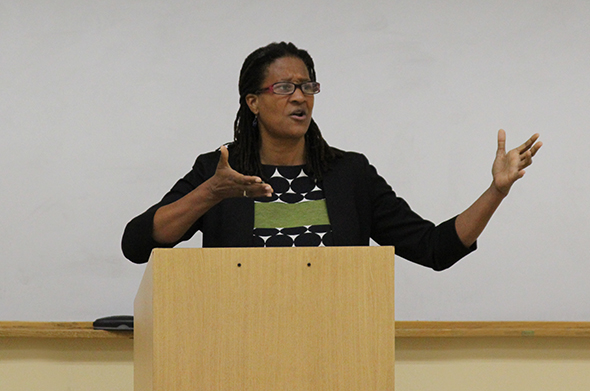
Professor Catherin Smith gives a spirited discussion
Scholar Catherine Smith

Throughout the year, the Stetson Law community enjoyed enlightening conversations with nationally known scholars, community leaders, and accomplished alumni. Among the most notable speakers in 2022:

3. Popular In-Person Conferences & Events Returned

Law Professor Peter Lake speaks at a conference
Law Professor Peter Lake, Charles A. Dana Chair and Director, Center for Excellence in Higher Education Law and Policy

As in-person events returned in 2022, Stetson Law was thrilled to invite colleagues back to industry-leading events like the 43rd Annual National Conference on Law & Higher Ed, the International Environmental Moot Court Competition, the Educating Advocacy Teacher Conference (EATS), and the National Conference on Special Needs Planning and Special Needs Trusts.

4. Winning Performances at National Competitions

Once again, Stetson Law students dominated the national moot court scene. From yet another sweep of the Florida Bar Association International Law Section’s Richard DeWitt Memorial Vis Pre-Moot in Miami to a “double-double” at the Robert Orseck Memorial Moot Court Competition at the Florida Bar’s Annual conference in Orlando, Stetson Law’s amazing competitors helped bring the college’s national championship tally to a whopping 86. See more competition stats.

5. Faculty Recognition & Leadership

A headshot of Law Professor Rebecca Morgan
Law Professor Rebecca Morgan

Throughout the year, pioneering Stetson Law faculty members saw national recognition:

6. Students Used Their Skills to Serve Others

As the college’s pro bono program turned 30, students carried on the tradition of putting their knowledge to good use. This includes everything from helping veterans confront bankruptcy to helping research and write an amici brief for an important U.S. Supreme Court clean water case.

7. Spring ’22 Graduation Was a Day to Remember

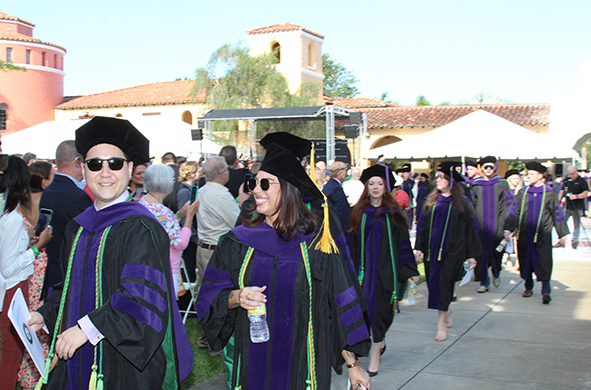
Graduates in sunglasses smile as they leave an outdoor commencement ceremony
Graduates at the Spring 2022 enjoyed sunshine and camaraderie.

On a sunny day in May, Stetson Law’s Class of ’22 officially became alumni – but not before hearing a compelling, touching, and often funny commencement address from Deputy Secretary of the U.S. Department of Veterans Affairs Donald Remy. The valedictorian was Jessica Zellitt, a passionate advocate for improving healthcare policy.

8. Advocacy Institute Construction Began

In late May, Stetson University officials heralded the start of a construction project that will bolster Stetson Law’s legacy as a destination for advocacy. When it opens, Stetson Law’s Advocacy Institute will be a destination for accomplished and aspiring advocates alike.

9. Stetson Law Reached out to the Greater Community

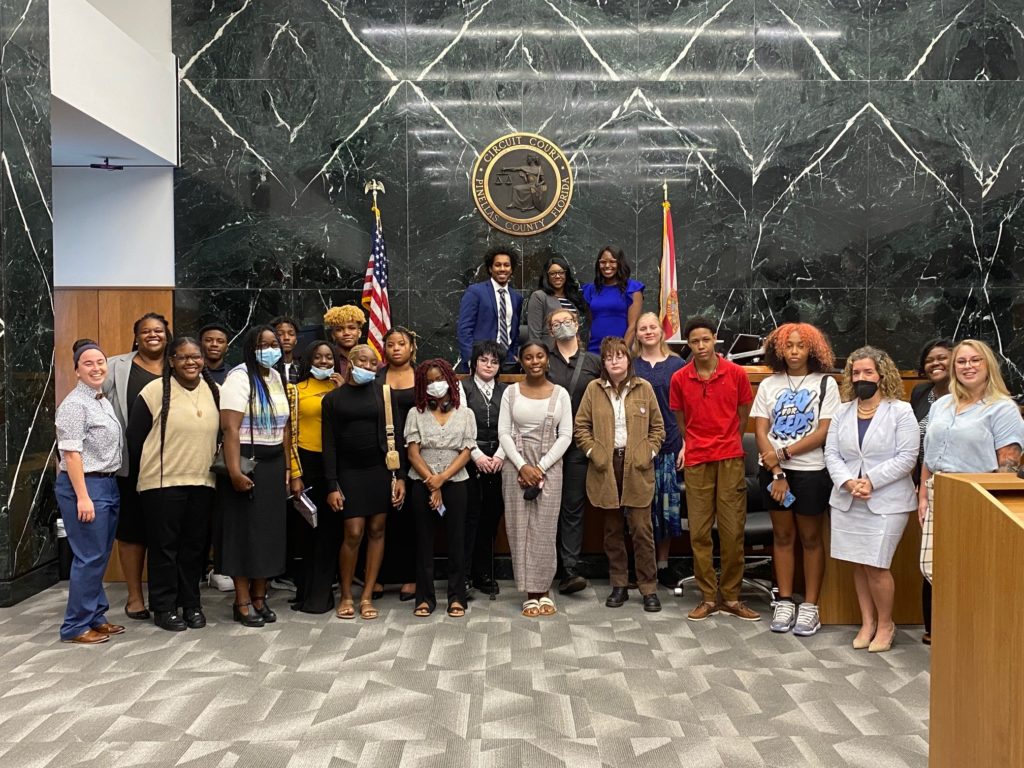
Stetson Law’s Summer Youth Civic Engagement Program, Class of 2022

By inviting youth from the surrounding community to learn about the role local, state, and national governments play in their lives, the creators of Stetson Law’s summer Youth Civic Engagement Program aimed to show them how to advocate for themselves and their communities.
Over the spring semester, Law Professor Kirsten Davis taught a course at University of South Florida St. Petersburg that introduced undergraduates to studying law.

10. Eye-Opening Travel Experiences Ensued

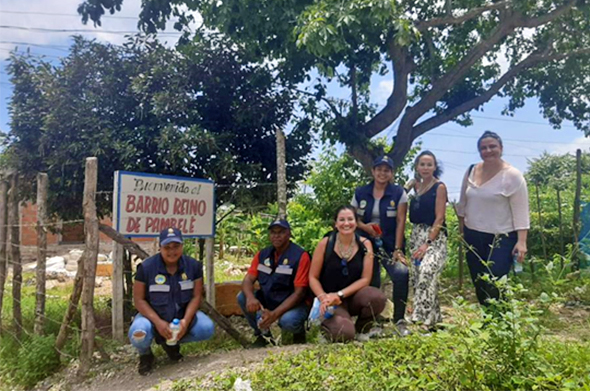
Law Professor Luz Nagle visits a neighborhood in Cartagena, Colombia.
Law Professor Luz Nagle advocates for human rights in Colombia

With Covid-era travel restrictions lifted, Stetson Law’s beloved study abroad programs took flight, including beloved summer programs in Oxford, England and The Hague, The Netherlands. Critical partnerships with international agencies and NGOs brought Professor Luz Nagle to Colombia to help fight exploitation of migrants and Professor Royal Gardner to add Stetson Law as a signatory to an international sea turtle protection agreement.
Stateside, Stetson Law re-launched its popular Civil Rights law travel course, which took students to important sites throughout the South for an exploration of the Civil Rights Era through a legal lens.

See all Stetson Law News.

Highlights from Stetson Law’s December Graduate Celebration

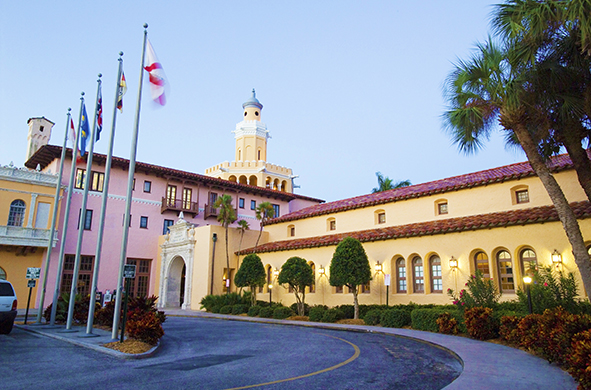
A shot of Stetson Law's iconic tower from the horseshoe driveway.

To celebrate Stetson Law students who successfully completed their law school journey over the Fall 2022 semester, officials held an intimate on-campus gathering in their honor (see the full video below).

The event was held December 15 in the Great Hall and featured remarks from campus and university leadership. Kicking off the celebration, Stetson Law Interim Dean Theresa J. Pulley Radwan commended the students for persevering through an unprecedented era.

“You are part of an unshakable cohort who have experienced more in your time in law school than most have in their lifetime,” Pulley Radwan said. “You have shined through a global pandemic – all while caring for your friends, family, and colleagues. You have weathered many shifts in the last few years and have remained resilient and excellent. We are so proud of you.”

The culmination of an unconventional journey

Acknowledging how those who complete their studies in the fall semester tend to be part of Stetson Law’s innovative part-time program, Stetson University Executive Vice President and Provost Noel Painter congratulated them for growing their careers through legal education.

“Congratulations on all that you have accomplished,” Painter said. “Your journey to this point is uniquely your own.  Celebrate the successes and embrace the challenges that made you a better person and a better lawyer along the way.”

Welcoming the soon-to-be Stetson lawyers

Stetson Lawyers Alumni Association Vice President Brittany Maxey-Fisher, J.D. ’07, told the audience that through exemplary work, Stetson Law alumni help tell Stetson Law’s story to the world while helping shape a better society.

“Together we will shine an even brighter spotlight on Stetson’s reputation for advocacy, legal writing, and our nationally recognized Centers and Institutes,” she said. “As you continue to design your footprint, strive for excellence, leadership and purpose. Create environments that celebrate differences and inspire growth in others by empowering them as they travel along their journey.”

Following Maxey-Fisher’s speech, Radwan called out the names of the students and noted the loved ones who helped them through their law school journey.

A moving speech

Law Professor Judith Scully, a champion of Stetson Law’s social justice initiatives, encouraged students to remain committed to bettering society. Noting that many law school applicants say their desire to study law comes from wanting to change the world, Scully offered five key pieces of advice:

  1. Be courageous.
  2. Be filled with gratitude.
  3. Remain hopeful no matter what.
  4. Stay focused on your work.
  5. Learn how to value, embrace, and nourish rest.

“I believe that in this December 2022 graduating class there are many small groups of you who will indeed help to change the world for the better,” she said. “I have great hopes and dreams for you.  My prayer is that your time as lawyers be well spent.  May you help to balance the scales of justice.  May you be abundantly blessed with good fortune and may you use your good fortune to benefit those around you and continue to be a source of inspiration for others.”

Watch the celebration

Visiting Professor, Student Publish Paper on Dobbs Decision

A side-by-side photo of a former student and a professor
Left: Flore Foulon. Right: Visiting Law Professor James Hart.

A visiting professor and a recent alumna spent much of the summer developing a sharp piece of analysis on one of the biggest U.S. Supreme Court decisions in recent memory.

The article’s title is A Comparative Law Guide to a post-Dobbs America and it is set to be published in the Cardozo Journal of Social Justice and Equal Rights. Looking at how civil law and common law can create differing outcomes when it comes to abortion rights, it is currently in the editing process.

Even prior to the leaked draft Supreme Court opinion that preceded the decision itself, then-student Flore Foulon spoke with Visiting Law Professor James Hart during his office hours near the end of the Spring 2022 semester. She had expressed an interest in writing a paper about abortion and bodily autonomy through a comparative law lens.

Foulon, who has studied law in three countries, said what inspired her to pursue the article was “the fascinating legal framework in different jurisdictions.”

“Writing an article using comparative law to delineate possible outcomes seemed the most logical approach following my education,” she said. “I am passionate about comparative law and this article is a good illustration of inspirations one can derive from it.”

Hart said he co-authored his first post-law-school article with his Constitutional Law professor at University of Denver Sturm College of Law, Jan Laitos, which made collaborating with a student even more meaningful for him.

Collaborating from afar

Working over the summer – Hart from his home in Denver, where he is finishing his career as a violinist with the Colorado Symphony, and Foulon from Paris (“utterly unfair!” Hart jokes), the two split their analysis down the middle. Foulon, who has a deep understanding of civil law, took on that portion while Hart covered the common law side.

As the Dobbs decision came down, a side-by-side look at how civil and common law determine the extent of abortion rights and access to reproductive care made the most sense to the pair. Hart explains that the main difference between the two systems is that in common law systems, it is the judiciary that makes law through legal outcomes that create precedents, which guide future case outcomes. Civil law systems, meanwhile, involve a legislative body that creates policy through statutes and other measures.

Comparing the two systems as they relate to the current abortion-rights landscape made sense.

“I felt that the comparative law angle was especially relevant, as once the Dobbs decision came out, the field of battle had shifted from the Court(s) to the Congress and state legislatures,” Hart said. “This made civil law legal systems instantly more relevant to a post-Dobbs America.”

Meaningful mentorship

Foulon said it feels surreal to be published for the first time, and that she greatly appreciates the opportunity.

“Being an international student, I often suffered a little from the imposter syndrome. However, it feels extremely gratifying to see my work being published,” she said. “I have a genuine passion for law and research and being published for the first time feels like the consecration of this passion. I am extremely grateful for Professor Hart to have written this article with me as it exceeded all the expectations for the article I had in mind when I first walked into his office.”

Of his former student, Hart said Foulon’s research and writing were extraordinary and that it reminded him of his collaboration with Professor Laitos. It was interesting to be on the other side of the mentor-mentee dynamic, he said – and that he couldn’t have picked a better mentee.

“One of the most meaningful aspects of being a law professor is watching your students become your colleagues as the years pass. I was so pleased that this collaboration worked out,” he said. “There is a wonderful Latin phrase, Docendo Discimus; to teach is to learn. That sums up my collaboration with Flore better than anything I could say.”

Hart will be returning to Stetson Law in January to teach Constitutional Law and a related seminar over the Spring 2023 semester.

Student Francesca Little Aims to Give Back, Elevate Latinx Community

A headshot of law student Francesca Little smiling in front of green foliage
Law student Francesca Little

Fresh from winning a prestigious award at the Tampa Hispanic Bar Association’s Scholarship Gala, Francesca Little isn’t resting on her laurels.

The Stetson Law 3L is busy with events like a Thanksgiving GIVEBACK initiative to collect donations for refugees, a project on which she is collaborating with Gulf Coast Jewish & Family Community Services (GCJFCS). It is underway November 28 through December 2.

It’s easy to see why she stood out to THBA officials seeking to honor a law student whose efforts to provide legal services for the Hispanic/Latinx community have proven exemplary. Through her extensive volunteer work as well as her work as social media manager for immigration law firm Dubrule & Nowel, PLLC, she has sought to advocate for the region’s Hispanic/Latinx and refugee communities. It’s a community with which she deeply identifies; Little is the daughter of Venezuelan migrants who brought her to the U.S. when she was a child.

“Francesca is a zealous advocate on behalf of her clients and remains optimistic in even the most complex cases,” said Chelsea Nowel, owner and co-founder of Dubrule & Nowel. “She always has a positive attitude and is fully engaged with them, even through long sessions of writing declarations and gathering evidence. 

Representing dedication to service

The scholarship with which TBHA honored Little is called the Victoria Cruz-Garcia award. Its namesake is a 2003 Stetson Law alum who practices with Solomon Law Group, a Tampa-based business and family law firm.

“To me, it represents someone passionate who is dedicated to promoting positive changes for our Hispanic/Latinx community,” Little said of the award. “As such, receiving this particular award before I graduate next year, I felt lucky that all my hard work throughout my time at Stetson Law was recognized as helping to benefit my community.”

Making a real difference

As president of both Stetson Law’s Hispanic Bar Association (HBA) and Immigration Law Student Association (ILSA), she has sought to grow both organizations and get them more deeply involved with important community causes. Collaboration – both within these groups and with other organizations – has been her focus.

She recently coordinated the school’s first Hispanic/Latinx Heritage Month Celebration at Stetson Law’s Tampa Campus, an event that fostered networking between current Stetson Law students, alumni, THBA members, and local judges.

Little also helped coordinate the start of “Spanish-speaking Client Help Days” with Bay Area Legal services, which she hopes will allow more of her Hispanic/Latinx community members to have access to legal aid resources. She recently facilitated a “TPS Talk” event on campus with an immigration attorney who spoke to students about the process of Temporary Protected Status (TPS) in the immigration arena and how they can help others apply.

Whenever HBA or ILSA holds an event involving food, Little said, she seeks out Hispanic/Latinx-owned businesses to provide food and drink.

Interested in contributing to the Thanksgiving GIVEBACK? Stetson law students can earn up to three non-legal pro bono hours by bringing non-perishable food items and hygiene products to the Gulfport campus library November 28 through December 2. Three donated items constitute one pro bono hour.

Judges, FL Supreme Court Justice Talk Clerkships at Stetson Law

A law student stands at a podium to introduce several judges on a panel.
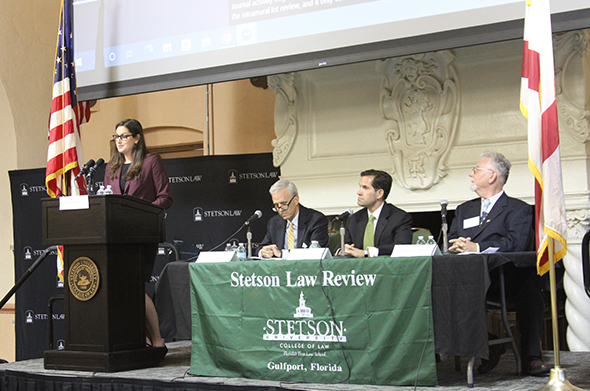
Law Student and Stetson Law Review Editor-in-Chief Kathryn Alkire introduces a distinguished panel of judges for a discussion about judicial clerkships.

If all the intensive reading, research, writing, and analysis law school entails leaves a 3L wanting more, members of the federal and state judiciaries in Florida want to hear from them.

That was the big takeaway from an engaging panel discussion at Stetson Law hosted by Stetson Law Review. Judges from a range of backgrounds and jurisdictions gave the audience a glimpse of what a judicial clerkship looks like in their courtroom.

Judicial clerkships are generally one- or two-year positions – but some are longer. They involve working closely with the judiciary to conduct research, write memoranda, draft decisions, and discuss ongoing cases with judges and other clerks. Most judges have one or two clerks, though some have a pool of several attorneys often referred to as staff attorneys.

For a recent law school graduate or working legal professional exploring a potential new direction, the position can be a capstone to one’s legal education, a critical career launching (or turning) point, and an immersive look at how judges operate. The judges on Tuesday’s panel went into detail on what that looks like day to day and how it can benefit one’s entire career.

Insights on judicial clerkships from high-caliber officials

Speaking to an audience consisting of dozens of students who work on the Law Review, Kathryn Alkire, the publication’s editor-in-chief, introduced the panel’s four judges: Florida Supreme Court Justice John D. Couriel; Hon. Charlene Edwards Honeywell, District Judge for the United States District Court, Middle District of Florida; Hon. Christopher J. Tuite, Magistrate Judge for the United States District Court, Middle District of Florida; and Hon. Craig C. Villanti of Florida’s Second District Court of Appeal (who is also a Stetson Law alumnus; J.D. ’77).

Each spoke candidly about what their judicial clerks do, the lifelong connections they develop with them, and how they vet candidates for the role.

“It’s really a fun job because every day you come in and solve a puzzle. And the beauty of the job, which you’ll never find again unless you ascend to the bench, is your sole objective is to do the right thing,” Judge Tuite said.

The panel was moderated by Law Professor Louis Virelli III, who noted how rare it is to hear directly from such high-profile judges and reflected on his own experience as a judicial clerk.

“I also had the absolute distinct pleasure of being a clerk twice myself at the district court and circuit court levels,” he said. “They were the two best jobs of my life prior to this one – but it’s still close. It really is an extraordinary opportunity.”

Unforgettable role, lifelong connections through mentorship

While the position is heavy on research and writing, it also brings those in it face to face with the inner workings of a courtroom – a valuable experience for any legal professional at any point in their career. They can see what makes a good lawyer, what makes a less effective one, and even how and why high-profile cases unfold the way they do.

“I like to refer to the trial court as the court where all of the action is, and so our clerks not only get to do research and writing, they also get to observe,” Honeywell said.

The panelists stressed how clerks play a critical role in assuring the judiciary gets it right in their decisions, thereby ensuring a courtroom is delivering on the promise of justice for all.

“I tell my law clerks that their first job is to protect me from error. It really is that simple: save our court from error. And therefore, it is a critical job,” Justice Couriel said. “It involves a lot of diagnosis. It involves a lot of figuring out what the law tells us about how a particular case or controversy ought to be solved.”

Trust is a centerpiece of a judge’s relationship with their clerk, Couriel added. While the days may be long and the pressure high, a lifelong alliance develops over time.

“While the term of the job is only a year, I really view the job as a lifelong commitment,” he said. “My law clerks have me in their corner for the length of his or her career.”

While the justice and judges shared details unique to what the role entails in their courtrooms, one common thread persisted: a knack for legalese and a love for the written word are paramount.

“Being on law review is the perfect segue into being an intern or a law clerk because you do what we do: read, research, write,” Villanti said. “It’s what you do, 24/7. It’s all you do. I used to read a thing called books. I don’t read books anymore. I read briefs.”

To explore more ways Stetson Law students can develop their ideal career path while still in school, visit the college’s Office of Career and Professional Development website. Learn more about Stetson Law Review.

Talking Urban Sprawl & Florida Wildlife With Elise Bennett

A picture of a young woman layered over a picture of a Florida development
The Center for Biological Diversity’s Elise Bennett

As Florida’s growing population drives demand for more development, the state’s wild spaces are disappearing – and as they do, so are the many native species that live in them.

As part of the Edward and Bonnie Foreman Biodiversity Lecture Series at Stetson Law, Elise Bennett, Florida director and senior attorney at the nonprofit Center for Biological Diversity, showed students how they can advocate for better species protections in Florida and beyond using tools ranging from the Endangered Species Act to writing letters to state officials. Her talk was titled “Feeling the Squeeze: Saving Biodiversity in a Shrinking Natural Landscape.”

Bennett, a Stetson Law alumna, said that from a young age, seeing Florida’s natural landscapes disappear motivated her to work in environmental conservation.

“If you grew up in Florida or even if you’ve been here a year or two, you’ve probably witnessed some of Florida’s natural areas disappearing into a parking lot, or a strip mall, or a fancy development,” she said. “Witnessing that was what really encouraged me to go into conservation work.”

A policy with a lasting legacy

While environmental advocates in the legal space have myriad tools for helping bring about effective policies for protecting biodiversity, Bennett pointed to the Endangered Species Act as one of the most powerful tools in an environmental lawyer’s toolbelt.

From the American alligator to the bald eagle, the Endangered Species Act has helped restore numerous vulnerable species. Bennett said some 99 percent of all species protected under the 1973 law have avoided extinction.

One big way the law works is by protecting natural habitats where otherwise-vulnerable species can thrive. Habitat loss is one of the biggest detriments to biodiversity – so limiting encroachment on or destruction of them can help ensure they maintain healthy populations.

“The reasons we need the Endangered Species Act is that humans have had a widespread impact on the systems species need to survive,” Bennett said. “Habitat loss is the main driver of species decline and extinction globally.”

Whether it’s developer or state agency trying to work around protections for gopher tortoises, or it’s the threat of beach erosion induced by sea-level rise posing an imminent danger to the Florida Keys mole skink, advocates can fight for more meaningful protections in court. 

“We’re working to give them a fighting chance” amid the potentially devastating effects of overdevelopment and climate change.

Little creature, big stakes

At the Center for Biological Diversity, Bennett and her team spend a lot of time developing strategies that will result in meaningful policy changes.

Sometimes that means encouraging state lawmakers to pass a law barring blue crab fishermen from using traps that are killing a high number of diamondback terrapins, who find their way into the traps in search of food, get stuck, and drown.

It can mean challenging a government agency that is giving away critical land to developers, as is the case with a swath of land in South Florida that’s a favorite dwelling place for the Florida bonneted bat.

Or, as is the case with the Florida Keys mole skink – as Bennett describes it, “this amazing little lizard with a bright pink tail, found only on low-lying, ancient coral-reef islands in the Florida Keys” – it comes in the form of a battle for stronger Endangered Species Act protections that has spanned over a dozen years. After years of going back and forth with three presidential administrations, the U.S. Fish and Wildlife Service finally appears poised to list the species as threatened – and provide for the protection of over 7,000 acres of critical habitat.

Cases like this give Bennett and her fellow environmental advocates reason to remain optimistic.

“Despite big challenges, there are reasons to be hopeful,” Bennett said. “We have incredible, powerful, and diverse legal and policy tools that we can use to protect Florida’s biodiversity. We have unprecedented access to science and law to help better develop our policy solutions… We also have unprecedented access to government decisionmakers through email, online comment portals, Zoom meetings, and the traditional letter-writing and in-person meetings as well.”

Here are Stetson Law’s 2022 Racial Justice Fellows

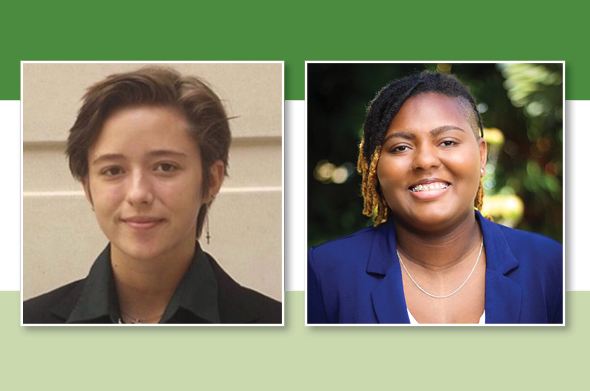
Two headshots of students selceted for a special fellowship program
Left: Jessica King; Right, Zenea Johnson

With a sharp focus on racial justice, two Stetson Law students will spend the next year building a more equitable community through collaboration with fellow students from a range of backgrounds.

As part of the St. Petersburg Higher Education Racial Equity Consortium (SPHERE), the two will serve as Racial Justice Fellows alongside students from each of St. Petersburg’s higher-learning institutions. The fellowship program, now in its second year, consists of students from Eckerd College, St. Petersburg College, Stetson University College of Law, and University of South Florida St. Petersburg. Through an application process, consortium organizers selected two students from each institution.

The aim is to bring participants face to face with community leaders, faculty, and mentors to collaborate on projects that will help create progress within St. Petersburg through influencing public policy and challenging the status quo.

“Working with leaders in the community and the SPHERE consortium, this class of Racial Justice Fellows will build on the work of the first cohort and help to establish real change through projects focused on shaping policy and transforming systems to create more equitable outcomes for all,” said Michelle Madden, campus diversity officer at USF’s St. Petersburg campus.  

Meet Stetson Law’s two student fellows

Though their backgrounds differ, the students selected share a deep passion for advocating for the underserved – and the hope of applying skills and tools they are gaining through their legal education to do so.

For Stetson Law student Zenea Johnson, who is pursuing a J.D. with a social justice advocacy concentration, the fellowship is her next step in understanding the many fights taking place within the space of social justice. It would build on lessons from a career she has so far spent dedicated to helping women from underrepresented populations, from domestic abuse survivors to refugees in the process of resettling in the U.S. She said her own experience as a woman from an underrepresented group has inspired her to keep going.

“After years of experiencing life through the lenses of the many intersections of my identity, there is one lens that will always have a greater impact on how I see society and that just so happens to be the one part of my identity that society sees first,” Johnson said. 

Law student Jessica King, who earned her B.A. in sociology with minors in history and leadership studies, said she came to law school with a dream of using her law degree in the service of progressing racial equality in the South. She believes the fellowship can help give her the mentorship and direction she needs amid the rigors of her studies. The program is a win-win, she added, given how she gets to help others while connecting to people, places, and opportunities she may not have otherwise known.

“I believe this fellowship will greatly shape my leadership journey and career because I came into law school with a dream to use my law degree to work and progress racial equality in the South and I believe this fellowship would give me the direction and mentorship I need,” King said.

What the fellowship entails

As with the inaugural 2021 edition of the program, the Racial Justice fellows will participate in regular meetings on how to build on the previous cohort’s strategic vision for what’s known as a Truth, Racial Healing and Transformation Center for Pinellas County.

Each student will receive a stipend of up to $2,000 for the 2022-2023 academic year and will work as interns in summer of 2023. Last year’s participants interned at organizations like the NAACP, the City of St. Petersburg, the Youth Farm, and Community Tampa Bay.  

The students will also serve as interns in the summer of 2023 and will meet regularly for meaningful discussions surrounding diversity, equity, and inclusion. One such discussion that took place last year revolved around the idea of a “new normal” and how the struggles of 2020 have made campus life for underrepresented students even more difficult than before.

Faculty mentors see the program as a building block for meaningful careers current participants will spend advocating for those who need it most.

“We hope that SPHERE’s one-year fellowship and summer community internships will introduce our students to a lifetime commitment of addressing racial injustices,” said Stetson Law Professor Judith Scully, director of Stetson Law’s Social Justice Advocacy program. “Our curriculum is merely a foundation for our students to stand upon as they begin to see themselves as courageous leaders with a focus on racial equity.”